
Identification Value
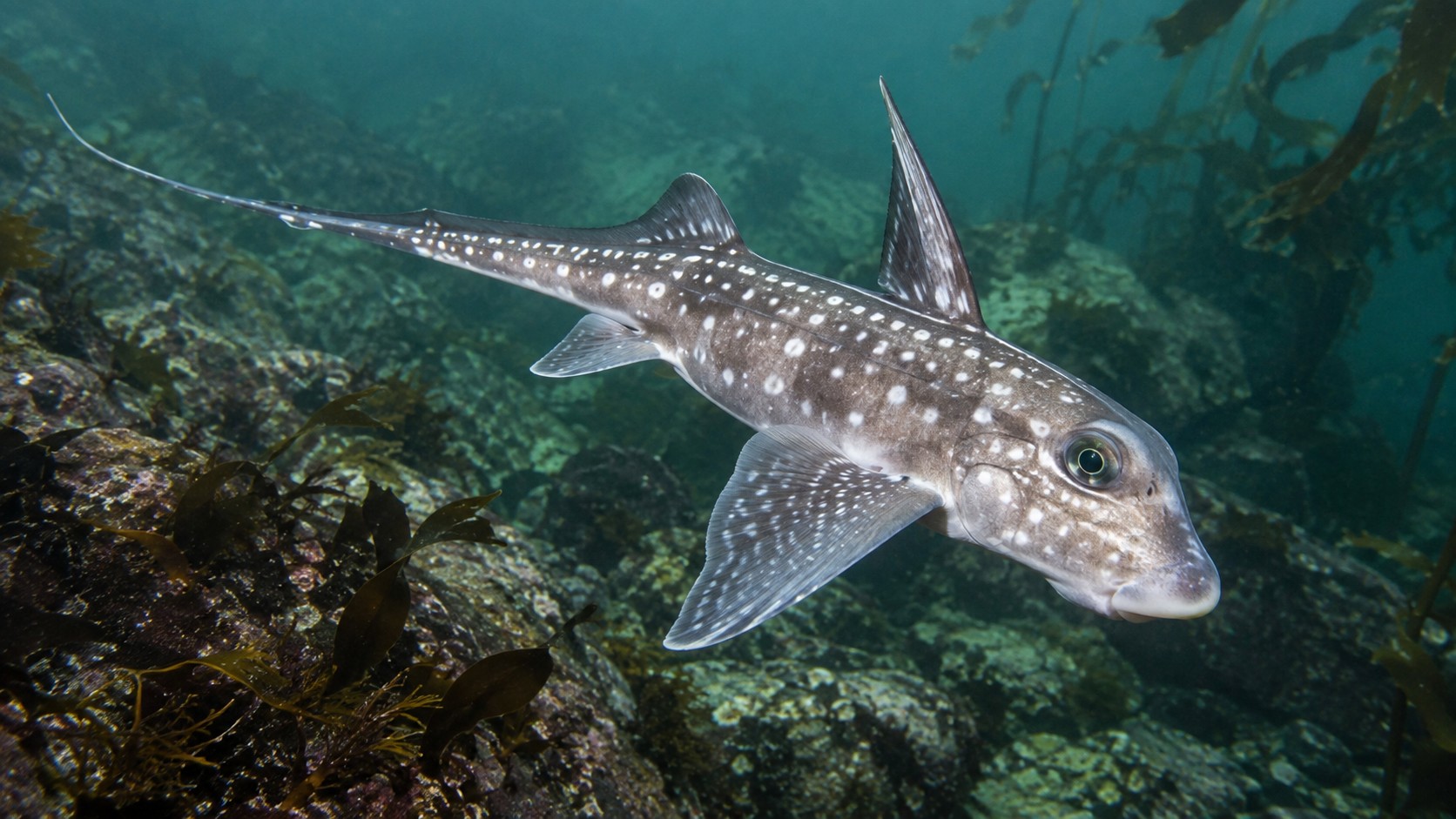
Spotted Ratfish needs to be read through a specific biological center: a chimaera with pale spots, a rabbit-like face, wing-like fins, and a long tapering tail. That sentence gives this profile a job beyond simply naming another fish. It tells readers which clues matter first and why the animal belongs where it does in the Animal Streets Fish taxonomy.
a useful quick cue is spotted ghost shark of the Pacific. It is not a decoration or a trivia line. It is the clue that connects body form, habitat, and feeding into one practical reading habit.
this profile can serve readers who arrive from different directions. A student may want classification, an animal lover may want recognition, and a conservation-minded reader may want context. All of those uses are stronger when this profile stays anchored to a chimaera with pale spots, a rabbit-like face, wing-like fins, and a long tapering tail.
Anatomy and Physical Description
The normal setting matters: Pacific coastal shelves, rocky bottoms, sandy slopes, and cold dim water near the seafloor. That habitat shapes what the animal can eat, how it moves, where it rests, and what kind of risks it faces. A fish profile becomes much clearer when place is treated as part of the animal rather than a backdrop.
The body fits that setting: large head, silver-brown spotted body, greenish eyes, wing-like pectoral fins, and whip-like tail. Those details are usually more reliable than color alone. Light, depth, camera angle, age, and preservation can all shift appearance, but the larger structure gives readers a sturdier way to compare pages.
Behavior links the setting and the body. Glides slowly near the bottom, often at night or in deeper water, searching by smell and touch. That gives this profile a living center, and it keeps this profile from repeating broad language about fish swimming, feeding, or hiding.
If the reader remembers the habitat and the body together, this profile becomes easier to use. The animal is no longer an isolated name; it is a form shaped by water, prey, pressure, bottom type, or open space.
Diet and Feeding Ecology
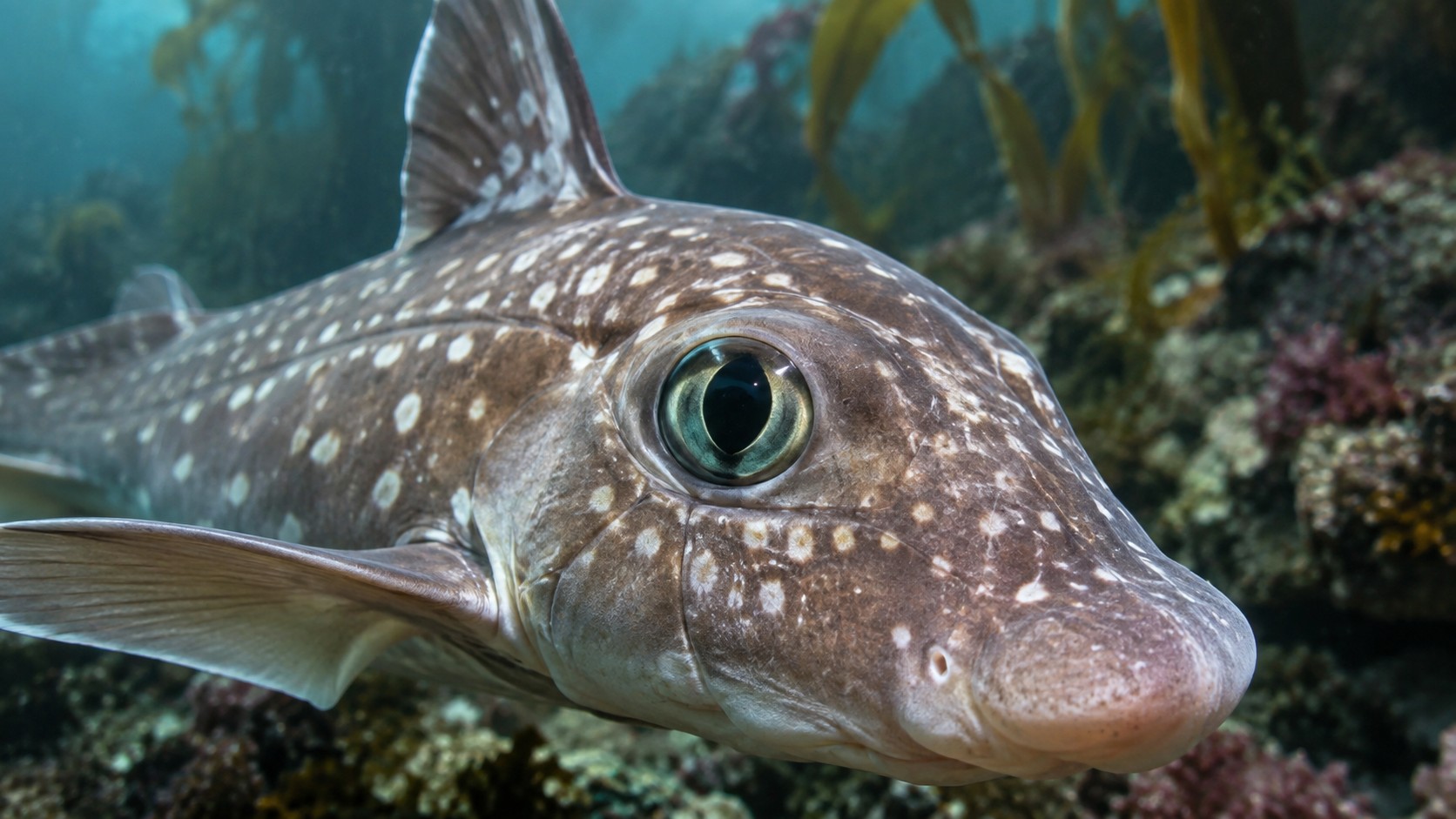
Feeding gives Spotted Ratfish much of its practical shape. It crushes clams, shrimp, worms, and other bottom invertebrates with tooth plates. A mouth, head, fin, or tail is not just an identification marker; it is a tool shaped by prey and setting.
Readers can imagine the feeding moment without needing a dramatic scene. The explanation shows how the animal reaches food, what kind of prey fits the body, and why the habitat makes that strategy possible.
This also helps this profile avoid generic diet language. A list of foods is weaker than a clear explanation of how the fish actually feeds. For Spotted Ratfish, the key is to connect crushes clams, shrimp, worms, and other bottom invertebrates with tooth plates with large head, silver-brown spotted body, greenish eyes, wing-like pectoral fins, and whip-like tail.
Food availability also touches the human context. Handling can be avoided because of a venomous dorsal spine and fragile deep-water context. That gives this profile a responsible note without turning it into an alarm or a care sheet.
Similar Species Comparison
Comparison is where this profile earns its place. Unlike sharks, spotted ratfish looks more like a winged ghost fish with tooth plates than a jawed predator. Nearby Fish pages may share a branch, a water type, or a familiar outline, but the comparison shows why this topic is not interchangeable.
The strongest comparison starts with anatomy, then moves into feeding and habitat. For Spotted Ratfish, the sequence is body first, setting second, feeding third, and public context after that. That order keeps this profile useful for readers who are still learning the branch.
A good taxonomy profile also tells readers what not to assume. One image, one famous trait, or one common name can mislead. The safer path is to ask what the animal is built to do and where it normally does it.
Human Relationship
The human context stays close to the biology. Handling can be avoided because of a venomous dorsal spine and fragile deep-water context. That may mean conservation, fishing pressure, bycatch, aquarium misunderstanding, tourism distance, or the limits of studying animals in deep water.
Handled carefully, this context makes this profile more trustworthy. It does not need to overstate risk or promise a complete management guide. It simply shows where human attention changes the story of Spotted Ratfish.
this profile also makes room for uncertainty. Some animals are common in public media but hard to observe well; others are known mostly through science, fisheries, or rare footage. A measured tone protects this profile from drifting into myth.
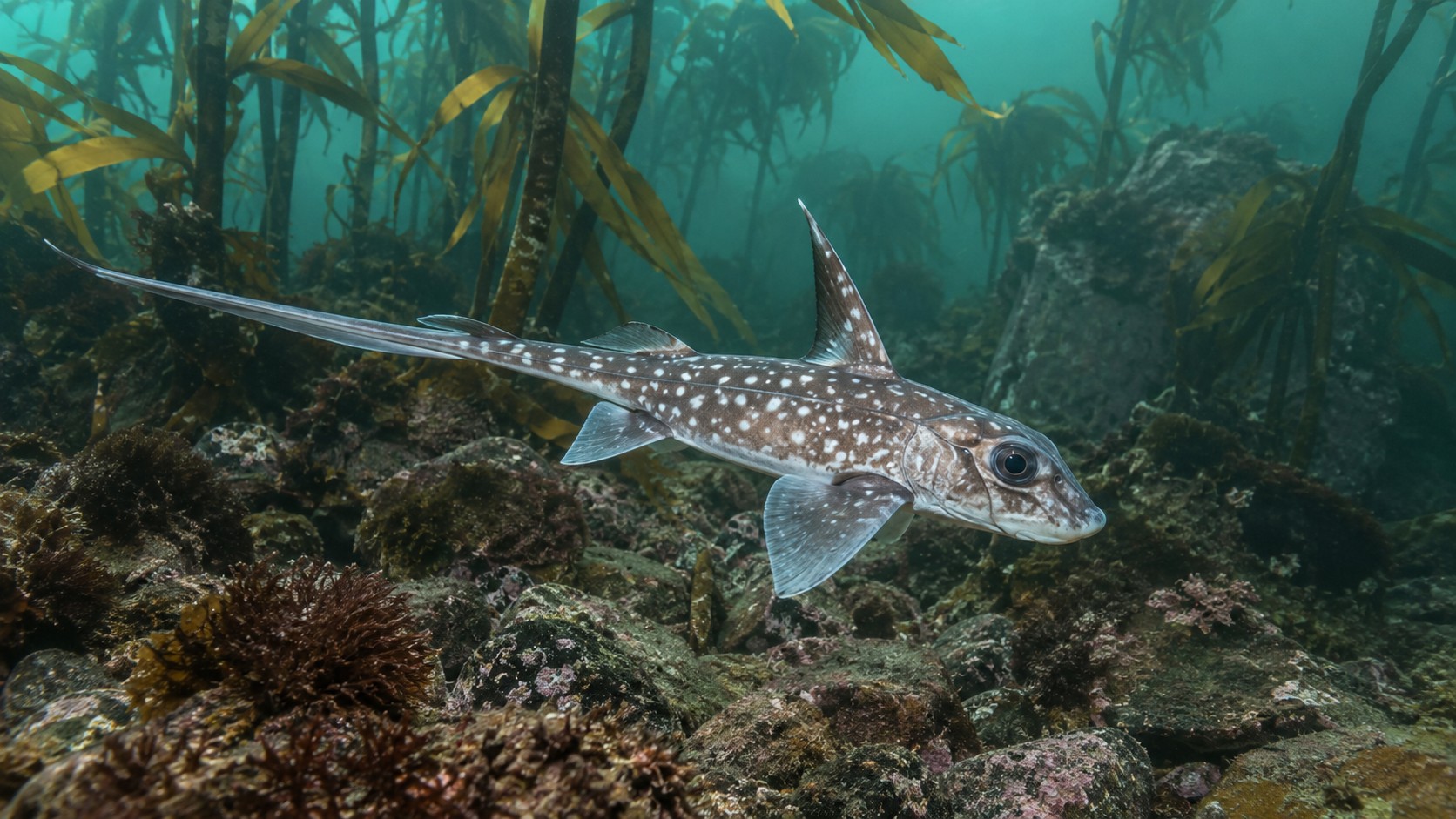
Image Clues
Images teach recognition. For Spotted Ratfish, useful visuals show spots, large eyes, wing-like fins, and a natural Pacific bottom habitat. That makes the image set part of this profile, not just decoration.
The featured image establishes the animal’s main body signal. A second image can slow the reader down for eye, head, or surface detail. A third image adds habitat or a different angle so this profile does not feel visually repetitive.
The final takeaway is simple: remember spotted ghost shark of the Pacific, place it in Pacific coastal shelves, rocky bottoms, sandy slopes, and cold dim water near the seafloor, and connect it to crushes clams, shrimp, worms, and other bottom invertebrates with tooth plates. Those three ideas turn this profile from a name in a taxonomy list into a useful animal explainer.
Behavior
A reader practicing with Spotted Ratfish can slow down and name the visible evidence in order. First comes the outline, then the head and mouth, then the fins or tail, then the habitat. That sequence keeps this profile practical because it turns spotted ghost shark of the Pacific into something the reader can actually look for.
This is especially useful when images are dramatic or unfamiliar. A deep-sea fish may look strange because pressure and darkness shape it; a shark may look familiar because public media repeats the same angles; a ray or chimaera may be confused with a neighboring branch. this profile teaches a repeatable habit without making the animal feel generic.
Reproduction and Life Cycle
Spotted Ratfish can change meaning with age, size, sex, season, region, or photographed condition. Those changes do not erase the main profile, but they can shift what the reader notices first. this profile makes room for variation while still returning to large head, silver-brown spotted body, greenish eyes, wing-like pectoral fins, and whip-like tail.
Variation also affects comparison. A juvenile, adult, rare specimen, aquarium individual, or deep-water observation may not show every classic clue. That is why the safest explanation combines body, habitat, feeding, and behavior rather than leaning on one perfect image.
Ecology Role
Inside the Fish taxonomy, Spotted Ratfish has a specific role. It either narrows a parent branch or gives a sibling profile a clearer contrast point. this profile is strongest when it helps the larger branch feel organized, especially around unlike sharks, Spotted Ratfish looks more like a winged ghost fish with tooth plates than a jawed predator.
This matters because taxonomy pages can become flat when every profile uses the same facts in the same order. Spotted Ratfish can instead add a distinct observation lesson: spotted ghost shark of the Pacific. That lesson prepares the reader for the next fish without copying the previous profile.
Image-to-Text Connection
The images can reinforce the words. If this profile says the animal is defined by large head, silver-brown spotted body, greenish eyes, wing-like pectoral fins, and whip-like tail, the photos do not hide those details. If this profile emphasizes Pacific coastal shelves, rocky bottoms, sandy slopes, and cold dim water near the seafloor, the background feels biologically useful rather than blank.
The three-image set has separate jobs. The featured image establishes the topic, the first body image slows the reader down for detail, and the second body image adds habitat or behavior. Together they make Spotted Ratfish easier to understand without repeating the same pose three times.
Final Reader Check
Before leaving this profile, the reader can be able to answer three questions about Spotted Ratfish: what does the body suggest, where does the animal make sense, and how does it get food? The answers point back to large head, silver-brown spotted body, greenish eyes, wing-like pectoral fins, and whip-like tail, Pacific coastal shelves, rocky bottoms, sandy slopes, and cold dim water near the seafloor, and crushes clams, shrimp, worms, and other bottom invertebrates with tooth plates.
That final check keeps this profile aligned with the Animal Streets purpose. this profile is not just a long caption. It is a focused explainer that turns a taxonomy row into an animal with structure, setting, behavior, and a clear reason to be remembered.
Detailed Takeaway
The most important habit for reading Spotted Ratfish is to keep the animal’s visible form tied to its normal world. The body clue is large head, silver-brown spotted body, greenish eyes, wing-like pectoral fins, and whip-like tail. The setting is Pacific coastal shelves, rocky bottoms, sandy slopes, and cold dim water near the seafloor. When those two pieces are read together, the fish stops feeling like a loose name and starts feeling like an animal shaped by a particular way of living.
The feeding clue completes that picture. Spotted Ratfish crushes clams, shrimp, worms, and other bottom invertebrates with tooth plates. That does not need to be turned into a dramatic scene; it simply needs to be connected to mouth shape, body position, water depth, prey type, and movement. Readers can explain why this animal feeds this way from the same clues they use to recognize it.
The comparison point is also part of this profile’s job. Unlike sharks, spotted ratfish looks more like a winged ghost fish with tooth plates than a jawed predator. That line helps readers move through the Fish taxonomy without blending neighboring pages together. A clear comparison gives the parent profile more value because each child profile adds a sharper example instead of repeating the same broad fish facts.
Finally, The human context stays measured. Handling can be avoided because of a venomous dorsal spine and fragile deep-water context. this profile can leave readers with curiosity, not confusion or hype. If they remember spotted ghost shark of the Pacific, understand the habitat, and can describe the feeding strategy, this Spotted Ratfish profile has done its work.
That final combination is what keeps this profile from becoming interchangeable with another Fish profile. Spotted Ratfish can be remembered through the specific relationship between spotted ghost shark of the Pacific, Pacific coastal shelves, rocky bottoms, sandy slopes, and cold dim water near the seafloor, and the way it crushes clams, shrimp, worms, and other bottom invertebrates with tooth plates. Those details give readers a practical way to recognize the animal and a clearer reason to keep exploring the branch.
Habitat and Geographic Range
Spotted Ratfish makes more sense when habitat is treated as part of the animal, not a background label. Depth, current, substrate, cover, temperature, salinity, and migration routes can all change what the reader can expect to see.
The geographic range stays careful and plain. If this profile is about a group rather than one narrow species, the range belongs in broad biological terms; if it is about a named species, this profile points readers toward its normal waters and limits.
Conservation and Population Context
Conservation context for spotted ratfish stays measured. Some animals are well studied, some are poorly observed, some face direct pressure, and some are mainly affected by habitat change, fisheries, pollution, warming water, or barriers to movement.
This section is not a place for vague alarm. It separates what is known from what is uncertain and helps the reader understand whether the concern is population decline, local pressure, limited data, invasive status, or simple misunderstanding.
Captive Care Accuracy
Spotted Ratfish does not belong in casual pet or simple home-aquarium advice. If the animal appears in professional care, the important point is that water chemistry, diet, space, temperature, filtration, transport stress, and veterinary oversight are specialized.
For a general reader, captive-care accuracy mostly means avoiding bad assumptions. this profile can discuss public display or research settings when relevant, but it does not imply that a wild fish, shark, ray, chimaera, or jawless fish is easy to keep.