
A Bright Little Amphibian With a Big Story
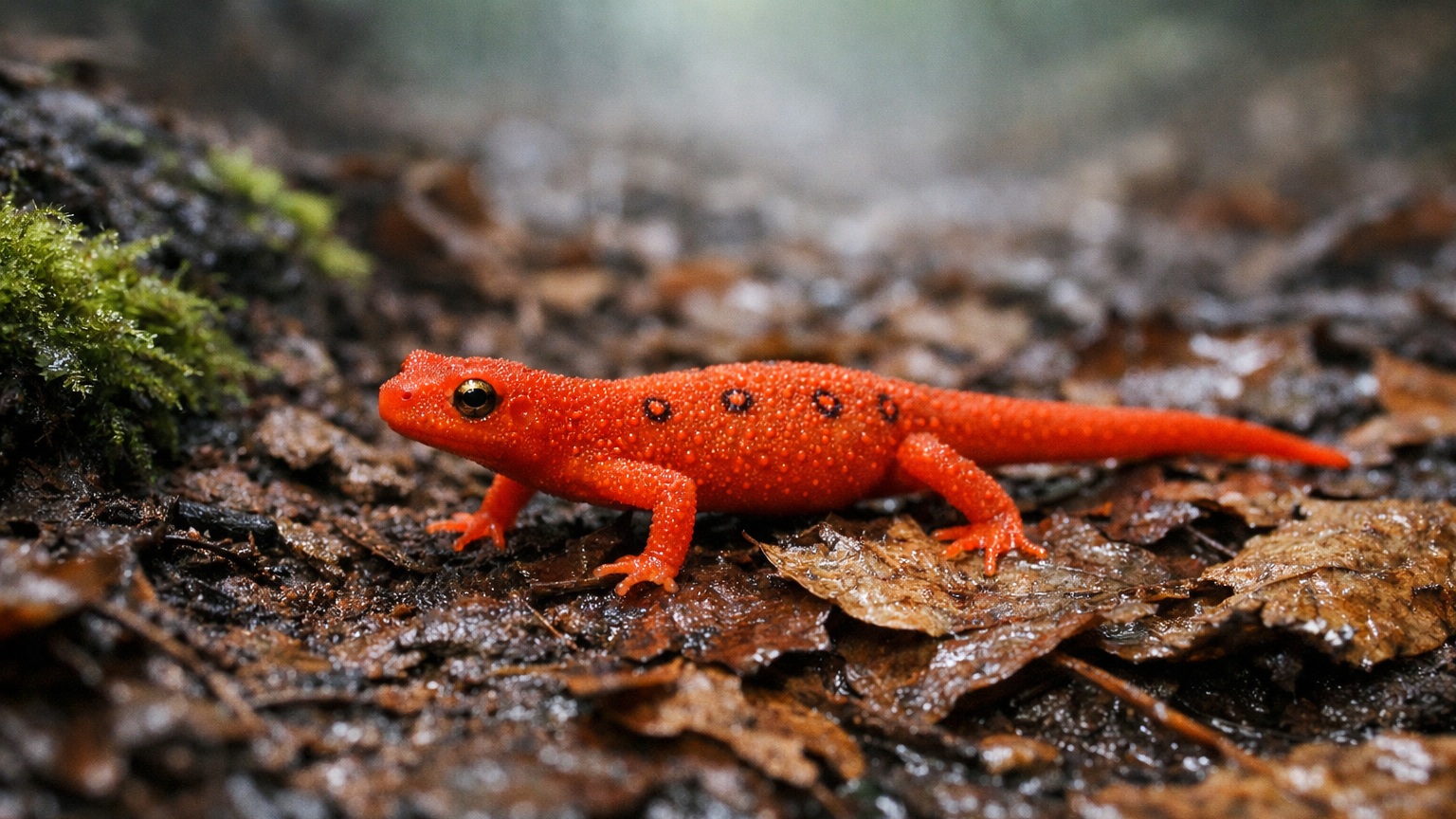
The red-spotted newt, commonly associated with Notophthalmus viridescens viridescens, belongs to the broader eastern newt species, Notophthalmus viridescens, and is one of the most recognizable amphibians in eastern North America. It is small, quiet, and easy to overlook, yet it has one of the most dramatic life histories of any familiar woodland creature. In many places, people encounter it first as a glowing orange juvenile crossing damp forest trails after rain, then later learn that the same animal may return to water as a greenish adult marked with red spots. That layered identity is part of what makes the red-spotted newt so memorable. It is both a forest wanderer and a pond resident, and it changes its appearance and habits as it grows. For general readers, it offers a perfect example of how even a modest amphibian can reveal an extraordinary amount about adaptation, survival, and the rhythm of wild places.
A: It is the familiar spotted form of the eastern newt, often linked to the subspecies Notophthalmus viridescens viridescens.
A: Yes, the red eft is the bright juvenile land stage in the red-spotted newt’s life cycle.
A: They use ponds, marshes, shallow freshwater habitats, and nearby damp forests.
A: Their skin contains toxins that help discourage predators, so they should not be handled casually.
A: They eat small invertebrates such as insects, larvae, worms, and other tiny prey.
A: Adults are usually about 2.5 to 5 inches long.
A: Many can live around 12 to 15 years.
A: No, the juvenile eft stage is terrestrial before the adult returns to water.
A: The vivid color warns predators that the newt is chemically defended.
A: In many parts of their range they are still widespread, especially where wetland and forest habitat remain healthy.
More Than One Name, More Than One Identity
One reason the red-spotted newt can seem confusing at first is that common names overlap. Some sources use “eastern newt” for the species as a whole and “red-spotted newt” for a subspecies, while other public-facing references blend the names more casually when describing the familiar spotted form people actually see. Scientifically, the species is Notophthalmus viridescens, and animal references recognize several subspecies within that broader group, including the red-spotted newt.
That means the red-spotted newt is best understood not as a completely separate creature from the eastern newt, but as one especially well-known form within it. This distinction matters because it helps explain why so many descriptions of the red-spotted newt also include the classic three-stage life cycle associated with the eastern newt. It also helps readers understand why wildlife agencies, zoos, and field guides sometimes use the two names almost side by side.
A Life Cycle That Feels Like Three Different Animals
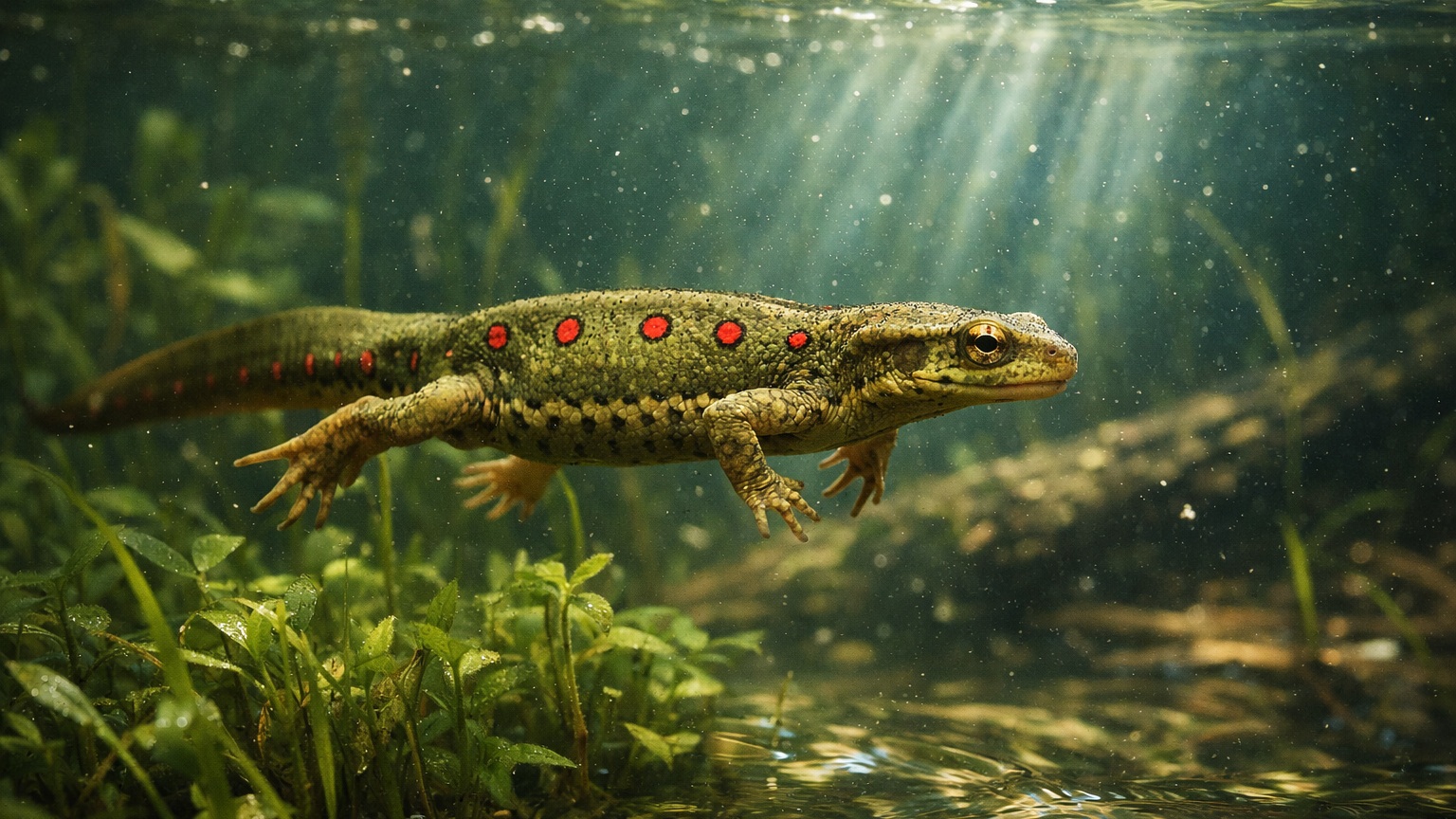
The red-spotted newt’s most fascinating feature is its three-part life cycle. It begins as an aquatic larva, living in freshwater and breathing with feathery external gills while feeding on tiny prey in ponds or marshy waters. After a period of early growth, it transforms into the terrestrial juvenile phase known as the eft, often called the red eft, which is the brilliantly orange-red stage many people notice on forest floors. After spending years on land, the eft typically returns to water and changes again into the aquatic adult, with greener or yellow-brown tones and a flatter tail built for swimming. Each of these stages comes with its own body plan, habitat use, and survival strategy, so the animal does not merely grow larger over time. It effectively shifts lifestyles, turning a single species into what feels like three different creatures connected by one continuous story.
The Famous Red Eft Stage
The red eft stage is the part of the life cycle that gives the red-spotted newt much of its public image. At this stage, the animal is bright orange to reddish orange, often with red or reddish spots bordered in darker pigment, and it may spend two to seven years on land before returning to water. That is a surprisingly long time for what many people assume is only a temporary juvenile phase, and it explains why the eft has become such a familiar woodland sight in some regions.
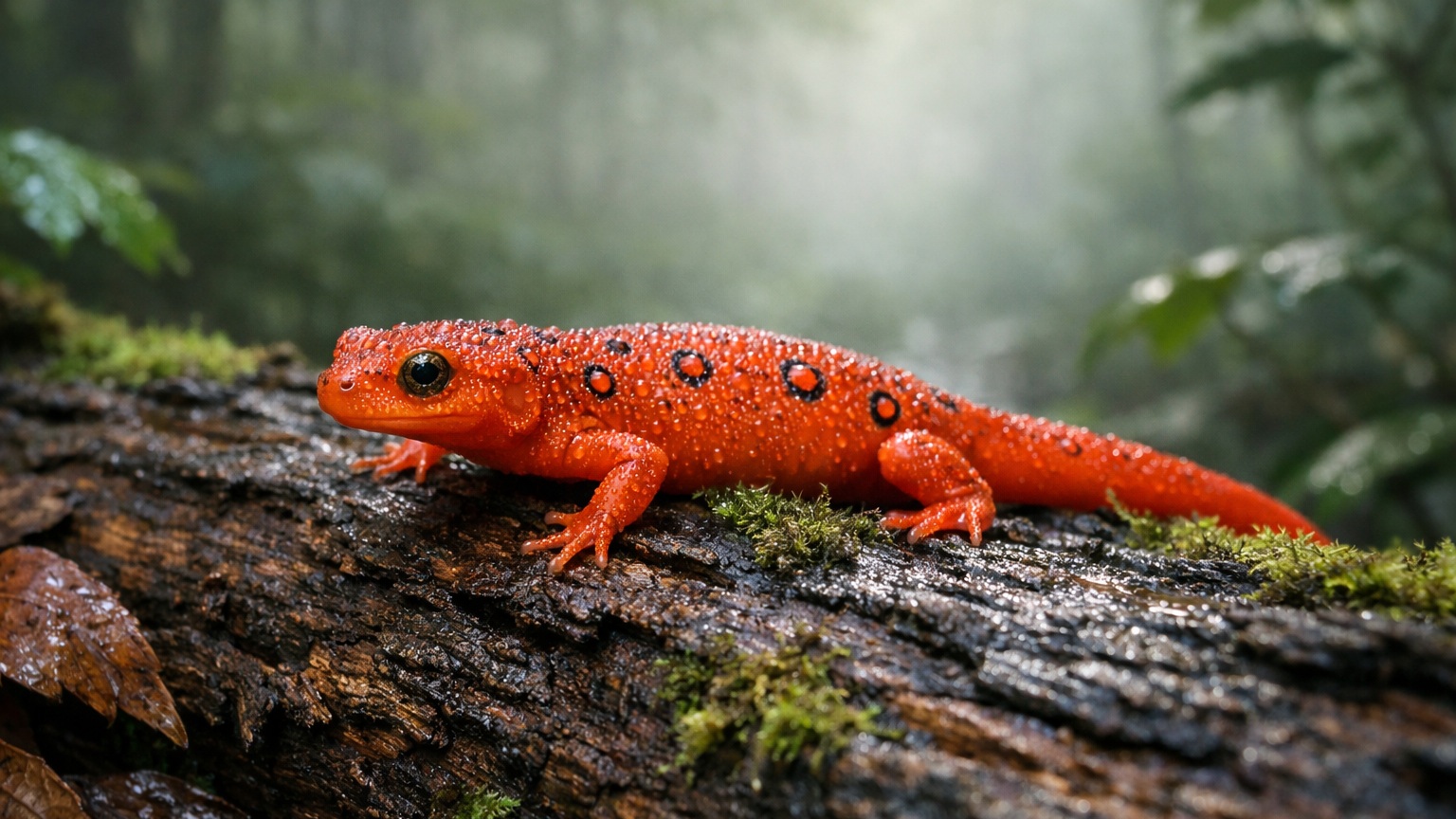
Efts are built for damp forest life, moving through leaf litter, moss, and wet ground cover rather than staying in open water. Their color is not just attractive but functional, acting as a warning to predators that this small amphibian is not an easy meal. Few native amphibians communicate danger so vividly, and that makes the red eft one of the most striking examples of warning coloration in eastern forests.
Where Red-Spotted Newts Live
Red-spotted newts and their close eastern newt relatives occupy a broad range across eastern North America, stretching from parts of Canada south to Florida and westward through the Great Lakes region into parts of the central and southern United States. Within that broad range, they favor small freshwater habitats such as ponds, marshes, shallow lakes, ditches, and slow-moving waters with vegetation and cover. The juvenile eft stage, however, shifts the story onto land, where damp forests and leaf litter become essential. This mix of aquatic and terrestrial habitat use is one reason the species has remained so ecologically successful. It can take advantage of pond environments for breeding and adult life while also using surrounding woodland as a dispersal zone during the eft stage. When readers imagine the red-spotted newt, the best picture is not a single habitat but a linked system of pond, wetland edge, and shaded forest.
Built for Moisture, Movement, and Survival
Physically, the red-spotted newt is a compact salamander-like amphibian with slightly rough, moist skin, small limbs, and a body built more for steady movement than speed. Adults are generally about 2.5 to 5 inches long, with greenish or yellow-brown tones and black-bordered red spots across the back, while juveniles in the eft stage are much brighter and more eye-catching. Larvae look different again, with gills and a more overtly aquatic form. Adult newts also develop a tail suited for swimming, which helps them navigate pond habitats efficiently once they return to water.
Moist skin remains central to their biology, as with many amphibians, and this is one reason they stay tied to humid conditions and freshwater systems. Their body is not dramatic in the way a large reptile or bird might be, but it is beautifully specialized for changing environments across the years.
Why the Color Matters
The red-spotted newt’s coloration is more than decoration. Public wildlife and zoo sources note that the red spots and bright juvenile colors signal toxicity, and scientific references cited by government and museum pages connect the animal to tetrodotoxin, a potent defensive chemical that makes it unpalatable to many predators. In the eft stage especially, the brilliant orange-red body functions as a warning, telling would-be attackers that eating this amphibian will be an unpleasant mistake. This strategy allows the newt to move openly through habitat where a dull-colored juvenile might need to hide more carefully. Even so, warning colors do not make the newt invincible, and some predators may still attack or learn to handle toxic prey. The important point is that the newt’s bright appearance is not accidental or merely aesthetic. It is a message written directly onto the body, and the forest has been reading that message for a very long time.
What It Eats at Every Stage
The red-spotted newt is carnivorous throughout its life, but the exact menu shifts with age and habitat. Larvae in the water feed on small aquatic organisms and invertebrates, while terrestrial efts hunt tiny land-based prey such as insects, worms, and other small invertebrates found in moist forest environments. Adults return to an aquatic diet that can include insect larvae and other available freshwater prey. This steady appetite for small animals makes the newt an active participant in local food webs rather than a passive pond resident.
It helps regulate invertebrate populations while also serving as prey itself, particularly in stages or situations where predators can overcome its defenses. For general readers, one of the easiest ways to understand the newt’s role is to think of it as a small but capable hunter that changes hunting grounds as its life changes course.
Daily Behavior in Forests and Ponds
Although red-spotted newts are not social performers in the way birds or mammals sometimes are, they lead active and surprisingly dynamic lives. Efts may travel considerable distances across land, and this wandering stage helps disperse individuals from one wetland system to another, reducing crowding and strengthening population mixing. Adults in water spend time moving through vegetation, foraging, and breeding seasonally, while both land and water stages rely on moisture, shelter, and suitable temperatures. The species is often associated with rainy periods or damp conditions because those moments reduce the risk of drying out and make travel safer. This is one reason hikers and naturalists often spot efts after wet weather, when the forest floor briefly becomes more hospitable to small amphibians. The newt’s behavior is quiet rather than flashy, but its movements reflect a sophisticated strategy for crossing landscapes that are never entirely stable.
Courtship, Eggs, and the Next Generation
Breeding usually takes place in water, often from late winter into early spring, depending on local conditions. Smithsonian’s animal profile notes that males court females with tail movements and pheromones, then deposit a spermatophore that the female picks up to fertilize her eggs internally. The female later attaches eggs individually to submerged vegetation or other objects in the water, which gives developing young some protection and spacing rather than leaving them in one exposed mass.
This method suits a species whose early life depends so heavily on freshwater habitat quality. Once the eggs hatch, larvae begin the aquatic first chapter of the cycle, growing toward the transformation that eventually produces the red eft. What makes this reproductive process especially elegant is how tightly it ties behavior, anatomy, and habitat together, with each stage preparing the next in a carefully timed sequence.
How Long They Live and Why That Matters
Red-spotted newts are not brief-lived amphibians. Public species profiles place the eastern newt and its familiar forms at roughly 12 to 15 years of life, which is longer than many casual observers might guess for a small pond-and-forest amphibian. That extended lifespan gives the animal time to move through its multiple life stages, survive changing seasonal conditions, and reproduce across more than one breeding season. It also means a newt seen crossing a trail one year may be part of a much longer local story than people realize. A healthy population is built not only from successful breeding but also from the survival of individuals over many years. Longevity, in that sense, is one of the hidden foundations of the species’ persistence across much of its range.
A Small but Important Part of the Ecosystem
In both ponds and forests, red-spotted newts help connect different layers of the ecosystem. They feed on invertebrates, interact with predators, and move nutrients and energy between aquatic and terrestrial environments as they pass through their stages. Because amphibians are often sensitive to pollution and habitat change, their presence can also tell biologists and naturalists something about local environmental quality. Newts are not the only indicator species in eastern wetlands, but they are among the more charismatic and memorable ones, especially because people may encounter them directly on trails or near ponds.
Their continued presence in a landscape often hints at functioning freshwater habitat, adequate cover, and enough moisture to support amphibian life over time. They are easy to underestimate because they are small, but ecologically they are woven into the ordinary workings of healthy wet places.
A Quiet Conservation Story
The red-spotted newt is not usually presented as a dramatic crisis species, and that is worth keeping in perspective. In some areas, wildlife agencies describe eastern or red-spotted newts as widespread and secure, which suggests that many populations remain stable enough to be a familiar part of the landscape. Still, like many amphibians, they depend on clean water, connected habitat, and damp terrestrial cover, so wetland loss, pollution, and broader environmental change can still create pressure. The conservation story here is quieter than for some headline species, but it is not meaningless. Protecting ponds, marshes, wooded buffers, and water quality helps this newt alongside countless other animals and plants. In that way, paying attention to the red-spotted newt is less about alarm and more about recognizing how much life depends on ordinary, healthy habitat.
Why the Red-Spotted Newt Keeps Capturing Attention
The red-spotted newt remains so appealing because it combines beauty, mystery, and familiarity in a single animal. It is small enough to fit in the palm of a hand, though it should be left undisturbed, yet its life story spans water, land, color change, chemical defense, and long-distance juvenile wandering. For children, hikers, gardeners, and wildlife enthusiasts, it often becomes a gateway species, an animal that sparks bigger questions about salamanders, amphibians, wetlands, and the hidden complexity of familiar woods.
For scientists, it is also a useful subject in studies of development, behavior, and ecology. That combination of accessibility and depth is rare. The red-spotted newt may not dominate headlines or tower over its habitat, but it has all the ingredients of a truly unforgettable wild creature.
Animal Product Reviews
Dive into Animal Streets’ Animal Product Reviews — your guide to the best gear, gifts, books, and gadgets inspired by the animal kingdom. From land-roaming lions to ocean-gliding whales, from household pets to prehistoric giants, we explore top-rated products for enthusiasts, educators, and animal lovers alike. Whether you’re shopping for toys, decor, field gear, or fun collectibles, we’ve sniffed out the best so you can discover it all in one wild place!