
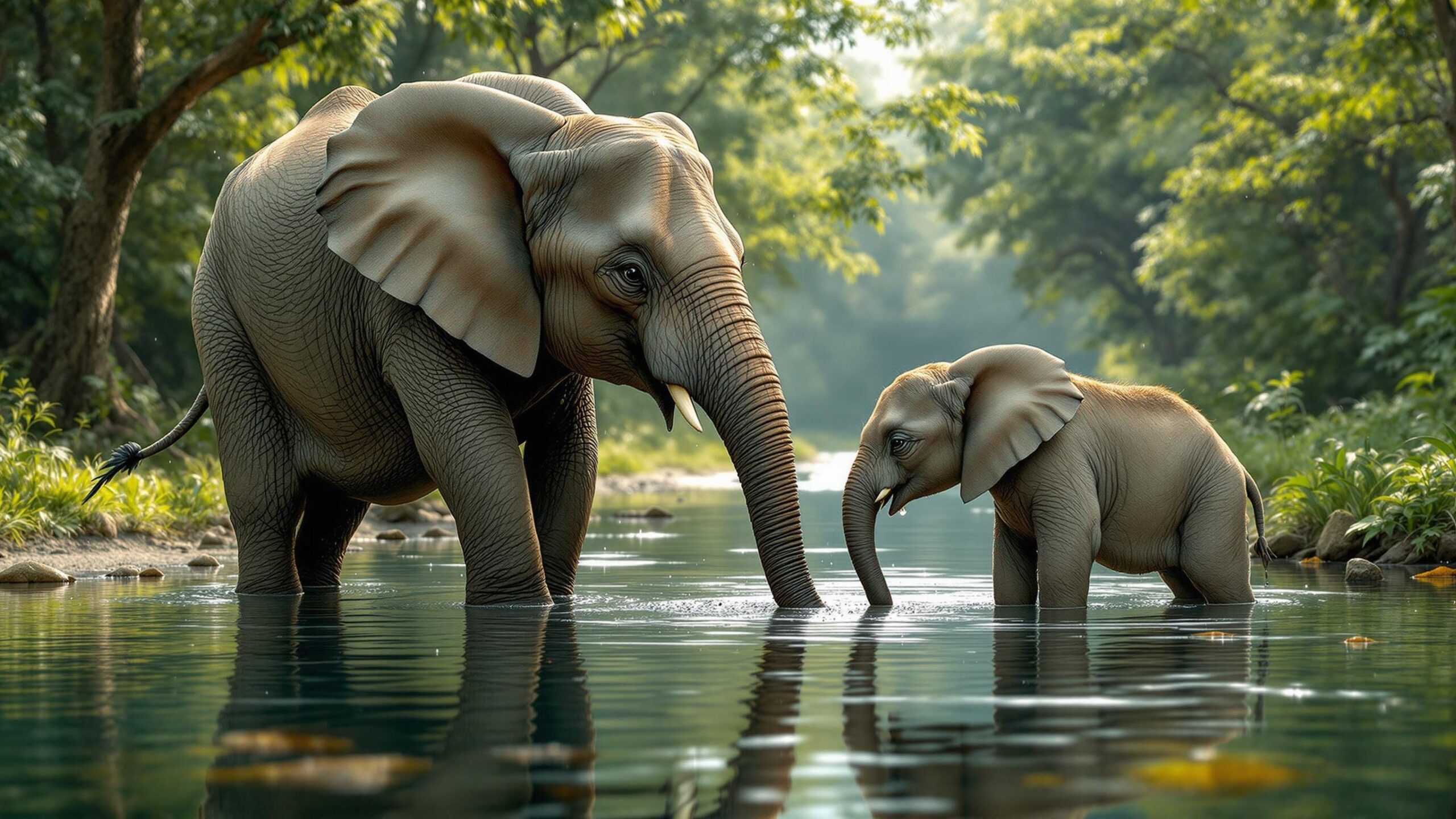
Giants of the Earth: The Spellbinding World of Elephants
Imagine stepping quietly into the golden haze of an African savanna at sunrise. A deep rumble vibrates the earth, and through the swirling dust, a herd of elephants emerges—trunks swinging, ears fanned wide, ancient eyes glimmering with intelligence and memory. There is no other animal that commands awe quite like the elephant. With their immense size, intricate social lives, and vital role in the ecosystems they inhabit, elephants have long captured the human imagination, becoming symbols of strength, wisdom, and endurance across continents and cultures. But elephants are not just the largest land mammals on the planet—they are keystone species, architects of the wild, and gentle giants whose family bonds and behaviors reveal striking parallels to our own. As you journey through this pillar page, you’ll discover the fascinating world of elephants, from the broad differences between their types to the extraordinary diversity within their species. Each sub-category of elephant holds its own wonders, stories, and secrets, waiting for you to explore further. Whether you are drawn to the drama of the African savanna or the lush green jungles of Asia, the world of elephants offers an endless invitation to marvel, learn, and care.
Taxonomy And Identity
But elephants are not just the largest land mammals on the planet—they are keystone species, architects of the wild, and gentle giants whose family bonds and behaviors reveal striking parallels to our own. Elephants belong to the family Elephantidae, which is part of the order Proboscidea—a group that once included mammoths and mastodons. These social bonds are not confined to family; elephants have been observed forming friendships with individuals from other herds, rescuing unrelated calves in distress, and showing empathy to wounded or grieving animals.
Their smaller herds, family-centric culture, and adaptability make them resilient but vulnerable to the pressures of modern life. Elephants is best understood through its anatomy, habitat, diet, behavior, and place in its ecosystem. Elephants is best understood through its anatomy, habitat, diet, behavior, and place in its ecosystem.
Identification And Appearance
A deep rumble vibrates the earth, and through the swirling dust, a herd of elephants emerges—trunks swinging, ears fanned wide, ancient eyes glimmering with intelligence and memory. With their immense size, intricate social lives, and vital role in the ecosystems they inhabit, elephants have long captured the human imagination, becoming symbols of strength, wisdom, and endurance across continents and cultures. Each sub-category of elephant holds its own wonders, stories, and secrets, waiting for you to explore further.
A deep rumble vibrates the earth, and through the swirling dust, a herd of elephants emerges—trunks swinging, ears fanned wide, ancient eyes glimmering with intelligence and memory. With their immense size, intricate social lives, and vital role in the ecosystems they inhabit, elephants have long captured the human imagination, becoming symbols of strength, wisdom, and endurance across continents and cultures. Body form, markings, movement, and habitat work together to separate this animal from close relatives and lookalikes.
Anatomy And Adaptations
Elephants are defined by their extraordinary adaptations: massive size (adult males can weigh over 13,000 pounds), distinctive trunks that serve as multi-tool appendages, and enormous ears that act as natural air conditioners. Their thick, wrinkled skin protects them from harsh weather, and their ivory tusks—tragically the source of human conflict—are elongated incisor teeth used for digging, foraging, and defense. Each of these groups brings its own set of unique adaptations, behaviors, and ecological significance.
Both species face enormous challenges, from habitat loss to ivory poaching, yet their resilience and adaptability are awe-inspiring. Their ancestors, the mammoths and mastodons, roamed Eurasia and the Americas during the Ice Age, adapting to diverse climates and environments. DNA studies reveal the evolutionary connections between today’s species, shedding light on their migrations and adaptations over millions of years.
Range And Wild Habitat
Asian elephants live in matriarchal herds similar to African elephants, though their groups are often smaller and their ranges more fragmented due to human development. They are known for their intelligence, playful curiosity, and close bonds with both herd members and, in some regions, humans. Habitat loss due to agriculture, mining, and urbanization fragments their ranges, leading to conflict with people.
Their range extends across East and Southern Africa, from the Serengeti to the Okavango Delta. In some regions, you may find legendary “tuskers”—males with enormous ivory, towering above their peers. From land-roaming lions to ocean-gliding whales, from household pets to prehistoric giants, we explore top-rated products for enthusiasts, educators, and animal lovers alike.
Wild Diet And Feeding
The matriarch, an experienced female, leads the herd in finding water, food, and safety—her wisdom essential for survival in an unpredictable world. Low-frequency rumbles, too deep for humans to hear, carry information over miles, alerting distant herds to food, danger, or the arrival of a new calf. Their sheer size allows them to knock down trees, opening up dense woodlands and enabling grasses to thrive, supporting a vast web of herbivores and predators.
Without elephants, many habitats would collapse, triggering a cascade of losses throughout the food chain. But elephants also face serious threats from human activity. Their thick, wrinkled skin protects them from harsh weather, and their ivory tusks—tragically the source of human conflict—are elongated incisor teeth used for digging, foraging, and defense.
Behavior
With their immense size, intricate social lives, and vital role in the ecosystems they inhabit, elephants have long captured the human imagination, becoming symbols of strength, wisdom, and endurance across continents and cultures. But elephants are not just the largest land mammals on the planet—they are keystone species, architects of the wild, and gentle giants whose family bonds and behaviors reveal striking parallels to our own. They grieve their dead, recognize themselves in mirrors, and even show signs of cultural transmission, passing behaviors down through generations.
With their immense size, intricate social lives, and vital role in the ecosystems they inhabit, elephants have long captured the human imagination, becoming symbols of strength, wisdom, and endurance across continents and cultures. But elephants are not just the largest land mammals on the planet—they are keystone species, architects of the wild, and gentle giants whose family bonds and behaviors reveal striking parallels to our own. Behavior is easiest to understand when daily movement, social contact, communication, and risk avoidance are considered together.
Reproduction And Life Cycle
With their immense size, intricate social lives, and vital role in the ecosystems they inhabit, elephants have long captured the human imagination, becoming symbols of strength, wisdom, and endurance across continents and cultures. But elephants are not just the largest land mammals on the planet—they are keystone species, architects of the wild, and gentle giants whose family bonds and behaviors reveal striking parallels to our own. Elephants are defined by their extraordinary adaptations: massive size (adult males can weigh over 13,000 pounds), distinctive trunks that serve as multi-tool appendages, and enormous ears that act as natural air conditioners.
They grieve their dead, recognize themselves in mirrors, and even show signs of cultural transmission, passing behaviors down through generations. Each of these groups brings its own set of unique adaptations, behaviors, and ecological significance. The differences between them go far beyond size and geography, reaching into their physical features, social organization, and daily lives.
Ecology And Role In The Environment
With their immense size, intricate social lives, and vital role in the ecosystems they inhabit, elephants have long captured the human imagination, becoming symbols of strength, wisdom, and endurance across continents and cultures. But elephants are not just the largest land mammals on the planet—they are keystone species, architects of the wild, and gentle giants whose family bonds and behaviors reveal striking parallels to our own. Elephants are also ecosystem engineers, shaping their environments in ways that benefit countless other species.
From digging water holes during droughts to dispersing seeds in their dung, elephants are guardians of biodiversity and balance. Each of these groups brings its own set of unique adaptations, behaviors, and ecological significance. Forest elephants play a crucial ecological role as “mega-gardeners” of the jungle, dispersing seeds of rare trees and creating trails that open up the forest for other animals.
Conservation Status And Threats
Both species face enormous challenges, from habitat loss to ivory poaching, yet their resilience and adaptability are awe-inspiring. In India, Thailand, and Myanmar, elephants have long worked alongside people as laborers, ceremonial animals, and even partners in forest conservation projects. But as forests shrink and wild populations decline, the survival of Asian elephants now hinges on a delicate balance between tradition, conservation, and the pressures of a rapidly changing world.
Habitat loss due to agriculture, mining, and urbanization fragments their ranges, leading to conflict with people. Ivory poaching, though illegal, continues to endanger populations, while climate change alters migration patterns and water availability. In some places, populations are stabilizing or even increasing, thanks to tireless efforts by conservationists, local communities, and international organizations.
Human Relationship
With their immense size, intricate social lives, and vital role in the ecosystems they inhabit, elephants have long captured the human imagination, becoming symbols of strength, wisdom, and endurance across continents and cultures. Their thick, wrinkled skin protects them from harsh weather, and their ivory tusks—tragically the source of human conflict—are elongated incisor teeth used for digging, foraging, and defense. Socially, elephants form close-knit matriarchal herds led by the oldest female, with intricate bonds and communication methods ranging from trumpet calls to infrasonic rumbles that travel miles underground.
With their immense size, intricate social lives, and vital role in the ecosystems they inhabit, elephants have long captured the human imagination, becoming symbols of strength, wisdom, and endurance across continents and cultures. Their thick, wrinkled skin protects them from harsh weather, and their ivory tusks—tragically the source of human conflict—are elongated incisor teeth used for digging, foraging, and defense. Its daily life is shaped by where it moves, what it eats, how it avoids danger, and how it interacts with other animals.
Captive Care
Whether you are drawn to the drama of the African savanna or the lush green jungles of Asia, the world of elephants offers an endless invitation to marvel, learn, and care. Calves are cherished by all, with “aunties” helping to care for and protect them. Responsible care depends on matching space, diet, social conditions, climate, and veterinary oversight to the animal’s biology.
Wild And Captive Variation
Wild Elephants behavior reflects natural movement, feeding, breeding, and social conditions that cannot be reduced to a simple display setting. Captive or managed observations can help education and science in limited contexts, but they do not replace the ecological complexity of wild habitat. Differences between wild and managed settings are most useful when they clarify welfare, conservation, and natural history.
Similar Species
Asian elephants live in matriarchal herds similar to African elephants, though their groups are often smaller and their ranges more fragmented due to human development. Its daily life is shaped by where it moves, what it eats, how it avoids danger, and how it interacts with other animals. Its daily life is shaped by where it moves, what it eats, how it avoids danger, and how it interacts with other animals.
Common Misconceptions
The behaviors of Asian elephants are as captivating as their mythology. Iconic Elephants in Culture and Mythology Throughout history, elephants have held a special place in the hearts and minds of people around the world. Its daily life is shaped by where it moves, what it eats, how it avoids danger, and how it interacts with other animals.
FAQ
Sources
- https://animalstreets.com/mammals/land-mammals/elephants/ Organization: animalstreets.com Source type: Live page or linked source URL: https://animalstreets.com/mammals/land-mammals/elephants/ Information verified: Used for current-page extraction and source discovery; independent fact verification may still be required. Date checked: 2026-08-27 Reliability notes: Current page / internal source; use for audit context, not independent verification
- https://animalstreets.com/mammals-product-reviews/land-mammals-product-reviews/ Organization: animalstreets.com Source type: Live page or linked source URL: https://animalstreets.com/mammals-product-reviews/land-mammals-product-reviews/ Information verified: Used for current-page extraction and source discovery; independent fact verification may still be required. Date checked: 2026-08-27 Reliability notes: Current page / internal source; use for audit context, not independent verification
- https://animalstreets.com/mammals/land-mammals/elephants/african-elephants/ Organization: animalstreets.com Source type: Live page or linked source URL: https://animalstreets.com/mammals/land-mammals/elephants/african-elephants/ Information verified: Used for current-page extraction and source discovery; independent fact verification may still be required. Date checked: 2026-08-27 Reliability notes: Current page / internal source; use for audit context, not independent verification
- https://animalstreets.com/mammals/land-mammals/elephants/asian-elephants/ Organization: animalstreets.com Source type: Live page or linked source URL: https://animalstreets.com/mammals/land-mammals/elephants/asian-elephants/ Information verified: Used for current-page extraction and source discovery; independent fact verification may still be required. Date checked: 2026-08-27 Reliability notes: Current page / internal source; use for audit context, not independent verification
- https://animalstreets.com/animal-product-reviews/ Organization: animalstreets.com Source type: Live page or linked source URL: https://animalstreets.com/animal-product-reviews/ Information verified: Used for current-page extraction and source discovery; independent fact verification may still be required. Date checked: 2026-08-27 Reliability notes: Current page / internal source; use for audit context, not independent verification