
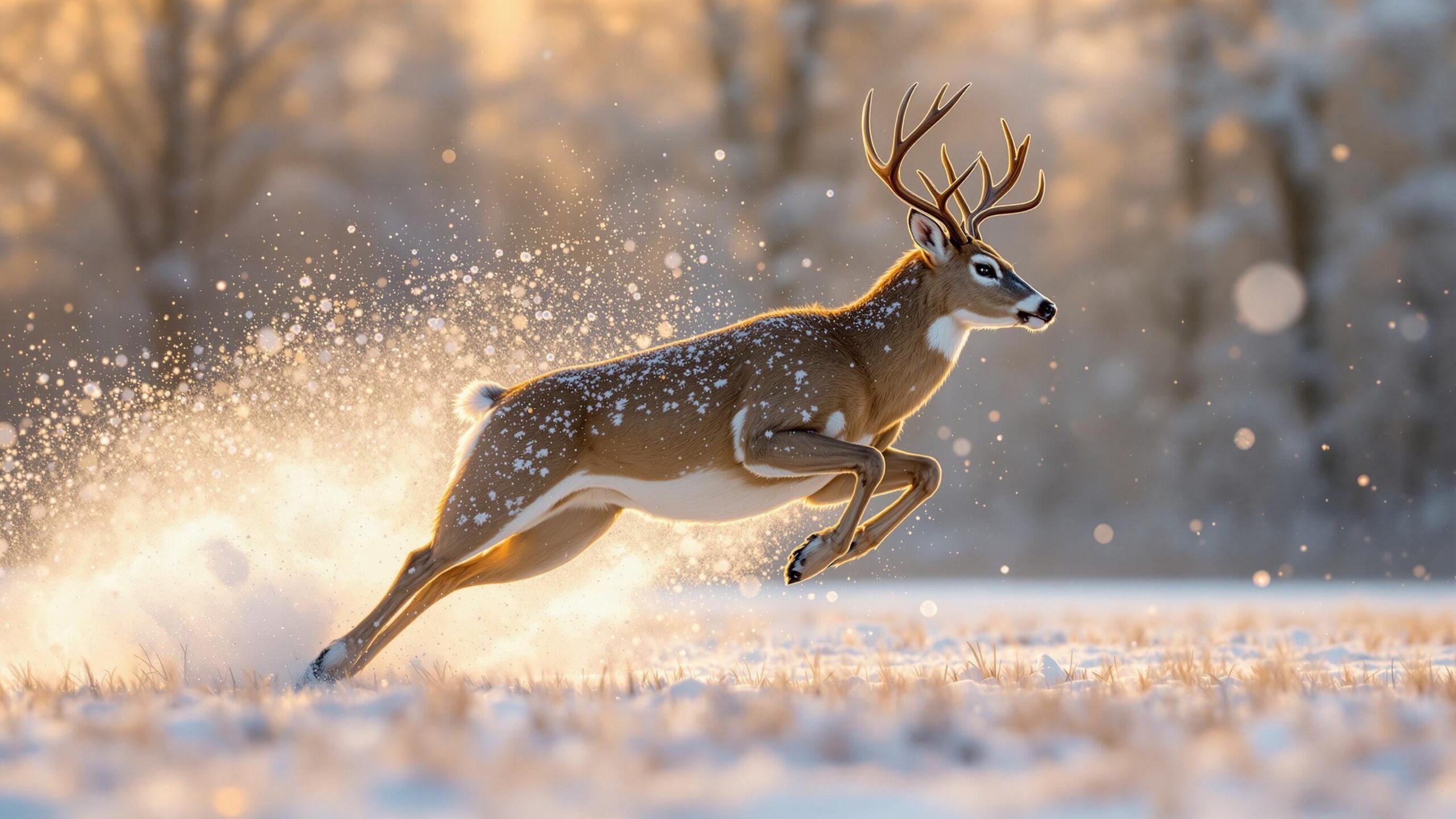
Deer: Graceful Stewards of Forest and Field
There’s a certain magic that happens when you see a deer in the wild. The hush of the forest, the flick of a white tail, the quiet crunch of hooves on fallen leaves—it all combines into a moment of quiet wonder. Whether bounding across an open field at dusk or standing statue-still in dense woodland, deer seem to embody the delicate balance between strength and serenity. They are creatures of grace and power, evolutionarily honed for survival, and spread across continents in astonishing variety. From the towering moose of the north to the tiny pudu of South America, the deer family is one of the most widespread and ecologically influential mammal groups on Earth. This article dives into the fascinating world of deer, offering a comprehensive look at their biology, behaviors, and the diversity that defines this elegant animal category. We’ll begin with a broad overview of what makes deer unique, then explore the major sub-categories of deer—including cervines like red deer and elk, diminutive species like muntjacs and pudus, and the sprawling white-tailed deer family. Along the way, we’ll uncover the roles deer play in their ecosystems, how they’ve adapted to survive in vastly different habitats, and why they continue to captivate humans across cultures and generations.
Taxonomy And Identity
From the towering moose of the north to the tiny pudu of South America, the deer family is one of the most widespread and ecologically influential mammal groups on Earth. We’ll begin with a broad overview of what makes deer unique, then explore the major sub-categories of deer—including cervines like red deer and elk, diminutive species like muntjacs and pudus, and the sprawling white-tailed deer family. Males grow enormous, broad antlers that can span over six feet wide, making them one of the most distinctive members of the deer family.
The tufted deer, named for the shock of dark hair on its forehead and the prominent fangs of the male, adds to the mystery and diversity of the deer family. The deer is best understood through its anatomy, habitat, diet, behavior, and place in its ecosystem. The deer is best understood through its anatomy, habitat, diet, behavior, and place in its ecosystem.
Identification And Appearance
The hush of the forest, the flick of a white tail, the quiet crunch of hooves on fallen leaves—it all combines into a moment of quiet wonder. Whether bounding across an open field at dusk or standing statue-still in dense woodland, deer seem to embody the delicate balance between strength and serenity. This article dives into the fascinating world of deer, offering a comprehensive look at their biology, behaviors, and the diversity that defines this elegant animal category.
We’ll begin with a broad overview of what makes deer unique, then explore the major sub-categories of deer—including cervines like red deer and elk, diminutive species like muntjacs and pudus, and the sprawling white-tailed deer family. Body form, markings, movement, and habitat work together to separate this animal from close relatives and lookalikes. Body form, markings, movement, and habitat work together to separate this animal from close relatives and lookalikes.
Anatomy And Adaptations
Along the way, we’ll uncover the roles deer play in their ecosystems, how they’ve adapted to survive in vastly different habitats, and why they continue to captivate humans across cultures and generations. Known for its large, mule-like ears, graceful movements, and remarkable adaptability, this majestic deer species inhabits a wide range of environments—from the arid deserts of the Southwest to the alpine slopes of the Rocky Mountains. With a rich cultural legacy, fascinating biological adaptations, and an unparalleled role in Arctic ecosystems, reindeer capture the imagination of scientists, storytellers, and wildlife enthusiasts alike.
Deer are highly adaptable creatures, found in a wide range of environments from tundra and temperate forests to grasslands, swamps, and tropical jungles. Red deer are incredibly adaptable, thriving in both open fields and dense woodland, and are often seen grazing at dawn and dusk. Agile, alert, and surprisingly elusive for their numbers, white-tailed deer have adapted extraordinarily well to human-altered landscapes.
Range And Wild Habitat
Known for its large, mule-like ears, graceful movements, and remarkable adaptability, this majestic deer species inhabits a wide range of environments—from the arid deserts of the Southwest to the alpine slopes of the Rocky Mountains. Deer are highly adaptable creatures, found in a wide range of environments from tundra and temperate forests to grasslands, swamps, and tropical jungles. Elk ( Cervus canadensis ), known as wapiti in their native North America, are among the largest deer species in the world.
Sika deer and fallow deer, while smaller, have carved out niches in woodlands and parklands, especially in areas where they’ve been introduced outside their native ranges. Sika deer are native to East Asia but have established populations in parts of Europe and the United States. The hush of the forest, the flick of a white tail, the quiet crunch of hooves on fallen leaves—it all combines into a moment of quiet wonder.
Wild Diet And Feeding
Despite their variety, all deer share some essential characteristics: they are herbivores with cloven hooves, they rely on keen senses of hearing and smell to detect predators, and, most famously, males (and in some species, females) grow antlers—a defining feature that sets them apart from other ungulates like goats or antelope. This incredible feat of regeneration is unmatched among mammals and has fascinated scientists for decades. They are also a crucial food source for predators, forming the backbone of many terrestrial food webs.
Their diet is highly varied, including everything from tree buds and garden plants to agricultural crops. They are strong swimmers, able to dive to the bottoms of lakes and rivers in search of aquatic plants—a favorite food source. They have thick fur, large hooves for walking on snow, and an extraordinary sense of smell for locating food beneath the snowpack.
Behavior
This article dives into the fascinating world of deer, offering a comprehensive look at their biology, behaviors, and the diversity that defines this elegant animal category. With its massive antlers, long legs, and oddly majestic silhouette, the Moose reigns over boreal forests, wetlands, and tundra like a solitary monarch. Behavior is easiest to understand when daily movement, social contact, communication, and risk avoidance are considered together.
Reproduction And Life Cycle
Once fully formed, the velvet is shed and the bone beneath is used in displays of dominance and combat during mating season. Spread across Europe, Asia, and North America, these species tend to inhabit forests, meadows, and highlands and are known for their elaborate antlers and dramatic mating rituals. Its daily life is shaped by where it moves, what it eats, how it avoids danger, and how it interacts with other animals.
Ecology And Role In The Environment
From the towering moose of the north to the tiny pudu of South America, the deer family is one of the most widespread and ecologically influential mammal groups on Earth. Along the way, we’ll uncover the roles deer play in their ecosystems, how they’ve adapted to survive in vastly different habitats, and why they continue to captivate humans across cultures and generations. With a rich cultural legacy, fascinating biological adaptations, and an unparalleled role in Arctic ecosystems, reindeer capture the imagination of scientists, storytellers, and wildlife enthusiasts alike.
Despite their variety, all deer share some essential characteristics: they are herbivores with cloven hooves, they rely on keen senses of hearing and smell to detect predators, and, most famously, males (and in some species, females) grow antlers—a defining feature that sets them apart from other ungulates like goats or antelope. Their role in ecosystems is equally varied. They are also a crucial food source for predators, forming the backbone of many terrestrial food webs.
Conservation Status And Threats
Sika deer are native to East Asia but have established populations in parts of Europe and the United States. While they play a vital role in forest ecology—helping to disperse seeds and shape undergrowth—they can also become problematic when populations grow unchecked. Their presence indicates healthy wetlands and forests, but like many large mammals, they are vulnerable to habitat fragmentation, climate change, and vehicle collisions.
Rarely seen, they are considered a conservation priority due to habitat loss and their limited distribution. Its daily life is shaped by where it moves, what it eats, how it avoids danger, and how it interacts with other animals. Its daily life is shaped by where it moves, what it eats, how it avoids danger, and how it interacts with other animals.
Human Relationship
Along the way, we’ll uncover the roles deer play in their ecosystems, how they’ve adapted to survive in vastly different habitats, and why they continue to captivate humans across cultures and generations. With their towering antlers, haunting bugles, and graceful power, elk have long captured the imagination of people across cultures and centuries. As the fourth-largest deer species in the world, this awe-inspiring mammal has captivated human imagination for thousands of years—appearing in prehistoric cave paintings, royal hunting tapestries, and countless legends.
Along the way, we’ll uncover the roles deer play in their ecosystems, how they’ve adapted to survive in vastly different habitats, and why they continue to captivate humans across cultures and generations. With their towering antlers, haunting bugles, and graceful power, elk have long captured the imagination of people across cultures and centuries. Its daily life is shaped by where it moves, what it eats, how it avoids danger, and how it interacts with other animals.
Captive Care
Deer is best treated as a wild animal whose needs depend on large habitat space, natural diet, social conditions, and specialist veterinary knowledge. Public education, rescue, rehabilitation, or accredited conservation work may be relevant in some cases, but casual private care is not an appropriate frame. The safest human role is to support habitat protection, responsible viewing, and professional wildlife care when intervention is truly needed.
Wild And Captive Variation
They are creatures of grace and power, evolutionarily honed for survival, and spread across continents in astonishing variety. Despite their variety, all deer share some essential characteristics: they are herbivores with cloven hooves, they rely on keen senses of hearing and smell to detect predators, and, most famously, males (and in some species, females) grow antlers—a defining feature that sets them apart from other ungulates like goats or antelope. Fallow deer, with their palmate antlers and varied coat patterns, have long been a favorite of ornamental parklands and are often seen in semi-domesticated settings.
Similar Species
Unlike many deer species, moose are largely solitary and rarely form herds. Its daily life is shaped by where it moves, what it eats, how it avoids danger, and how it interacts with other animals. Its daily life is shaped by where it moves, what it eats, how it avoids danger, and how it interacts with other animals.
Common Misconceptions
This article dives into the fascinating world of deer, offering a comprehensive look at their biology, behaviors, and the diversity that defines this elegant animal category. Along the way, we’ll uncover the roles deer play in their ecosystems, how they’ve adapted to survive in vastly different habitats, and why they continue to captivate humans across cultures and generations. Towering above all other deer species, the Moose combines size, strength, and a touch of awkward charm into one unforgettable creature.
Known for its large, mule-like ears, graceful movements, and remarkable adaptability, this majestic deer species inhabits a wide range of environments—from the arid deserts of the Southwest to the alpine slopes of the Rocky Mountains. With a rich cultural legacy, fascinating biological adaptations, and an unparalleled role in Arctic ecosystems, reindeer capture the imagination of scientists, storytellers, and wildlife enthusiasts alike. Despite their variety, all deer share some essential characteristics: they are herbivores with cloven hooves, they rely on keen senses of hearing and smell to detect predators, and, most famously, males (and in some species, females) grow antlers—a defining feature that sets them apart from other ungulates like goats or antelope.
FAQ
How does the Deer behave?
This article dives into the fascinating world of deer, offering a comprehensive look at their biology, behaviors, and the diversity that defines this elegant animal category. With its massive antlers, long legs, and oddly majestic silhouette, the Moose reigns over boreal forests, wetlands, and tundra like a solitary monarch. Its daily life is shaped by where it moves, what it eats, how it avoids danger, and how it interacts with other animals.
Sources
- https://animalstreets.com/mammals/land-mammals/hoofed-mammals/deer/ Organization: animalstreets.com Source type: Live page or linked source URL: https://animalstreets.com/mammals/land-mammals/hoofed-mammals/deer/ Information verified: Used for current-page extraction and source discovery; independent fact verification may still be required. Date checked: 2026-08-27 Reliability notes: Current page / internal source; use for audit context, not independent verification
- https://animalstreets.com/mammals-product-reviews/land-mammals-product-reviews/ Organization: animalstreets.com Source type: Live page or linked source URL: https://animalstreets.com/mammals-product-reviews/land-mammals-product-reviews/ Information verified: Used for current-page extraction and source discovery; independent fact verification may still be required. Date checked: 2026-08-27 Reliability notes: Current page / internal source; use for audit context, not independent verification
- https://animalstreets.com/mammals/land-mammals/hoofed-mammals/deer/elk/ Organization: animalstreets.com Source type: Live page or linked source URL: https://animalstreets.com/mammals/land-mammals/hoofed-mammals/deer/elk/ Information verified: Used for current-page extraction and source discovery; independent fact verification may still be required. Date checked: 2026-08-27 Reliability notes: Current page / internal source; use for audit context, not independent verification
- https://animalstreets.com/mammals/land-mammals/hoofed-mammals/deer/moose/ Organization: animalstreets.com Source type: Live page or linked source URL: https://animalstreets.com/mammals/land-mammals/hoofed-mammals/deer/moose/ Information verified: Used for current-page extraction and source discovery; independent fact verification may still be required. Date checked: 2026-08-27 Reliability notes: Current page / internal source; use for audit context, not independent verification
- https://animalstreets.com/mammals/land-mammals/hoofed-mammals/deer/mule-deer/ Organization: animalstreets.com Source type: Live page or linked source URL: https://animalstreets.com/mammals/land-mammals/hoofed-mammals/deer/mule-deer/ Information verified: Used for current-page extraction and source discovery; independent fact verification may still be required. Date checked: 2026-08-27 Reliability notes: Current page / internal source; use for audit context, not independent verification
- https://animalstreets.com/mammals/land-mammals/hoofed-mammals/deer/red-deer/ Organization: animalstreets.com Source type: Live page or linked source URL: https://animalstreets.com/mammals/land-mammals/hoofed-mammals/deer/red-deer/ Information verified: Used for current-page extraction and source discovery; independent fact verification may still be required. Date checked: 2026-08-27 Reliability notes: Current page / internal source; use for audit context, not independent verification
- https://animalstreets.com/mammals/land-mammals/hoofed-mammals/deer/reindeer/ Organization: animalstreets.com Source type: Live page or linked source URL: https://animalstreets.com/mammals/land-mammals/hoofed-mammals/deer/reindeer/ Information verified: Used for current-page extraction and source discovery; independent fact verification may still be required. Date checked: 2026-08-27 Reliability notes: Current page / internal source; use for audit context, not independent verification
- https://animalstreets.com/mammals/land-mammals/hoofed-mammals/deer/white-tailed-deer/ Organization: animalstreets.com Source type: Live page or linked source URL: https://animalstreets.com/mammals/land-mammals/hoofed-mammals/deer/white-tailed-deer/ Information verified: Used for current-page extraction and source discovery; independent fact verification may still be required. Date checked: 2026-08-27 Reliability notes: Current page / internal source; use for audit context, not independent verification