
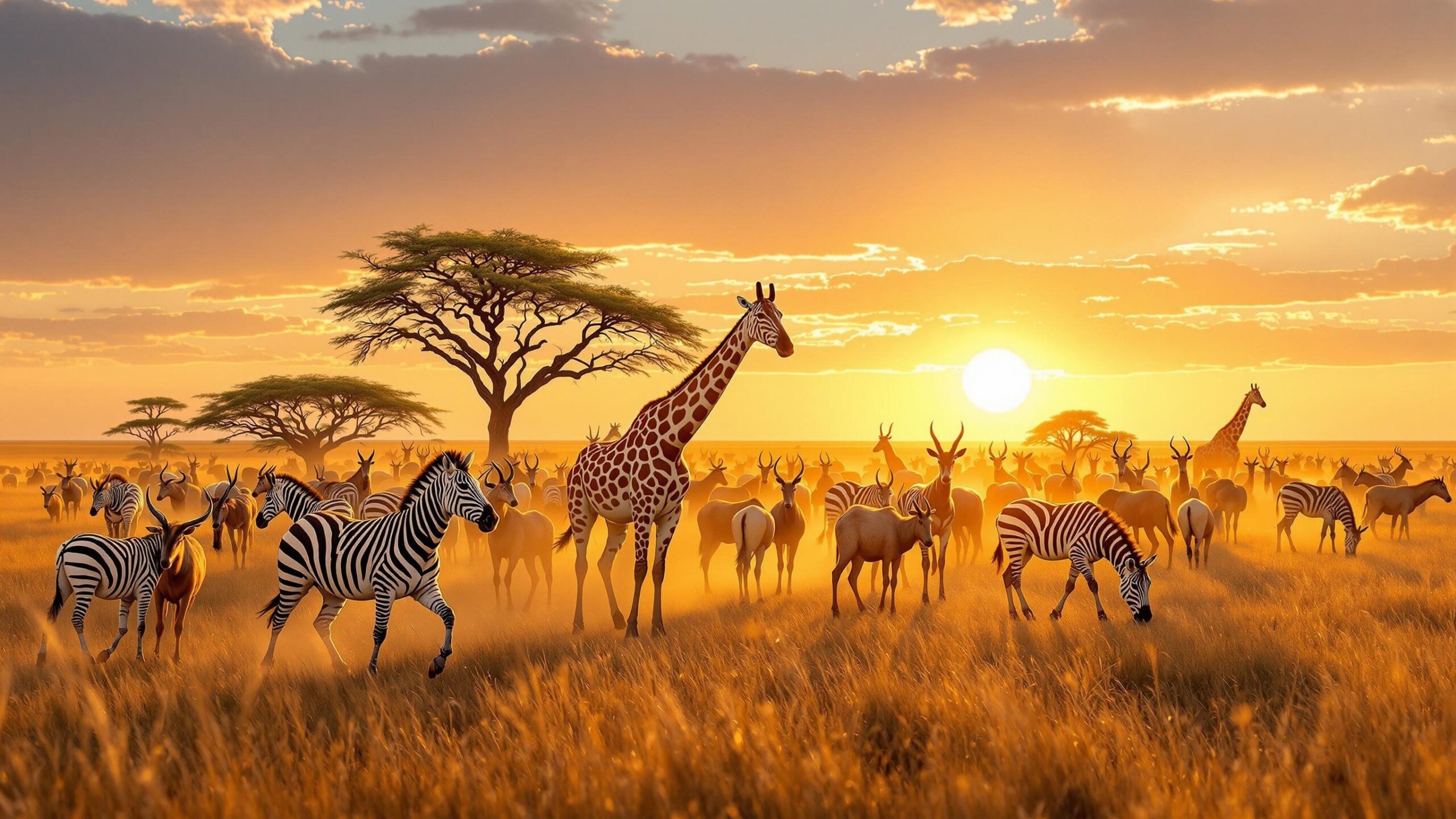
Hoofed Mammals: The Earthbound Giants and Fleet-Footed Nomads
Across the world’s grasslands, forests, mountains, and deserts, a powerful and diverse group of mammals roams, grazes, gallops, and occasionally leaps with spectacular force. These are the hoofed mammals—creatures that range from the towering giraffes of the African savannah to the elusive mountain goats of alpine cliffs. Known to scientists as ungulates, hoofed mammals make up one of the most ecologically influential and visually iconic categories in the animal kingdom. From antelopes and deer to horses, rhinos, and pigs, they form a vital thread in the fabric of life on Earth. Hoofed mammals are united by a common feature: their weight-bearing toes are encased in hardened keratin structures known as hooves. These evolutionary adaptations offer speed, durability, and support for locomotion over various terrains. Whether browsing in dense forests, sprinting across savannahs, or climbing near-vertical rock faces, ungulates are perfectly tailored to survive—and thrive—in demanding environments. This article explores the fascinating world of hoofed mammals, beginning with their defining characteristics and then diving into the major sub-groups. Each subgroup reveals a unique branch of evolutionary strategy, ecological role, and often remarkable behavior. Together, they demonstrate the stunning versatility of hoofed life.
Taxonomy And Identity
Their wild cousins, the vicuña and guanaco, graze on sparse vegetation in high-altitude grasslands and exhibit social structures based on family groups. Hoofed mammals is best understood through its anatomy, habitat, diet, behavior, and place in its ecosystem. Hoofed mammals is best understood through its anatomy, habitat, diet, behavior, and place in its ecosystem.
Identification And Appearance
Hoofed mammals are united by a common feature: their weight-bearing toes are encased in hardened keratin structures known as hooves. Whether browsing in dense forests, sprinting across savannahs, or climbing near-vertical rock faces, ungulates are perfectly tailored to survive—and thrive—in demanding environments. This article explores the fascinating world of hoofed mammals, beginning with their defining characteristics and then diving into the major sub-groups.
Hoofed mammals are united by a common feature: their weight-bearing toes are encased in hardened keratin structures known as hooves. Whether browsing in dense forests, sprinting across savannahs, or climbing near-vertical rock faces, ungulates are perfectly tailored to survive—and thrive—in demanding environments. Body form, markings, movement, and habitat work together to separate this animal from close relatives and lookalikes.
Anatomy And Adaptations
These evolutionary adaptations offer speed, durability, and support for locomotion over various terrains. Whether browsing in dense forests, sprinting across savannahs, or climbing near-vertical rock faces, ungulates are perfectly tailored to survive—and thrive—in demanding environments. Giraffes, the tallest land animals, browse acacia trees in African savannahs with long prehensile tongues and necks that function as feeding adaptations and combat tools in neck-swinging contests known as “necking.” Antelopes are a diverse group found primarily in Africa and parts of Asia.
Wild boars and domestic pigs are omnivorous, intelligent, and adaptable. Body form, markings, movement, and habitat work together to separate this animal from close relatives and lookalikes. Body form, markings, movement, and habitat work together to separate this animal from close relatives and lookalikes.
Range And Wild Habitat
These are the hoofed mammals—creatures that range from the towering giraffes of the African savannah to the elusive mountain goats of alpine cliffs. Their reproductive strategies range from seasonal rutting competitions to prolonged maternal care of single offspring. Many are migratory, following food sources across vast distances, while others maintain tight territorial control over smaller ranges.
Llamas and alpacas are domesticated species native to the Andes. Rhinoceroses are ancient, armor-plated browsers and grazers found in Africa and Asia. Tapirs are forest-dwelling browsers found in Central and South America and Southeast Asia.
Wild Diet And Feeding
Ungulates are herbivores with digestive systems specialized for processing large quantities of plant material. Many are migratory, following food sources across vast distances, while others maintain tight territorial control over smaller ranges. Species like white-tailed deer, elk, and moose are keystone herbivores in North American and Eurasian forests.
Many antelopes are prey for large carnivores and rely on acute senses and agility for survival. They provide meat, milk, hides, wool, and serve as beasts of burden. Despite their size and power, rhinos face grave threats from poaching and habitat loss.
Behavior
Each subgroup reveals a unique branch of evolutionary strategy, ecological role, and often remarkable behavior. These mammals are often social, forming herds, bands, or harems. Many are migratory, following food sources across vast distances, while others maintain tight territorial control over smaller ranges.
Each subgroup reveals a unique branch of evolutionary strategy, ecological role, and often remarkable behavior. These mammals are often social, forming herds, bands, or harems. Behavior is easiest to understand when daily movement, social contact, communication, and risk avoidance are considered together.
Reproduction And Life Cycle
Their reproductive strategies range from seasonal rutting competitions to prolonged maternal care of single offspring. Its daily life is shaped by where it moves, what it eats, how it avoids danger, and how it interacts with other animals. Its daily life is shaped by where it moves, what it eats, how it avoids danger, and how it interacts with other animals.
Ecology And Role In The Environment
Known to scientists as ungulates, hoofed mammals make up one of the most ecologically influential and visually iconic categories in the animal kingdom. Each subgroup reveals a unique branch of evolutionary strategy, ecological role, and often remarkable behavior. With their slender frames, swift strides, and an elegance that seems to flow with the wind, antelopes are among the most visually stunning and ecologically vital mammals in the animal kingdom.
Species like white-tailed deer, elk, and moose are keystone herbivores in North American and Eurasian forests. Many antelopes are prey for large carnivores and rely on acute senses and agility for survival. Often overshadowed by their more famous relatives, tapirs are important seed dispersers and indicators of forest health.
Conservation Status And Threats
Despite their size and power, rhinos face grave threats from poaching and habitat loss. Human Connections and Conservation Challenges Ungulates have long been intertwined with human civilization. Habitat fragmentation, overhunting, poaching, competition with livestock, and climate change all imperil their populations.
Some species—such as the saola of Southeast Asia or the addax of the Sahara—are critically endangered and rarely seen. Conservation efforts include protected areas, wildlife corridors, sustainable herding practices, and ecotourism initiatives. Its daily life is shaped by where it moves, what it eats, how it avoids danger, and how it interacts with other animals.
Human Relationship
With their deep cultural significance, economic importance, and impressive biological traits, cattle are far more than mere barnyard fixtures—they are one of the most pivotal domesticated animals in human history. For thousands of years, they have walked beside humankind—hauling water across deserts, carrying kings across mountains, and forging civilizations in some of the harshest places on Earth. Its daily life is shaped by where it moves, what it eats, how it avoids danger, and how it interacts with other animals.
Captive Care
Whether it’s in the wild under the golden African sun or behind the glass of a zoo enclosure, giraffes have a way of capturing our imagination. Their reproductive strategies range from seasonal rutting competitions to prolonged maternal care of single offspring. Responsible care depends on matching space, diet, social conditions, climate, and veterinary oversight to the animal’s biology.
Wild And Captive Variation
With their deep cultural significance, economic importance, and impressive biological traits, cattle are far more than mere barnyard fixtures—they are one of the most pivotal domesticated animals in human history. Domestic ruminants—cattle, goats, and sheep—have shaped human history. Wild boars and domestic pigs are omnivorous, intelligent, and adaptable.
Similar Species
Hoofed mammals are united by a common feature: their weight-bearing toes are encased in hardened keratin structures known as hooves. These evolutionary adaptations offer speed, durability, and support for locomotion over various terrains. Each subgroup reveals a unique branch of evolutionary strategy, ecological role, and often remarkable behavior.
In Artiodactyls, weight is distributed equally between the third and fourth toes, while in Perissodactyls, the third toe is the primary support. This distinction influences how they walk, run, and maneuver through their habitats. Their reproductive strategies range from seasonal rutting competitions to prolonged maternal care of single offspring.
Common Misconceptions
From the domestication of cattle and horses to cultural symbols like the reindeer of the Arctic and the sacred cows of India, hoofed mammals occupy a special place in myth, economy, and heritage. Its daily life is shaped by where it moves, what it eats, how it avoids danger, and how it interacts with other animals. Its daily life is shaped by where it moves, what it eats, how it avoids danger, and how it interacts with other animals.
FAQ
What is a Hoofed Mammals?
Their wild cousins, the vicuña and guanaco, graze on sparse vegetation in high-altitude grasslands and exhibit social structures based on family groups. Hoofed mammals are united by a common feature: their weight-bearing toes are encased in hardened keratin structures known as hooves. These evolutionary adaptations offer speed, durability, and support for locomotion over various terrains.
Sources
- https://animalstreets.com/mammals/land-mammals/hoofed-mammals/ Organization: animalstreets.com Source type: Live page or linked source URL: https://animalstreets.com/mammals/land-mammals/hoofed-mammals/ Information verified: Used for current-page extraction and source discovery; independent fact verification may still be required. Date checked: 2026-08-27 Reliability notes: Current page / internal source; use for audit context, not independent verification
- https://animalstreets.com/mammals-product-reviews/land-mammals-product-reviews/ Organization: animalstreets.com Source type: Live page or linked source URL: https://animalstreets.com/mammals-product-reviews/land-mammals-product-reviews/ Information verified: Used for current-page extraction and source discovery; independent fact verification may still be required. Date checked: 2026-08-27 Reliability notes: Current page / internal source; use for audit context, not independent verification
- https://animalstreets.com/mammals/land-mammals/hoofed-mammals/antelope/ Organization: animalstreets.com Source type: Live page or linked source URL: https://animalstreets.com/mammals/land-mammals/hoofed-mammals/antelope/ Information verified: Used for current-page extraction and source discovery; independent fact verification may still be required. Date checked: 2026-08-27 Reliability notes: Current page / internal source; use for audit context, not independent verification
- https://animalstreets.com/mammals/land-mammals/hoofed-mammals/camels/ Organization: animalstreets.com Source type: Live page or linked source URL: https://animalstreets.com/mammals/land-mammals/hoofed-mammals/camels/ Information verified: Used for current-page extraction and source discovery; independent fact verification may still be required. Date checked: 2026-08-27 Reliability notes: Current page / internal source; use for audit context, not independent verification
- https://animalstreets.com/mammals/land-mammals/hoofed-mammals/cattle/ Organization: animalstreets.com Source type: Live page or linked source URL: https://animalstreets.com/mammals/land-mammals/hoofed-mammals/cattle/ Information verified: Used for current-page extraction and source discovery; independent fact verification may still be required. Date checked: 2026-08-27 Reliability notes: Current page / internal source; use for audit context, not independent verification
- https://animalstreets.com/mammals/land-mammals/hoofed-mammals/deer/ Organization: animalstreets.com Source type: Live page or linked source URL: https://animalstreets.com/mammals/land-mammals/hoofed-mammals/deer/ Information verified: Used for current-page extraction and source discovery; independent fact verification may still be required. Date checked: 2026-08-27 Reliability notes: Current page / internal source; use for audit context, not independent verification
- https://animalstreets.com/mammals/land-mammals/hoofed-mammals/donkeys/ Organization: animalstreets.com Source type: Live page or linked source URL: https://animalstreets.com/mammals/land-mammals/hoofed-mammals/donkeys/ Information verified: Used for current-page extraction and source discovery; independent fact verification may still be required. Date checked: 2026-08-27 Reliability notes: Current page / internal source; use for audit context, not independent verification
- https://animalstreets.com/mammals/land-mammals/hoofed-mammals/giraffes/ Organization: animalstreets.com Source type: Live page or linked source URL: https://animalstreets.com/mammals/land-mammals/hoofed-mammals/giraffes/ Information verified: Used for current-page extraction and source discovery; independent fact verification may still be required. Date checked: 2026-08-27 Reliability notes: Current page / internal source; use for audit context, not independent verification