
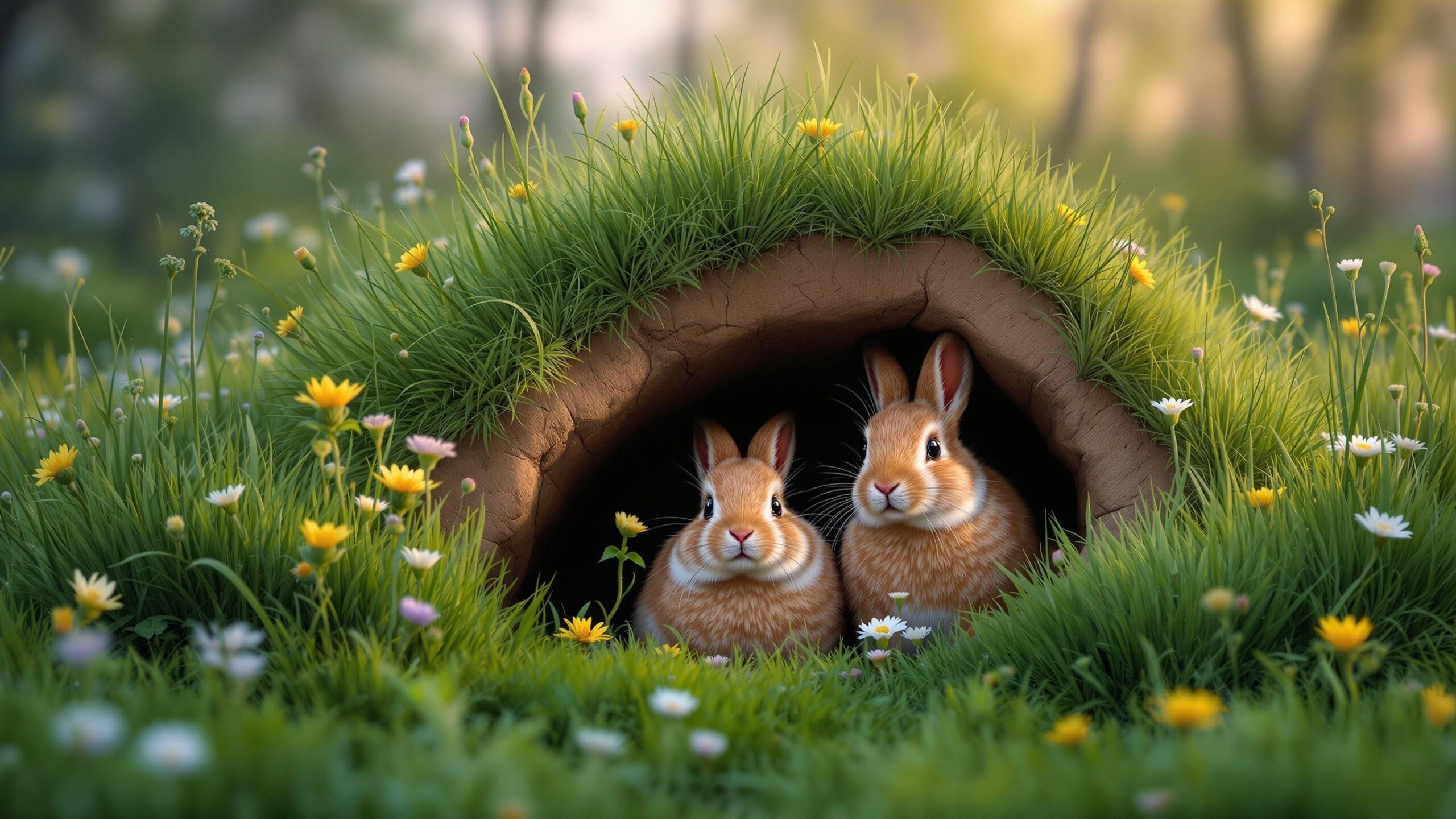
Rabbits, Hares, and Pikas: Nature’s Nimble Navigators of Field and Mountain
From the gentle rustle of grass in a spring meadow to the echo of chirps across alpine slopes, the world of rabbits, hares, and pikas pulses with quiet yet profound energy. These small mammals, often dismissed as mere prey animals, are actually resilient survivors, ecological contributors, and symbols of agility, fertility, and seasonal change. Found on nearly every continent and in nearly every biome, they are integral to the health of ecosystems and the traditions of human culture. Classified under the order Lagomorpha, rabbits, hares, and pikas are not rodents, though they are often mistaken as such. Lagomorphs have distinct biological features that set them apart, including an extra pair of incisors behind their main front teeth, a strictly herbivorous diet, and unique digestive systems that allow for efficient nutrient extraction from tough plant material. Though they are small and often elusive, their impact is vast, spanning predator-prey dynamics, seed dispersal, cultural symbolism, and even climate indicators. This article will journey through the diverse and fascinating world of these three groups—rabbits, hares, and pikas—offering insight into their adaptations, lifeways, and ecological roles, while highlighting some of the most iconic species within each group.
Taxonomy And Identity
Classified under the order Lagomorpha, rabbits, hares, and pikas are not rodents, though they are often mistaken as such. Rabbits, hares & pikas is best understood through its anatomy, habitat, diet, behavior, and place in its ecosystem. Rabbits, hares & pikas is best understood through its anatomy, habitat, diet, behavior, and place in its ecosystem.
Identification And Appearance
They are instantly recognizable yet surprisingly complex, creatures that have played roles in mythology, science, agriculture, and the wild ecosystems of every continent except Antarctica. Species like the European rabbit, eastern cottontail, and brush rabbit showcase the group’s adaptability to different environments. Domesticated rabbits, originally descended from wild European rabbits, are now common pets and agricultural animals raised for meat, fur, and manure.
They are instantly recognizable yet surprisingly complex, creatures that have played roles in mythology, science, agriculture, and the wild ecosystems of every continent except Antarctica. Species like the European rabbit, eastern cottontail, and brush rabbit showcase the group’s adaptability to different environments. Body form, markings, movement, and habitat work together to separate this animal from close relatives and lookalikes.
Anatomy And Adaptations
Lagomorphs have distinct biological features that set them apart, including an extra pair of incisors behind their main front teeth, a strictly herbivorous diet, and unique digestive systems that allow for efficient nutrient extraction from tough plant material. This article will journey through the diverse and fascinating world of these three groups—rabbits, hares, and pikas—offering insight into their adaptations, lifeways, and ecological roles, while highlighting some of the most iconic species within each group. Species like the European rabbit, eastern cottontail, and brush rabbit showcase the group’s adaptability to different environments.
Instead, hares live above ground, relying on speed and camouflage to evade predators. Species like the snowshoe hare, Arctic hare, and European brown hare exhibit seasonal coat changes or coloration adapted to their environments. The snowshoe hare’s white winter fur, for example, offers camouflage in snowy forests, while the jackrabbit’s large ears help dissipate heat in arid habitats.
Range And Wild Habitat
North American pikas, such as the American pika, live in mountainous regions like the Rockies and the Sierra Nevada. Asian pikas inhabit a range of mountainous areas across central Asia and the Himalayas. Though similar in appearance to their North American cousins, they exhibit a wider range of behaviors, with some species living in colonies and others leading solitary lives.
Pikas are ecosystem engineers in their own right, helping with soil development and plant distribution in alpine areas. In alpine systems, pikas are one of the few sources of high-energy prey, sustaining foxes and birds of prey in remote regions. Most rabbits are burrowers, living in complex tunnel systems called warrens that provide shelter, safety from predators, and stable microclimates.
Wild Diet And Feeding
These small mammals, often dismissed as mere prey animals, are actually resilient survivors, ecological contributors, and symbols of agility, fertility, and seasonal change. Lagomorphs have distinct biological features that set them apart, including an extra pair of incisors behind their main front teeth, a strictly herbivorous diet, and unique digestive systems that allow for efficient nutrient extraction from tough plant material. Though they are small and often elusive, their impact is vast, spanning predator-prey dynamics, seed dispersal, cultural symbolism, and even climate indicators.
Rabbits are crepuscular, active mainly at dawn and dusk, and feed on grasses, herbs, and woody plants, digesting their food twice through a process called hindgut fermentation. Rabbits are prey for a wide variety of carnivores, including foxes, hawks, and snakes, and their population dynamics often mirror the health of surrounding ecosystems. Domesticated rabbits, originally descended from wild European rabbits, are now common pets and agricultural animals raised for meat, fur, and manure.
Behavior
Known for their long limbs, keen senses, and solitary lifestyles, hares stand apart from their close relatives, the rabbits. They are intelligent, social, and capable of forming strong bonds with humans. Hares also influence vegetation through browsing and seed dispersal, and their alert, solitary nature makes them symbols of independence and vigilance.
Known for their long limbs, keen senses, and solitary lifestyles, hares stand apart from their close relatives, the rabbits. They are intelligent, social, and capable of forming strong bonds with humans. Behavior is easiest to understand when daily movement, social contact, communication, and risk avoidance are considered together.
Reproduction And Life Cycle
With their rounded bodies, large ears, and powerful hind legs, rabbits have become symbols of cuteness and caution, known for their twitchy noses and rapid reproduction. To understand lagomorphs is to understand how nature works in cycles of reproduction, predation, vegetation, and climate. Its daily life is shaped by where it moves, what it eats, how it avoids danger, and how it interacts with other animals.
Ecology And Role In The Environment
These small mammals, often dismissed as mere prey animals, are actually resilient survivors, ecological contributors, and symbols of agility, fertility, and seasonal change. Found on nearly every continent and in nearly every biome, they are integral to the health of ecosystems and the traditions of human culture. Though they are small and often elusive, their impact is vast, spanning predator-prey dynamics, seed dispersal, cultural symbolism, and even climate indicators.
This article will journey through the diverse and fascinating world of these three groups—rabbits, hares, and pikas—offering insight into their adaptations, lifeways, and ecological roles, while highlighting some of the most iconic species within each group. They are instantly recognizable yet surprisingly complex, creatures that have played roles in mythology, science, agriculture, and the wild ecosystems of every continent except Antarctica. Most rabbits are burrowers, living in complex tunnel systems called warrens that provide shelter, safety from predators, and stable microclimates.
Conservation Status And Threats
Rabbits are prey for a wide variety of carnivores, including foxes, hawks, and snakes, and their population dynamics often mirror the health of surrounding ecosystems. The snowshoe hare, in particular, has a well-documented predator-prey cycle with the Canada lynx, a relationship that has been studied as a classic example of ecological population oscillation. A single population of rabbits or hares can support entire communities of raptors, felines, canids, and reptiles.
Their burrows can prevent compaction, while overpopulation in some cases leads to agricultural conflict and land degradation. This dual role—as keystone species and potential pests—highlights the importance of balanced populations and informed management strategies. Pikas, less mythologized, are increasingly becoming icons of conservation and climate awareness.
Human Relationship
Found on nearly every continent and in nearly every biome, they are integral to the health of ecosystems and the traditions of human culture. Domesticated rabbits, originally descended from wild European rabbits, are now common pets and agricultural animals raised for meat, fur, and manure. They are intelligent, social, and capable of forming strong bonds with humans.
In traditional Asian medicine, pikas have even been hunted, though they are increasingly being recognized for their ecological value. Its daily life is shaped by where it moves, what it eats, how it avoids danger, and how it interacts with other animals. Its daily life is shaped by where it moves, what it eats, how it avoids danger, and how it interacts with other animals.
Captive Care
These animals are famous for their high-pitched warning calls and for being sensitive indicators of climate change, as rising temperatures threaten their alpine habitats. Pikas are especially vulnerable to warming temperatures, as they rely on cold climates and have limited dispersal capabilities. Responsible care depends on matching space, diet, social conditions, climate, and veterinary oversight to the animal’s biology.
Wild And Captive Variation
Classified under the order Lagomorpha, rabbits, hares, and pikas are not rodents, though they are often mistaken as such. Lagomorphs have distinct biological features that set them apart, including an extra pair of incisors behind their main front teeth, a strictly herbivorous diet, and unique digestive systems that allow for efficient nutrient extraction from tough plant material. Rabbits are prey for a wide variety of carnivores, including foxes, hawks, and snakes, and their population dynamics often mirror the health of surrounding ecosystems.
Similar Species
Classified under the order Lagomorpha, rabbits, hares, and pikas are not rodents, though they are often mistaken as such. Though similar in appearance to their North American cousins, they exhibit a wider range of behaviors, with some species living in colonies and others leading solitary lives. Its daily life is shaped by where it moves, what it eats, how it avoids danger, and how it interacts with other animals.
Common Misconceptions
Classified under the order Lagomorpha, rabbits, hares, and pikas are not rodents, though they are often mistaken as such. They are instantly recognizable yet surprisingly complex, creatures that have played roles in mythology, science, agriculture, and the wild ecosystems of every continent except Antarctica. Pikas, less mythologized, are increasingly becoming icons of conservation and climate awareness.
Classified under the order Lagomorpha, rabbits, hares, and pikas are not rodents, though they are often mistaken as such. They are instantly recognizable yet surprisingly complex, creatures that have played roles in mythology, science, agriculture, and the wild ecosystems of every continent except Antarctica. Its daily life is shaped by where it moves, what it eats, how it avoids danger, and how it interacts with other animals.
FAQ
What is a Rabbits, Hares & Pikas?
Classified under the order Lagomorpha, rabbits, hares, and pikas are not rodents, though they are often mistaken as such. These small mammals, often dismissed as mere prey animals, are actually resilient survivors, ecological contributors, and symbols of agility, fertility, and seasonal change. Lagomorphs have distinct biological features that set them apart, including an extra pair of incisors behind their main front teeth, a strictly herbivorous diet, and unique digestive systems that allow for efficient nutrient extraction from tough plant material.
Sources
- https://animalstreets.com/mammals/land-mammals/small-mammals/rabbits-hares-pikas/ Organization: animalstreets.com Source type: Live page or linked source URL: https://animalstreets.com/mammals/land-mammals/small-mammals/rabbits-hares-pikas/ Information verified: Used for current-page extraction and source discovery; independent fact verification may still be required. Date checked: 2026-08-27 Reliability notes: Current page / internal source; use for audit context, not independent verification
- https://animalstreets.com/mammals-product-reviews/land-mammals-product-reviews/ Organization: animalstreets.com Source type: Live page or linked source URL: https://animalstreets.com/mammals-product-reviews/land-mammals-product-reviews/ Information verified: Used for current-page extraction and source discovery; independent fact verification may still be required. Date checked: 2026-08-27 Reliability notes: Current page / internal source; use for audit context, not independent verification
- https://animalstreets.com/mammals/land-mammals/small-mammals/rabbits-hares-pikas/hares/ Organization: animalstreets.com Source type: Live page or linked source URL: https://animalstreets.com/mammals/land-mammals/small-mammals/rabbits-hares-pikas/hares/ Information verified: Used for current-page extraction and source discovery; independent fact verification may still be required. Date checked: 2026-08-27 Reliability notes: Current page / internal source; use for audit context, not independent verification
- https://animalstreets.com/mammals/land-mammals/small-mammals/rabbits-hares-pikas/pikas/ Organization: animalstreets.com Source type: Live page or linked source URL: https://animalstreets.com/mammals/land-mammals/small-mammals/rabbits-hares-pikas/pikas/ Information verified: Used for current-page extraction and source discovery; independent fact verification may still be required. Date checked: 2026-08-27 Reliability notes: Current page / internal source; use for audit context, not independent verification
- https://animalstreets.com/mammals/land-mammals/small-mammals/rabbits-hares-pikas/rabbits/ Organization: animalstreets.com Source type: Live page or linked source URL: https://animalstreets.com/mammals/land-mammals/small-mammals/rabbits-hares-pikas/rabbits/ Information verified: Used for current-page extraction and source discovery; independent fact verification may still be required. Date checked: 2026-08-27 Reliability notes: Current page / internal source; use for audit context, not independent verification
- https://animalstreets.com/animal-product-reviews/ Organization: animalstreets.com Source type: Live page or linked source URL: https://animalstreets.com/animal-product-reviews/ Information verified: Used for current-page extraction and source discovery; independent fact verification may still be required. Date checked: 2026-08-27 Reliability notes: Current page / internal source; use for audit context, not independent verification