
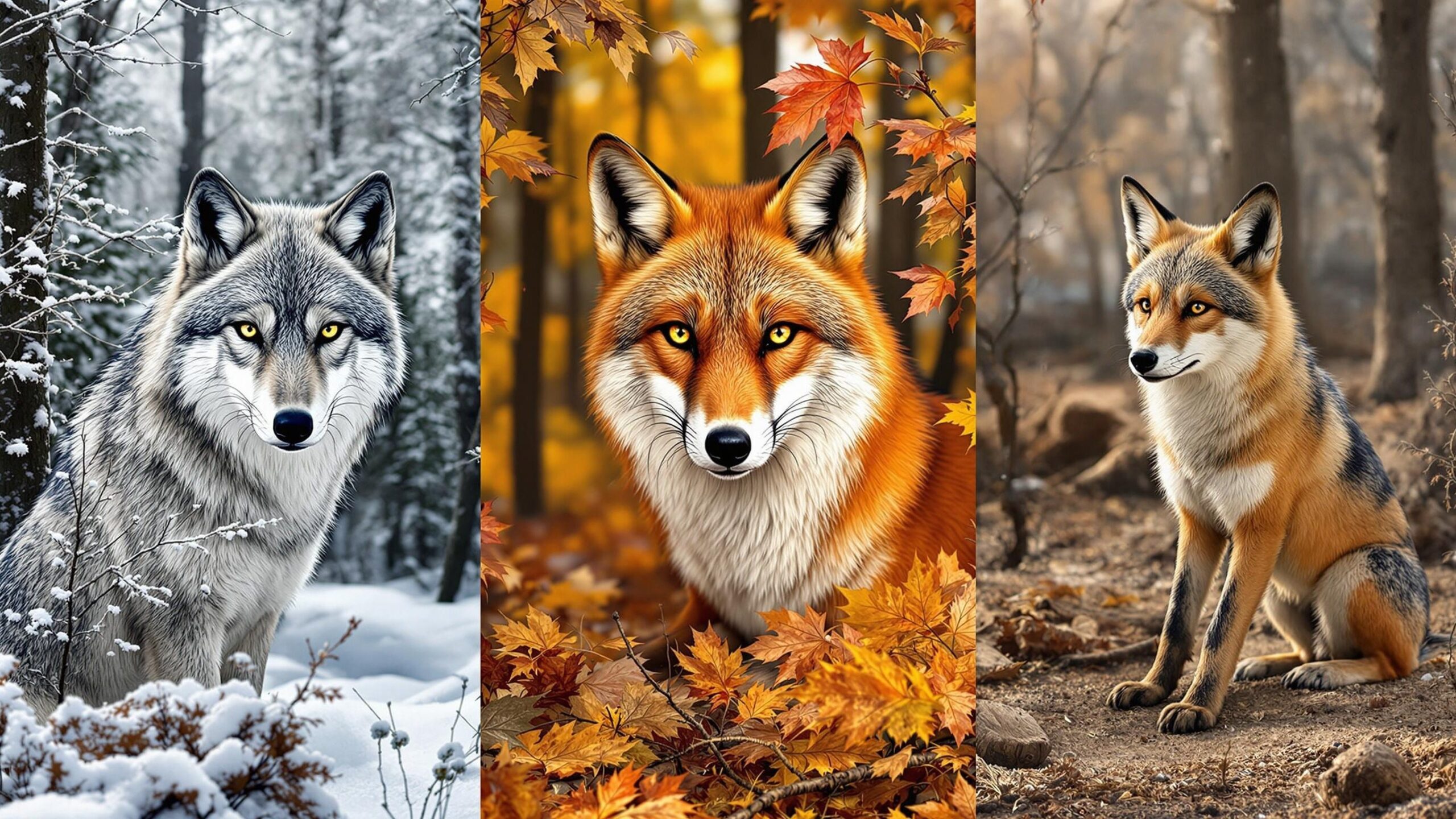
Wild Canids: Masters of Adaptation in the Animal Kingdom
There’s a primal thrill in watching a pack of wolves sprint across a snowy expanse, or seeing a jackal slink silently through tall savanna grass, or hearing the eerie whoop of an African wild dog echo across the plains. These are moments that stir something ancient in us—a deep-rooted connection to the wild. Wild dogs and their canine relatives, members of the biological family Canidae, are among the most diverse, intelligent, and ecologically significant carnivores on the planet. Found on every continent except Antarctica, these highly adaptive mammals have evolved into a dazzling variety of forms and lifestyles, from solitary desert foxes to tightly bonded wolf packs. Whether stalking prey as apex predators or scavenging with opportunistic cleverness, canines play crucial roles in maintaining the balance of ecosystems worldwide. This guide serves as a comprehensive introduction to the remarkable world of wild dogs and their close relatives. We’ll explore their evolutionary background, social complexity, hunting strategies, and the fascinating diversity that exists within this group. From the famous gray wolf to the lesser-known bush dog, each subgroup carries its own story of survival, adaptation, and beauty. These animals are not just survivors of the wild—they are architects of it.
Taxonomy And Identity
Wild dogs and their canine relatives, members of the biological family Canidae, are among the most diverse, intelligent, and ecologically significant carnivores on the planet. The Canidae family is divided into two broad categories: the “true dogs” or canines, which include wolves, foxes, jackals, and domestic dogs; and a few more primitive or isolated lineages like the South American bush dogs and African wild dogs. This diversity reflects the family’s extraordinary adaptability.
Let’s explore some of the major sub-groups that make up this fascinating animal family—each with its own set of adaptations, behaviors, and ecological roles. Wild canids is best understood through its anatomy, habitat, diet, behavior, and place in its ecosystem. Wild canids is best understood through its anatomy, habitat, diet, behavior, and place in its ecosystem.
Identification And Appearance
Their social bonds are deep, and their communication—howling, body language, scent-marking—is complex. Body form, markings, movement, and habitat work together to separate this animal from close relatives and lookalikes. Body form, markings, movement, and habitat work together to separate this animal from close relatives and lookalikes.
Anatomy And Adaptations
Found on every continent except Antarctica, these highly adaptive mammals have evolved into a dazzling variety of forms and lifestyles, from solitary desert foxes to tightly bonded wolf packs. From the famous gray wolf to the lesser-known bush dog, each subgroup carries its own story of survival, adaptation, and beauty. Sleek, cunning, and endlessly adaptable, coyotes are woven into the very fabric of North America’s wild identity.
This fleeting presence is the fox: clever, quiet, and endlessly adaptable. Today’s canids share a number of distinctive traits: a long snout, sharp canine teeth, excellent hearing and smell, and clawed paws built for endurance rather than stealth. Body form, markings, movement, and habitat work together to separate this animal from close relatives and lookalikes.
Range And Wild Habitat
Wolves once ranged across most of the Northern Hemisphere, from North America to Eurasia. Though their numbers have diminished due to human persecution and habitat loss, they are making a comeback in several regions, often sparking passionate debate about wildlife management and rewilding. Known as Lycaon pictus , this highly social and charismatic species is native to sub-Saharan Africa and is renowned for its hunting efficiency and cooperative behavior.
Red foxes can be found in forests, grasslands, deserts, mountains, and urban areas. Coyotes ( Canis latrans ) are native to North and Central America, while jackals are found across Africa and parts of Asia. Coyotes have rapidly expanded their range over the past century, now inhabiting nearly every corner of North America.
Wild Diet And Feeding
Wild dogs and their canine relatives, members of the biological family Canidae, are among the most diverse, intelligent, and ecologically significant carnivores on the planet. Whether stalking prey as apex predators or scavenging with opportunistic cleverness, canines play crucial roles in maintaining the balance of ecosystems worldwide. Wolves are capable of bringing down prey much larger than themselves, such as elk, moose, and bison, through teamwork and relentless pursuit.
Unlike other canines, African wild dogs have only four toes per foot and highly specialized teeth adapted for shearing meat. Prey includes impalas, gazelles, and other small to mid-sized ungulates. Most species are solitary hunters, relying on stealth, cunning, and a highly developed sense of hearing to find prey.
Behavior
Found on every continent except Antarctica, these highly adaptive mammals have evolved into a dazzling variety of forms and lifestyles, from solitary desert foxes to tightly bonded wolf packs. We’ll explore their evolutionary background, social complexity, hunting strategies, and the fascinating diversity that exists within this group. They communicate not with howls or barks but with high-pitched whistles that rise like birdcalls.
Found on every continent except Antarctica, these highly adaptive mammals have evolved into a dazzling variety of forms and lifestyles, from solitary desert foxes to tightly bonded wolf packs. We’ll explore their evolutionary background, social complexity, hunting strategies, and the fascinating diversity that exists within this group. Behavior is easiest to understand when daily movement, social contact, communication, and risk avoidance are considered together.
Reproduction And Life Cycle
Wolves live and hunt in tight-knit packs, usually composed of a dominant breeding pair and their offspring. It is tall and long-legged, with a fox-like face and reddish fur. Its favorite food is the lobeira fruit, sometimes called the “wolf apple.” Bush dogs ( Speothos venaticus ), on the other hand, are short-legged, pack-hunting animals that live in dense forests and wetlands.
As you explore individual species pages—each brimming with more detail, imagery, and wild insights—you’ll gain a deeper appreciation for these four-legged survivors. Its daily life is shaped by where it moves, what it eats, how it avoids danger, and how it interacts with other animals. Its daily life is shaped by where it moves, what it eats, how it avoids danger, and how it interacts with other animals.
Ecology And Role In The Environment
Wild dogs and their canine relatives, members of the biological family Canidae, are among the most diverse, intelligent, and ecologically significant carnivores on the planet. Whether stalking prey as apex predators or scavenging with opportunistic cleverness, canines play crucial roles in maintaining the balance of ecosystems worldwide. They are not lions, nor hyenas, nor jackals—but a different kind of predator entirely.
They are not just apex predators, but living symbols of wildness, resilience, and intricate social harmony. Let’s explore some of the major sub-groups that make up this fascinating animal family—each with its own set of adaptations, behaviors, and ecological roles. Wolves are capable of bringing down prey much larger than themselves, such as elk, moose, and bison, through teamwork and relentless pursuit.
Conservation Status And Threats
Wolves have captivated our imaginations for millennia, from cave paintings to mythologies, fairy tales to conservation debates. Though their numbers have diminished due to human persecution and habitat loss, they are making a comeback in several regions, often sparking passionate debate about wildlife management and rewilding. As apex predators, they help control ungulate populations and shape the structure of entire ecosystems, a phenomenon known as trophic cascade.
Close relatives include the Indian wolf, Himalayan wolf, and Ethiopian wolf—all adapted to specific ecological niches, and all facing unique conservation challenges. African wild dogs are critically endangered due to habitat fragmentation, human conflict, and disease transmission from domestic dogs. However, dedicated conservation programs and increasing awareness are helping protect remaining populations across reserves and wildlife corridors in Botswana, Tanzania, and South Africa.
Human Relationship
We’ll explore their evolutionary background, social complexity, hunting strategies, and the fascinating diversity that exists within this group. Its daily life is shaped by where it moves, what it eats, how it avoids danger, and how it interacts with other animals. Its daily life is shaped by where it moves, what it eats, how it avoids danger, and how it interacts with other animals.
Captive Care
Wild Canids is best treated as a wild animal whose needs depend on large habitat space, natural diet, social conditions, and specialist veterinary knowledge. Public education, rescue, rehabilitation, or accredited conservation work may be relevant in some cases, but casual private care is not an appropriate frame. The safest human role is to support habitat protection, responsible viewing, and professional wildlife care when intervention is truly needed.
Wild And Captive Variation
Found on every continent except Antarctica, these highly adaptive mammals have evolved into a dazzling variety of forms and lifestyles, from solitary desert foxes to tightly bonded wolf packs. The Canidae family is divided into two broad categories: the “true dogs” or canines, which include wolves, foxes, jackals, and domestic dogs; and a few more primitive or isolated lineages like the South American bush dogs and African wild dogs. Wolves live and hunt in tight-knit packs, usually composed of a dominant breeding pair and their offspring.
Similar Species
Unlike felines, who tend to be solitary hunters, many canids are deeply social animals, forming packs or mated pairs that rely on cooperation and communication. Unlike other canines, African wild dogs have only four toes per foot and highly specialized teeth adapted for shearing meat. It resembles a small wolf and plays a similar ecological role as a top predator in mountainous regions.
Unlike felines, who tend to be solitary hunters, many canids are deeply social animals, forming packs or mated pairs that rely on cooperation and communication. Unlike other canines, African wild dogs have only four toes per foot and highly specialized teeth adapted for shearing meat. Its daily life is shaped by where it moves, what it eats, how it avoids danger, and how it interacts with other animals.
Common Misconceptions
The sound belongs to the coyote, a creature of myth, mystery, and survival. Wolves have captivated our imaginations for millennia, from cave paintings to mythologies, fairy tales to conservation debates. Foxes are cultural staples in myth and folklore around the world—tricksters, shape-shifters, and clever guides.
The sound belongs to the coyote, a creature of myth, mystery, and survival. Wolves have captivated our imaginations for millennia, from cave paintings to mythologies, fairy tales to conservation debates. Its daily life is shaped by where it moves, what it eats, how it avoids danger, and how it interacts with other animals.
FAQ
How can someone identify a Wild Canids?
Their social bonds are deep, and their communication—howling, body language, scent-marking—is complex. Found on every continent except Antarctica, these highly adaptive mammals have evolved into a dazzling variety of forms and lifestyles, from solitary desert foxes to tightly bonded wolf packs. From the famous gray wolf to the lesser-known bush dog, each subgroup carries its own story of survival, adaptation, and beauty.
Sources
- https://animalstreets.com/mammals/land-mammals/wild-canids/ Organization: animalstreets.com Source type: Live page or linked source URL: https://animalstreets.com/mammals/land-mammals/wild-canids/ Information verified: Used for current-page extraction and source discovery; independent fact verification may still be required. Date checked: 2026-08-27 Reliability notes: Current page / internal source; use for audit context, not independent verification
- https://animalstreets.com/mammals-product-reviews/land-mammals-product-reviews/ Organization: animalstreets.com Source type: Live page or linked source URL: https://animalstreets.com/mammals-product-reviews/land-mammals-product-reviews/ Information verified: Used for current-page extraction and source discovery; independent fact verification may still be required. Date checked: 2026-08-27 Reliability notes: Current page / internal source; use for audit context, not independent verification
- https://animalstreets.com/mammals/land-mammals/wild-canids/african-wild-dogs/ Organization: animalstreets.com Source type: Live page or linked source URL: https://animalstreets.com/mammals/land-mammals/wild-canids/african-wild-dogs/ Information verified: Used for current-page extraction and source discovery; independent fact verification may still be required. Date checked: 2026-08-27 Reliability notes: Current page / internal source; use for audit context, not independent verification
- https://animalstreets.com/mammals/land-mammals/wild-canids/coyotes/ Organization: animalstreets.com Source type: Live page or linked source URL: https://animalstreets.com/mammals/land-mammals/wild-canids/coyotes/ Information verified: Used for current-page extraction and source discovery; independent fact verification may still be required. Date checked: 2026-08-27 Reliability notes: Current page / internal source; use for audit context, not independent verification
- https://animalstreets.com/mammals/land-mammals/wild-canids/dholes/ Organization: animalstreets.com Source type: Live page or linked source URL: https://animalstreets.com/mammals/land-mammals/wild-canids/dholes/ Information verified: Used for current-page extraction and source discovery; independent fact verification may still be required. Date checked: 2026-08-27 Reliability notes: Current page / internal source; use for audit context, not independent verification
- https://animalstreets.com/mammals/land-mammals/wild-canids/exotic-canids/ Organization: animalstreets.com Source type: Live page or linked source URL: https://animalstreets.com/mammals/land-mammals/wild-canids/exotic-canids/ Information verified: Used for current-page extraction and source discovery; independent fact verification may still be required. Date checked: 2026-08-27 Reliability notes: Current page / internal source; use for audit context, not independent verification
- https://animalstreets.com/mammals/land-mammals/wild-canids/fox/ Organization: animalstreets.com Source type: Live page or linked source URL: https://animalstreets.com/mammals/land-mammals/wild-canids/fox/ Information verified: Used for current-page extraction and source discovery; independent fact verification may still be required. Date checked: 2026-08-27 Reliability notes: Current page / internal source; use for audit context, not independent verification
- https://animalstreets.com/mammals/land-mammals/wild-canids/jackals/ Organization: animalstreets.com Source type: Live page or linked source URL: https://animalstreets.com/mammals/land-mammals/wild-canids/jackals/ Information verified: Used for current-page extraction and source discovery; independent fact verification may still be required. Date checked: 2026-08-27 Reliability notes: Current page / internal source; use for audit context, not independent verification