
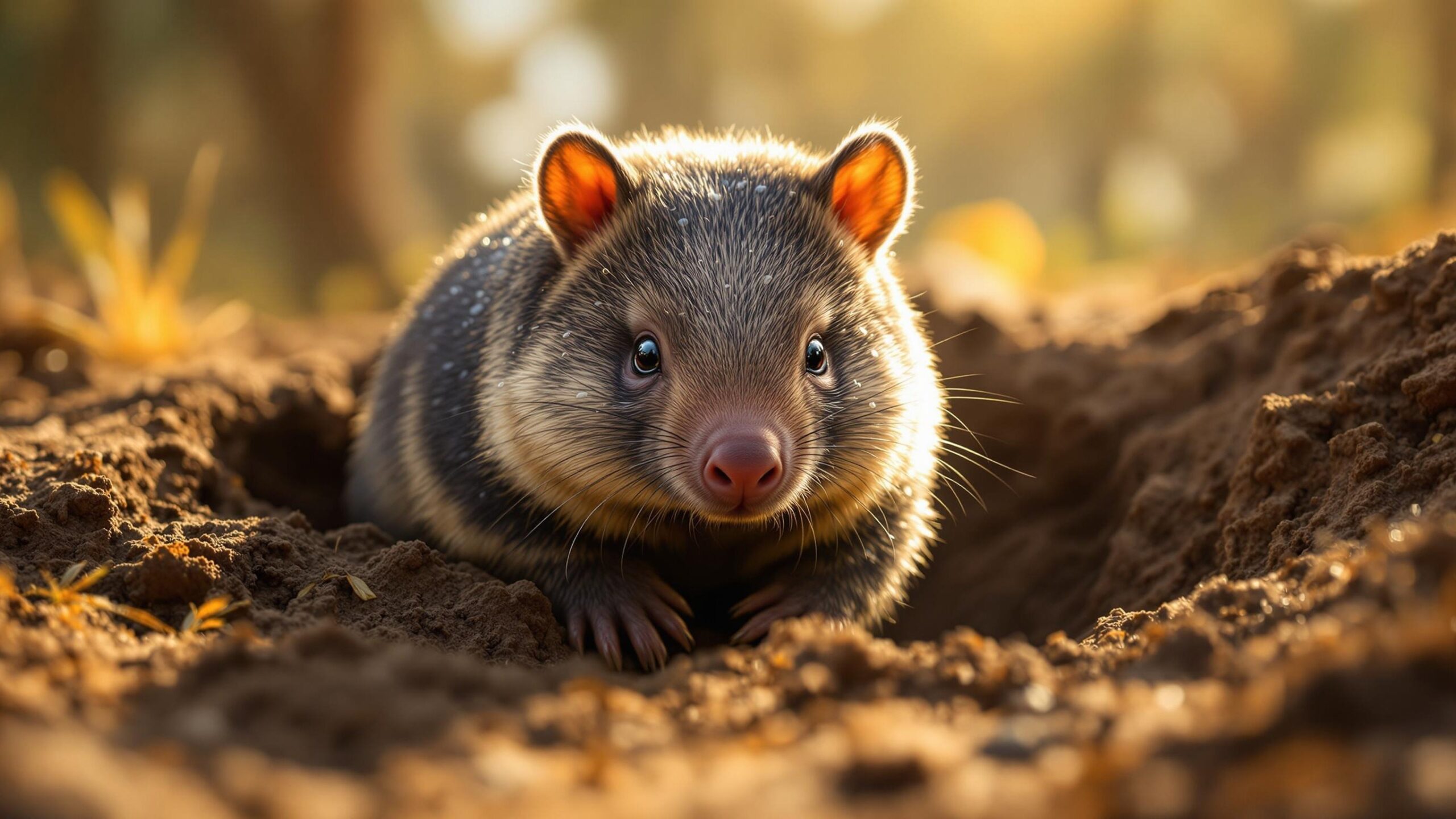
Wombats: The Burrowing Builders of Australia’s Wild Heart
Deep in the scrublands, eucalyptus forests, and rugged mountain valleys of Australia, a low-slung, sturdy creature waddles through the underbrush, nose to the ground and fur dusted with soil. With their compact bodies, powerful claws, and endearing expressions, wombats are among the most fascinating and underappreciated marsupials in the animal kingdom. They may not possess the fame of kangaroos or koalas, but wombats are ecological engineers, evolutionary oddities, and living proof that slow and steady can indeed shape the world around them. Wombats belong to the family Vombatidae, and they are known for their exceptional burrowing abilities, their cube-shaped droppings, and their backwards-facing pouches. Scientifically speaking, they are a marvel of adaptation—a group of herbivorous marsupials that has evolved to thrive in some of Australia’s most challenging environments. This comprehensive article explores the wombat in all its underground glory, introducing its biological traits, ecological role, and the differences among its three species. Each species has a unique story, and taken together, they offer a deep and engaging look at the genius of nature’s design.
Taxonomy And Identity
Wombats belong to the family Vombatidae, and they are known for their exceptional burrowing abilities, their cube- shaped droppings, and their backwards-facing pouches. Wombats is best understood through its anatomy, habitat, diet, behavior, and place in its ecosystem. Wombats is best understood through its anatomy, habitat, diet, behavior, and place in its ecosystem.
Identification And Appearance
Wombats belong to the family Vombatidae, and they are known for their exceptional burrowing abilities, their cube- shaped droppings, and their backwards-facing pouches. Body form, markings, movement, and habitat work together to separate this animal from close relatives and lookalikes. Body form, markings, movement, and habitat work together to separate this animal from close relatives and lookalikes.
Anatomy And Adaptations
Scientifically speaking, they are a marvel of adaptation—a group of herbivorous marsupials that has evolved to thrive in some of Australia’s most challenging environments. Often mistaken for a cuddly cross between a bear and a rodent, this stout, low-slung mammal is a master of digging, a nocturnal forager, and a marvel of evolutionary adaptation. Their teeth never stop growing, which is essential for coping with their abrasive diet.
This adaptation is perfectly suited to their digging lifestyle, ensuring that dirt doesn’t fill the pouch and smother the joey. The common wombat is perhaps the most adaptable of the three species. Body form, markings, movement, and habitat work together to separate this animal from close relatives and lookalikes.
Range And Wild Habitat
Native to southeastern Australia and Tasmania, the Common Wombat has fascinated scientists and animal lovers alike for generations. Most of their activity occurs at night or during the cooler hours of dusk and dawn, when they venture out to graze on native grasses, roots, bark, and sedges. Found in southeastern Australia, including Tasmania, the common wombat thrives in a range of habitats—from alpine regions and dense forests to grassy plains and coastal scrub.
These wombats have coarse fur that can range from sandy brown to dark gray, and their sturdy bodies make them well- suited to digging through a variety of soil types. Its range includes areas of high human presence, and in some parts of Australia, they’ve learned to live in proximity to farmland, fences, and even roadsides. By grazing selectively, wombats promote regrowth in native plants and discourage the dominance of invasive species.
Wild Diet And Feeding
These underground homes not only provide safety from predators and harsh weather, but also maintain cool temperatures, offering wombats refuge during Australia’s intense heat. Their teeth never stop growing, which is essential for coping with their abrasive diet. Burrows can sometimes undermine pastures or culverts, and vehicle collisions are a common threat.
Their burrowing lifestyle allows them to escape the heat of the day and conserve moisture. They can go long periods without drinking, obtaining most of their moisture from their food. Their low metabolic rate means they digest food slowly but thoroughly, maximizing nutrient absorption in an environment where every calorie counts.
Behavior
Often mistaken for a cuddly cross between a bear and a rodent, this stout, low-slung mammal is a master of digging, a nocturnal forager, and a marvel of evolutionary adaptation. Unlike many marsupials, wombats are solitary by nature. Behavior is easiest to understand when daily movement, social contact, communication, and risk avoidance are considered together.
Reproduction And Life Cycle
Scientifically speaking, they are a marvel of adaptation—a group of herbivorous marsupials that has evolved to thrive in some of Australia’s most challenging environments. Often mistaken for a cuddly cross between a bear and a rodent, this stout, low-slung mammal is a master of digging, a nocturnal forager, and a marvel of evolutionary adaptation. Native to southeastern Australia and Tasmania, the Common Wombat has fascinated scientists and animal lovers alike for generations.
Endemic to Australia, this endangered marsupial is not only remarkable for its scarcity but also for its resilience, unique biology, and ancient lineage. Wombats are champion diggers, and their burrows can reach lengths of up to 100 feet, with multiple entrances, sleeping chambers, and side tunnels. These underground homes not only provide safety from predators and harsh weather, but also maintain cool temperatures, offering wombats refuge during Australia’s intense heat.
Ecology And Role In The Environment
They may not possess the fame of kangaroos or koalas, but wombats are ecological engineers, evolutionary oddities, and living proof that slow and steady can indeed shape the world around them. This comprehensive article explores the wombat in all its underground glory, introducing its biological traits, ecological role, and the differences among its three species. These underground homes not only provide safety from predators and harsh weather, but also maintain cool temperatures, offering wombats refuge during Australia’s intense heat.
Despite these risks, the common wombat remains a vital part of the ecosystem. By grazing selectively, wombats promote regrowth in native plants and discourage the dominance of invasive species. This role as ecosystem manager often goes unnoticed but is critical to the health of their habitats.
Conservation Status And Threats
Endemic to Australia, this endangered marsupial is not only remarkable for its scarcity but also for its resilience, unique biology, and ancient lineage. Though not endangered, the southern hairy-nosed wombat faces its own set of challenges. Yet their resilience and communal tendencies make them well-positioned to adapt to evolving landscapes, especially with thoughtful conservation planning.
Intensive conservation efforts, including predator-proof fencing, habitat restoration, and careful monitoring, have helped the population recover to more than 300 today. A second protected population has also been established to ensure genetic diversity and reduce risk from localized threats. These wombats represent one of Australia’s greatest conservation comebacks.
Human Relationship
Endemic to Australia, this endangered marsupial is not only remarkable for its scarcity but also for its resilience, unique biology, and ancient lineage. Its range includes areas of high human presence, and in some parts of Australia, they’ve learned to live in proximity to farmland, fences, and even roadsides. While this adaptability has helped them persist in changing environments, it has also put them in conflict with human infrastructure.
Though not endangered, the southern hairy-nosed wombat faces its own set of challenges. Its daily life is shaped by where it moves, what it eats, how it avoids danger, and how it interacts with other animals. Its daily life is shaped by where it moves, what it eats, how it avoids danger, and how it interacts with other animals.
Captive Care
These underground homes not only provide safety from predators and harsh weather, but also maintain cool temperatures, offering wombats refuge during Australia’s intense heat. Intensive conservation efforts, including predator-proof fencing, habitat restoration, and careful monitoring, have helped the population recover to more than 300 today. These tunnels provide shelter from predators, buffer extreme temperatures, and offer refuge during floods, fires, and heatwaves.
Wild And Captive Variation
These wombats have coarse fur that can range from sandy brown to dark gray, and their sturdy bodies make them well- suited to digging through a variety of soil types. By grazing selectively, wombats promote regrowth in native plants and discourage the dominance of invasive species. Its daily life is shaped by where it moves, what it eats, how it avoids danger, and how it interacts with other animals.
Similar Species
Often mistaken for a cuddly cross between a bear and a rodent, this stout, low-slung mammal is a master of digging, a nocturnal forager, and a marvel of evolutionary adaptation. Unlike many marsupials, wombats are solitary by nature. Unlike kangaroos and wallabies, whose pouches open upward, a wombat’s pouch faces the rear.
Unlike the common wombat, which tends to live alone, southern hairy-nosed wombats are more social. The northern hairy-nosed wombat is similar in appearance to its southern cousin, but larger, with a broader head and longer, coarser fur. Its daily life is shaped by where it moves, what it eats, how it avoids danger, and how it interacts with other animals.
Common Misconceptions
Often mistaken for a cuddly cross between a bear and a rodent, this stout, low-slung mammal is a master of digging, a nocturnal forager, and a marvel of evolutionary adaptation. Its daily life is shaped by where it moves, what it eats, how it avoids danger, and how it interacts with other animals. Its daily life is shaped by where it moves, what it eats, how it avoids danger, and how it interacts with other animals.
FAQ
What is a Wombats?
Wombats belong to the family Vombatidae, and they are known for their exceptional burrowing abilities, their cube- shaped droppings, and their backwards-facing pouches. Scientifically speaking, they are a marvel of adaptation—a group of herbivorous marsupials that has evolved to thrive in some of Australia’s most challenging environments. Often mistaken for a cuddly cross between a bear and a rodent, this stout, low-slung mammal is a master of digging, a nocturnal forager, and a marvel of evolutionary adaptation.
How does the Wombats behave?
Often mistaken for a cuddly cross between a bear and a rodent, this stout, low-slung mammal is a master of digging, a nocturnal forager, and a marvel of evolutionary adaptation. Unlike many marsupials, wombats are solitary by nature. Its daily life is shaped by where it moves, what it eats, how it avoids danger, and how it interacts with other animals.
Sources
- https://animalstreets.com/mammals/land-mammals/marsupials/wombats/ Organization: animalstreets.com Source type: Live page or linked source URL: https://animalstreets.com/mammals/land-mammals/marsupials/wombats/ Information verified: Used for current-page extraction and source discovery; independent fact verification may still be required. Date checked: 2026-08-27 Reliability notes: Current page / internal source; use for audit context, not independent verification
- https://animalstreets.com/mammals-product-reviews/land-mammals-product-reviews/ Organization: animalstreets.com Source type: Live page or linked source URL: https://animalstreets.com/mammals-product-reviews/land-mammals-product-reviews/ Information verified: Used for current-page extraction and source discovery; independent fact verification may still be required. Date checked: 2026-08-27 Reliability notes: Current page / internal source; use for audit context, not independent verification
- https://animalstreets.com/mammals/land-mammals/marsupials/wombats/common-wombat/ Organization: animalstreets.com Source type: Live page or linked source URL: https://animalstreets.com/mammals/land-mammals/marsupials/wombats/common-wombat/ Information verified: Used for current-page extraction and source discovery; independent fact verification may still be required. Date checked: 2026-08-27 Reliability notes: Current page / internal source; use for audit context, not independent verification
- https://animalstreets.com/mammals/land-mammals/marsupials/wombats/northern-hairy-nosed-wombat/ Organization: animalstreets.com Source type: Live page or linked source URL: https://animalstreets.com/mammals/land-mammals/marsupials/wombats/northern-hairy-nosed-wombat/ Information verified: Used for current-page extraction and source discovery; independent fact verification may still be required. Date checked: 2026-08-27 Reliability notes: Current page / internal source; use for audit context, not independent verification
- https://animalstreets.com/mammals/land-mammals/marsupials/wombats/southern-hairy-nosed-wombat/ Organization: animalstreets.com Source type: Live page or linked source URL: https://animalstreets.com/mammals/land-mammals/marsupials/wombats/southern-hairy-nosed-wombat/ Information verified: Used for current-page extraction and source discovery; independent fact verification may still be required. Date checked: 2026-08-27 Reliability notes: Current page / internal source; use for audit context, not independent verification
- https://animalstreets.com/animal-product-reviews/ Organization: animalstreets.com Source type: Live page or linked source URL: https://animalstreets.com/animal-product-reviews/ Information verified: Used for current-page extraction and source discovery; independent fact verification may still be required. Date checked: 2026-08-27 Reliability notes: Current page / internal source; use for audit context, not independent verification