
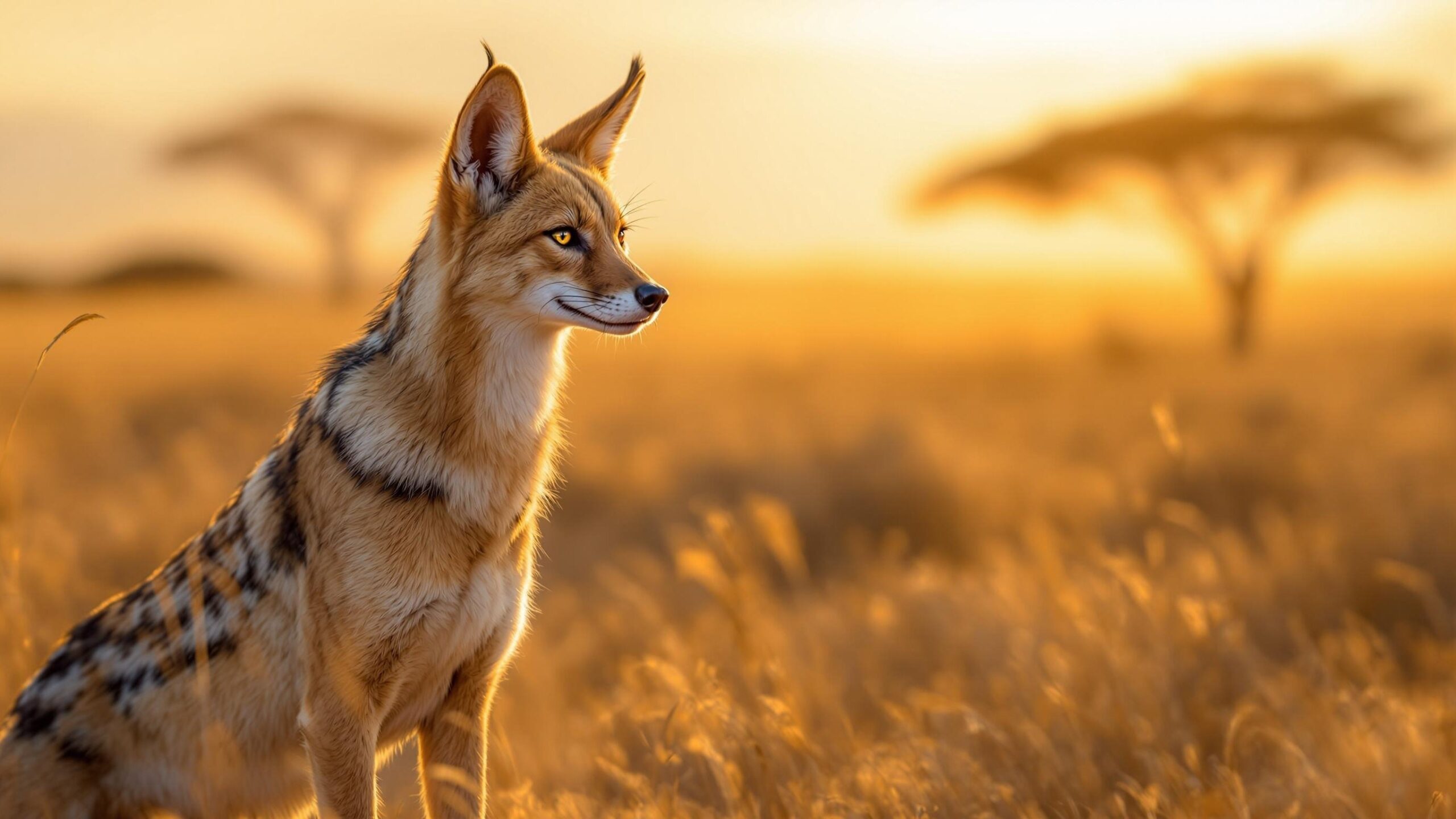
Jackals: The Sly Survivors of the Wild Who Thrive in the Shadows
As dusk paints the savanna in molten gold and shadows stretch long across the landscape, a figure emerges—not with the brute force of a lion or the silence of a leopard, but with the cunning grace of a born opportunist. With sharp eyes, keen ears, and a nose that can catch the scent of a meal from miles away, the jackal enters the scene. Neither fully predator nor purely scavenger, the jackal is a symbol of adaptability, balance, and resilience. From African grasslands and deserts to Eurasian scrublands and Himalayan foothills, jackals have carved out a niche by dancing along the edge of survival, thriving in both the wilderness and the margins of human civilization.
Jackals, belonging to the Canidae family alongside wolves, coyotes, foxes, and domestic dogs, are not one uniform species but a category of clever, resourceful canids found primarily in Africa and Asia. Their reputation in folklore often paints them as sly tricksters or eerie night howlers, but in reality, they play an essential ecological role. As hunters, scavengers, and cleanup crews, jackals help keep ecosystems in balance, and their diverse behaviors reflect the environments they call home. Understanding jackals means understanding the art of survival—where intelligence, cooperation, and adaptability are more powerful than size or strength.
Taxonomy And Identity
Jackals, belonging to the Canidae family alongside wolves, coyotes, foxes, and domestic dogs, are not one uniform species but a category of clever, resourceful canids found primarily in Africa and Asia. Black-backed jackals are particularly vocal, using a variety of barks, growls, and screams to maintain territory and family cohesion. Explore the family lives of black-backed jackals.
Jackals, belonging to the Canidae family alongside wolves, coyotes, foxes, and domestic dogs, are not one uniform species but a category of clever, resourceful canids found primarily in Africa and Asia. Black-backed jackals are particularly vocal, using a variety of barks, growls, and screams to maintain territory and family cohesion. Jackals is best understood through its anatomy, habitat, diet, behavior, and place in its ecosystem.
Identification And Appearance
Understanding jackals means understanding the art of survival—where intelligence, cooperation, and adaptability are more powerful than size or strength. The Side-striped Jackal (Canis adustus) is the more reserved cousin of the more vocal and conspicuous Black-backed Jackal. Body form, markings, movement, and habitat work together to separate this animal from close relatives and lookalikes.
Anatomy And Adaptations
Neither fully predator nor purely scavenger, the jackal is a symbol of adaptability, balance, and resilience. Understanding jackals means understanding the art of survival—where intelligence, cooperation, and adaptability are more powerful than size or strength. This cunning and adaptable carnivore, known for its sharp wits and striking appearance, is one of the oldest canid species still alive today.
Their coats vary depending on species and region, often providing ideal camouflage in arid and semi-arid environments. Unlike many solitary carnivores, jackals often operate in monogamous pairs, raising pups together in dens and cooperating closely to hunt and defend their range. Body form, markings, movement, and habitat work together to separate this animal from close relatives and lookalikes.
Range And Wild Habitat
Their coats vary depending on species and region, often providing ideal camouflage in arid and semi-arid environments. Unlike many solitary carnivores, jackals often operate in monogamous pairs, raising pups together in dens and cooperating closely to hunt and defend their range. This dietary adaptability is a key factor in their wide distribution and long-term success in changing ecosystems.
Golden jackals thrive in a remarkable range of habitats—from the Nile Delta to the forests of Sri Lanka, from suburban farmland to remote savannas. In Europe, where their range is expanding into the Balkans and beyond, they’re emerging as one of the most resilient wild canids of the continent. Their haunting wails, often mistaken for those of coyotes, form a nightly chorus in many rural landscapes, a sound both ancient and strangely modern.
Wild Diet And Feeding
This cunning and adaptable carnivore, known for its sharp wits and striking appearance, is one of the oldest canid species still alive today. Unlike many solitary carnivores, jackals often operate in monogamous pairs, raising pups together in dens and cooperating closely to hunt and defend their range. Their diet is as flexible as their behavior.
Jackals are omnivores, capable of hunting rodents, birds, and reptiles, scavenging carrion, and supplementing their meals with fruit, insects, and even roots. In India, they patrol rice paddies and orchards, preying on rats and raiding fruit trees. Neither fully predator nor purely scavenger, the jackal is a symbol of adaptability, balance, and resilience.
Behavior
As hunters, scavengers, and cleanup crews, jackals help keep ecosystems in balance, and their diverse behaviors reflect the environments they call home. One of the most impressive features of jackals is their communication. Behavior is easiest to understand when daily movement, social contact, communication, and risk avoidance are considered together.
Reproduction And Life Cycle
During breeding seasons, older siblings may stay behind to assist in raising the new litter—a cooperative breeding strategy that increases pup survival. Its daily life is shaped by where it moves, what it eats, how it avoids danger, and how it interacts with other animals. Its daily life is shaped by where it moves, what it eats, how it avoids danger, and how it interacts with other animals.
Ecology And Role In The Environment
Neither fully predator nor purely scavenger, the jackal is a symbol of adaptability, balance, and resilience. Their reputation in folklore often paints them as sly tricksters or eerie night howlers, but in reality, they play an essential ecological role. As hunters, scavengers, and cleanup crews, jackals help keep ecosystems in balance, and their diverse behaviors reflect the environments they call home.
This dietary adaptability is a key factor in their wide distribution and long-term success in changing ecosystems. Their success stems from a perfect blend of behavioral flexibility and ecological generalism. Its daily life is shaped by where it moves, what it eats, how it avoids danger, and how it interacts with other animals.
Conservation Status And Threats
Nevertheless, side-striped jackals play an essential role in cleaning up carrion and controlling rodent and insect populations, contributing to the health of African forest-edge environments. This expansion is largely due to the reduction of wolf populations (now beginning to rebound), climate change, and land-use changes that have opened up new habitat corridors. In their new European ranges, jackals occupy a similar niche to red foxes and badgers, scavenging roadkill, controlling rodent populations, and feeding on agricultural surplus.
Scientists are studying these populations closely to understand how golden jackals adapt to colder climates and human-dominated landscapes. As mesopredators, they control populations of small mammals and birds that might otherwise overrun vegetation or spread disease. In agricultural areas, they help suppress rodent populations.
Human Relationship
From African grasslands and deserts to Eurasian scrublands and Himalayan foothills, jackals have carved out a niche by dancing along the edge of survival, thriving in both the wilderness and the margins of human civilization. As hunters, scavengers, and cleanup crews, jackals help keep ecosystems in balance, and their diverse behaviors reflect the environments they call home. Unlike many solitary carnivores, jackals often operate in monogamous pairs, raising pups together in dens and cooperating closely to hunt and defend their range.
Jackals are omnivores, capable of hunting rodents, birds, and reptiles, scavenging carrion, and supplementing their meals with fruit, insects, and even roots. Its daily life is shaped by where it moves, what it eats, how it avoids danger, and how it interacts with other animals. Its daily life is shaped by where it moves, what it eats, how it avoids danger, and how it interacts with other animals.
Captive Care
Jackals is best treated as a wild animal whose needs depend on large habitat space, natural diet, social conditions, and specialist veterinary knowledge. Public education, rescue, rehabilitation, or accredited conservation work may be relevant in some cases, but casual private care is not an appropriate frame. The safest human role is to support habitat protection, responsible viewing, and professional wildlife care when intervention is truly needed.
Wild And Captive Variation
Jackals, belonging to the Canidae family alongside wolves, coyotes, foxes, and domestic dogs, are not one uniform species but a category of clever, resourceful canids found primarily in Africa and Asia. During breeding seasons, older siblings may stay behind to assist in raising the new litter—a cooperative breeding strategy that increases pup survival. Black-backed jackals are particularly vocal, using a variety of barks, growls, and screams to maintain territory and family cohesion.
Similar Species
Unlike many solitary carnivores, jackals often operate in monogamous pairs, raising pups together in dens and cooperating closely to hunt and defend their range. Their haunting wails, often mistaken for those of coyotes, form a nightly chorus in many rural landscapes, a sound both ancient and strangely modern. Unlike golden jackals, which may tolerate communal overlaps, black-backed jackals draw hard boundaries.
It is distinguished by its grizzled gray coat and a pale stripe running along each side of the body from elbow to hip, often less vibrant than the markings of its cousins. Unlike wolves, golden jackals are generally not perceived as a major threat to livestock or humans, which has allowed them to expand with little opposition. In their new European ranges, jackals occupy a similar niche to red foxes and badgers, scavenging roadkill, controlling rodent populations, and feeding on agricultural surplus.
Common Misconceptions
Their haunting wails, often mistaken for those of coyotes, form a nightly chorus in many rural landscapes, a sound both ancient and strangely modern. In Hindu mythology, the goddess Kali is often accompanied by jackals, representing the boundary between life and death, wildness and wisdom. Yet with myth has also come misunderstanding.
Jackals are storytellers, in both myth and reality. Its daily life is shaped by where it moves, what it eats, how it avoids danger, and how it interacts with other animals. Its daily life is shaped by where it moves, what it eats, how it avoids danger, and how it interacts with other animals.
FAQ
How can someone identify a Jackals?
Understanding jackals means understanding the art of survival—where intelligence, cooperation, and adaptability are more powerful than size or strength. The Side-striped Jackal (Canis adustus) is the more reserved cousin of the more vocal and conspicuous Black-backed Jackal. Neither fully predator nor purely scavenger, the jackal is a symbol of adaptability, balance, and resilience.
How does the Jackals behave?
As hunters, scavengers, and cleanup crews, jackals help keep ecosystems in balance, and their diverse behaviors reflect the environments they call home. One of the most impressive features of jackals is their communication. Its daily life is shaped by where it moves, what it eats, how it avoids danger, and how it interacts with other animals.
Additional Natural History Notes
Jackals is best interpreted through habitat, seasonal food supply, movement, social behavior, breeding timing, and the pressures created by predators, competitors, and people. Coat color, limb shape, ears, teeth, and body size connect to how the animal travels, finds food, avoids danger, and raises young. Wild behavior also differs from observations made in parks, zoos, farms, rescue settings, or neighborhoods, where space, diet, risk, and human influence can change daily activity.
A complete account also benefits from scale and season. Many animals change their movements, calls, feeding choices, or visibility as weather, water, prey, nesting sites, or shelter change through the year. Those rhythms can make the same species look secretive in one setting and bold in another. By connecting anatomy, habitat, and seasonal behavior, the animal becomes easier to understand as a living part of its ecosystem rather than a list of isolated facts.
Regional history adds another layer. Islands, mountains, deserts, forests, rivers, and grasslands can isolate populations long enough for small differences in size, color, diet, or behavior to matter. Local names, field reports, museum records, and modern genetic work often fit together slowly, especially when the animal is rare, nocturnal, migratory, or difficult to observe. The strongest interpretation treats those clues as part of one natural history rather than separate trivia.