
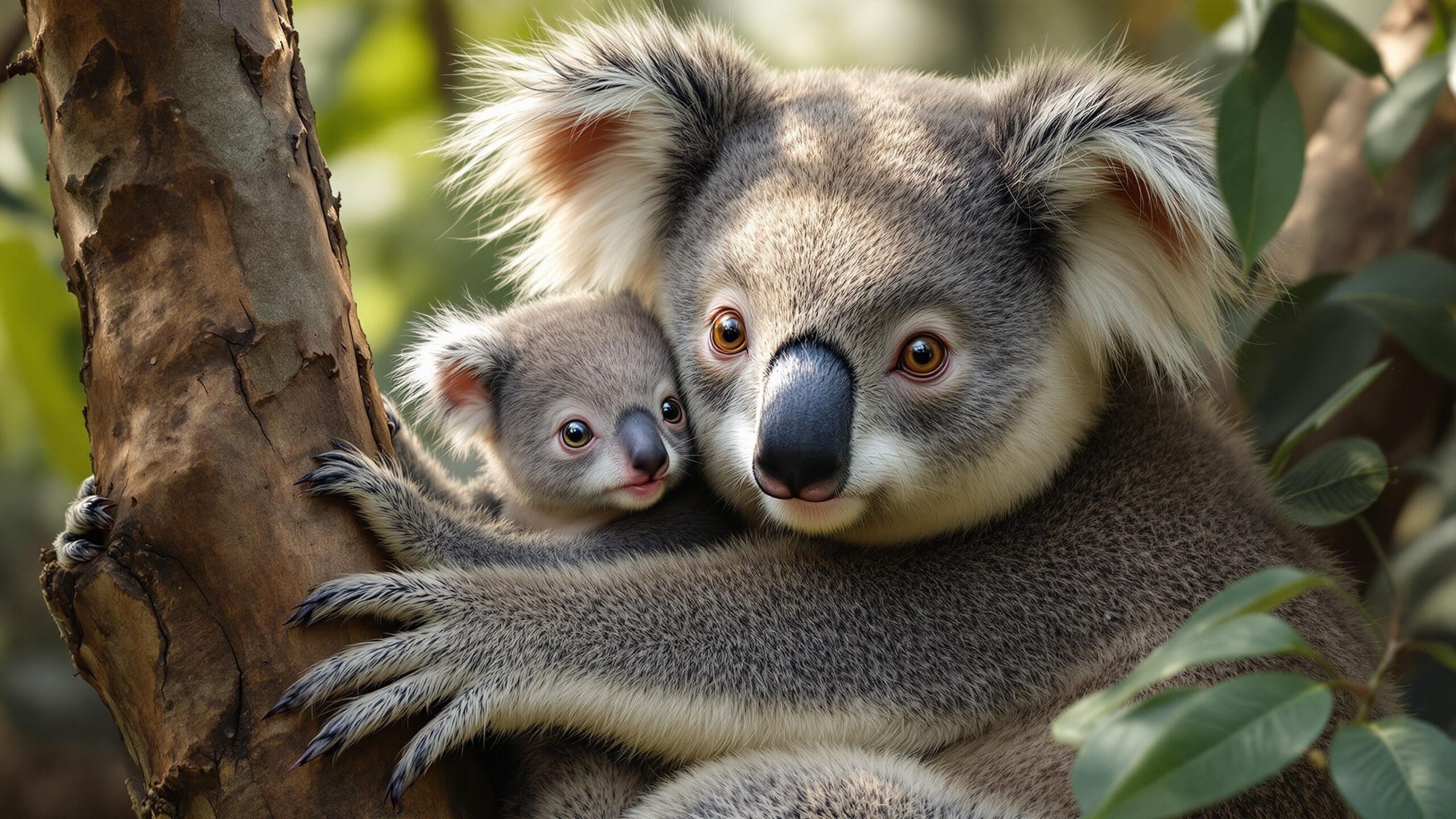
Koala: The Sleepy Climber of Australia’s Eucalyptus Forests
Few animals inspire the same instant affection as the koala. With their fluffy ears, large noses, and sleepy expressions, koalas have become international icons of Australia’s wildlife. Despite their cuddly appearance, these marsupials are highly specialized animals, adapted to a very specific lifestyle in the treetops of eucalyptus forests. Scientifically known as Phascolarctos cinereus, the koala is a solitary, tree-dwelling mammal that plays a key role in Australia’s ecosystem and cultural identity. From their unique biology to their daily behaviors, koalas offer a fascinating glimpse into how nature shapes animals to thrive in specific environments. This in-depth, user-friendly guide explores everything there is to know about koalas—what they are, how they live, what they eat, where they’re found, and why they matter. It’s designed to be accessible to anyone with a curiosity about wildlife, while remaining grounded in science and conservation awareness.
What Exactly Is a Koala?
Despite the popular nickname “koala bear,” koalas are not bears at all. They are marsupials, which means they carry and nurse their young in a pouch. Marsupials are a class of mammals primarily found in Australia and nearby islands, with kangaroos, wombats, and wallabies among their better-known relatives. Of all marsupials, the koala is one of the most distinct, both in appearance and lifestyle. Koalas belong to the family Phascolarctidae and are the only surviving member of the genus Phascolarctos. Fossil evidence shows that their ancestors were much more diverse, including multiple now-extinct species that once roamed Australia in varying habitats. Today’s koalas are the result of millions of years of adaptation to the eucalyptus forests of eastern and southeastern Australia. They have thick, woolly gray fur that helps regulate temperature and resist rain, large round ears for excellent hearing, and a large black nose that gives them an outstanding sense of smell—essential for identifying eucalyptus trees. Their sharp claws and opposable digits make them excellent climbers, perfectly suited to life in the treetops.
Taxonomy And Identity
Marsupials are a class of mammals primarily found in Australia and nearby islands, with kangaroos, wombats, and wallabies among their better-known relatives. Koalas belong to the family Phascolarctidae and are the only surviving member of the genus Phascolarctos. The koala is best understood through its anatomy, habitat, diet, behavior, and place in its ecosystem.
Identification And Appearance
They have thick, woolly gray fur that helps regulate temperature and resist rain, large round ears for excellent hearing, and a large black nose that gives them an outstanding sense of smell—essential for identifying eucalyptus trees. Their territories vary greatly in size, depending on food availability, population density, and landscape conditions. Each individual tends to have a preferred set of trees that it returns to repeatedly, using scent markings and vocal calls to establish its presence and deter others.
They have thick, woolly gray fur that helps regulate temperature and resist rain, large round ears for excellent hearing, and a large black nose that gives them an outstanding sense of smell—essential for identifying eucalyptus trees. Their territories vary greatly in size, depending on food availability, population density, and landscape conditions. Body form, markings, movement, and habitat work together to separate this animal from close relatives and lookalikes.
Anatomy And Adaptations
Despite their cuddly appearance, these marsupials are highly specialized animals, adapted to a very specific lifestyle in the treetops of eucalyptus forests. Today’s koalas are the result of millions of years of adaptation to the eucalyptus forests of eastern and southeastern Australia. Their sharp claws and opposable digits make them excellent climbers, perfectly suited to life in the treetops.
This diet might sound limiting, but they’ve evolved complex adaptations to make it work. In the trees, they are agile and secure, using their powerful limbs, strong claws, and padded paws to climb, leap, and rest. These regional differences not only highlight the adaptability of the species but also the importance of understanding local environmental conditions when planning habitat conservation or restoration.
Range And Wild Habitat
Marsupials are a class of mammals primarily found in Australia and nearby islands, with kangaroos, wombats, and wallabies among their better-known relatives. Where Koalas Live and How They Survive Koalas are native only to Australia, and their habitat is tightly tied to the availability of eucalyptus trees. They are found in a range that stretches from far northern Queensland through New South Wales and into Victoria and parts of southeastern South Australia.
Within this range, koalas inhabit woodlands, open forests, and even some suburban and rural areas where suitable trees remain. A koala’s home range can consist of just a few favorite trees or stretch across several dozen acres. Regional Differences Among Koalas Though they are a single species, koalas vary noticeably across their geographic range.
Wild Diet And Feeding
This in-depth, user-friendly guide explores everything there is to know about koalas—what they are, how they live, what they eat, where they’re found, and why they matter. Koalas eat eucalyptus leaves—and almost nothing else. This diet might sound limiting, but they’ve evolved complex adaptations to make it work.
Koalas can eat up to 1.5 pounds of leaves per day, which helps meet both their nutritional and hydration needs, as eucalyptus contains enough water to keep them from needing to drink frequently. Because digesting such a difficult diet takes so much energy, koalas conserve it in a very simple way—they rest. Their territories vary greatly in size, depending on food availability, population density, and landscape conditions.
Behavior
Scientifically known as Phascolarctos cinereus , the koala is a solitary, tree-dwelling mammal that plays a key role in Australia’s ecosystem and cultural identity. From their unique biology to their daily behaviors, koalas offer a fascinating glimpse into how nature shapes animals to thrive in specific environments. The remaining hours are spent eating, grooming, moving between trees, and engaging in social or mating behavior.
Scientifically known as Phascolarctos cinereus , the koala is a solitary, tree-dwelling mammal that plays a key role in Australia’s ecosystem and cultural identity. From their unique biology to their daily behaviors, koalas offer a fascinating glimpse into how nature shapes animals to thrive in specific environments. Behavior is easiest to understand when daily movement, social contact, communication, and risk avoidance are considered together.
Reproduction And Life Cycle
The remaining hours are spent eating, grooming, moving between trees, and engaging in social or mating behavior. Males typically maintain larger territories that may overlap with several females, especially during the breeding season. Koalas are mostly solitary, except for mothers and joeys or during mating interactions.
Reproduction and Life Cycle of Koalas Koala reproduction follows the typical marsupial pattern. Breeding season generally occurs between September and March, during which males use deep, resonant bellows to advertise themselves to females and warn off other males. After a successful mating, the female carries the fertilized embryo for just about 35 days before giving birth to a tiny, undeveloped joey, roughly the size of a jellybean.
Ecology And Role In The Environment
Scientifically known as Phascolarctos cinereus , the koala is a solitary, tree-dwelling mammal that plays a key role in Australia’s ecosystem and cultural identity. Koalas in the Ecosystem Koalas serve a valuable role in Australia’s ecosystems. In some cases, their favorite trees become microhabitats for other species, hosting entire mini-ecosystems within the canopy.
When koala numbers drop, it may be a sign that an ecosystem is under stress due to land clearing, drought, fire, or disease. These animals have adapted to thrive in the treetops of Australia, but their survival now depends on our ability to maintain those trees—and the ecosystems they support. Learning about koalas offers more than just trivia—it opens a window into Australia’s rich ecosystems, the challenges of wildlife conservation, and the delicate connections between animals and the forests they inhabit.
Conservation Status And Threats
It’s designed to be accessible to anyone with a curiosity about wildlife, while remaining grounded in science and conservation awareness. Their territories vary greatly in size, depending on food availability, population density, and landscape conditions. On the ground, they are slow and vulnerable, though they can move quickly in short bursts when threatened.
Females can breed each year and may raise one joey at a time, contributing to relatively slow population growth compared to some other mammals. These southern populations often live in more remote or protected woodlands, and some areas have required population management due to limited habitat or food resources. The state supports some of the largest koala populations and a wide range of habitats, from coastal bushland to inland forest corridors.
Human Relationship
These koalas are often more visible to humans, as they inhabit areas near urban development and roadways, leading to both increased sightings and greater risks. Koalas and Human Interaction Koalas are deeply embedded in Australian identity. At the same time, koalas face real pressures from human expansion.
Despite these challenges, koalas remain widespread in many areas, and careful planning and public awareness are helping to balance the needs of human communities with those of their iconic neighbors. Its daily life is shaped by where it moves, what it eats, how it avoids danger, and how it interacts with other animals. Its daily life is shaped by where it moves, what it eats, how it avoids danger, and how it interacts with other animals.
Captive Care
They have thick, woolly gray fur that helps regulate temperature and resist rain, large round ears for excellent hearing, and a large black nose that gives them an outstanding sense of smell—essential for identifying eucalyptus trees. Community groups, wildlife carers, and conservation organizations across Australia are dedicated to protecting koala populations, rescuing injured individuals, and preserving their habitats. Despite these challenges, koalas remain widespread in many areas, and careful planning and public awareness are helping to balance the needs of human communities with those of their iconic neighbors.
Wild And Captive Variation
Males typically maintain larger territories that may overlap with several females, especially during the breeding season. Breeding season generally occurs between September and March, during which males use deep, resonant bellows to advertise themselves to females and warn off other males. Females can breed each year and may raise one joey at a time, contributing to relatively slow population growth compared to some other mammals.
Similar Species
Females can breed each year and may raise one joey at a time, contributing to relatively slow population growth compared to some other mammals. Its daily life is shaped by where it moves, what it eats, how it avoids danger, and how it interacts with other animals. Its daily life is shaped by where it moves, what it eats, how it avoids danger, and how it interacts with other animals.
Common Misconceptions
Despite their cuddly appearance, these marsupials are highly specialized animals, adapted to a very specific lifestyle in the treetops of eucalyptus forests. From their unique biology to their daily behaviors, koalas offer a fascinating glimpse into how nature shapes animals to thrive in specific environments. It’s designed to be accessible to anyone with a curiosity about wildlife, while remaining grounded in science and conservation awareness.
Fossil evidence shows that their ancestors were much more diverse, including multiple now-extinct species that once roamed Australia in varying habitats. Today’s koalas are the result of millions of years of adaptation to the eucalyptus forests of eastern and southeastern Australia. This diet might sound limiting, but they’ve evolved complex adaptations to make it work.
FAQ
What is a Koala?
Marsupials are a class of mammals primarily found in Australia and nearby islands, with kangaroos, wombats, and wallabies among their better-known relatives. Koalas belong to the family Phascolarctidae and are the only surviving member of the genus Phascolarctos. Despite their cuddly appearance, these marsupials are highly specialized animals, adapted to a very specific lifestyle in the treetops of eucalyptus forests.
Sources
- https://animalstreets.com/mammals/land-mammals/marsupials/koala/ Organization: animalstreets.com Source type: Live page or linked source URL: https://animalstreets.com/mammals/land-mammals/marsupials/koala/ Information verified: Used for current-page extraction and source discovery; independent fact verification may still be required. Date checked: 2026-08-27 Reliability notes: Current page / internal source; use for audit context, not independent verification
- https://animalstreets.com/mammals-product-reviews/land-mammals-product-reviews/ Organization: animalstreets.com Source type: Live page or linked source URL: https://animalstreets.com/mammals-product-reviews/land-mammals-product-reviews/ Information verified: Used for current-page extraction and source discovery; independent fact verification may still be required. Date checked: 2026-08-27 Reliability notes: Current page / internal source; use for audit context, not independent verification
- https://animalstreets.com/animal-product-reviews/ Organization: animalstreets.com Source type: Live page or linked source URL: https://animalstreets.com/animal-product-reviews/ Information verified: Used for current-page extraction and source discovery; independent fact verification may still be required. Date checked: 2026-08-27 Reliability notes: Current page / internal source; use for audit context, not independent verification