
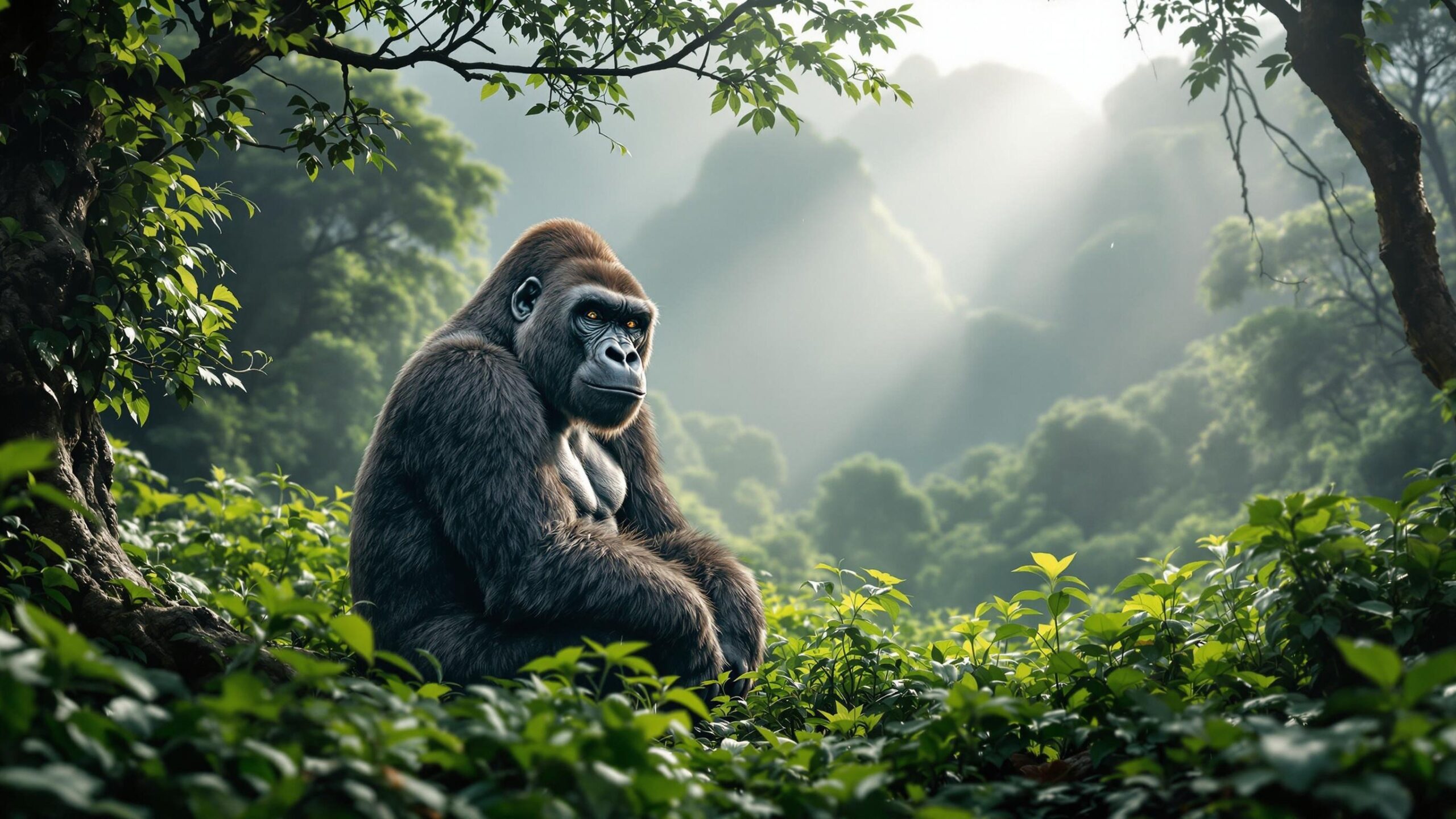
Gorillas: The Gentle Giants of the Forest
In the quiet mist of a central African morning, a rustle in the thick undergrowth signals more than just movement—it hints at majesty. From behind a curtain of foliage, a massive silverback steps into a clearing, his muscular frame commanding, yet his eyes calm and intelligent. This is the gorilla, a creature of immense power and startling gentleness, the largest of all primates and one of our closest relatives in the animal kingdom. These forest giants are not only awe-inspiring due to their size and strength but also because of their profound emotional depth, tight-knit social structures, and vital ecological roles. This article dives deep into the world of gorillas, exploring their biology, diversity, behaviors, and the urgent need for their conservation.
Taxonomy And Identity
Shy, intelligent, and family-oriented, Western Gorillas are the unsung guardians of the tropical forests they call home. They belong to the genus Gorilla , one of the four genera of great apes, alongside Homo (humans), Pan (chimpanzees and bonobos), and Pongo (orangutans). Mountain gorillas live in stable family groups that can number up to 30 individuals, though 10 to 15 is more typical.
Western gorillas typically live in family groups led by a silverback, with social structures shaped by ecological pressures and food availability. Gorillas is best understood through its anatomy, habitat, diet, behavior, and place in its ecosystem. Gorillas is best understood through its anatomy, habitat, diet, behavior, and place in its ecosystem.
Identification And Appearance
These forest giants are not only awe-inspiring due to their size and strength but also because of their profound emotional depth, tight-knit social structures, and vital ecological roles. Communication occurs through vocalizations, body language, and facial expressions, with over 20 recognized sounds, including grunts, hoots, and chest beats. Their thick fur helps insulate them from the cool mountain climate, and their diet includes a wider range of leaves and stems than their lowland cousins due to fewer fruiting trees.
These forest giants are not only awe-inspiring due to their size and strength but also because of their profound emotional depth, tight-knit social structures, and vital ecological roles. Communication occurs through vocalizations, body language, and facial expressions, with over 20 recognized sounds, including grunts, hoots, and chest beats. Body form, markings, movement, and habitat work together to separate this animal from close relatives and lookalikes.
Anatomy And Adaptations
With large, barrel-shaped chests and strong jaws adapted for processing tough vegetation, gorillas are marvels of evolutionary design for forest foraging. They are adept climbers and will occasionally forage in trees, although adults tend to remain grounded due to their size. Found in the dense rainforests of Cameroon, Central African Republic, Gabon, Congo, and Equatorial Guinea, these gorillas are more arboreal than their eastern cousins, frequently climbing trees for fruit and shelter.
Conservationists have focused on habitat protection, community engagement, and disease monitoring to safeguard these adaptable yet vulnerable apes. Each subspecies tells a story of resilience, adaptation, and the quiet strength found in community. Body form, markings, movement, and habitat work together to separate this animal from close relatives and lookalikes.
Range And Wild Habitat
Found in the Virunga volcanic mountains of Central Africa and Bwindi Impenetrable Forest in Uganda, mountain gorillas live at altitudes of 8,000 to 13,000 feet in mist-shrouded forests. Their thick fur helps insulate them from the cool mountain climate, and their diet includes a wider range of leaves and stems than their lowland cousins due to fewer fruiting trees. Conservation efforts are difficult due to ongoing instability, but organizations are working with local communities to develop sustainable, gorilla-friendly alternatives to destructive land use.
Found in the dense rainforests of Cameroon, Central African Republic, Gabon, Congo, and Equatorial Guinea, these gorillas are more arboreal than their eastern cousins, frequently climbing trees for fruit and shelter. Because of their limited range, genetic diversity is a concern, and any habitat loss has outsized effects. Every birth is celebrated, and each troop’s movement is closely monitored through camera traps and ranger patrols.
Wild Diet And Feeding
It is the Western Gorilla (Gorilla gorilla), a critically important species of great ape and the largest living primate on Earth. They belong to the genus Gorilla , one of the four genera of great apes, alongside Homo (humans), Pan (chimpanzees and bonobos), and Pongo (orangutans). Their diet consists primarily of leaves, stems, fruit, and bamboo shoots.
Communication occurs through vocalizations, body language, and facial expressions, with over 20 recognized sounds, including grunts, hoots, and chest beats. Their thick fur helps insulate them from the cool mountain climate, and their diet includes a wider range of leaves and stems than their lowland cousins due to fewer fruiting trees. With large, barrel-shaped chests and strong jaws adapted for processing tough vegetation, gorillas are marvels of evolutionary design for forest foraging.
Behavior
These forest giants are not only awe-inspiring due to their size and strength but also because of their profound emotional depth, tight-knit social structures, and vital ecological roles. This article dives deep into the world of gorillas, exploring their biology, diversity, behaviors, and the urgent need for their conservation. Socially, gorillas live in groups called troops or bands, usually led by a dominant silverback male who provides protection, mediates conflict, and guides daily movement.
These forest giants are not only awe-inspiring due to their size and strength but also because of their profound emotional depth, tight-knit social structures, and vital ecological roles. This article dives deep into the world of gorillas, exploring their biology, diversity, behaviors, and the urgent need for their conservation. Behavior is easiest to understand when daily movement, social contact, communication, and risk avoidance are considered together.
Reproduction And Life Cycle
These groups are centered around a dominant silverback who fathers most of the offspring, protects the group, and makes daily decisions. Social groups resemble those of mountain gorillas, with a silverback leading several females and their offspring. Gorillas often follow traditional trails and build new sleeping nests each night, flattening ground vegetation in a way that creates micro-habitats for other species.
These groups are centered around a dominant silverback who fathers most of the offspring, protects the group, and makes daily decisions. Social groups resemble those of mountain gorillas, with a silverback leading several females and their offspring. Its daily life is shaped by where it moves, what it eats, how it avoids danger, and how it interacts with other animals.
Ecology And Role In The Environment
These forest giants are not only awe-inspiring due to their size and strength but also because of their profound emotional depth, tight-knit social structures, and vital ecological roles. These gentle giants, often referred to as the kings of the jungle, are not only icons of African biodiversity but also keystones of tropical forest health. Grauer’s gorillas exhibit a varied diet of fruits, leaves, seeds, and bark.
Western gorillas typically live in family groups led by a silverback, with social structures shaped by ecological pressures and food availability. Their droppings serve as natural fertilizers and aid in seed dispersal, contributing to the regeneration of their forest habitats. Their presence indicates a healthy forest ecosystem, and their disappearance often foreshadows ecological imbalance.
Conservation Status And Threats
This article dives deep into the world of gorillas, exploring their biology, diversity, behaviors, and the urgent need for their conservation. Dian Fossey’s groundbreaking research in the 1960s and her subsequent conservation efforts brought international attention to these gorillas, transforming them into symbols of endangered species conservation. Despite decades of threats from poaching, disease, and habitat encroachment, the mountain gorilla population has rebounded thanks to intensive conservation programs, including eco-tourism, veterinary interventions, and anti- poaching patrols.
Today, their numbers exceed 1,000 individuals—a conservation success, though their survival remains precarious. Poaching, mining, and civil unrest have severely fragmented their habitat and reduced their population. Conservation efforts are difficult due to ongoing instability, but organizations are working with local communities to develop sustainable, gorilla-friendly alternatives to destructive land use.
Human Relationship
They belong to the genus Gorilla , one of the four genera of great apes, alongside Homo (humans), Pan (chimpanzees and bonobos), and Pongo (orangutans). Dian Fossey’s groundbreaking research in the 1960s and her subsequent conservation efforts brought international attention to these gorillas, transforming them into symbols of endangered species conservation. These gorillas are more elusive than their mountain relatives, dwelling in dense, remote jungles far from human settlements.
The Ebola virus has decimated entire communities, and bushmeat hunting continues to be a major threat. Its daily life is shaped by where it moves, what it eats, how it avoids danger, and how it interacts with other animals. Its daily life is shaped by where it moves, what it eats, how it avoids danger, and how it interacts with other animals.
Captive Care
Sanctuaries and rehabilitation centers offer care for orphaned or injured individuals. Responsible care depends on matching space, diet, social conditions, climate, and veterinary oversight to the animal’s biology. Responsible care depends on matching space, diet, social conditions, climate, and veterinary oversight to the animal’s biology.
Wild And Captive Variation
Captive gorillas like Koko, who learned over 1,000 signs in American Sign Language, have demonstrated the capacity for complex communication, emotional depth, and self-awareness. Such behaviors underscore their cognitive sophistication and the need for ethical considerations in both wild and captive settings. By feeding on a wide variety of plants, they help manage vegetation growth and encourage forest diversity.
Similar Species
These forest giants are not only awe-inspiring due to their size and strength but also because of their profound emotional depth, tight-knit social structures, and vital ecological roles. This article dives deep into the world of gorillas, exploring their biology, diversity, behaviors, and the urgent need for their conservation. Their diet consists primarily of leaves, stems, fruit, and bamboo shoots.
With large, barrel-shaped chests and strong jaws adapted for processing tough vegetation, gorillas are marvels of evolutionary design for forest foraging. Their thick fur helps insulate them from the cool mountain climate, and their diet includes a wider range of leaves and stems than their lowland cousins due to fewer fruiting trees. These groups are centered around a dominant silverback who fathers most of the offspring, protects the group, and makes daily decisions.
Common Misconceptions
FAQ
Sources
- https://animalstreets.com/mammals/land-mammals/primates/gorillas/ Organization: animalstreets.com Source type: Live page or linked source URL: https://animalstreets.com/mammals/land-mammals/primates/gorillas/ Information verified: Used for current-page extraction and source discovery; independent fact verification may still be required. Date checked: 2026-08-27 Reliability notes: Current page / internal source; use for audit context, not independent verification
- https://animalstreets.com/mammals-product-reviews/land-mammals-product-reviews/ Organization: animalstreets.com Source type: Live page or linked source URL: https://animalstreets.com/mammals-product-reviews/land-mammals-product-reviews/ Information verified: Used for current-page extraction and source discovery; independent fact verification may still be required. Date checked: 2026-08-27 Reliability notes: Current page / internal source; use for audit context, not independent verification
- https://animalstreets.com/mammals/land-mammals/primates/gorillas/eastern-gorilla/ Organization: animalstreets.com Source type: Live page or linked source URL: https://animalstreets.com/mammals/land-mammals/primates/gorillas/eastern-gorilla/ Information verified: Used for current-page extraction and source discovery; independent fact verification may still be required. Date checked: 2026-08-27 Reliability notes: Current page / internal source; use for audit context, not independent verification
- https://animalstreets.com/mammals/land-mammals/primates/gorillas/western-gorilla/ Organization: animalstreets.com Source type: Live page or linked source URL: https://animalstreets.com/mammals/land-mammals/primates/gorillas/western-gorilla/ Information verified: Used for current-page extraction and source discovery; independent fact verification may still be required. Date checked: 2026-08-27 Reliability notes: Current page / internal source; use for audit context, not independent verification
- https://animalstreets.com/animal-product-reviews/ Organization: animalstreets.com Source type: Live page or linked source URL: https://animalstreets.com/animal-product-reviews/ Information verified: Used for current-page extraction and source discovery; independent fact verification may still be required. Date checked: 2026-08-27 Reliability notes: Current page / internal source; use for audit context, not independent verification