
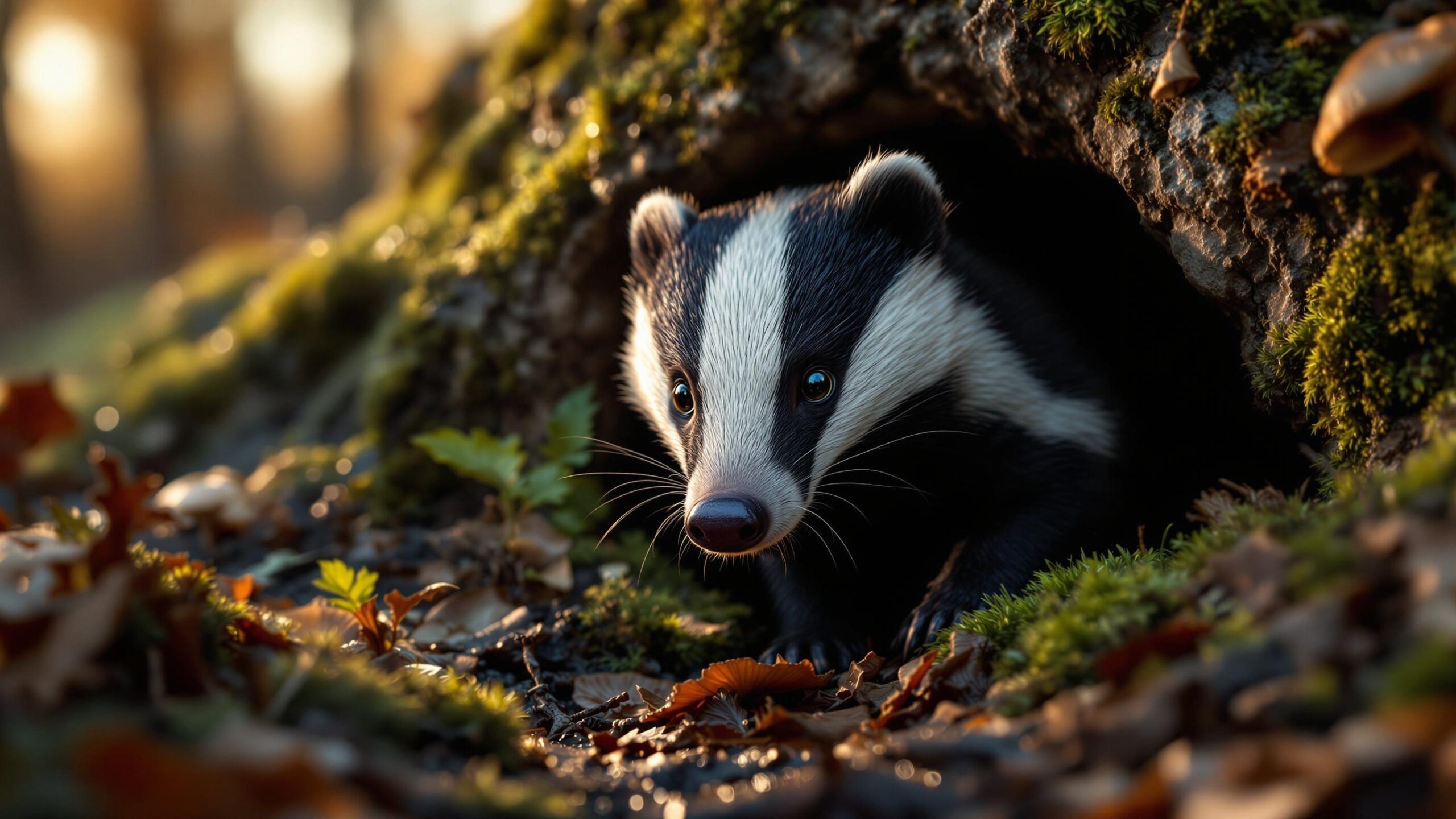
Carnivorous Small Mammals

Carnivorous Small Mammals

The Stealthy Hunters of the Undergrowth: An Introduction to Carnivorous Small Mammals

Tucked beneath the forest floor, darting through desert sands, or prowling the night in suburban woodlands, small carnivorous mammals are among the animal kingdom’s most effective and enigmatic predators.  Though they lack the size and celebrity of their larger cousins—the lions, wolves, and bears—their adaptations for hunting are no less fascinating.  From razor-sharp teeth and keen senses to impressive agility and problem-solving skills, these pint-sized predators play vital roles in ecosystems across the globe.  Often elusive and secretive, carnivorous small mammals are natural-born survivors and skilled hunters, driven by instinct and sharpened by evolution.  Despite their size, these animals help regulate prey populations, contribute to biodiversity, and maintain balance in their respective environments.  They are ferocious yet fragile, sometimes abundant but increasingly threatened by habitat loss and climate change.  Understanding these mammals isn’t just about appreciating their biological brilliance—it’s about recognizing the quiet yet powerful threads they weave through the web of life.

European Badger

Badgers

A Journey into the Secret Lives of Nature’s Tenacious Tunnelers Deep beneath the surface of forests, grasslands, and farmlands around the globe lies a hidden world teeming with determination, resilience, and surprising complexity.   This is the realm of the badger.  To the casual observer, a badger may seem like just another member of the mustelid family, a stocky animal with a reputation for being feisty and elusive.  But peel back

Read More »
Ferrets in a tree

Ferrets

The Curious Charmers of the Animal Kingdom From the moment you first lock eyes with a ferret, it’s hard not to be captivated by its boundless curiosity and mischievous glint.  These small, slinky mammals possess a rare combination of playfulness, intelligence, and tenacity that has made them beloved companions, skilled hunters, and fascinating subjects of scientific study.  Though often associated with domestic pets, ferrets are part of a larger biological

Read More »
Marten on a tree branch

Martens

Masters of the Forest: A Deep Dive into the World of Martens In the secretive depths of boreal forests, where moss carpets the earth and pine needles whisper in the wind, elusive creatures known as martens dance through the undergrowth and leap between the boughs of ancient trees.  With their luxurious fur, agile bodies, and clever minds, martens have captured the fascination of naturalists and trappers alike for centuries. Yet

Read More »
Mink on a rock

Minks

Masters of Water and Shadow: A Journey into the World of Minks Tucked away along riverbanks, marshes, and woodland streams, a secretive predator glides between worlds—half in water, half in shadow.  With eyes alert and bodies sleek, minks embody the wild spirit of nature’s hidden places.  Though seldom seen, their presence is unmistakable: a trail of pawprints in the mud, a ripple in the reeds, or a flash of fur

Read More »
Group of Otters

Otters

Nature’s Playful Water Dancers In the shimmering realms where land meets water, a sleek body glides beneath the surface, fur slick and whiskers twitching.  It surfaces for a breath, rolls playfully, and with a swift flick of its tail, vanishes again into the current.  This is the otter—one of the most charismatic and beloved animals in the natural world.  With their buoyant personalities, remarkable intelligence, and strong family bonds, otters

Read More »
Weasel in the snow

Weasels

Nature’s Sleek and Silent Hunters In the quiet corners of forests, the tangled edges of meadows, and even the frostbitten tundra, there lives a family of creatures so stealthy, so swift, and so surprisingly diverse that they often escape notice despite being everywhere.  These are the weasels—members of the Mustelidae family—and though their name is sometimes used to describe someone sneaky or elusive, the real animals are far more admirable

Read More »

What Defines a Carnivorous Small Mammal?

Carnivorous small mammals are a diverse group united more by dietary habits than strict taxonomy.  Most of them fall under the order Carnivora, though some species in other groups also display meat-based diets.  What they all share is a specialization in consuming other animals—typically insects, small vertebrates, or carrion.  These mammals often possess traits such as sharp claws, enhanced hearing and smell, stealthy locomotion, and dentition optimized for gripping, tearing, or shearing meat.  Size-wise, they range from a few ounces to about 30 pounds, with most being nimble enough to stalk prey in tight spaces or at night.  Many are solitary, with highly territorial behavior.  Others are communal hunters, using complex social structures to increase their success.  Though some species lean toward omnivory or opportunistic scavenging, meat remains their primary nutritional target.

Mustelids: Ferocity in a Slender Frame

No discussion of carnivorous small mammals would be complete without the mustelids—a family that includes weasels, ferrets, martens, stoats, minks, otters, and badgers.  These long-bodied, short-limbed predators are often underestimated due to their size, but make no mistake: mustelids are relentless hunters.  Weasels can squeeze into the tiniest of crevices in pursuit of rodents, their hyperactive metabolism demanding frequent meals.  Stoats, known for their hypnotic “dancing,” can disorient prey before striking.  The European polecat and its domesticated descendant, the ferret, are agile subterranean hunters that have been used by humans for centuries to control rodent populations.  The badger, bulkier but just as capable, digs for earthworms and insect larvae but will not shy away from rabbits or small reptiles.  Meanwhile, otters—especially the North American river otter and the Eurasian otter—are sleek aquatic carnivores that thrive on fish, amphibians, and crustaceans, hunting with precision in chilly rivers and lakes.

Viverrids and Genets: The Ghosts of the Night

Native to Africa and parts of Asia, viverrids include civets, genets, and linsangs—slender, graceful mammals that stalk the twilight.  These animals have semi-retractable claws, acute night vision, and an uncanny ability to move silently through trees and brush.  The common genet, a cat-like creature with a long banded tail, is both arboreal and terrestrial, capable of leaping from branch to branch as it hunts birds, rodents, and insects.  Civets, including the African palm civet, are omnivorous but lean heavily into carnivory when available, using their dexterous paws to forage in complex terrains.  Linsangs, particularly the banded linsang of Southeast Asia, are among the most visually striking of this group.  With a leopard-like pattern and feline agility, they exemplify stealth and elegance in the predatory world.

Mongooses and Meerkats: Warriors of the Wastelands

In Africa and southern Asia, mongooses and meerkats dominate the small carnivore scene with sharp reflexes and unbreakable social bonds.  Despite their cute appearance, mongooses are fierce, fast, and famous for their resistance to snake venom.  Species like the Indian gray mongoose are known for their legendary battles with cobras.  Meerkats, members of the mongoose family, are equally captivating.  These desert dwellers work in tight-knit colonies, with individuals standing sentry while others forage for scorpions, beetles, and small vertebrates.  Their cooperative behavior and constant communication make them formidable survivors in harsh environments.  Mongooses often display both solo and cooperative hunting strategies, depending on species. The banded mongoose, for instance, can be seen moving in groups, tearing through termite mounds or flipping rocks in search of prey.

Shrews and Solenodons: Venomous Miniatures

Though often overlooked, shrews are among the most voracious and aggressive carnivores relative to size.  Some species, such as the Eurasian water shrew or the American short-tailed shrew, possess venomous saliva—a rare trait in mammals—that immobilizes prey like worms, insects, and even small amphibians.  The solenodon, native to the Caribbean, is a primitive insectivore with venom-injecting grooves in its lower incisors.  Its shuffling gait and nocturnal habits conceal a formidable hunter that can sniff out insects in deep leaf litter and decaying logs.  These animals possess incredibly high metabolic rates, necessitating near-constant feeding. Some shrews consume more than their body weight in food daily, making them critical players in controlling insect populations.

Carnivorous Marsupials: Southern Hemisphere Specialists

Australia and New Guinea bring their own spin to carnivorous small mammals.  The quokka may get all the camera love, but the real action lies with creatures like the quoll and the Tasmanian devil.  Quolls are agile, spotted marsupials with razor teeth and a taste for reptiles, rodents, and even birds.  The Tasmanian devil, though small by carnivore standards, has a fearsome bite and a communal feeding behavior that resembles that of scavenging hyenas.  It uses its strong jaws to consume bone, fur, and flesh alike.  With a powerful nose and loud shrieks, the devil is both an effective predator and an essential cleanup crew for Tasmania’s ecosystems.   Other marsupial predators include the lesser-known but equally important dunnarts and planigales—tiny, carnivorous mammals that hunt insects and small animals in arid environments.

Carnivorous Bats: Aerial Predators of the Night

Though most bats feed on fruit or insects, a few specialize in small vertebrates, making them legitimate carnivorous mammals.  The ghost bat of Australia preys on frogs, mice, and smaller bats.  The spectral bat of South America targets birds roosting in trees, while the fringe-lipped bat adds frogs and even fish to its nighttime menu.  Using echolocation, stealth, and night vision, these bats represent a fascinating evolutionary path to carnivory—one that takes to the skies.

Ecological Importance: Balancing the Prey Pyramid

Carnivorous small mammals serve essential ecological functions.  They help regulate populations of rodents, insects, amphibians, and even other small predators.  Their activities reduce crop damage, minimize the spread of disease-carrying pests, and contribute to the equilibrium of natural communities.  As bioindicators, their presence—or absence—can signal changes in environmental health.  When pesticides, climate change, or habitat fragmentation affect insect or prey populations, carnivorous small mammals often show the first signs of stress.  Monitoring these mammals is crucial for early detection of ecosystem decline.

Threats and Conservation Challenges

Many small carnivorous mammals face growing threats.  Habitat destruction, road mortality, poison from pest control, and competition from invasive species all contribute to their decline. The fragmentation of forest corridors and the poisoning of food sources (such as insects or rodents laced with rodenticides) have unintended ripple effects that reach these mid-tier predators.  Conservation strategies must consider their often secretive behavior and wide-ranging habitats.  Efforts to protect them include rewilding programs, habitat corridors, education initiatives, and regulation of pesticide use.

Final Thoughts: Champions of the Hidden Hunt

Small carnivorous mammals may not roar, prowl the savanna, or inspire blockbuster films, but their story is just as compelling.  They are the silent engineers of balance, the agile dancers of dusk, and the relentless seekers of the unseen.  From the hedgehog scuttling through a moonlit garden to the mongoose squaring off with a cobra, these animals remind us that nature’s drama is not confined to the colossal—it thrives in the shadows, beneath the leaves, and in the twitch of a whisker.  To dive deeper into the thrilling world of these mammals, explore our detailed subcategory pages on mustelids, shrews, viverrids, and more.  Each reveals a new chapter in the saga of the stealthy and the small—where precision, power, and persistence define nature’s quietest killers.

Animal Product Reviews

Dive into Animal Streets’ Animal Product Reviews — your guide to the best gear, gifts, books, and gadgets inspired by the animal kingdom. From land-roaming lions to ocean-gliding whales, from household pets to prehistoric giants, we explore top-rated products for enthusiasts, educators, and animal lovers alike. Whether you’re shopping for toys, decor, field gear, or fun collectibles, we’ve sniffed out the best so you can discover it all in one wild place!