
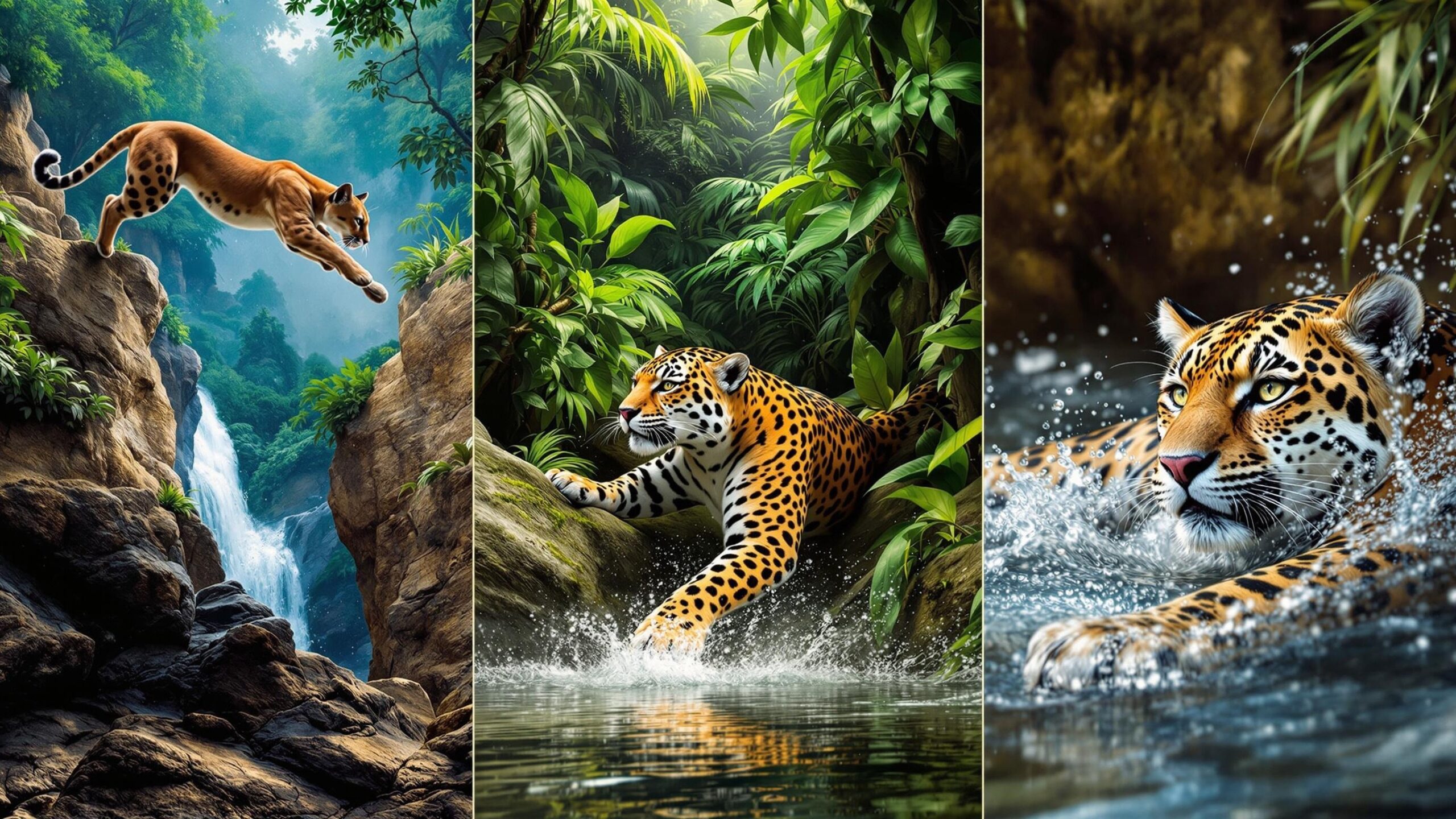
Big Cats: The Silent Rulers, Stealthy Stalkers, and Supreme Predators of the Wild
There is a certain mystique that surrounds the big cats. Their lithe, muscular bodies, piercing eyes, and silent, calculated movements command both fear and admiration. Whether stalking the savannahs, prowling through rainforests, or blending into snowy landscapes, big cats are the apex predators of the mammal world—each species a master of its domain. These elite carnivores have fascinated humans for millennia, appearing in myths, flags, coats of arms, and spiritual traditions across every continent they roam. They are not just predators; they are symbols of power, independence, and grace.
This article serves as an exciting and in-depth introduction to the world of big cats. It will guide you through the defining traits of these majestic creatures while preparing you to explore the sub-categories of big cats, including lions, tigers, leopards, jaguars, cheetahs, snow leopards, cougars, and clouded leopards. Each of these feline legends holds a unique place in the ecosystems they rule and the cultures they inspire.
Taxonomy And Identity
The term “big cat” typically refers to members of the genus Panthera , including lions, tigers, leopards, and jaguars—species known for their size, hunting prowess, and ability to roar. Unlike other big cats, cheetahs are not part of the genus Panthera and cannot roar. They are solitary or live in small family groups, with males sometimes forming coalitions.
The term “big cat” typically refers to members of the genus Panthera , including lions, tigers, leopards, and jaguars—species known for their size, hunting prowess, and ability to roar. Unlike other big cats, cheetahs are not part of the genus Panthera and cannot roar. Big cats is best understood through its anatomy, habitat, diet, behavior, and place in its ecosystem.
Identification And Appearance
It will guide you through the defining traits of these majestic creatures while preparing you to explore the sub- categories of big cats, including lions, tigers, leopards, jaguars, cheetahs, snow leopards, cougars, and clouded leopards. The clouded leopard, with its dreamlike patterning, acrobatic prowess, and secretive nature, is one of the most mysterious cats in the world. Body form, markings, movement, and habitat work together to separate this animal from close relatives and lookalikes.
Anatomy And Adaptations
Muscles ripple beneath its golden coat as it climbs a tree with supernatural ease, dragging prey twice its size with barely a sound. They have adapted to thrive in diverse environments—from dense rainforests and open savannahs to arid deserts and icy mountain ranges. They rely on ambush tactics, using their camouflaged coats to get close to prey before delivering a powerful final blow.
Tigers are strong swimmers and often hunt near rivers, preying on deer, wild boar, and even crocodiles. Their adaptability to human-dominated landscapes has allowed them to survive in areas where other big cats have disappeared. With thick, smoky-gray coats, long tails, and powerful limbs, they are perfectly adapted to cold, mountainous environments.
Range And Wild Habitat
They have adapted to thrive in diverse environments—from dense rainforests and open savannahs to arid deserts and icy mountain ranges. Protecting tigers is not only crucial for biodiversity but for preserving the cultural heritage of the regions they inhabit. Yet, their range has diminished due to deforestation, agriculture, and poaching.
Whether stalking the savannahs, prowling through rainforests, or blending into snowy landscapes, big cats are the apex predators of the mammal world—each species a master of its domain. This habitat context helps separate the animal’s natural setting from zoo, aquarium, farm, or private-care conditions. This habitat context helps separate the animal’s natural setting from zoo, aquarium, farm, or private-care conditions.
Wild Diet And Feeding
These elite carnivores have fascinated humans for millennia, appearing in myths, flags, coats of arms, and spiritual traditions across every continent they roam. Muscles ripple beneath its golden coat as it climbs a tree with supernatural ease, dragging prey twice its size with barely a sound. What unites these cats is not just their physical size but their place at the top of the food chain, their stealthy hunting abilities, and their wide geographic spread.
All big cats are obligate carnivores, relying on meat to survive. They possess exceptional night vision, sharp claws, powerful jaws, and finely-tuned muscles that allow them to stalk, ambush, and overpower prey. And despite their strength and reputation, many of these species are vulnerable or endangered, facing threats from habitat loss, poaching, and human-wildlife conflict.
Behavior
Big cats are solitary by nature, with the exception of lions, which form complex social structures called prides. Behavior is easiest to understand when daily movement, social contact, communication, and risk avoidance are considered together. Behavior is easiest to understand when daily movement, social contact, communication, and risk avoidance are considered together.
Reproduction And Life Cycle
Conservation programs are focused on habitat protection and captive breeding, as the cheetah remains one of the most endangered big cats in Africa. Its daily life is shaped by where it moves, what it eats, how it avoids danger, and how it interacts with other animals. Its daily life is shaped by where it moves, what it eats, how it avoids danger, and how it interacts with other animals.
Ecology And Role In The Environment
Whether stalking the savannahs, prowling through rainforests, or blending into snowy landscapes, big cats are the apex predators of the mammal world—each species a master of its domain. They are not just predators; they are symbols of power, independence, and grace. Each of these feline legends holds a unique place in the ecosystems they rule and the cultures they inspire.
Muscles ripple beneath its golden coat as it climbs a tree with supernatural ease, dragging prey twice its size with barely a sound. Its daily life is shaped by where it moves, what it eats, how it avoids danger, and how it interacts with other animals. Its daily life is shaped by where it moves, what it eats, how it avoids danger, and how it interacts with other animals.
Conservation Status And Threats
And despite their strength and reputation, many of these species are vulnerable or endangered, facing threats from habitat loss, poaching, and human-wildlife conflict. But today, lion populations are declining due to shrinking habitats and conflicts with humans over livestock. Conservation efforts are working to protect these magnificent animals, ensuring that their thunderous roars continue to echo across the African plains.
The Siberian tiger is the largest, while the Sumatran is the smallest and most critically endangered. Jaguars play a key role in the ecosystems they inhabit, controlling populations of herbivores and smaller predators. Cheetahs rely on speed rather than strength, and their fragile build makes them vulnerable to injury and theft of kills by stronger predators.
Human Relationship
These elite carnivores have fascinated humans for millennia, appearing in myths, flags, coats of arms, and spiritual traditions across every continent they roam. Regal, commanding, and deeply symbolic, lions have captured the imagination of humankind for millennia. The term “big cat” typically refers to members of the genus Panthera , including lions, tigers, leopards, and jaguars—species known for their size, hunting prowess, and ability to roar.
These elite carnivores have fascinated humans for millennia, appearing in myths, flags, coats of arms, and spiritual traditions across every continent they roam. Regal, commanding, and deeply symbolic, lions have captured the imagination of humankind for millennia. Its daily life is shaped by where it moves, what it eats, how it avoids danger, and how it interacts with other animals.
Captive Care
Big Cats is best treated as a wild animal whose needs depend on large habitat space, natural diet, social conditions, and specialist veterinary knowledge. Public education, rescue, rehabilitation, or accredited conservation work may be relevant in some cases, but casual private care is not an appropriate frame. The safest human role is to support habitat protection, responsible viewing, and professional wildlife care when intervention is truly needed.
Wild And Captive Variation
Similar Species
Unlike lions, tigers are lone hunters, fiercely territorial and incredibly patient. Jaguars have a similar rosette pattern to leopards, but their rosettes are larger and often have a central black spot. Unlike many cats, jaguars are comfortable in water and often hunt aquatic or semi-aquatic animals.
Unlike other big cats, cheetahs are not part of the genus Panthera and cannot roar. Unlike jaguars or leopards, cougars lack spots as adults and are known for their sleek, uniform coats and long tails. Its daily life is shaped by where it moves, what it eats, how it avoids danger, and how it interacts with other animals.
Common Misconceptions
These elite carnivores have fascinated humans for millennia, appearing in myths, flags, coats of arms, and spiritual traditions across every continent they roam. Its daily life is shaped by where it moves, what it eats, how it avoids danger, and how it interacts with other animals. Its daily life is shaped by where it moves, what it eats, how it avoids danger, and how it interacts with other animals.
FAQ
How can someone identify a Big Cats?
It will guide you through the defining traits of these majestic creatures while preparing you to explore the sub- categories of big cats, including lions, tigers, leopards, jaguars, cheetahs, snow leopards, cougars, and clouded leopards. The clouded leopard, with its dreamlike patterning, acrobatic prowess, and secretive nature, is one of the most mysterious cats in the world. Muscles ripple beneath its golden coat as it climbs a tree with supernatural ease, dragging prey twice its size with barely a sound.
How does the Big Cats behave?
Big cats are solitary by nature, with the exception of lions, which form complex social structures called prides. Its daily life is shaped by where it moves, what it eats, how it avoids danger, and how it interacts with other animals. Its daily life is shaped by where it moves, what it eats, how it avoids danger, and how it interacts with other animals.
Additional Natural History Notes
Big Cats is best interpreted through habitat, seasonal food supply, movement, social behavior, breeding timing, and the pressures created by predators, competitors, and people. Coat color, limb shape, ears, teeth, and body size connect to how the animal travels, finds food, avoids danger, and raises young. Wild behavior also differs from observations made in parks, zoos, farms, rescue settings, or neighborhoods, where space, diet, risk, and human influence can change daily activity.
A complete account also benefits from scale and season. Many animals change their movements, calls, feeding choices, or visibility as weather, water, prey, nesting sites, or shelter change through the year. Those rhythms can make the same species look secretive in one setting and bold in another. By connecting anatomy, habitat, and seasonal behavior, the animal becomes easier to understand as a living part of its ecosystem rather than a list of isolated facts.
Regional history adds another layer. Islands, mountains, deserts, forests, rivers, and grasslands can isolate populations long enough for small differences in size, color, diet, or behavior to matter. Local names, field reports, museum records, and modern genetic work often fit together slowly, especially when the animal is rare, nocturnal, migratory, or difficult to observe. The strongest interpretation treats those clues as part of one natural history rather than separate trivia.