
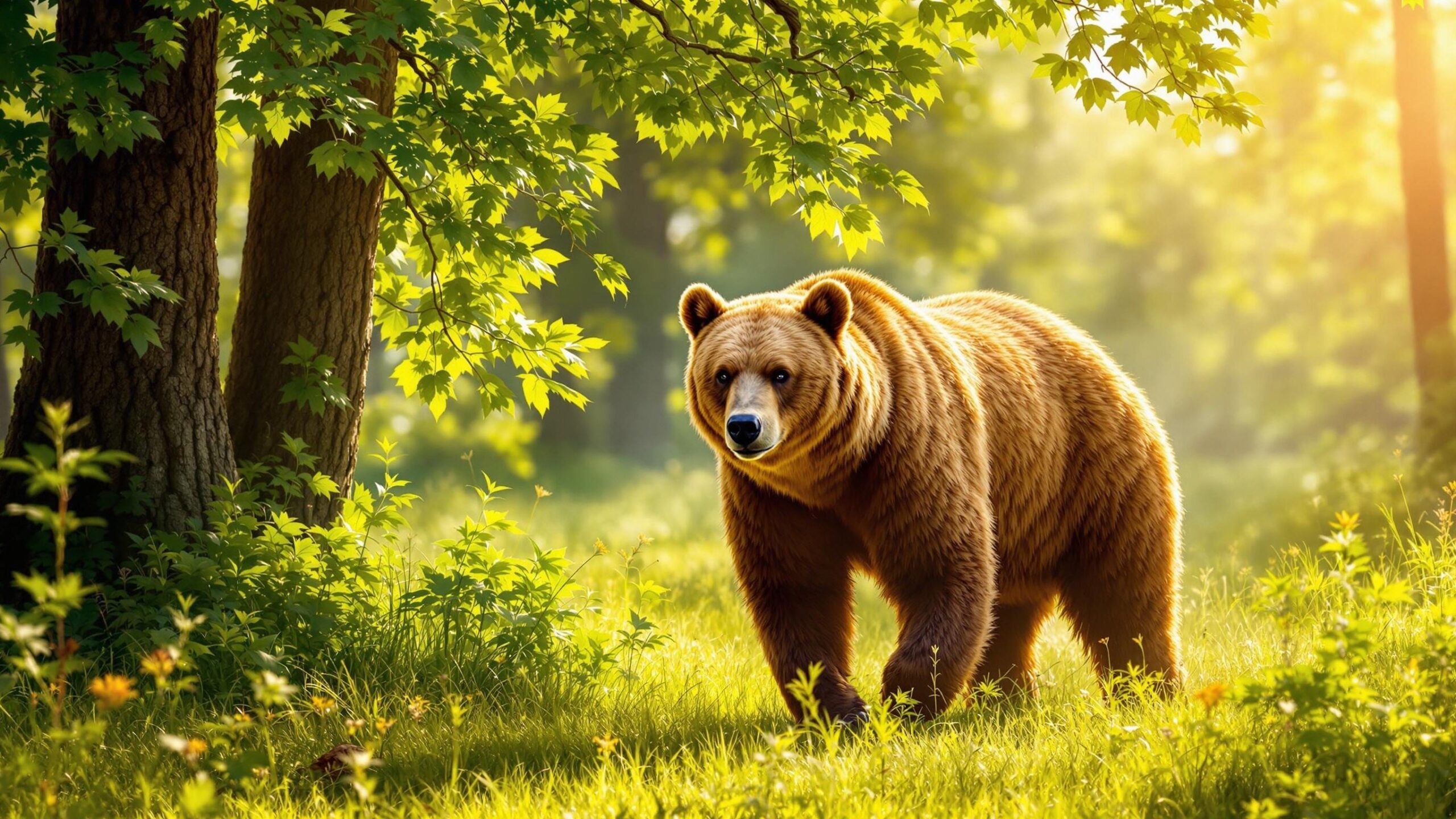
Brown Bears: The Mighty Titans of the Wilderness
There are few animals on Earth that stir the imagination quite like the brown bear. Towering, powerful, and yet often surprisingly gentle, brown bears command both fear and fascination. From the fish-rich rivers of Alaska to the misty mountains of Europe and the icy stretches of Russia, these massive mammals have roamed the wilds for thousands of years. Brown bears are more than just apex predators or iconic wilderness dwellers—they are keystone species, vital parts of the ecosystems they inhabit. They are symbols of strength and endurance, and their story is one of resilience in the face of environmental change, human conflict, and mythic legacy. This page dives deep into the world of brown bears, exploring the biology, diversity, and cultural significance of one of nature’s most awe-inspiring creatures.
Taxonomy And Identity
Brown bears are more than just apex predators or iconic wilderness dwellers—they are keystone species, vital parts of the ecosystems they inhabit. Towering in stature yet elusive in behavior, this majestic mammal has long held a revered place in folklore, ecology, and modern conservation discussions. Despite being classified as carnivores, they are omnivorous and opportunistic feeders, with diets that include berries, roots, insects, fish, carrion, and even large mammals when available.
Brown bears exhibit great variation in size depending on their region and food availability. Coastal bears like those in Alaska often reach enormous sizes due to abundant salmon runs, while interior populations may be smaller and more dependent on plant-based diets. Reproductive behavior is also a marvel of adaptation.
Identification And Appearance
Brown bears exhibit great variation in size depending on their region and food availability. Coastal bears like those in Alaska often reach enormous sizes due to abundant salmon runs, while interior populations may be smaller and more dependent on plant-based diets. Brown bears experience delayed implantation, meaning that even after mating in early summer, the fertilized egg doesn’t implant in the uterus until the fall—only if the mother has gained enough weight.
Brown bears exhibit great variation in size depending on their region and food availability. Coastal bears like those in Alaska often reach enormous sizes due to abundant salmon runs, while interior populations may be smaller and more dependent on plant-based diets. Body form, markings, movement, and habitat work together to separate this animal from close relatives and lookalikes.
Anatomy And Adaptations
Their massive shoulder hump—made of powerful muscle—enables them to dig with great strength, while their long claws and strong jaws serve as tools for both foraging and defense. Despite their bulk, brown bears are fast runners, strong swimmers, and competent climbers. Reproductive behavior is also a marvel of adaptation.
In densely populated areas, they have adapted to avoid human contact, often becoming nocturnal and sticking to remote terrain. Siberian brown bears are robust and well-adapted to the harsh climate. Body form, markings, movement, and habitat work together to separate this animal from close relatives and lookalikes.
Range And Wild Habitat
Brown bears exhibit great variation in size depending on their region and food availability. Grizzly bears ( Ursus arctos horribilis ) are primarily found in Alaska, western Canada, and parts of the northwestern United States, including Montana and Wyoming. Native to the Kodiak Archipelago in Alaska, these bears can reach weights of over 1,500 pounds and stand over 10 feet tall when upright.
In countries like Finland, Slovenia, and Croatia, bear watching has become a major ecotourism attraction. From the fish-rich rivers of Alaska to the misty mountains of Europe and the icy stretches of Russia, these massive mammals have roamed the wilds for thousands of years. Revered for its immense strength, intelligence, and tenacity, the grizzly commands attention whether roaming remote alpine meadows or salmon-rich riverbanks.
Wild Diet And Feeding
Despite being classified as carnivores, they are omnivorous and opportunistic feeders, with diets that include berries, roots, insects, fish, carrion, and even large mammals when available. Their massive shoulder hump—made of powerful muscle—enables them to dig with great strength, while their long claws and strong jaws serve as tools for both foraging and defense. Brown bears exhibit great variation in size depending on their region and food availability.
When they feed on salmon or ungulates, the nutrient-rich remains fertilize the land. The Kodiak bear has also played an important role in indigenous Alutiiq culture, where it is seen as both a spiritual entity and a provider of food and materials. Still, they play crucial ecological roles by controlling populations of prey animals, scavenging carcasses, and fertilizing forest floors.
Behavior
Towering in stature yet elusive in behavior, this majestic mammal has long held a revered place in folklore, ecology, and modern conservation discussions. Reproductive behavior is also a marvel of adaptation. Behavior is easiest to understand when daily movement, social contact, communication, and risk avoidance are considered together.
Reproduction And Life Cycle
Brown bears experience delayed implantation, meaning that even after mating in early summer, the fertilized egg doesn’t implant in the uterus until the fall—only if the mother has gained enough weight. Its daily life is shaped by where it moves, what it eats, how it avoids danger, and how it interacts with other animals. Its daily life is shaped by where it moves, what it eats, how it avoids danger, and how it interacts with other animals.
Ecology And Role In The Environment
Brown bears are more than just apex predators or iconic wilderness dwellers—they are keystone species, vital parts of the ecosystems they inhabit. After facing near-extinction in the lower 48 states, they now number over 700 in the Greater Yellowstone Ecosystem. These bears play a vital ecological role.
Their scat spreads seeds across vast distances. Still, they play crucial ecological roles by controlling populations of prey animals, scavenging carcasses, and fertilizing forest floors. Its daily life is shaped by where it moves, what it eats, how it avoids danger, and how it interacts with other animals.
Conservation Status And Threats
Towering in stature yet elusive in behavior, this majestic mammal has long held a revered place in folklore, ecology, and modern conservation discussions. Coastal bears like those in Alaska often reach enormous sizes due to abundant salmon runs, while interior populations may be smaller and more dependent on plant-based diets. In Yellowstone National Park, for example, grizzlies are a conservation success story.
Despite their massive size, Kodiak bears are not particularly aggressive unless provoked, and they tend to live in low-density populations with minimal territorial conflict. Once widespread across the continent, their populations have been reduced by habitat loss, hunting, and human development. Still, they play crucial ecological roles by controlling populations of prey animals, scavenging carcasses, and fertilizing forest floors.
Human Relationship
They are symbols of strength and endurance, and their story is one of resilience in the face of environmental change, human conflict, and mythic legacy. Despite their bulk, brown bears are fast runners, strong swimmers, and competent climbers. Cubs are born in the den during hibernation, and mother bears emerge in spring with their young, ready to teach them how to survive the harsh, competitive wild.
Grizzlies have become symbols of untamed wilderness and the struggle between human expansion and natural preservation. Its daily life is shaped by where it moves, what it eats, how it avoids danger, and how it interacts with other animals. Its daily life is shaped by where it moves, what it eats, how it avoids danger, and how it interacts with other animals.
Captive Care
Brown Bears is best treated as a wild animal whose needs depend on large habitat space, natural diet, social conditions, and specialist veterinary knowledge. Public education, rescue, rehabilitation, or accredited conservation work may be relevant in some cases, but casual private care is not an appropriate frame. The safest human role is to support habitat protection, responsible viewing, and professional wildlife care when intervention is truly needed.
Wild And Captive Variation
Wild Brown Bears behavior reflects natural movement, feeding, breeding, and social conditions that cannot be reduced to a simple display setting. Captive or managed observations can help education and science in limited contexts, but they do not replace the ecological complexity of wild habitat. Differences between wild and managed settings are most useful when they clarify welfare, conservation, and natural history.
Similar Species
Common Misconceptions
They are symbols of strength and endurance, and their story is one of resilience in the face of environmental change, human conflict, and mythic legacy. One of the more fascinating aspects of Siberian brown bears is their role in mythology and folklore. The Himalayan brown bear also holds a place in cryptozoology and folklore, often cited in local myths about the yeti or “abominable snowman.” These tales reflect both the mystery of the landscape and the aura of the bear itself—a creature both real and mythical, vanishing into the snow just as you catch a glimpse.
Why Brown Bears Still Captivate Us Brown bears live on the edge of myth and reality. Its daily life is shaped by where it moves, what it eats, how it avoids danger, and how it interacts with other animals. Its daily life is shaped by where it moves, what it eats, how it avoids danger, and how it interacts with other animals.
FAQ
How does the Brown Bears behave?
Towering in stature yet elusive in behavior, this majestic mammal has long held a revered place in folklore, ecology, and modern conservation discussions. Reproductive behavior is also a marvel of adaptation. Its daily life is shaped by where it moves, what it eats, how it avoids danger, and how it interacts with other animals.
Sources
- https://animalstreets.com/mammals/land-mammals/bears/brown-bears/ Organization: animalstreets.com Source type: Live page or linked source URL: https://animalstreets.com/mammals/land-mammals/bears/brown-bears/ Information verified: Used for current-page extraction and source discovery; independent fact verification may still be required. Date checked: 2026-08-27 Reliability notes: Current page / internal source; use for audit context, not independent verification
- https://animalstreets.com/mammals-product-reviews/land-mammals-product-reviews/ Organization: animalstreets.com Source type: Live page or linked source URL: https://animalstreets.com/mammals-product-reviews/land-mammals-product-reviews/ Information verified: Used for current-page extraction and source discovery; independent fact verification may still be required. Date checked: 2026-08-27 Reliability notes: Current page / internal source; use for audit context, not independent verification
- https://animalstreets.com/eurasian-brown-bear/ Organization: animalstreets.com Source type: Live page or linked source URL: https://animalstreets.com/eurasian-brown-bear/ Information verified: Used for current-page extraction and source discovery; independent fact verification may still be required. Date checked: 2026-08-27 Reliability notes: Current page / internal source; use for audit context, not independent verification
- https://animalstreets.com/mammals/land-mammals/bears/brown-bears/grizzly-bear/ Organization: animalstreets.com Source type: Live page or linked source URL: https://animalstreets.com/mammals/land-mammals/bears/brown-bears/grizzly-bear/ Information verified: Used for current-page extraction and source discovery; independent fact verification may still be required. Date checked: 2026-08-27 Reliability notes: Current page / internal source; use for audit context, not independent verification
- https://animalstreets.com/mammals/land-mammals/bears/brown-bears/himalayan-brown-bear/ Organization: animalstreets.com Source type: Live page or linked source URL: https://animalstreets.com/mammals/land-mammals/bears/brown-bears/himalayan-brown-bear/ Information verified: Used for current-page extraction and source discovery; independent fact verification may still be required. Date checked: 2026-08-27 Reliability notes: Current page / internal source; use for audit context, not independent verification
- https://animalstreets.com/mammals/land-mammals/bears/brown-bears/kodiak-bear/ Organization: animalstreets.com Source type: Live page or linked source URL: https://animalstreets.com/mammals/land-mammals/bears/brown-bears/kodiak-bear/ Information verified: Used for current-page extraction and source discovery; independent fact verification may still be required. Date checked: 2026-08-27 Reliability notes: Current page / internal source; use for audit context, not independent verification
- https://animalstreets.com/mammals/land-mammals/bears/brown-bears/siberian-brown-bear/ Organization: animalstreets.com Source type: Live page or linked source URL: https://animalstreets.com/mammals/land-mammals/bears/brown-bears/siberian-brown-bear/ Information verified: Used for current-page extraction and source discovery; independent fact verification may still be required. Date checked: 2026-08-27 Reliability notes: Current page / internal source; use for audit context, not independent verification
- https://animalstreets.com/mammals/land-mammals/bears/brown-bears/tibetan-blue-bear/ Organization: animalstreets.com Source type: Live page or linked source URL: https://animalstreets.com/mammals/land-mammals/bears/brown-bears/tibetan-blue-bear/ Information verified: Used for current-page extraction and source discovery; independent fact verification may still be required. Date checked: 2026-08-27 Reliability notes: Current page / internal source; use for audit context, not independent verification