The Blueprint of a Primate: Biological and Behavioral Foundations
What makes a primate a primate? At the most fundamental level, it’s a combination of anatomy and behavior. Most primates share features such as opposable thumbs or big toes, allowing them to grasp and manipulate objects. Their eyes are positioned forward, providing a wide field of binocular vision, essential for navigating complex forest environments. They typically have flexible limbs, nails instead of claws, and complex brain structures supporting learning, memory, and emotion. But primates are not only biologically distinct—they are behaviorally extraordinary. Many live in intricate social groups with hierarchies, alliances, and communication systems. Their young are born relatively helpless, requiring extended care, which fosters strong familial bonds and the development of social intelligence. Tool use, self-recognition, empathy, and even elements of culture have all been observed in primate societies. With such a wide range of species, primates have spread across Central and South America, Africa, Asia, and a few island regions, adapting in astonishing ways. From the smallest mouse lemurs of Madagascar to the massive mountain gorillas of central Africa, primates are deeply integrated into the ecosystems they inhabit, playing roles as seed dispersers, prey, predators, and ecosystem engineers.
Great Apes: The Giants of Intelligence and Emotion
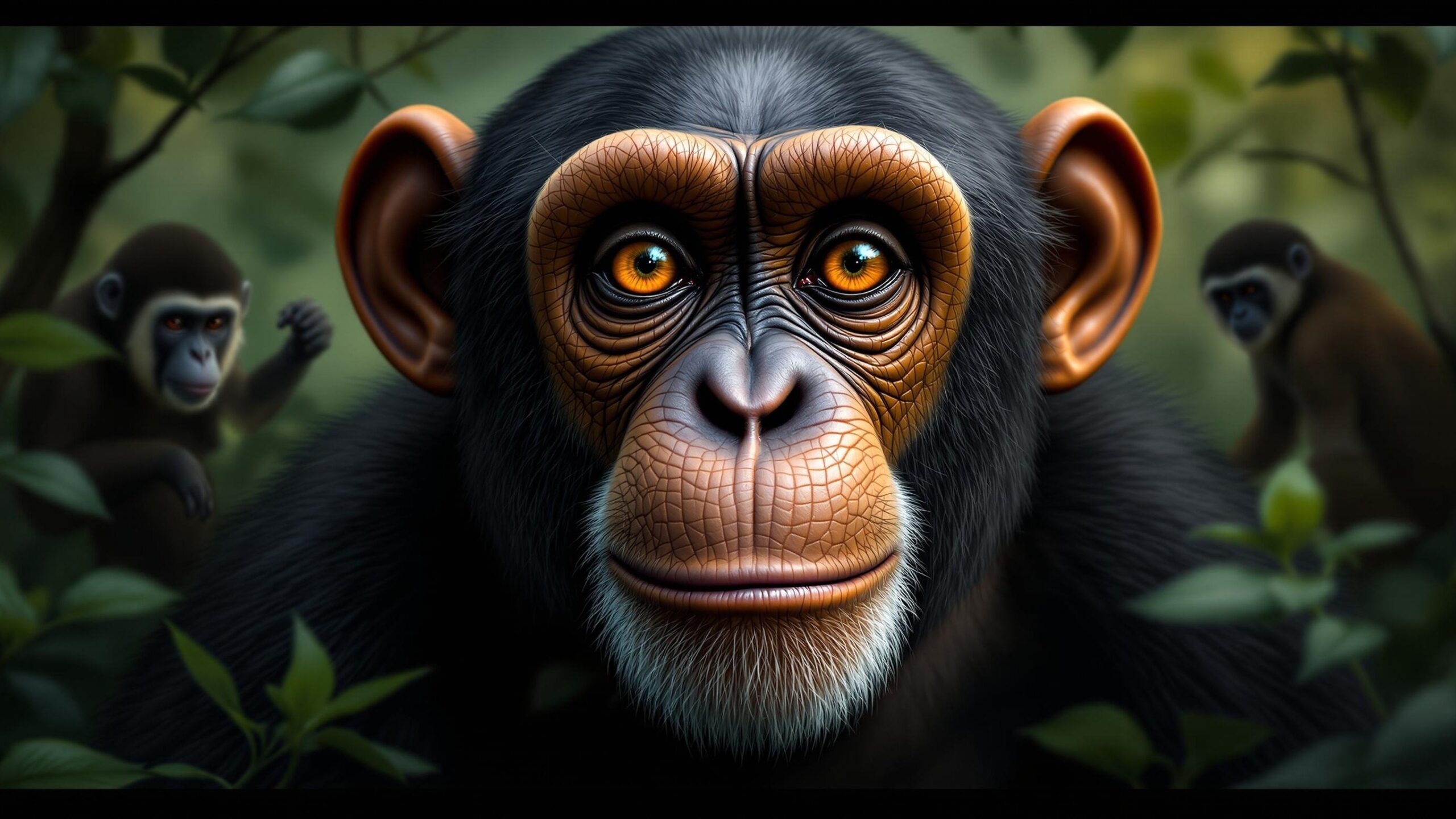
Among primates, none are more iconic—or more closely related to us—than the great apes. This group includes gorillas, chimpanzees, bonobos, orangutans, and humans. All great apes are large-bodied, highly intelligent, and capable of profound emotional expression and cognitive feats. They are the primates most like us, not just genetically but behaviorally. Gorillas, the largest living primates, are gentle giants of Africa’s forests. Living in cohesive family groups led by silverback males, they communicate through vocalizations, body language, and facial expressions. Despite their size, gorillas are mostly herbivorous and spend their days foraging for leaves, stems, and fruit.
Chimpanzees, also native to Africa, are known for their advanced tool use, problem-solving skills, and political social structures. They hunt in groups, care deeply for their young, and show empathy and grief. Their cousins, the bonobos, share over 98% of our DNA and are known for their peaceful, matriarchal societies and emphasis on social bonding through touch and play. In the rainforests of Borneo and Sumatra, orangutans live more solitary lives. With their long arms and distinctive reddish fur, they swing gracefully through trees and demonstrate astonishing memory and foresight. Their intelligence is among the highest in the animal kingdom, and they have even been observed building elaborate sleeping nests and using leaves as umbrellas or gloves. Each great ape species plays a vital ecological role and represents a unique evolutionary path. Sadly, all are endangered due to habitat loss, poaching, and disease. Their protection is not just a moral responsibility—it’s essential for the health of tropical forests and a deeper understanding of our own roots.
Old World Monkeys: Masters of Adaptation from Savannahs to Temples
Old World monkeys belong to the family Cercopithecidae and are native to Africa and Asia. They have narrow, downward-facing nostrils and are typically diurnal, living both on the ground and in trees. This group includes species such as baboons, macaques, colobus monkeys, and vervets, each with its own fascinating lifestyle. Baboons are powerful, ground-dwelling monkeys found in savannahs and scrublands. They live in large troops with complex dominance hierarchies and communicate through an array of vocalizations, gestures, and facial expressions. Their omnivorous diet includes everything from fruits and seeds to insects and small animals. Macaques are perhaps the most widespread Old World monkeys and have adapted to some of the most human-altered environments on Earth. Japanese macaques, or snow monkeys, famously bathe in natural hot springs during winter, while rhesus macaques thrive in bustling cities across South Asia. Their adaptability has allowed them to coexist—sometimes contentiously—with human populations.
Colobus monkeys, with their striking black-and-white coats and specialized stomachs, are arboreal folivores, feeding primarily on leaves. Their unique digestive systems allow them to extract nutrients from cellulose-rich plants, a trait rare among primates. Old World monkeys are incredibly varied, socially dynamic, and ecologically significant. They are seed dispersers, prey for large carnivores, and cultural symbols in many societies. Their proximity to human environments makes them crucial for both conservation and research.
New World Monkeys: The Treetop Travelers of the Americas
On the other side of the globe, New World monkeys—found in Central and South America—form a distinct branch of the primate family. These monkeys, part of the infraorder Platyrrhini, have wide, outward-facing nostrils, long tails, and a knack for life in the treetops. They include capuchins, howler monkeys, spider monkeys, tamarins, and marmosets. Capuchins, often dubbed the “brainy monkeys” of the Americas, are small but intelligent. They use tools, cooperate in group tasks, and have even been trained to assist people with disabilities. Their expressive faces and active curiosity make them favorites in research and media.
Howler monkeys are the rainforest’s most vocal residents. Their booming calls can be heard for miles and serve to mark territory and communicate with rivals. Despite their formidable vocalizations, they are gentle herbivores that live in stable family groups. Spider monkeys, with their long limbs and prehensile tails, are the acrobats of the jungle. They can move with astonishing speed and agility through the forest canopy, helping spread seeds across great distances. Tamarins and marmosets are among the smallest monkeys, often weighing less than a pound. They live in tight-knit groups and frequently give birth to twins. Unique among primates, some marmoset species exhibit cooperative breeding, where siblings help care for younger infants. New World monkeys play essential roles in rainforest ecology and are among the most threatened by deforestation. Their conservation is tied directly to the fate of tropical biodiversity and indigenous forest stewardship.
Prosimians: The Ancient Lineage of Lemurs, Lorises, and Tarsiers
Primates didn’t begin with monkeys and apes. Their earliest forms were the prosimians—”before monkeys”—a group that includes lemurs, lorises, and tarsiers. These animals retain many primitive traits but are no less fascinating. Lemurs, found only in Madagascar, display an incredible range of diversity. From the tiny mouse lemur to the strikingly colored sifaka, lemurs are the island’s most charismatic creatures. They have evolved to fill niches similar to monkeys, but in isolation, leading to some of the most unusual behaviors and appearances in the primate world. Lorises, found in South and Southeast Asia, are slow-moving, nocturnal primates with large eyes adapted for night vision. Despite their adorable appearance, some lorises have a toxic bite, a rare trait in mammals.
Tarsiers bridge the gap between prosimians and monkeys. They are small, nocturnal primates with massive eyes, capable of rotating their heads nearly 180 degrees. Found in Southeast Asia, they are the only entirely carnivorous primates, feeding on insects, lizards, and small birds. Prosimians are living fossils in many ways, offering a glimpse into the earliest chapters of primate evolution. Their uniqueness makes them conservation priorities, especially as many lemur species teeter on the brink of extinction due to habitat destruction in Madagascar.
The Role of Primates in Ecosystems and Human Culture
Across their wide range, primates play indispensable roles in the health of ecosystems. As frugivores, they consume large quantities of fruit and disperse seeds through their droppings, helping regenerate forests. Their interactions with plants and insects influence ecological dynamics, from pollination to nutrient cycling. In turn, primates are important prey for large carnivores and snakes, linking them into broader food webs. Their presence or absence can drastically alter ecological balance, making them valuable indicators of forest health and biodiversity. Beyond ecology, primates have profoundly shaped human culture, religion, and science. They appear in ancient cave art, religious symbols, myths, and modern entertainment. Monkeys and apes have been the subject of scientific fascination for centuries, helping us understand behavior, neuroscience, and evolutionary biology. Studying primates also helps us reflect on ourselves. Our own species, Homo sapiens, is part of this extraordinary family. Through the lens of our primate cousins, we see the roots of our intelligence, emotions, cooperation, and conflicts.
Threats and Conservation: Saving Our Closest Relatives
Despite their intelligence and adaptability, primates are among the most threatened mammals on Earth. Over 60% of primate species are at risk of extinction. Habitat destruction, primarily due to logging, mining, and agriculture, is the biggest driver. The illegal pet trade, hunting for bushmeat, disease transmission, and climate change add additional pressures. Conservation efforts are multifaceted. Protected areas, eco-tourism, reforestation projects, and local community involvement are all essential. Sanctuaries and rehabilitation centers offer hope for orphaned or rescued individuals. International cooperation, stronger laws, and ethical research practices are also vital components of primate conservation. Public education plays a key role. When people see primates not just as spectacles but as sentient beings with complex lives, empathy and action often follow. Every protected tree, every undisturbed troop, every child who learns to care can help write a better future for primates.
Why Primates Still Matter—and Why They Always Will
Primates are not just another group of animals. They are thinkers, builders, explorers, nurturers, and survivors. Their lives mirror ours in countless ways, offering lessons in family, resilience, curiosity, and adaptation. They connect ecosystems, influence culture, and deepen our understanding of the natural world—and of ourselves. As you explore the incredible range of primates—from the tool-using chimpanzee to the leaping lemur, from the snow monkey to the treetop tamarin—you step into a world of wonder, intelligence, and urgency. Each sub-category of primates deserves its own spotlight, its own protection, and its own chapter in the story of life on Earth. This pillar article is just the beginning. Dive deeper into the lives of great apes, the strategies of monkeys, the mysteries of prosimians. Learn their stories, share their challenges, and join in the effort to protect the wild, intelligent family we belong to—one branch of an ancient tree, still growing, still wild, still wondrous.