
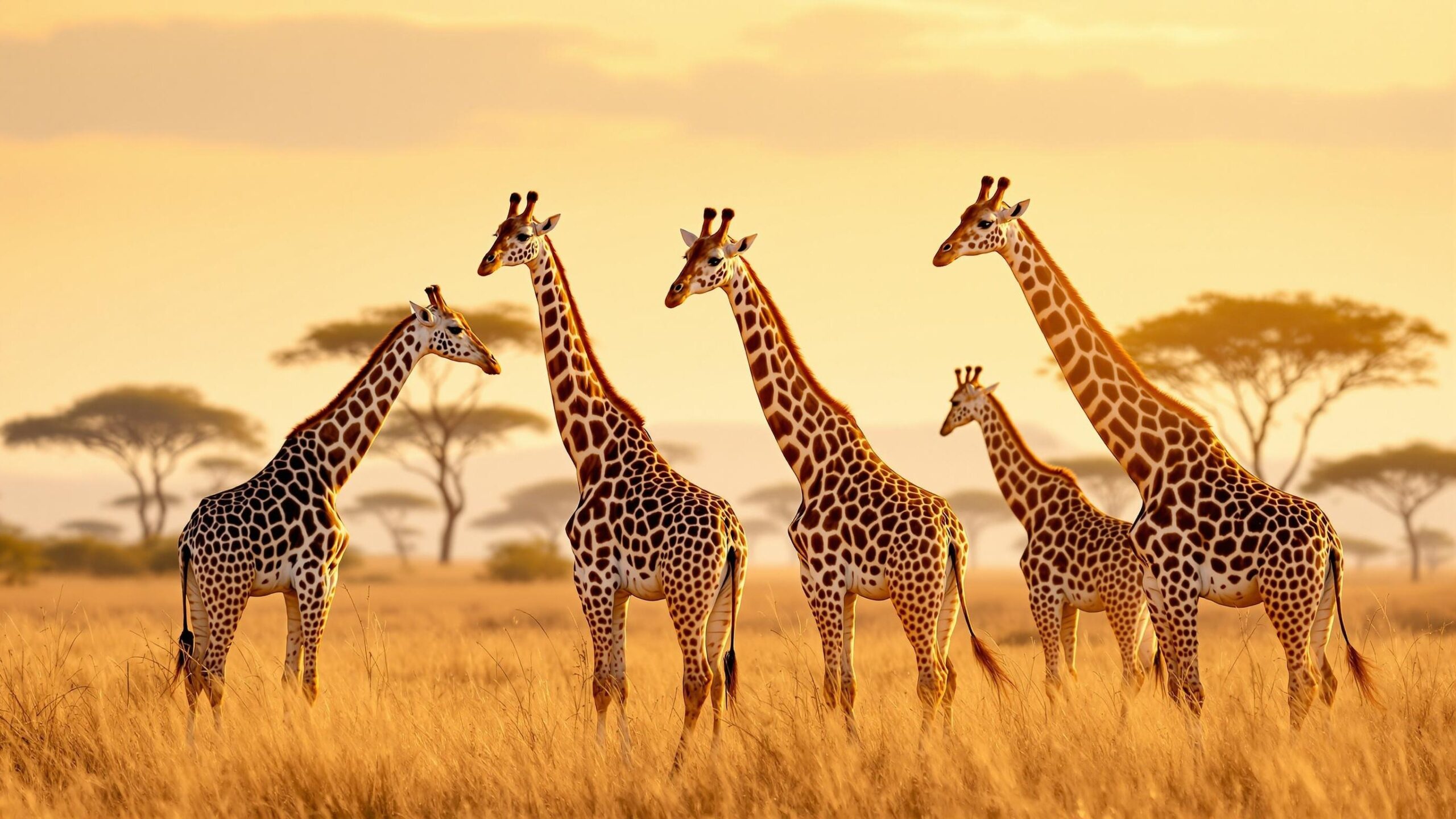
There’s something immediately magical about seeing a giraffe for the first time. Whether it’s in the wild under the golden African sun or behind the glass of a zoo enclosure, giraffes have a way of capturing our imagination. Their impossibly long necks stretch high into the canopy, their graceful stride rolls like a wave across the savannah, and their spotted coats shimmer with individuality. Towering above all other land animals, giraffes are not just gentle giants—they are evolutionary marvels and keystones of their ecosystem. We’ll also break down the primary sub-categories within the giraffe family and highlight the unique features that make each one unforgettable. Let’s journey into the heart of Africa and uncover the towering truth about these extraordinary animals.
Taxonomy And Identity
We’ll also break down the primary sub-categories within the giraffe family and highlight the unique features that make each one unforgettable. As a distinct species within the giraffe family, the Southern Giraffe plays a vital role in its ecosystem and stands as a living symbol of the continent’s rich biodiversity. Diversity in the Tallest Family on Earth Though often grouped together as a single species, giraffes are now understood to consist of multiple distinct species and subspecies, each with its own geographic range, coat pattern, and genetic makeup.
Each species has adapted to its own region, climate, and ecological niche, resulting in stunning variations across the giraffe family. Giraffes is best understood through its anatomy, habitat, diet, behavior, and place in its ecosystem. Giraffes is best understood through its anatomy, habitat, diet, behavior, and place in its ecosystem.
Identification And Appearance
With its lofty neck, kaleidoscopic coat of patchy patterns, and serene gaze, the Northern Giraffe represents a magnificent blend of elegance and evolutionary ingenuity. With its striking, net-like coat pattern and impossibly long legs and neck, this subspecies—or by some taxonomies, species—of giraffe stands as a living masterpiece of evolution. Body form, markings, movement, and habitat work together to separate this animal from close relatives and lookalikes.
Anatomy And Adaptations
These adaptations are not just fascinating—they are vital to the giraffe’s survival in one of the planet’s most competitive ecosystems. Each species has adapted to its own region, climate, and ecological niche, resulting in stunning variations across the giraffe family. Their environments range from dense woodlands to open plains, and their adaptability is one of their strongest survival traits.
This exquisite coloration is more than just a spectacle; it helps the giraffe blend into the dappled light of savannah woodlands, offering some camouflage from predators. Body form, markings, movement, and habitat work together to separate this animal from close relatives and lookalikes. Body form, markings, movement, and habitat work together to separate this animal from close relatives and lookalikes.
Range And Wild Habitat
Diversity in the Tallest Family on Earth Though often grouped together as a single species, giraffes are now understood to consist of multiple distinct species and subspecies, each with its own geographic range, coat pattern, and genetic makeup. Each species has adapted to its own region, climate, and ecological niche, resulting in stunning variations across the giraffe family. These giraffes occupy some of the driest and most politically unstable regions of Africa, including parts of Chad, South Sudan, and Niger.
These giraffes are typically found in countries like Namibia, Botswana, Zimbabwe, and South Africa. Their environments range from dense woodlands to open plains, and their adaptability is one of their strongest survival traits. Their impossibly long necks stretch high into the canopy, their graceful stride rolls like a wave across the savannah, and their spotted coats shimmer with individuality.
Wild Diet And Feeding
This height gives them a unique evolutionary edge: they can feed on leaves and shoots high in the acacia trees where few other herbivores can reach. The Ecological Impact of a Towering Herbivore Giraffes play an essential role in their ecosystems that goes far beyond their unique appearance. Giraffes also occupy a critical place in the food web.
Without giraffes, entire food chains and ecological processes would be destabilized. This height gives them a unique evolutionary edge: they can feed on leaves and shoots high in the acacia trees where few other herbivores can reach. In death, giraffe carcasses nourish scavengers and decomposers, cycling nutrients back into the ecosystem.
Behavior
Reproduction And Life Cycle
By breaking branches and stripping bark, they also provide nesting sites for birds and access points for insects. Its daily life is shaped by where it moves, what it eats, how it avoids danger, and how it interacts with other animals. Its daily life is shaped by where it moves, what it eats, how it avoids danger, and how it interacts with other animals.
Ecology And Role In The Environment
Towering above all other land animals, giraffes are not just gentle giants—they are evolutionary marvels and keystones of their ecosystem. Towering over the acacia-dotted landscapes of Kenya and Tanzania, this subspecies of giraffe is not only the tallest land mammal on Earth but also a cornerstone of the ecosystem it inhabits. As a distinct species within the giraffe family, the Southern Giraffe plays a vital role in its ecosystem and stands as a living symbol of the continent’s rich biodiversity.
These adaptations are not just fascinating—they are vital to the giraffe’s survival in one of the planet’s most competitive ecosystems. Each species has adapted to its own region, climate, and ecological niche, resulting in stunning variations across the giraffe family. This exquisite coloration is more than just a spectacle; it helps the giraffe blend into the dappled light of savannah woodlands, offering some camouflage from predators.
Conservation Status And Threats
As a result, they are among the most threatened giraffe populations on the continent. The Nubian giraffe, once widespread across northeastern Africa, now survives in fragmented populations, including in Ethiopia and the Alatash National Park along the Sudanese border. Thanks to conservation efforts, their numbers have increased, but they remain critically endangered.
Their population health is relatively stable, making them a cornerstone species for ecotourism and safari experiences. They are also known for their gentler demeanor, which has made them a favorite among wildlife enthusiasts and conservationists. However, their numbers have plummeted in recent decades due to poaching, habitat loss, and human-wildlife conflict.
Human Relationship
These adaptations are not just fascinating—they are vital to the giraffe’s survival in one of the planet’s most competitive ecosystems. Thanks to conservation efforts, their numbers have increased, but they remain critically endangered. However, their numbers have plummeted in recent decades due to poaching, habitat loss, and human-wildlife conflict.
These adaptations are not just fascinating—they are vital to the giraffe’s survival in one of the planet’s most competitive ecosystems. Thanks to conservation efforts, their numbers have increased, but they remain critically endangered. Its daily life is shaped by where it moves, what it eats, how it avoids danger, and how it interacts with other animals.
Captive Care
Whether it’s in the wild under the golden African sun or behind the glass of a zoo enclosure, giraffes have a way of capturing our imagination. Females often form nursery groups, known as crèches, where several mothers collectively care for their young. Responsible care depends on matching space, diet, social conditions, climate, and veterinary oversight to the animal’s biology.
Wild And Captive Variation
Their selective feeding habits influence plant community composition and contribute to biodiversity. Its daily life is shaped by where it moves, what it eats, how it avoids danger, and how it interacts with other animals. Its daily life is shaped by where it moves, what it eats, how it avoids danger, and how it interacts with other animals.
Similar Species
It is distinguished by large, irregular patches and a more muted color palette. Its daily life is shaped by where it moves, what it eats, how it avoids danger, and how it interacts with other animals. Its daily life is shaped by where it moves, what it eats, how it avoids danger, and how it interacts with other animals.
Common Misconceptions
Chinese emperors once received them as gifts, believing they were mythical creatures. Its daily life is shaped by where it moves, what it eats, how it avoids danger, and how it interacts with other animals. Its daily life is shaped by where it moves, what it eats, how it avoids danger, and how it interacts with other animals.
FAQ
Additional Natural History Notes
Giraffes is best interpreted through habitat, seasonal food supply, movement, social behavior, breeding timing, and the pressures created by predators, competitors, and people. Coat color, limb shape, ears, teeth, and body size connect to how the animal travels, finds food, avoids danger, and raises young. Wild behavior also differs from observations made in parks, zoos, farms, rescue settings, or neighborhoods, where space, diet, risk, and human influence can change daily activity.
A complete account also benefits from scale and season. Many animals change their movements, calls, feeding choices, or visibility as weather, water, prey, nesting sites, or shelter change through the year. Those rhythms can make the same species look secretive in one setting and bold in another. By connecting anatomy, habitat, and seasonal behavior, the animal becomes easier to understand as a living part of its ecosystem rather than a list of isolated facts.
Regional history adds another layer. Islands, mountains, deserts, forests, rivers, and grasslands can isolate populations long enough for small differences in size, color, diet, or behavior to matter. Local names, field reports, museum records, and modern genetic work often fit together slowly, especially when the animal is rare, nocturnal, migratory, or difficult to observe. The strongest interpretation treats those clues as part of one natural history rather than separate trivia.
Natural History In Context
Giraffes becomes clearer when its body, behavior, habitat, and feeding role are read together. A fish may look simple at first glance, yet small details such as mouth angle, fin placement, tail shape, body depth, eye size, color pattern, and swimming posture often reveal how it survives. These traits are not decoration. They show whether the animal cruises through open water, waits near cover, searches along the bottom, picks food from surfaces, schools with others, or depends on speed during short bursts of movement.
Season, age, and setting can also change what people notice. Young animals may use safer or shallower places than adults. Breeding condition can alter color, aggression, movement, or social behavior. Water clarity, light, depth, current, temperature, and available prey can all affect where the animal appears and how active it seems. When those details are included, the page gives a fuller explanation of the animal’s real life instead of relying on one memorable trait.
The animal’s relationship with people is strongest when it stays connected to biology. Aquarium care, fisheries, conservation, observation, and photography all depend on the same basic facts: space, water quality, diet, stress, natural behavior, and habitat. For wild animals, responsible attention means understanding the pressures around them without turning the page into an alarm. For captive or familiar species, it means keeping welfare and natural history at the center of the explanation.