
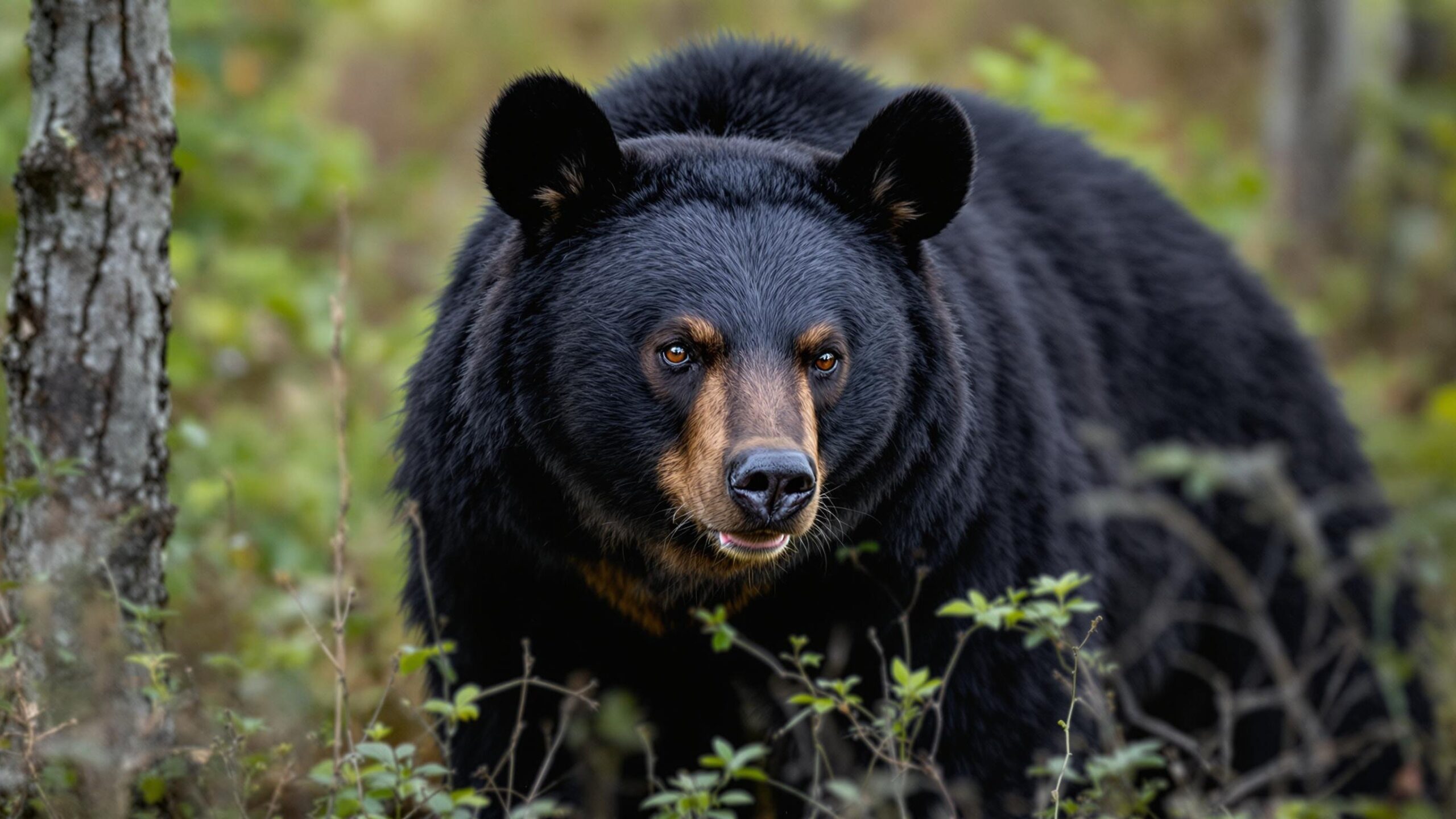
American Black Bears: North America’s Adaptable Bear
American black bears are the most widespread bears in North America, but their name can mislead people. A black bear is not always black, and a brown-colored black bear is still not a grizzly. The species is best understood through body shape, diet, seasonal behavior, habitat use, and the way bears respond to human food.
How To Recognize An American Black Bear
American black bears often have a straight facial profile, rounded ears, short claws, a small tail, and a body that can look lower at the shoulders than at the rump. They are usually smaller and less shoulder-humped than brown bears, but size and color can overlap.
Color is the biggest trap. The North American Bear Center notes that black bears can be black, brown, cinnamon, blond, blue-gray, or white. In western open habitats, lighter color phases can be common, while eastern bears are more often black.
Range And Habitat
The National Park Service describes American black bears as the most common and widely distributed bear species in North America. They live in forests, mountains, swamps, coastal areas, and mixed landscapes where cover and seasonal foods are available.
They are highly adaptable, but they still need secure habitat, den sites, seasonal food, and safe movement routes. Around people, that adaptability can become dangerous if bears learn to seek garbage, birdseed, pet food, crops, or camp food.
Diet
American black bears are omnivores with a diet that changes through the year. They eat grasses, leaves, berries, nuts, acorns, roots, insects, larvae, carrion, fish, and occasionally young animals. In many regions, plant foods make up most of the annual diet.
Fall is especially important because bears need to gain fat before winter denning. Poor natural food years can increase movement and make bears more likely to investigate human food sources.
Winter Denning
Black bears reduce activity in winter, but the depth and length of denning vary by climate, food supply, sex, age, and reproductive status. NPS materials describe lowered metabolism, slower heart rate, and regional variation in hibernation-like behavior.
Pregnant females give birth in winter dens, and cubs remain with the mother as they grow and learn. Den disturbance can be harmful, especially for females with young.
Behavior Around People
Most black bears avoid people when they can. Problems often begin when a bear gets rewarded with food. Garbage, coolers, bird feeders, grills, fruit trees, campsites, and unsecured vehicles can teach a bear to return to human spaces.
The safest bear is a wild bear that never associates people with food. Securing attractants protects both people and bears because food-conditioned bears are more likely to be removed or killed.
Conservation
American black bears are generally considered secure across much of their broad range, and Animal Diversity Web lists them as Least Concern. That broad status does not mean every local population faces the same conditions. Regional hunting management, habitat fragmentation, road mortality, poaching, and conflict all still matter.
Good management combines habitat protection, regulated harvest where legal, public education, attractant control, and careful response to conflict.
Similar Bears
American black bears are often confused with brown bears, especially when the black bear is cinnamon or brown. Brown bears usually have a more prominent shoulder hump, longer claws, and a more dished face. Polar bears are much larger, marine-associated bears. Spectacled bears live in South America and have different facial markings and range.
Quick Facts About American Black Bears
- Scientific name: Ursus americanus.
- Family: Ursidae.
- Range: North America.
- Diet: Omnivorous, often heavily plant-based seasonally.
- Color: Black, brown, cinnamon, blond, blue-gray, or rarely white.
- Winter behavior: Denning/torpor varies by region and conditions.
- Key safety note: Never feed bears; secure attractants.
Sources
- National Park Service. Black Bears.
- National Park Service. American Black Bear.
- North American Bear Center. Black Bear Color Phases.
- Animal Diversity Web. Ursus americanus.