
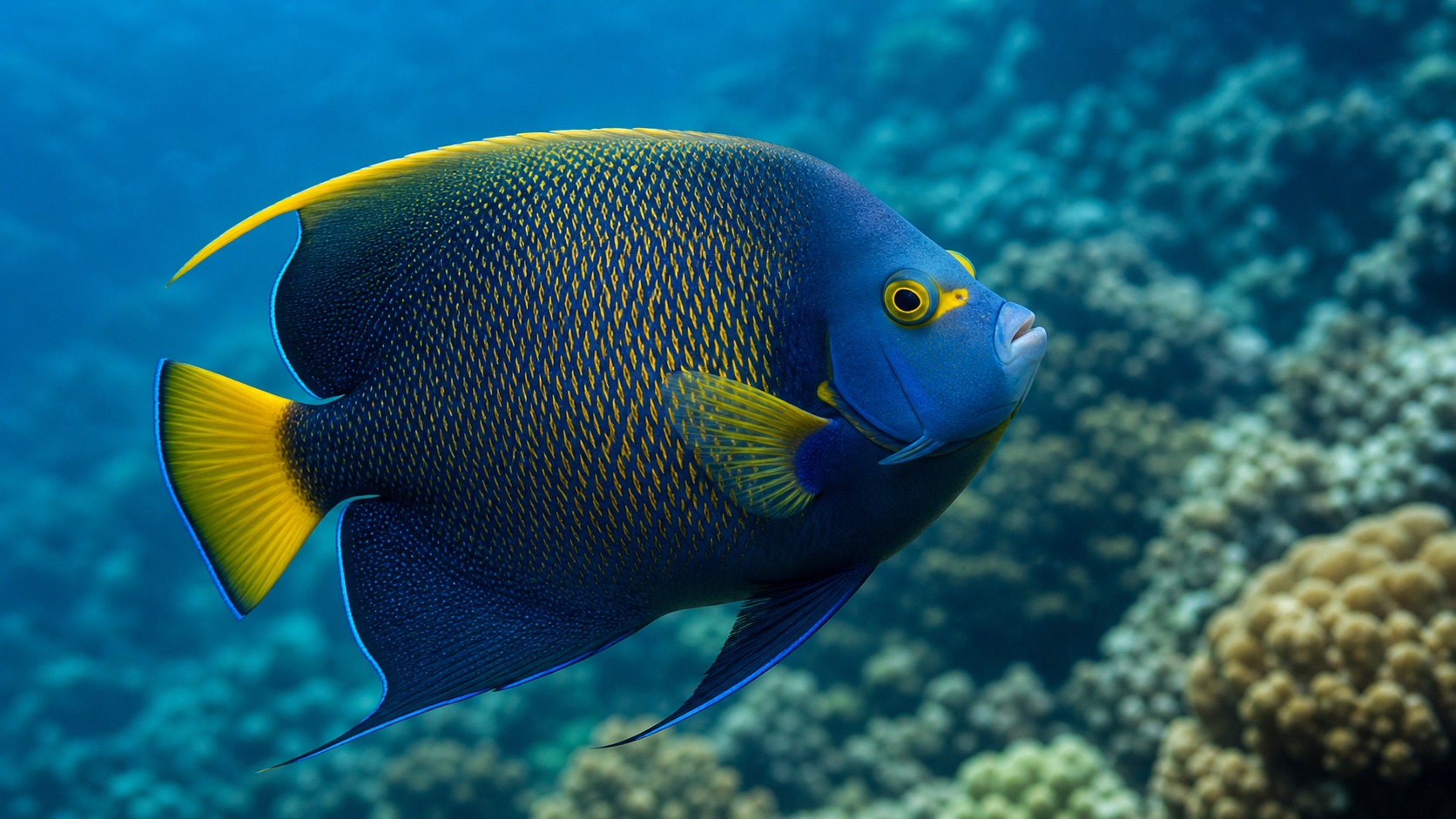
Marine angelfish are best understood as real wild fish rather than just names in an ocean category. Popularity can make them seem simpler than they are, so this profile keeps the biology visible.
The focus here is recognition, habitat background, behavior, feeding, adult expectations, and responsible interpretation. The fish should be read as a living animal rather than a color form, a novelty, a fishing label, or a quick aquarium tag.
What Are Angelfish?
Marine angelfish are marine reef fishes in the family Pomacanthidae, a group separate from freshwater angelfish. Marine angelfish can be familiar from aquariums, reef photographs, or popular culture, but the animal becomes clearer when it is connected to habitat, adult size, feeding style, body structure, and normal behavior.
Marine angelfish are saltwater reef fishes, while freshwater angelfish are cichlids; the shared common name can mislead readers. Classification helps readers separate shared reef traits from details that make this fish distinct.
How to Recognize Angelfish
The key recognition clues are to identify marine angelfish, look for a deep-bodied colorful reef fish with a small picking mouth and reef-patrolling behavior. Those visible clues are stronger than color alone because age, sex, stress, light, and life stage can change appearance.
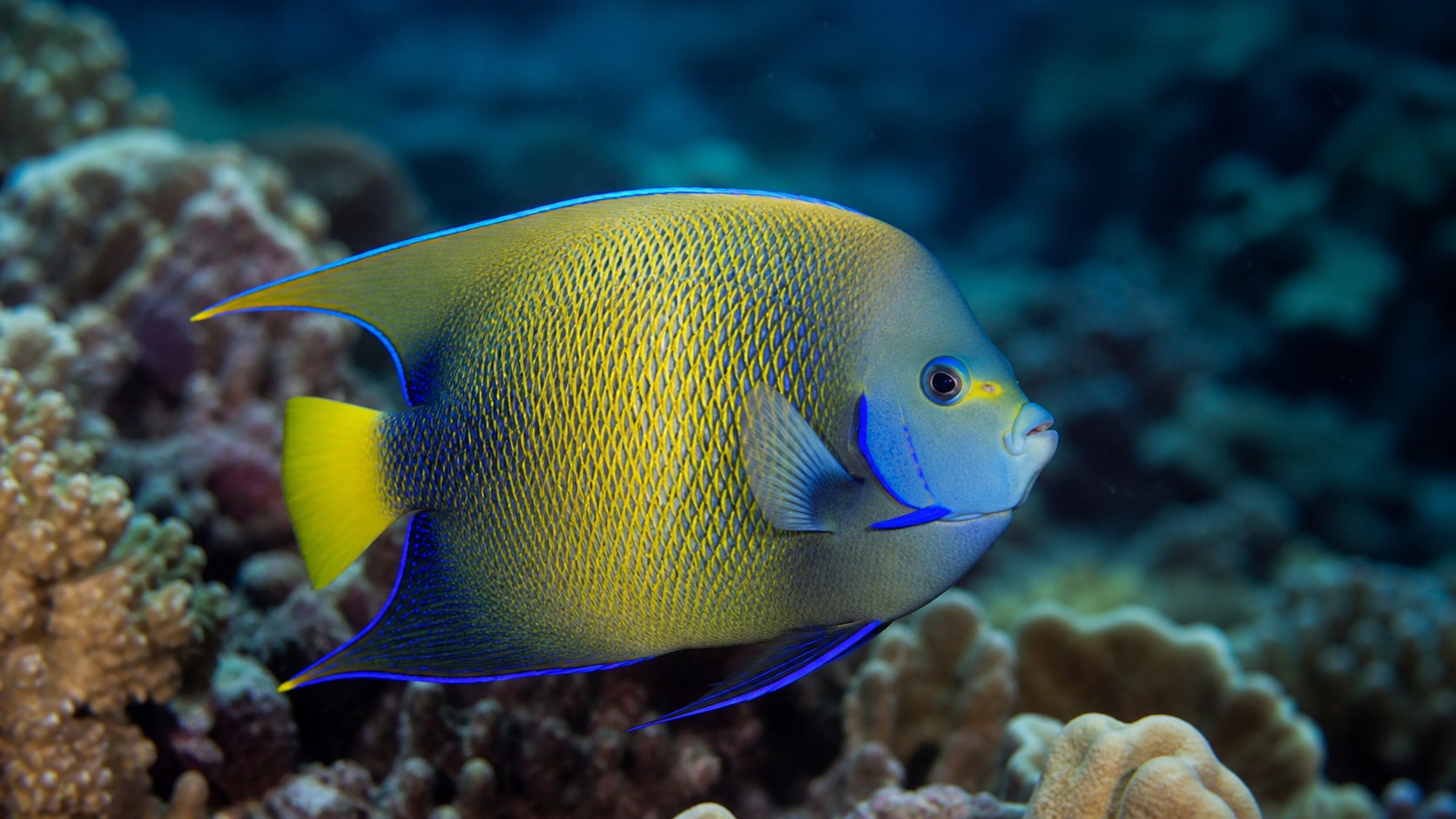
A marine angelfish image should be read for body depth, mouth, gill spine area, juvenile or adult pattern, and reef setting. The best identification habit is to read the whole animal: mouth position, fin shape, body depth, posture, swimming level, and surrounding habitat.
Native Range and Habitat
Marine angelfish occur on tropical and subtropical reefs in the Atlantic, Indian, and Pacific Oceans depending on species. Saltwater fish are easiest to understand when the page explains place rather than treating the animal as a floating portrait.
They use coral reefs, rocky reefs, ledges, caves, sponges, reef slopes, and other structured habitats with shelter and feeding sites. Water movement, depth, shelter, bottom type, season, and food availability all help explain the animal.
Body Design and Movement
The deep compressed body, small mouth, and strong fins suit maneuvering through reef structure and picking food from surfaces. Body shape affects feeding, escape, courtship, swimming style, and how the fish uses cover.
Marine angelfish often glide, turn, hover, and patrol reef spaces with deliberate control. Movement reveals whether the fish grazes, hovers, patrols, hides, defends a host, or cruises through open reef space.
Feeding Style
Marine angelfish feed on sponges, algae, tunicates, small invertebrates, and other reef foods depending on species. Diet is strongest when explained as a biological pattern rather than a short shopping list.
Their small mouths and reef posture point toward picking and browsing rather than high-speed pursuit. Mouth shape and daily movement help readers understand why the fish eats that way.
Behavior and Temperament
Marine angelfish may defend territories, form pairs, change color with age, and use reef structure for shelter. Behavior changes with age, season, group size, predators, shelter, and neighbors.
Their elegance can hide assertive behavior and specialized feeding. Careful profiles describe what the fish is trying to do rather than reducing it to one personality word.
Saltwater Context Without Oversimplifying
Marine angelfish are popular in reef photography and aquariums because their colors and patterns are dramatic. Popularity gives readers a close view, but it can flatten the animal into a color, character, or aquarium label.
A stronger view keeps the living fish at the center. Color, motion, shape, and reputation matter most when connected to adult needs, habitat, social behavior, and ecology.
Care Caution and Responsibility
Diet, territory, adult size, reef compatibility, and species differences make simple beauty-based explanations risky. Responsible interpretation begins with the adult animal, not a small individual or cropped photo.
This profile is informational rather than a care sheet, but it still helps readers notice welfare and conservation issues: adult size, water quality, diet, stress, collection pressure, compatible habitat, and whether the fish has been reduced to a selling point.
Life Cycle and Growth
Marine angelfish spawn in marine waters, and juveniles often look different from adults. Reproduction and growth often explain why a fish behaves differently at different sizes.
Juvenile angelfish can have different colors, stripes, or roles than adults, sometimes causing identification confusion. Young fish can hide the mature story, especially when juvenile colors or social roles differ from adults.
Ecological Role
Marine angelfish connect sponges, algae, reef surfaces, shelter, and predator-prey relationships. Even familiar saltwater fish belong to food webs and habitat processes.
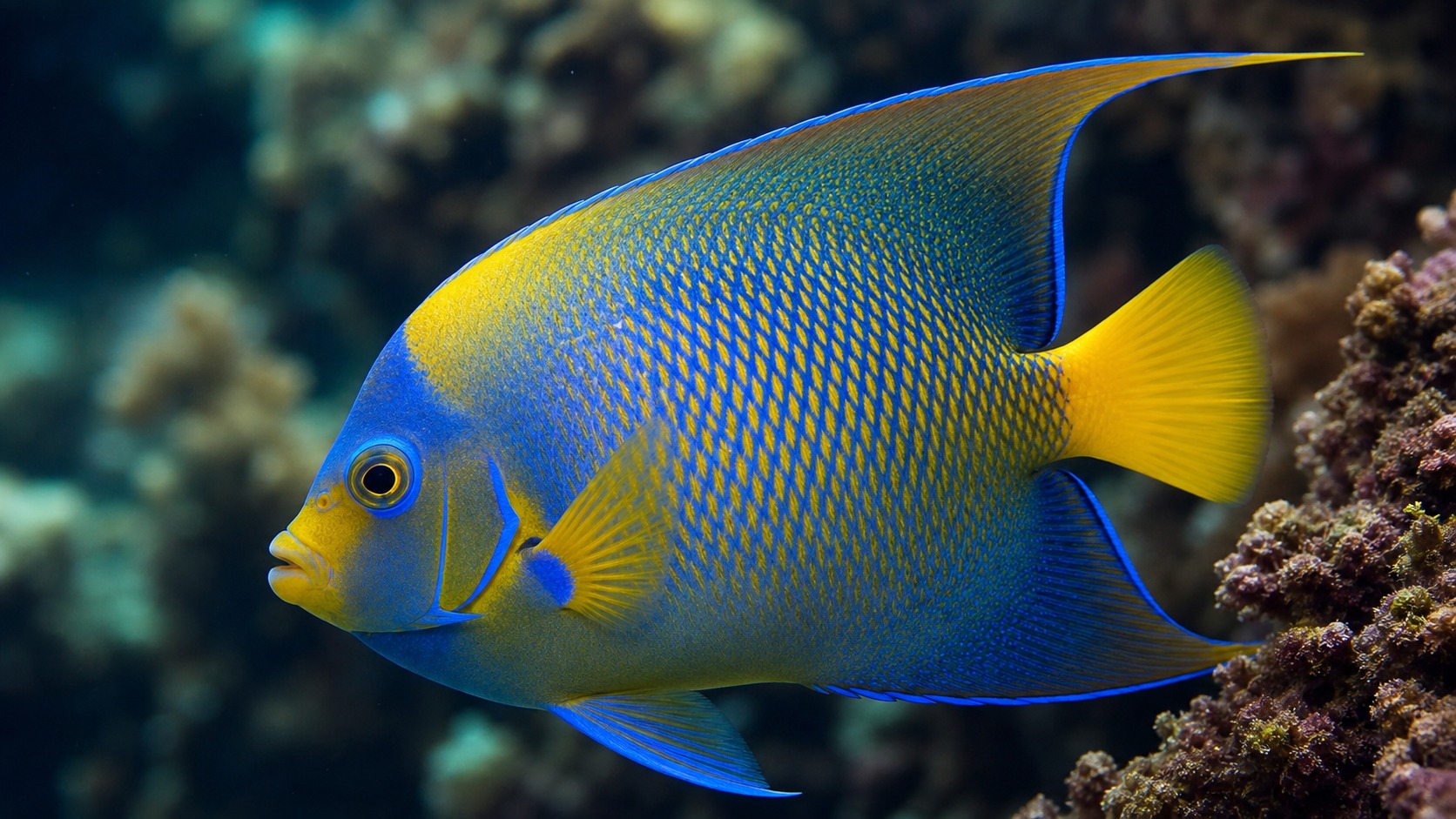
That role may include grazing, cleaning surfaces, defending space, controlling algae, moving nutrients, feeding predators, or sheltering among reef animals.
Human Relationship
People value marine angelfish for reef beauty, aquarium interest, and dramatic juvenile-to-adult transformations. People shape the public image through aquariums, diving, fishing, films, photography, and field guides.
That relationship is not automatically bad, but it requires accuracy because simple labels can replace the real animal.
Conservation and Trade Context
Reef decline, collection pressure, and habitat change can affect different marine angelfish species in different ways. Conservation context varies by species and region.
Fishing pressure, habitat change, reef damage, aquarium collection, bycatch, climate stress, and local rules can all matter.
Common Misunderstandings
The main misunderstanding is confusing marine angelfish with freshwater angelfish. Misunderstandings often begin when the fish is treated as a color, mascot, novelty, or single aquarium rule.
Marine angelfish are reef fishes with separate taxonomy, reef diets, territory, and juvenile-adult changes. A better reading connects the common name to body design, adult size, habitat, diet, and behavior.
Similar Saltwater Fish
Marine angelfish are compared with butterflyfish, tangs, damselfish, wrasses, and freshwater angelfish by name. Comparisons help because many reef fishes share color or habitat while living in very different ways.
They differ from butterflyfish by family traits and from freshwater angelfish by habitat, taxonomy, and body details. Good comparisons use structure first: mouth angle, body depth, fin placement, adult size, social behavior, swimming level, and habitat.
How to Read Images of Angelfish
A marine angelfish image should be read for body depth, mouth, gill spine area, juvenile or adult pattern, and reef setting. Images can exaggerate color while hiding adult size, swimming level, or the habitat clues that make the fish understandable.
For Animal Streets readers, the useful habit is to look past the prettiest frame and read the mouth, fins, body depth, eye position, posture, and surrounding context.
Why Angelfish Matters
Marine angelfish matter because they show how shared common names can hide very different animals. It gives readers a familiar entry point into marine fish biology.
Saltwater fishes can teach natural history because people notice their color, shape, and movement quickly.
Mouth Shape and Feeding Clues
Mouth shape is one of the simplest ways to read marine angelfish as living animals instead of labels. A grazing mouth, picking mouth, beak, or small plankton-feeding mouth reveals feeding strategy.
For marine angelfish, feeding clues should be paired with body position because food access, shelter, and social behavior meet in the same daily routine.
Fins, Balance, and Swimming Level
Fins control balance, braking, turning, hovering, courtship display, and quick movement away from danger.
Swimming level is equally important. Watching marine angelfish move helps readers understand the body more clearly than memorizing a size number alone.
Adult Size and Space Reality
Many saltwater fishes are photographed as juveniles or at flattering angles, and juvenile size can hide adult needs.
For marine angelfish, adult expectations change how readers should understand photographs and common advice.
Color, Pattern, and Identification
Color is often the first attraction, but color can be the least stable clue. Wild forms, age, sex, stress, depth, lighting, breeding condition, and camera settings can all change the look of a fish.
That is why marine angelfish need more than a color description. Body shape, mouth position, fin structure, adult size, habitat, and behavior keep identification useful.
Social Signals and Stress
Fish behavior can look simple from outside the water, but much of it is communication. Schooling, hovering, hiding, displaying, guarding space, grazing, or avoiding open water may all signal comfort, competition, fear, courtship, or stress.
For marine angelfish, the useful question is what the fish is trying to accomplish.
Water, Season, and Natural Rhythm
Marine fish live inside rhythms that photographs can hide: tides, currents, spawning seasons, plankton pulses, reef change, temperature shifts, and predator movement.
This matters for marine angelfish because natural background explains why the body and behavior evolved.
Popularity and Animal Welfare
Marine angelfish may be familiar because people keep, catch, film, photograph, or display them, but popularity should not erase welfare.
A better public explanation keeps admiration and responsibility together.
How to Compare It With Neighbors
Comparing marine angelfish with nearby saltwater fishes should start with structure rather than color.
The comparison prevents category drift and keeps this page distinct within Saltwater Fish.
What Good Photos Should Show
A strong photo of marine angelfish should show the full body, mouth shape, fins, texture, posture, and enough surrounding context to understand how the fish uses space.
A useful image pair gives both recognition detail and a sense of behavior, habitat, or swimming level.
The Practical Reading Habit
The practical habit is to ask three questions: what is the animal, where does it normally live, and what does its body help it do?
For marine angelfish, that habit turns saltwater familiarity into natural history.
Why the Parent Group Matters
Marine angelfish sit inside the Saltwater Fish group because people often meet them through reefs, diving, fishing, aquariums, or ocean photography.
The parent group helps readers compare marine animals side by side without treating all reef fish as the same.
Reef Structure and Daily Choices
Reef structure shapes the daily choices of marine angelfish. Open water, caves, coral heads, rubble, sand lanes, host animals, and algae-covered surfaces each create different risks and feeding chances.
A reader who notices structure will understand the fish faster than a reader who only memorizes color. The surrounding habitat explains why the animal turns, hovers, grazes, displays, shelters, or defends a small area.
Life Stage and Identification Caution
Life stage can change the way marine angelfish should be identified. Juveniles may use different shelter, carry different patterns, or behave more cautiously than adults.
That matters because many public images show the most colorful or convenient stage. A stronger profile keeps juvenile clues, adult size, and mature behavior in the same conversation.
Responsible Observation
Responsible observation means giving the animal space and reading behavior without forcing a reaction. Chasing, tapping glass, crowding a reef animal, or provoking display can distort the very behavior people came to understand.
For marine angelfish, the best observation is patient. Watch where the fish returns, how it feeds, what it avoids, and which nearby animals or structures shape its choices.
Identification Summary
To identify marine angelfish, look for a deep-bodied colorful reef fish with a small picking mouth and reef-patrolling behavior.
The quick pattern is body plus behavior. Once readers can name body shape, feeding style, swimming level, and adult needs, the fish becomes easier to understand and compare.
Simple Takeaway
Marine angelfish are saltwater reef fish, not freshwater angelfish in the ocean.
Their story combines color, reef structure, specialized feeding, territory, and dramatic life-stage changes.