
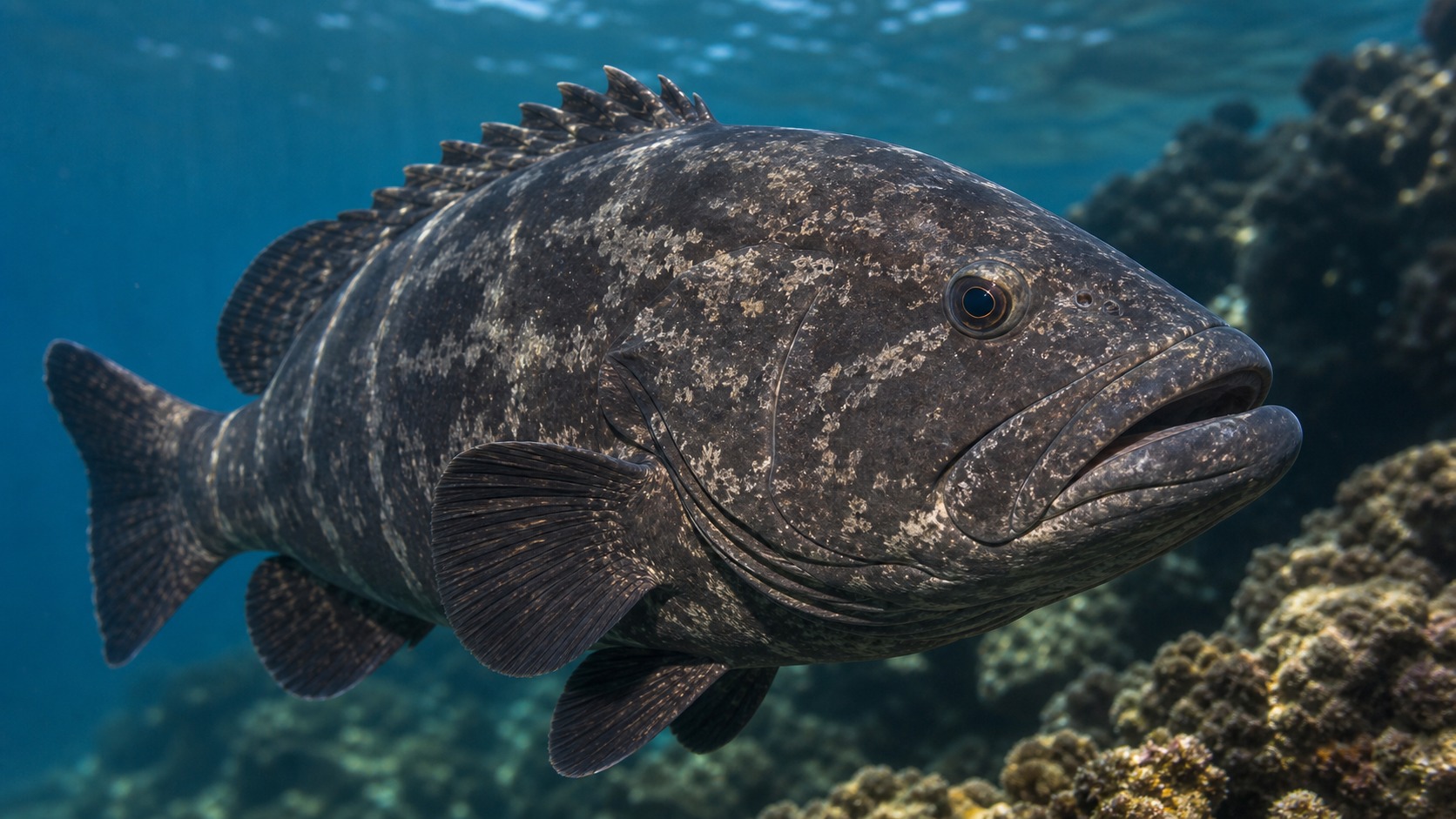
Black grouper are large reef-associated fish recognized for mottled dark bodies, heavy jaws, powerful suction feeding, and close ties to reefs, ledges, wrecks, and warm western Atlantic structure. A complete profile explains identification, range, habitat, feeding, movement, behavior, conservation context, and comparison with goliath grouper and other reef predators.
A: To identify black grouper, look for large mottled reef fish with heavy mouths, dark blotches, robust bodies, and warm reef or wreck habitat.
A: Black Grouper use coral reefs, rocky reefs, ledges, wrecks, caves, drop-offs, patch reefs, mangrove nurseries when young, and warm clear waters with structure.
A: Black grouper eat fish, squid, crabs, shrimp, and reef-associated prey captured with powerful suction strikes from cover or short pursuit.
A: The robust body, dark rectangular blotches, olive or gray-brown coloration, heavy mouth, spiny dorsal fin, rounded tail, and grouper profile define black grouper.
A: No. Robust body, dark rectangular blotches, olive or gray-brown coloration, heavy mouth, spiny dorsal fin, coral reefs, rocky reefs, ledges, wrecks, caves, movement, diet, and life stage all matter.
A: Black grouper are compared with goliath grouper, gag grouper, Nassau grouper, red grouper, snappers, sea basses, and other reef predators.
A: In images, look for mottled dark body, heavy jaw, reef or ledge context, broad fins, and natural shelter-holding posture.
A: Black grouper conservation depends on fisheries regulations, reef habitat health, spawning protections, bycatch handling, water quality, and the slow growth typical of many groupers.
A: Black grouper belong in this group because body structure, habitat use, and behavior help readers compare related animals without blending them together.
A: Black grouper remain reef structure predators; their story connects ambush feeding, spawning adults, reef quality, fisheries management, and protection of complex marine habitats.
Black grouper are best understood as real wild animals rather than just names in a broad animal category. Black Grouper becomes clearer when robust body, dark rectangular blotches, olive or gray-brown coloration, heavy mouth, spiny dorsal fin is read alongside coral reefs, rocky reefs, ledges, wrecks, caves and structure-oriented ambush predators shaped by reef shelter, territorial space, suction feeding, age-related habitat use, spawning behavior.
The useful thread is practical: recognize Black Grouper, place it in coral reefs, rocky reefs, ledges, wrecks, caves, then connect feeding, movement, and conservation pressure. Black grouper should be read as living animals, not as novelties, hazards, mascots, or quick labels.
What Are Black Grouper?
Black grouper are western Atlantic groupers commonly associated with Mycteroperca bonaci. This profile starts with western Atlantic groupers commonly associated with Mycteroperca bonaci, then connects robust body, dark rectangular blotches, olive or gray-brown coloration, heavy mouth, spiny dorsal fin to habitat, diet, movement, and comparison within Grouper.
Black Grouper should be read through robust body, dark rectangular blotches, olive or gray-brown coloration, heavy mouth, spiny dorsal fin, coral reefs, rocky reefs, ledges, wrecks, caves, and structure-oriented ambush predators shaped by reef shelter, territorial space, suction feeding, age-related habitat use, spawning behavior rather than one famous trait or cropped photo. The profile stays grounded in coral reefs, rocky reefs, ledges, wrecks, caves, structure-oriented ambush predators shaped by reef shelter, territorial space, suction feeding, age-related habitat use, spawning behavior, adult form, and the pressures that shape its range.
How To Recognize Them
To identify black grouper, look for large mottled reef fish with heavy mouths, dark blotches, robust bodies, and warm reef or wreck habitat. That pattern is stronger when color is checked against structure, habitat, posture, and movement.
A useful black grouper photo check focuses on mottled dark body, heavy jaw, reef or ledge context, broad fins, and natural shelter-holding posture. The best reading habit is to connect visible field marks with coral reefs, rocky reefs, ledges, wrecks, caves.
Native Range And Habitat
Black grouper occur in warm western Atlantic, Gulf, Caribbean, and nearby waters, with local presence shaped by reefs, rocky ledges, clear water, prey, spawning areas, and fishing pressure. Range matters on this page because coral reefs, rocky reefs, ledges, wrecks, caves shape feeding, shelter, breeding, and movement.
That habitat mix includes coral reefs, rocky reefs, ledges, wrecks, caves, drop-offs, patch reefs, mangrove nurseries when young, and warm clear waters with structure. In those surroundings, movement details include this pattern: Black grouper hold near reef shelter, make short ambush lunges, move among structure, and may gather or shift habitat around spawning seasons and size changes.
Body Design And Movement
The robust body, dark rectangular blotches, olive or gray-brown coloration, heavy mouth, spiny dorsal fin, rounded tail, and grouper profile define black grouper. That body plan matters because robust body, dark rectangular blotches, olive or gray-brown coloration, heavy mouth, spiny dorsal fin changes how the animal feeds, moves, rests, and uses cover.
Black grouper hold near reef shelter, make short ambush lunges, move among structure, and may gather or shift habitat around spawning seasons and size changes. For this animal, movement is not decoration: Black grouper hold near reef shelter, make short ambush lunges, move among structure, and may gather or shift habitat around spawning seasons and size changes.
Feeding Style
Black grouper eat fish, squid, crabs, shrimp, and reef-associated prey captured with powerful suction strikes from cover or short pursuit. Diet is clearest when the food list is tied to habitat, body form, and opportunity: Fish, squid, crabs, shrimp, and reef-associated prey captured.
Feeding details connect directly to robust body, dark rectangular blotches, olive or gray-brown coloration, heavy mouth, spiny dorsal fin and to the places where Black Grouper find food. That is why the food story should stay connected to the whole animal.
Behavior And Daily Rhythm
They are structure-oriented ambush predators shaped by reef shelter, territorial space, suction feeding, age-related habitat use, spawning behavior, and strong fishing interest. Those behaviors matter most when read against season, disturbance, life stage, and the habitat pattern described above.
The point is to show how Black Grouper survive day to day, especially through structure-oriented ambush predators shaped by reef shelter, territorial space, suction feeding, age-related habitat use, spawning behavior, and strong fishing interest.
Grouper Context
Black grouper belong on this page because their body plan and daily life help readers compare nearby animals without blending them together.
This animal stands apart through dark mottled patterning, warm western Atlantic reef habitat, heavy grouper build, suction feeding, and strong association with structure rather than open water. That comparison works best when it stays tied to robust body, dark rectangular blotches, olive or gray-brown coloration, heavy mouth, spiny dorsal fin, Black grouper hold near reef shelter, make short ambush lunges, move among structure, and may gather or shift habitat around spawning seasons and size changes, and coral reefs, rocky reefs, ledges, wrecks, caves.
Responsible Interpretation
Responsible interpretation starts with distance, habitat respect, and attention to natural behavior, especially when Black Grouper are feeding, resting, breeding, or moving.
For Black Grouper, observation should support understanding, not pressure the animal into a closer or more dramatic encounter.
Life Cycle And Growth
Life stage can change size, markings, behavior, and risk; young Black Grouper should be interpreted in the context of adult form and habitat.
The life-cycle story is strongest when growth, breeding timing, shelter, and survival pressure are tied back to coral reefs, rocky reefs, ledges, wrecks, caves.
Ecological Role
Black grouper connect food resources, predators, soil, shelter, vegetation, open ground, and seasonal movement in ways that are easy to miss from a simple portrait.
Their ecological role is tied to fish, squid, crabs, shrimp, and reef-associated prey captured, movement through habitat, and the way other species respond to their presence.
Human Relationship
People encounter these animals through protected areas, farms, roads, field guides, restoration projects, grasslands, scrublands, forests, and rural edges.
Public interest should lead to better recognition and respect, especially around conservation depends on fisheries regulations, reef habitat health, spawning protections, bycatch handling, water quality, and the slow growth typical of many groupers.
Conservation And Habitat Pressure
Black grouper conservation depends on fisheries regulations, reef habitat health, spawning protections, bycatch handling, water quality, and the slow growth typical of many groupers. For Black Grouper, the conservation picture centers on conservation depends on fisheries regulations, reef habitat health, spawning protections, bycatch handling, water quality, and the slow growth typical of many groupers.
That context is more useful than vague alarm because it names the pressures that affect the animal and the habitat it relies on.
Common Misunderstandings
A common mistake is treating one famous trait as the whole story of Black Grouper.
Black grouper need comparison through body shape, movement, habitat, diet, adult size, and real-world behavior. That approach makes the page more accurate and more useful.
Similar Grouper
Black grouper are compared with goliath grouper, gag grouper, Nassau grouper, red grouper, snappers, sea basses, and other reef predators. The closest comparisons should focus on They differ through dark mottled patterning, warm western Atlantic reef habitat, heavy grouper build, suction feeding, and strong association with structure rather than open water rather than loose resemblance.
Those traits keep the comparison grounded in dark mottled patterning, warm western Atlantic reef habitat, heavy grouper build, suction feeding, and strong association with structure rather than open water. Structure, behavior, and habitat give the comparison more value than color alone.
How To Read Images
A black grouper image is strongest when it clearly shows mottled dark body, heavy jaw, reef or ledge context, broad fins, and natural shelter-holding posture. A useful photo should help readers notice Black grouper are best understood through body shape, movement, habitat, and feeding style.
The best image habit is to connect visible details to the animal’s real setting: coral reefs, rocky reefs, ledges, wrecks, caves.
Why Black Grouper Matter
Black grouper matter because they turn habitats into visible natural history. They show how robust body, dark rectangular blotches, olive or gray-brown coloration, heavy mouth, spiny dorsal fin, structure-oriented ambush predators shaped by reef shelter, territorial space, suction feeding, age-related habitat use, spawning behavior, and place fit together.
For black grouper, the larger story connects ambush feeding, spawning adults, reef quality, fisheries management, and protection of complex marine habitats. That takeaway is strongest when it stays connected to habitat, diet, movement, and the conservation pressures named above.
Texture, Head Shape, And Posture
The useful clues are not just color. Head shape, eye position, surface texture, body width, tail position, wing, paw, foot, or flipper shape, and resting posture all work together.
For black grouper, those clues keep the page specific and prevent nearby animals from blurring together.
Habitat And Daily Choices
Black Grouper habitat shapes daily choices through coral reefs, rocky reefs, ledges, wrecks, caves.
For black grouper, surrounding soil, grass, scrub, forest floor, rocks, burrows, dens, open ground, or human edges are part of the identification story.
Safety And Observation
Observation should stay calm and distant so Black Grouper can feed, rest, move, or shelter without being pushed into defensive behavior.
For black grouper, a careful observer watches movement, resting, feeding, shelter use, social spacing, and retreat behavior instead of staging a closer look.
Adult Size And Scale
Images of Black Grouper should be checked against adult scale, habitat, and posture instead of one convenient angle.
Adult scale changes how readers interpret fish, squid, crabs, shrimp, and reef-associated prey captured, shelter, risk, and comparison with nearby grouper and animals with overlapping habitat or body shape.
Color, Pattern, And Identification
Color helps, but Black Grouper should be checked through structure, habitat, posture, and movement because lighting and age can change the first impression.
That is why black grouper need structure-based identification: body shape, head, surface texture, movement, adult size, and habitat.
Seasonal Or Environmental Rhythm
Black Grouper live inside seasonal and environmental rhythms that affect food, shelter, breeding, and movement.
Those rhythms matter for black grouper because the animal’s body and behavior evolved around changing conditions rather than around a static portrait.
Reader Comparison Checklist
A useful comparison starts with robust body, dark rectangular blotches, olive or gray-brown coloration, heavy mouth, spiny dorsal fin, then checks Black grouper hold near reef shelter, make short ambush lunges, move among structure, and may gather or shift habitat around spawning seasons and size changes and habitat.
For black grouper, the checklist shows why one animal belongs here while a similar-looking neighbor may belong in a different nearby group or use a different daily routine.
Habitat Clues In Practice
Habitat clues should point to the real setting: Coral reefs, rocky reefs, ledges, wrecks, caves.
For Black Grouper, habitat evidence helps explain feeding, cover, movement, and shelter.
Small Details Worth Slowing Down For
Small details matter most when they point to robust body, dark rectangular blotches, olive or gray-brown coloration, heavy mouth, spiny dorsal fin or Black grouper hold near reef shelter, make short ambush lunges, move among structure, and may gather or shift habitat around spawning seasons and size changes.
For black grouper, slowing down protects accuracy because the most obvious common-name clue is not always the most reliable clue.
What Good Photos Should Show
A strong photo of black grouper shows the full body, head shape, surface texture, posture, and enough surrounding habitat to explain the animal’s choices.
A useful image pair should show recognition detail plus the setting or behavior that explains Black grouper are best understood through body shape, movement, habitat, and feeding style.
The Practical Reading Habit
The practical reading path is simple for this page: confirm robust body, dark rectangular blotches, olive or gray-brown coloration, heavy mouth, spiny dorsal fin, place it in coral reefs, rocky reefs, ledges, wrecks, caves, and connect those clues to diet and behavior.
For black grouper, that turns a familiar or intimidating animal into usable natural history.
Identification Summary
To identify black grouper, look for large mottled reef fish with heavy mouths, dark blotches, robust bodies, and warm reef or wreck habitat.
The quick pattern is robust body, dark rectangular blotches, olive or gray-brown coloration, heavy mouth, spiny dorsal fin plus structure-oriented ambush predators shaped by reef shelter, territorial space, suction feeding, age-related habitat use, spawning behavior; those clues make the animal easier to compare.
Simple Takeaway
Black grouper are best understood as reef structure predators linked to ambush feeding, spawning adults, reef quality, fisheries management, and protection of complex marine habitats.
The useful profile connects Black Grouper to coral reefs, rocky reefs, ledges, wrecks, caves, fish, squid, crabs, shrimp, and reef-associated prey captured, Black grouper hold near reef shelter, make short ambush lunges, move among structure, and may gather or shift habitat around spawning seasons and size changes, and conservation depends on fisheries regulations, reef habitat health, spawning protections, bycatch handling, water quality, and the slow growth typical of many groupers.
Animal Product Reviews
Dive into Animal Streets’ Animal Product Reviews – your guide to the best gear, gifts, books, and gadgets inspired by the animal kingdom. From land-roaming lions to ocean-gliding whales, from household pets to prehistoric giants, we explore top-rated products for enthusiasts, educators, and animal lovers alike. Whether you’re shopping for toys, decor, field gear, or fun collectibles, we’ve sniffed out the best so you can discover it all in one wild place!