
How to Read This Fish
Goliath Grouper is best understood through immense size, reef-cave structure, broad-mouth feeding, and careful conservation framing. That focus keeps the page from becoming a loose profile and gives readers a clear way to place the fish inside the Saltwater Fish branch.
The article should begin with what the body is built to do. Names, colors, and human familiarity matter, but they become more useful when they are connected to habitat, feeding, movement, and life stage.
Body Form and Recognition
The first recognition step is immense body scale and a huge broad mouth. This gives readers a body plan before they reach for a common name. The head, mouth, fins, and body depth all work together to explain how the fish lives.
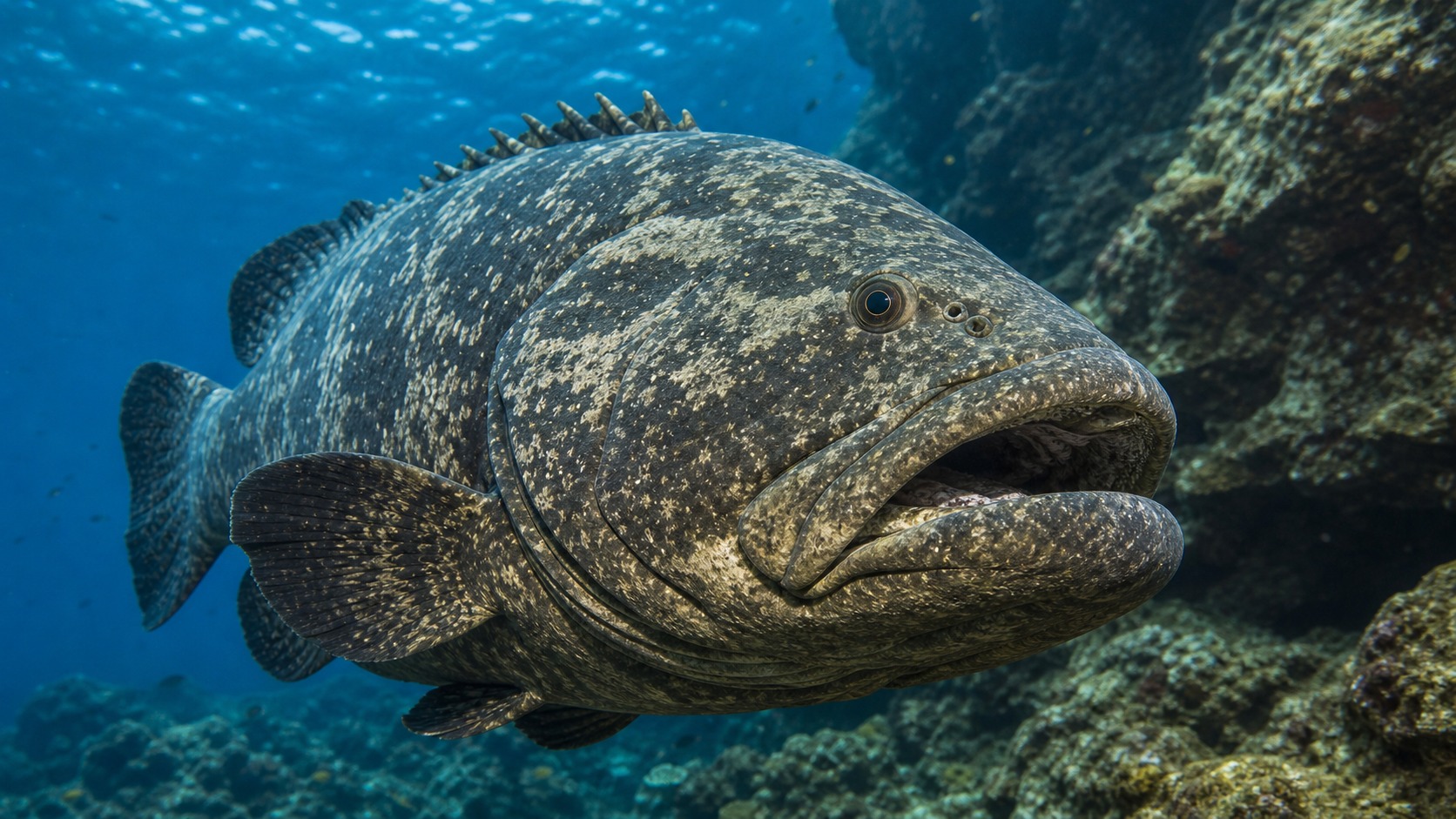
Photographs should show enough of the animal to avoid a one-clue identification. A cropped head or a distant body can be attractive but less useful. The best article image shows eye detail, body outline, and the texture that makes the fish recognizable.
Color and markings should be treated as supporting evidence. They can shift with light, depth, stress, age, and photography. A careful guide uses them only after the larger shape and habitat make sense.

Habitat and Daily Setting
Reef caves, wrecks, ledges, and large structure are not just background. They explain where goliath grouper can feed, shelter, patrol, or wait. Habitat is part of the animal's behavior.
A strong habitat section also avoids overnarrowing. Even fish that are famous for one setting may use different areas through life, season, or region. That flexibility keeps the article honest.
Feeding and Movement
Short-range broad-mouth feeding shapes the way readers should imagine this fish moving. The body is not random decoration; it is an answer to prey, water, and habitat.
Movement may be fast, patient, local, or sudden depending on the animal. The key is to explain motion in a way that fits the body. A heavy fish, a sleek fish, and a reef-edge fish are solving different problems.
Feeding also gives the article a bridge to nearby pages. Once readers understand the feeding style, comparisons with snapper, grouper, cod, mackerel, or barracuda become much easier.
Life Stage and Conservation Context
Life stage matters for goliath grouper. Juveniles and adults can differ in size, habitat, prey, and vulnerability. The adult image is important, but it is only one frame in a longer life.
Conservation should therefore be written carefully. Exact status depends on species, region, pressure, and management. A standard explainer can teach that caution without turning into a rulebook.
This life-history view also helps readers understand why child pages and parent pages both matter. Broad pages teach patterns, while narrower pages can carry the details that make the animal specific.

Comparison With Nearby Fish
Comparison is the easiest way to keep Goliath Grouper distinct. Compared with Black Grouper, Goliath Grouper is defined more strongly by immense scale and public conservation attention. Compared with Snapper, it is broader-mouthed, heavier, and more cave-oriented.
That comparison should be practical rather than decorative. Readers need to know which clue changes the decision: mouth, size, body depth, habitat, speed, or feeding style.
What the Images Should Teach
The featured image should show huge mouth, thick head, massive body, mottled texture, and reef-cave context The stillness image should slow the reader down and make the eye, head, and texture easy to inspect.
The third image should add a different job: habitat context, a closer angle, or a clearer body clue. Repeated images weaken the article because readers lose comparison opportunities.
Reader Practice
A useful memory pattern is massive body, huge mouth, reef cave. That phrase connects the visible fish with the habitat and behavior behind it.
Readers should leave ready to compare goliath grouper with the next page, not just repeat a label. That is the point of a taxonomy article: each page should make the next one easier to understand.
Final Takeaway
Goliath Grouper earns its page because it changes the reader's focus inside the Fish branch. It adds a particular body plan, habitat relationship, and feeding story that cannot be reduced to a nearby page.
The final habit is simple: read the body, read the water, read the feeding style, and read the life stage. Those four steps make goliath grouper feel like a living animal rather than a name on a list.
Taxonomy Role
Inside Animal Streets, this page should help the larger Saltwater Fish branch feel organized. It either narrows a parent category or adds a new comparison point for future articles.
That role is small but important. A good child page makes its parent clearer, and a good parent page prepares the next child pages without repeating them.
What Readers Should Not Assume
Readers should not assume goliath grouper can be understood from one dramatic trait. A large body, dark pattern, or toothy jaw may be memorable, but the real article comes from connecting that trait to water, prey, and life stage. The page should make the obvious clue useful without letting it take over.
Readers should also avoid treating goliath grouper as interchangeable with nearby saltwater predators. Similar habitat or similar size can hide meaningful differences. The safer habit is to ask what the mouth is built to do, where the fish holds in the water, and how its body solves the feeding problem in front of it.
How the Stillness Image Helps
The stillness image is important because goliath grouper needs more than a dramatic action shot. A quiet suspended view gives the reader time to study the eye, head, mouth, fin shape, and surface texture. Those details often carry the identification more reliably than a fast blur of motion.
The motion image and the closer habitat image then have different jobs. One shows the fish alive in its water, while the other explains the setting or the key anatomy. The three images together should feel like a small visual lesson rather than three versions of the same pose.
Why This Page Is Not a Duplicate
This page should not repeat the parent or sibling article with a swapped name. Goliath Grouper needs its own emphasis because it changes how the reader should look at the branch. The body plan, habitat relationship, and comparison points all shift the reader's attention in a specific direction.
That distinction matters for the whole taxonomy. When pages are too similar, readers stop trusting the hierarchy. When each page adds a clear angle, the branch becomes a learning path: broad idea first, narrower animal next, sharper comparison after that.
Practical Field Reading
If a reader sees goliath grouper in an image, the first step is to ignore the urge to name it instantly. Start with outline and head, then mouth, then fins, then habitat. Only after those clues line up should color, common name, or familiar reputation settle the answer.
This slower reading style is useful because fish photographs can be deceptive. Scale may be missing, water can distort color, and the most important clue may be partly hidden. A careful process gives readers a better chance of understanding the animal rather than only recognizing a label.
Human Connection Without Drift
People may know goliath grouper through diving, fishing, aquariums, seafood, documentaries, or dramatic wildlife images. Those entry points are welcome, but they should not pull the article away from the animal. Human interest belongs in the page only when it helps explain biology, habitat, or conservation context.
That balance keeps the article useful for a broad audience. A student can use it for classification, an animal lover can use it for recognition, and a conservation-minded reader can use it to understand why exact species and place matter. The same biological foundation serves all of them.
Final Reader Check
Before leaving the page, the reader should be able to say what makes Goliath Grouper different from the page before it and the page after it. That difference may be size, mouth shape, habitat, speed, markings, or life history, but it should be clear enough to remember.
The best final memory is not a sentence copied from the article. It is a mental picture of goliath grouper in the right kind of water, using the right kind of body, solving the right kind of feeding problem. That is what makes the taxonomy feel alive.
Conservation Language
Conservation language for goliath grouper should stay specific and measured. The article can explain why habitat, growth, harvest pressure, human attention, or prey availability may matter, but it should not pretend that one broad claim covers every place and every population. Exact status belongs with exact species, region, and time.
This careful tone is especially important on a taxonomy site. Readers need a trustworthy foundation before they move into more detailed conservation sources. A balanced article can make them more curious without overstating what a general explainer can prove.
How This Helps the Next Page
This page should make the next Fish article easier to read. After understanding goliath grouper, the reader has a clearer contrast point for the next animal's body plan, habitat, and feeding strategy. That is the quiet value of moving through the spreadsheet in order.
The branch becomes stronger when each article leaves behind a useful comparison habit. The reader does not just learn one fish; they learn how to notice differences between fish. That skill is what keeps the whole taxonomy from feeling flat.
Image-to-Text Connection
The images and text should reinforce each other. If the article says goliath grouper is shaped by a particular habitat or feeding style, the photos should make that visible through posture, head detail, background, and body texture. The words should explain what the eye is already beginning to notice.
This is also why the two approved prompt styles work well together. The motion image gives energy and shape, while the stillness image gives inspection and presence. The third image can then add habitat or anatomy emphasis without repeating the first two.
Who This Page Serves
A useful Goliath Grouper page should serve more than one reader. A student may need classification, a wildlife fan may need recognition, and a careful site visitor may need the difference between this page and a neighboring fish. The article should give all of them the same stable foundation.
That foundation is body, habitat, feeding, and comparison. When those pieces are clear, the page can stay approachable without becoming shallow. The reader gets enough detail to move forward, but not so much scattered information that the animal disappears.
Last Comparison
The final comparison is with the broader Fish branch. Goliath Grouper is not just another saltwater name; it changes the rhythm of the branch through its shape and behavior.
That change is the reason to keep building these pages one by one.
Each finished page gives the next article a clearer contrast point for readers.
That contrast keeps the Fish section genuinely useful and easier to navigate.