
How to Read This Fish
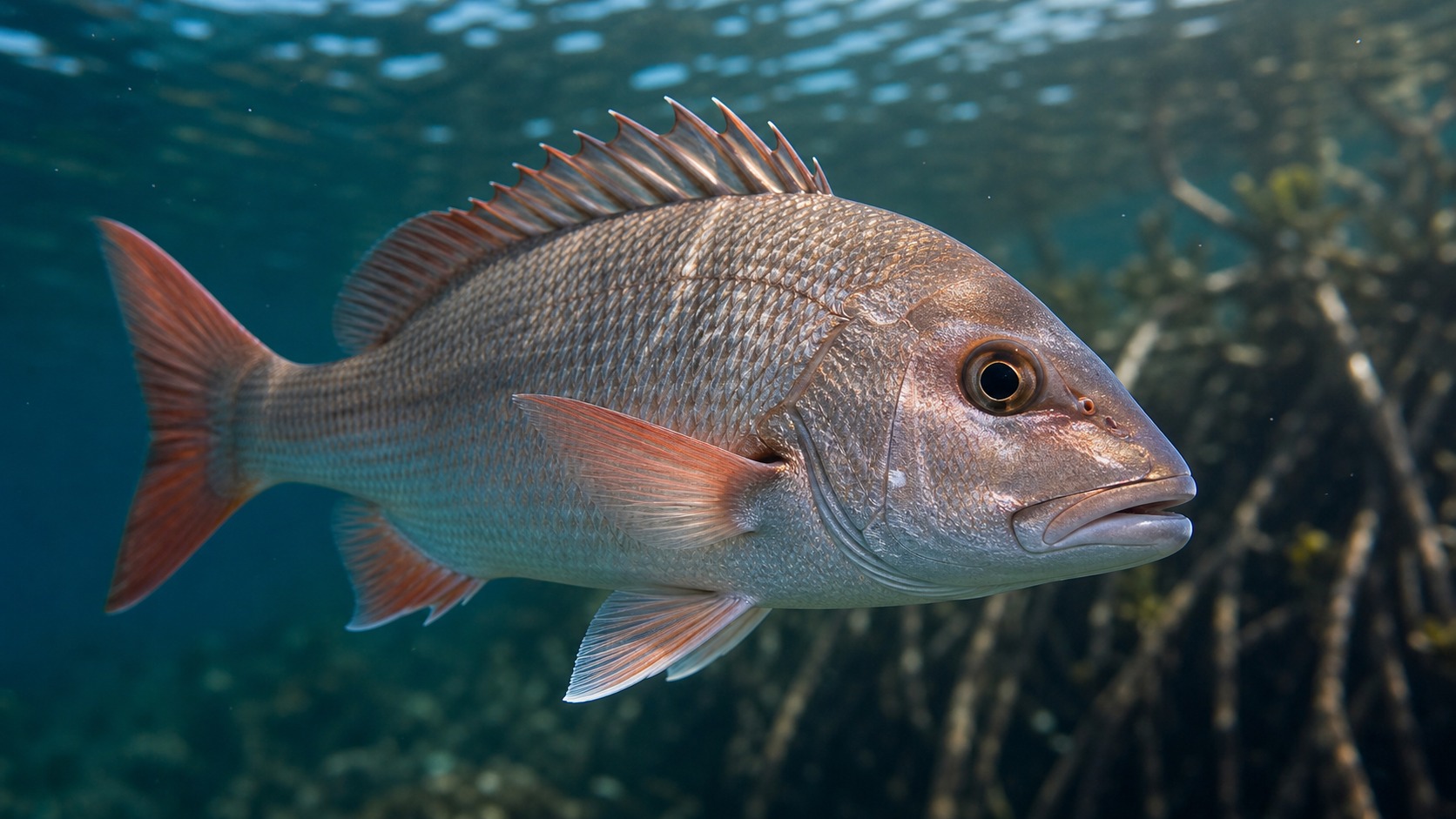
Mangrove Snapper should be read through habitat flexibility. The name points toward mangroves, but the animal is not limited to a single root-filled scene. It is a structure-aware snapper with a deeper body, strong eye, firm mouth, bronze-gray tones, and reddish fin hints that fit life around cover.
This page narrows the Snapper parent in a different direction than Red Snapper. Red Snapper leans toward a more offshore and red-bodied public image. Mangrove Snapper leans toward inshore structure, sheltered edges, and a more flexible habitat story.
Body Form and Identification
The fish has the snapper shape readers should now recognize: deeper body, strong eye, firm mouth, and a head built for quick feeding decisions. The bronze-gray body and reddish fins can help, but they should not replace structure and body shape as the foundation of identification.
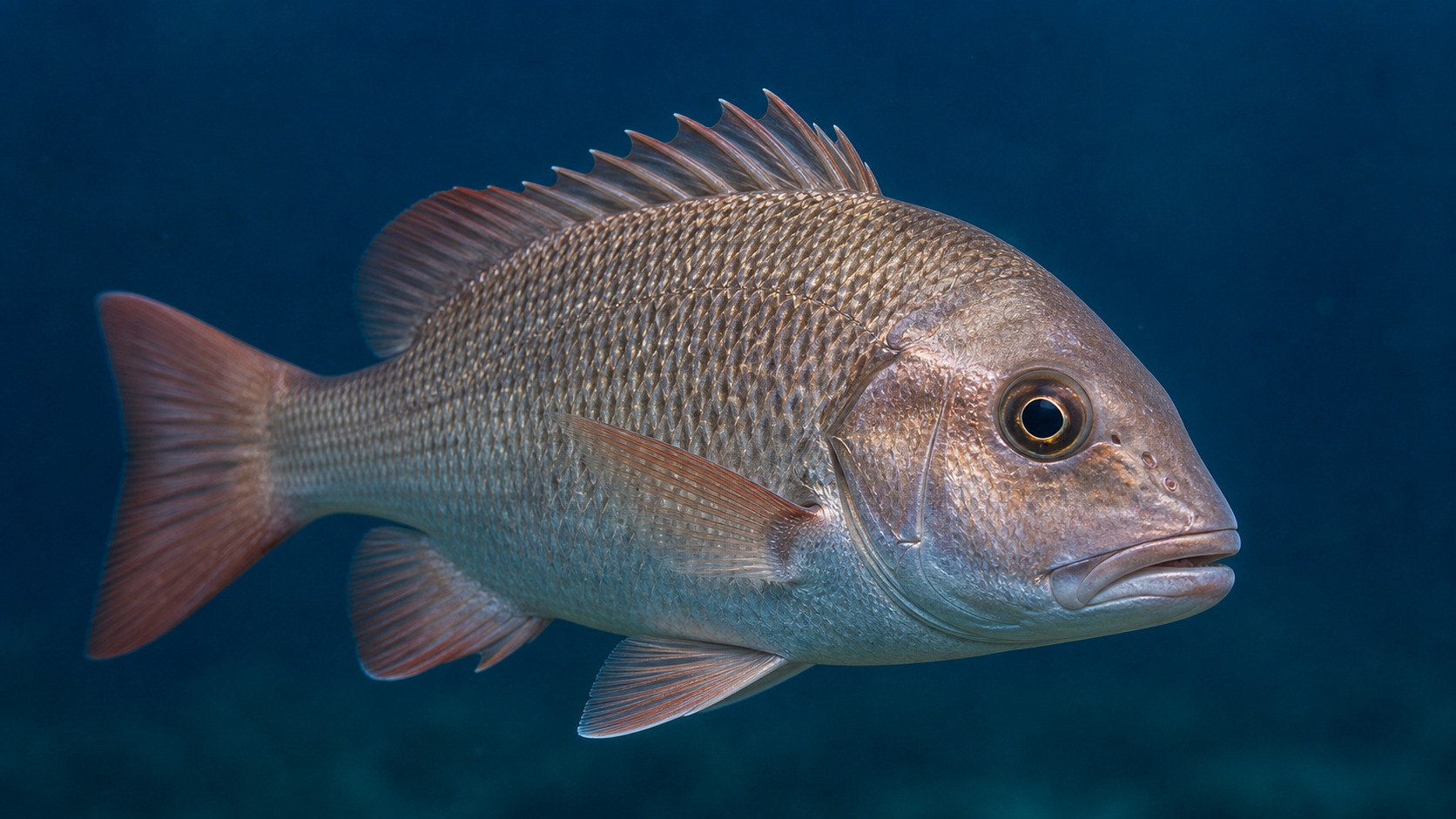
A still image is useful because it lets readers study the eye, mouth, and scale texture without the distraction of heavy habitat. The featured motion image can show the fish as active, while the stillness view makes the identification details easier to hold.
Color can shift with water clarity, stress, age, and light. A page that explains those limits helps readers avoid overconfidence. Mangrove Snapper is best identified through a group of clues rather than one shade of bronze or red.
Mangrove and Inshore Structure
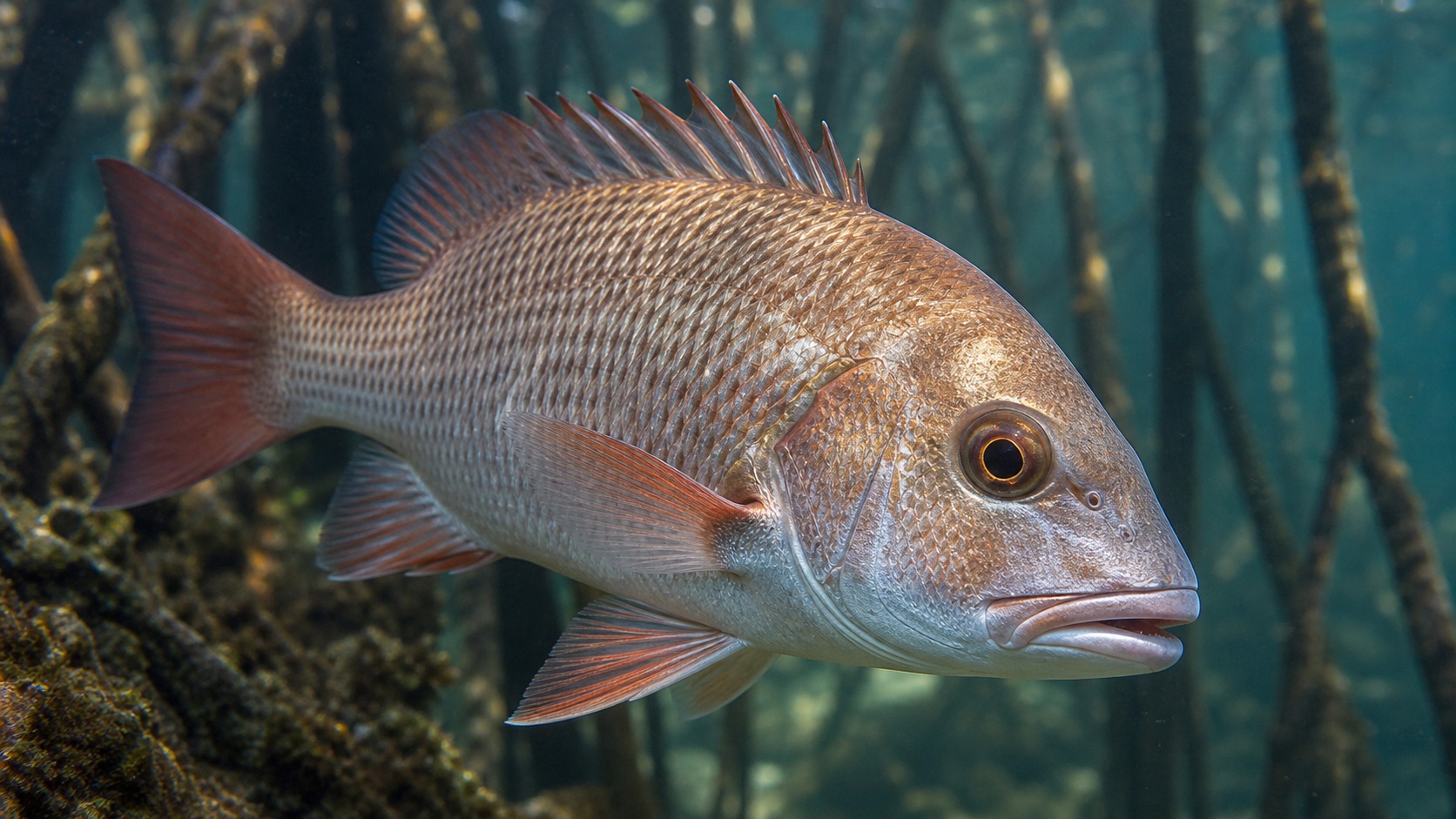
Mangrove roots, channels, docks, rocks, reefs, and ledges can all be part of the Mangrove Snapper story. Cover gives prey places to gather and fish places to hold. The habitat is not passive scenery; it is a working system that shapes movement and feeding.
Young fish may rely strongly on sheltered edges, while larger fish can use a wider range of structure. That change keeps the article from becoming too literal about the mangrove name. The word is important, but the biological idea is structure, shelter, and opportunity.
Feeding Near Cover
Mangrove Snapper feeding is flexible. The fish can take small fish, crustaceans, and other available prey depending on size, place, and opportunity. Its firm mouth and alert eye fit quick strikes around roots, ledges, docks, or reef edges.
The fish should not be described as inactive just because it stays near cover. Holding near structure can be an active strategy. The fish may wait, shift, strike, and retreat as prey moves through shadows and openings.
This feeding style gives the page a distinct voice. Red Snapper often feels more offshore; Mangrove Snapper feels closer to edges, shelter, and mixed inshore habitat. Both are snappers, but their reader cues differ.
Life Stage and Movement
Life stage matters because a small Mangrove Snapper may use shelter differently from a larger adult. Juveniles can need protected edges and smaller prey, while adults may travel between more varied structure-rich areas. That shift makes the animal more than a single habitat label.
Movement can be local and practical rather than dramatic. A fish may change position with tide, current, prey, shade, or size. The article should help readers expect that kind of flexibility instead of forcing the fish into one fixed scene.
Life-stage thinking also improves conservation context. Protecting only the places where larger fish are noticed may miss nursery edges or smaller habitat links. The full story includes growth and movement.
Comparison With Red Snapper
Red Snapper and Mangrove Snapper are sibling pages, but they should not sound interchangeable. Red Snapper brings a stronger red body and offshore structure story. Mangrove Snapper brings bronze-gray tones, inshore structure, mangrove edges, and habitat flexibility.
The comparison should be practical for readers. If the fish is near mangrove cover, docks, or sheltered inshore structure, Mangrove Snapper becomes a more natural possibility. If the story is deeper offshore hard bottom and a stronger red profile, Red Snapper may fit better.
Human Use and Naming
Mangrove Snapper is also known to people through fishing and seafood, but the article should not become a harvest guide. Human familiarity belongs in the background after body, habitat, feeding, and life stage are clear. That order keeps the animal from being reduced to a use.
The name itself should be handled carefully. Mangrove Snapper can use mangrove habitat, especially in sheltered life stages, but the species can be broader than the name suggests. Good taxonomy writing makes names useful without letting them become traps.
What the Images Should Teach
The featured image should show the whole animal in motion with snapper body shape and bronze-gray color. The stillness image should focus the eye, mouth, and scale pattern. The third image should suggest mangrove roots or inshore structure without covering the fish.
Together, the images should teach flexibility. The reader should see a snapper that belongs near cover but is not visually swallowed by habitat. Clean editorial images keep the animal readable.
Reader Practice
A useful reading order is habitat first, then snapper shape, then color. Mangrove Snapper is often easiest to place when the reader notices structure and inshore context before getting lost in shades of bronze, gray, or red.
That habit will also help with Grouper. Grouper is heavier, broader-mouthed, and more ambush-oriented. Mangrove Snapper shares structure, but not the same body mass or head proportion.
Why the Species Page Matters
Mangrove Snapper needs its own article because it changes the center of gravity from the parent Snapper page. The parent teaches deeper body, strong eye, firm mouth, and structure. This child page adds the inshore and mangrove-edge logic that many readers need in order to understand the name without taking it too literally.
A separate page also prevents Mangrove Snapper from being treated as a side note to Red Snapper. The species has its own reader problem: the name points to mangroves, but the animal can use a broader set of structure-rich habitats. Explaining that balance is the value of the page.
What Readers Should Not Assume
Readers should not assume Mangrove Snapper is always sitting visibly among mangrove roots. Mangroves matter, especially as habitat context, but the species can be more flexible than the name suggests. A useful guide treats the name as a clue, not a cage.
Readers should also avoid judging the fish by color alone. Bronze-gray, reddish, and darker tones can vary with light, water, age, and stress. The better habit is to combine snapper shape, inshore structure, strong eye, firm mouth, and body tone before settling on the identification.
Branch Role
Mangrove Snapper gives the Snapper branch an inshore and edge-habitat counterweight to Red Snapper. That role matters because it keeps the branch from becoming only an offshore reef story. It shows readers that structure can mean roots, docks, channels, rocks, ledges, and mixed edges, not just one kind of reef.
The page also prepares readers for later comparisons with Grouper. Both can be associated with cover, but Mangrove Snapper remains sharper, smaller in profile, and more snapper-like, while Grouper becomes broader-mouthed and heavier. The contrast helps the whole Saltwater Fish branch stay organized.
Image Interpretation
The image set should give Mangrove Snapper a quieter, more inshore identity than Red Snapper. The motion image can show the body shape and reddish fin hints. The stillness image can make the eye, mouth, and bronze-gray scale pattern easy to inspect. The third image can suggest mangrove roots or inshore cover without hiding the animal.
That image logic matters because the fish's name can pull attention toward habitat. The habitat should be present, but the fish must remain readable. A good body image teaches readers how Mangrove Snapper carries itself near cover rather than simply showing roots in the background.
Conservation and Habitat Framing
Mangrove Snapper conservation discussion should begin with habitat and species context rather than broad claims. Inshore edges, mangrove systems, water quality, fishing pressure, and nursery function can all matter, but the exact concern depends on place. A general article should teach readers why those details matter without pretending one statement covers every population.
Habitat framing is especially useful because mangroves are themselves important coastal systems. They can provide shelter, food-web support, and edges where young fish survive. By connecting the fish to those systems, the article becomes more than an identification page; it becomes a small lesson in coastal ecology.
Comparison Beyond Red Snapper
Mangrove Snapper also compares well with Cod, Mackerel, and Grouper. Cod is colder and more bottom-searching. Mackerel is faster and more open-water. Grouper is heavier and broader-mouthed. Mangrove Snapper sits between some of those ideas: structure-linked like grouper, but still sharper and more snapper-like in body.
Those comparisons help prevent the page from sounding like a narrower Red Snapper article. Mangrove Snapper has its own center: flexible inshore structure, alert feeding, and a name that points toward habitat while still needing biological nuance.
A Practical Memory
The useful memory is bronze snapper, strong eye, inshore cover. That phrase does not capture every detail, but it gives readers a handle that connects body, look, and habitat. It is much stronger than remembering only the word mangrove or only the fact that the fish can have reddish fins.
That memory also helps readers avoid a common mistake. Mangrove Snapper is not simply a young-looking Red Snapper, and it is not limited to one root-filled postcard scene. The page should leave readers with a flexible but specific concept: a snapper that often makes sense around sheltered structure.
Why Stillness Matters Here
The stillness photo prompt fits Mangrove Snapper especially well because the article depends on subtle cues. Bronze-gray tones, reddish fins, eye detail, and mouth shape are easier to study when the fish is suspended calmly in clear water. Motion is still useful, but quiet presence lets readers inspect the features that separate it from flashier snapper images.
The third image then adds habitat meaning. A softly blurred mangrove-root or inshore-structure background can suggest cover without turning the image into a messy habitat scene. That balance supports the article's main argument: habitat matters, but the fish must remain readable.
Final Comparison Note
Mangrove Snapper should leave readers thinking about edges. Edges between roots and channels, shelter and open water, juvenile and adult habitat, and common names and exact biology all matter. That edge-focused memory makes the article distinct from Red Snapper and useful before the branch turns toward Grouper.
The fish also teaches restraint. A name can be helpful without being complete, and a habitat clue can guide the reader without becoming the only fact. That is the central lesson this page contributes to the Snapper branch.
Final Takeaway
Mangrove Snapper is a flexible, structure-linked child page under Snapper. It turns the broad parent pattern toward mangrove edges, inshore cover, bronze-gray color, reddish fins, and opportunistic feeding.
Readers should leave with a sharper memory: Mangrove Snapper is not simply a less red snapper. It is a cover-aware predator whose name points toward an important habitat idea, but whose biology is broader than one scene.