
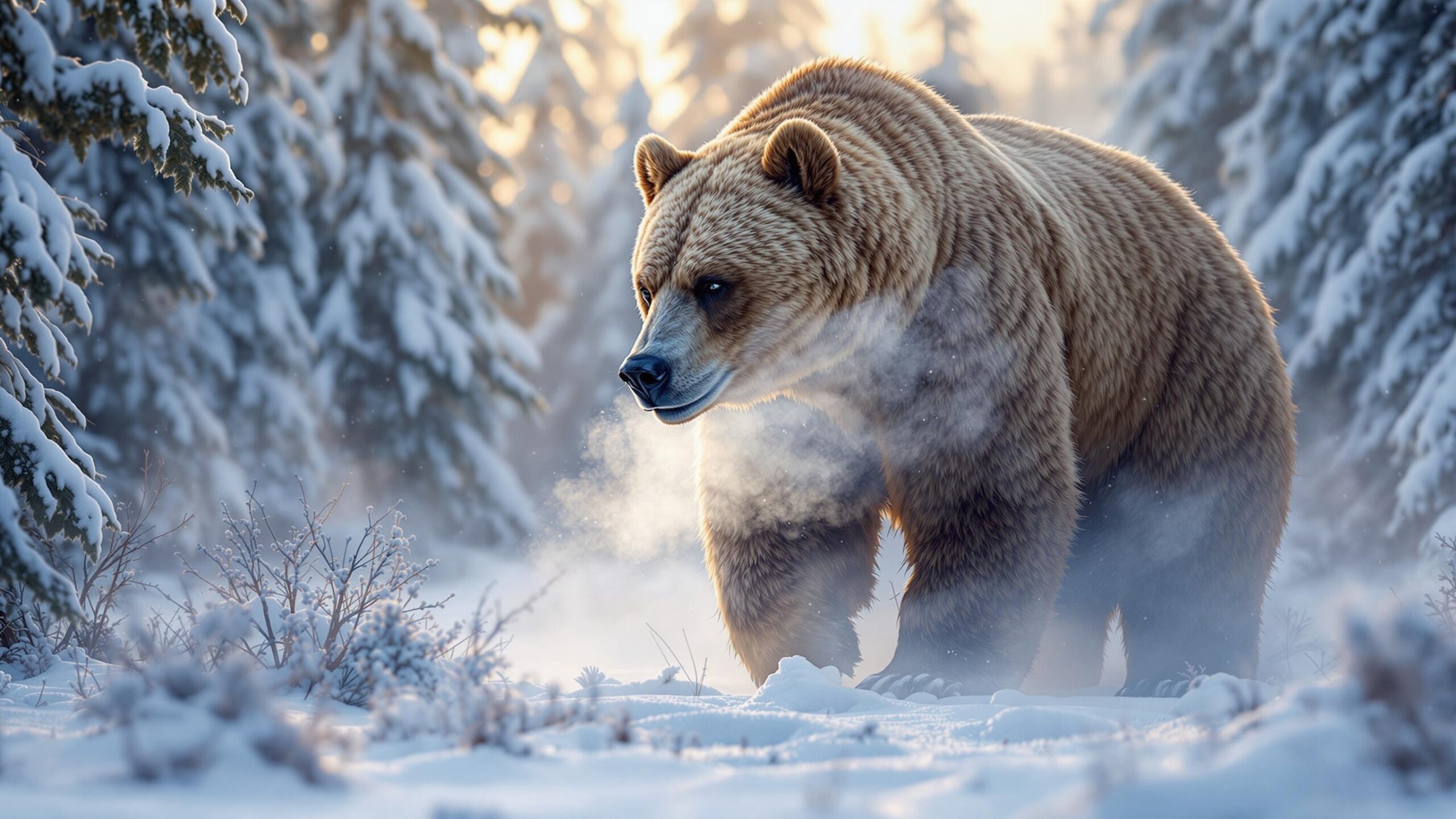
Siberian Brown Bear (Ursus arctos collaris): The Silent Guardian of the Russian Wilderness
Deep within the boundless forests of Siberia roams one of the largest and most enigmatic predators on Earth—the Siberian brown bear, scientifically known as Ursus arctos collaris. A subspecies of the widespread Eurasian brown bear, this majestic creature embodies both the mystery and power of the Russian wilderness. From the frostbitten Ural Mountains to the vast taiga of the Russian Far East, the Siberian brown bear is a symbol of resilience, adaptation, and balance in nature. Though not as famous as its coastal cousins in Kamchatka or the Kodiak bears of Alaska, the Siberian brown bear plays an equally vital role in the ecosystems it inhabits. This article explores the biology, behavior, habitat, and cultural significance of this remarkable bear—offering a comprehensive guide to one of the wild’s most formidable residents.
Classification and Evolutionary Background
The Siberian brown bear is one of several recognized subspecies of the brown bear (Ursus arctos), a species that originated in Eurasia and later spread to North America. The scientific name Ursus arctos collaris distinguishes the Siberian variety from other brown bear populations due to specific genetic, morphological, and behavioral traits. The name “collaris” is derived from the faint collar-like markings some individuals exhibit during youth, though these typically fade with age. The Siberian brown bear shares ancestry with the Kamchatka bear (Ursus arctos beringianus) and the European brown bear (Ursus arctos arctos), yet it has uniquely adapted to the harsh, variable environments of inland Russia. Having survived the Ice Ages, these bears are living relics of a time when megafauna ruled Eurasia. Their ability to thrive in Siberia’s extreme cold, scarce resources, and seasonal unpredictability speaks to their evolutionary hardiness and adaptability.
Taxonomy And Identity
The scientific name Ursus arctos collaris distinguishes the Siberian variety from other brown bear populations due to specific genetic, morphological, and behavioral traits. When spring arrives, the family emerges into a world of melting snow, budding plants, and renewed life. The siberian brown bear is best understood through its anatomy, habitat, diet, behavior, and place in its ecosystem.
Identification And Appearance
Classification and Evolutionary Background The Siberian brown bear is one of several recognized subspecies of the brown bear ( Ursus arctos ), a species that originated in Eurasia and later spread to North America. The name “collaris” is derived from the faint collar-like markings some individuals exhibit during youth, though these typically fade with age. Their thick, double-layered fur serves as insulation against the biting cold of Siberian winters.
Classification and Evolutionary Background The Siberian brown bear is one of several recognized subspecies of the brown bear ( Ursus arctos ), a species that originated in Eurasia and later spread to North America. The name “collaris” is derived from the faint collar-like markings some individuals exhibit during youth, though these typically fade with age. Body form, markings, movement, and habitat work together to separate this animal from close relatives and lookalikes.
Anatomy And Adaptations
From the frostbitten Ural Mountains to the vast taiga of the Russian Far East, the Siberian brown bear is a symbol of resilience, adaptation, and balance in nature. The Siberian brown bear shares ancestry with the Kamchatka bear ( Ursus arctos beringianus ) and the European brown bear ( Ursus arctos arctos ), yet it has uniquely adapted to the harsh, variable environments of inland Russia. Their ability to thrive in Siberia’s extreme cold, scarce resources, and seasonal unpredictability speaks to their evolutionary hardiness and adaptability.
Hibernation and Seasonal Adaptations The Siberian brown bear’s annual hibernation is an evolutionary marvel. As the days shorten and temperatures plunge, bears retreat into dens—often dug into hillsides, beneath tree roots, or in caves. In some cases, bears are shot in self-defense or preemptively killed if deemed a threat.
Range And Wild Habitat
Range and Habitat The Siberian brown bear occupies a vast expanse of territory across Russia, from the Ural Mountains and Altai region in the west to the Amur River basin and the Russian Far East in the east. This distribution includes boreal forests (taiga), subalpine zones, and occasionally open tundra. When available, Siberian brown bears will prey on marmots, deer, wild boar, moose calves, and fish, particularly salmon in eastern parts of their range.
In the wild, they use this intelligence to navigate vast home ranges, remember seasonal food sources, and avoid dangerous areas. Efforts to mitigate conflict include public education, bear-proof containers, habitat protection, and the creation of conservation corridors that allow bears to roam safely between regions. Conservation and Status The Siberian brown bear is not currently listed as endangered, and its population is considered relatively stable across much of its range.
Wild Diet And Feeding
Adult males generally weigh between 600 and 1,000 pounds, though in areas with abundant food, particularly salmon runs, some individuals can exceed 1,200 pounds. Their long, curved claws—sometimes over four inches—are designed for tearing apart logs, excavating roots, or catching prey. Seasonal migrations are common as bears move between higher elevations and lowland rivers to follow food availability.
Their territories can span several hundred square miles, depending on gender, age, and food density. Diet and Foraging Like other brown bear subspecies, the Siberian brown bear is an opportunistic omnivore with a remarkably flexible diet. In the warmer months, their food intake leans heavily on vegetation—grasses, herbs, roots, berries, and nuts—especially pine nuts from Siberian pine trees.
Behavior
This article explores the biology, behavior, habitat, and cultural significance of this remarkable bear—offering a comprehensive guide to one of the wild’s most formidable residents. The scientific name Ursus arctos collaris distinguishes the Siberian variety from other brown bear populations due to specific genetic, morphological, and behavioral traits. Seasonal migrations are common as bears move between higher elevations and lowland rivers to follow food availability.
This article explores the biology, behavior, habitat, and cultural significance of this remarkable bear—offering a comprehensive guide to one of the wild’s most formidable residents. The scientific name Ursus arctos collaris distinguishes the Siberian variety from other brown bear populations due to specific genetic, morphological, and behavioral traits. Behavior is easiest to understand when daily movement, social contact, communication, and risk avoidance are considered together.
Reproduction And Life Cycle
They also consume insects, larvae, and carrion. Males tend to roam over larger areas than females and avoid contact with other males outside the breeding season. Mating occurs from May to July, but due to a biological phenomenon called delayed implantation, the fertilized egg does not immediately begin development.
Juvenile bears learn by observing their mothers, mimicking her actions and building their own skills over time. Its daily life is shaped by where it moves, what it eats, how it avoids danger, and how it interacts with other animals. Its daily life is shaped by where it moves, what it eats, how it avoids danger, and how it interacts with other animals.
Ecology And Role In The Environment
Siberian Brown Bear ( Ursus arctos collaris ): The Silent Guardian of the Russian Wilderness Deep within the boundless forests of Siberia roams one of the largest and most enigmatic predators on Earth—the Siberian brown bear, scientifically known as Ursus arctos collaris. Though not as famous as its coastal cousins in Kamchatka or the Kodiak bears of Alaska, the Siberian brown bear plays an equally vital role in the ecosystems it inhabits. Their long, curved claws—sometimes over four inches—are designed for tearing apart logs, excavating roots, or catching prey.
When available, Siberian brown bears will prey on marmots, deer, wild boar, moose calves, and fish, particularly salmon in eastern parts of their range. Role in the Ecosystem As apex omnivores, Siberian brown bears play a crucial ecological role in maintaining the health and balance of their environment. They help regulate populations of prey animals, spread seeds through their droppings, and recycle nutrients by feeding on carrion.
Conservation Status And Threats
The scientific name Ursus arctos collaris distinguishes the Siberian variety from other brown bear populations due to specific genetic, morphological, and behavioral traits. They help regulate populations of prey animals, spread seeds through their droppings, and recycle nutrients by feeding on carrion. Efforts to mitigate conflict include public education, bear-proof containers, habitat protection, and the creation of conservation corridors that allow bears to roam safely between regions.
Conservation and Status The Siberian brown bear is not currently listed as endangered, and its population is considered relatively stable across much of its range. However, regional populations face varying degrees of pressure from habitat degradation, illegal hunting, and human expansion. While this provides economic incentives for rural communities, it also requires careful management to avoid overharvesting and ensure the long-term sustainability of bear populations.
Human Relationship
Despite their size, Siberian brown bears are elusive, typically avoiding areas of human settlement and maintaining a low profile in the vast wilderness. During summer salmon runs in rivers near the Pacific coast, these bears demonstrate impressive fishing skills, standing knee-deep in icy water to catch fish mid-leap. In the wild, they use this intelligence to navigate vast home ranges, remember seasonal food sources, and avoid dangerous areas.
Their sense of smell is exceptional—several thousand times stronger than that of humans. Its daily life is shaped by where it moves, what it eats, how it avoids danger, and how it interacts with other animals. Its daily life is shaped by where it moves, what it eats, how it avoids danger, and how it interacts with other animals.
Captive Care
As the days shorten and temperatures plunge, bears retreat into dens—often dug into hillsides, beneath tree roots, or in caves. During this time, their heart rate slows dramatically, body temperature drops slightly, and metabolic functions are suppressed. While this provides economic incentives for rural communities, it also requires careful management to avoid overharvesting and ensure the long-term sustainability of bear populations.
Wild And Captive Variation
The scientific name Ursus arctos collaris distinguishes the Siberian variety from other brown bear populations due to specific genetic, morphological, and behavioral traits. Males tend to roam over larger areas than females and avoid contact with other males outside the breeding season. Its daily life is shaped by where it moves, what it eats, how it avoids danger, and how it interacts with other animals.
Similar Species
The scientific name Ursus arctos collaris distinguishes the Siberian variety from other brown bear populations due to specific genetic, morphological, and behavioral traits. Compared to other bear species, the Siberian brown bear is in a fortunate position—but continued vigilance is necessary, especially in areas experiencing rapid development or deforestation. Its daily life is shaped by where it moves, what it eats, how it avoids danger, and how it interacts with other animals.
Common Misconceptions
From the myths of ancient Siberian tribes to the scientific studies of today, the Siberian brown bear continues to inspire, challenge, and captivate those who encounter it. Its daily life is shaped by where it moves, what it eats, how it avoids danger, and how it interacts with other animals. Its daily life is shaped by where it moves, what it eats, how it avoids danger, and how it interacts with other animals.
FAQ
What is a Siberian Brown Bear?
The scientific name Ursus arctos collaris distinguishes the Siberian variety from other brown bear populations due to specific genetic, morphological, and behavioral traits. When spring arrives, the family emerges into a world of melting snow, budding plants, and renewed life. Siberian Brown Bear ( Ursus arctos collaris ): The Silent Guardian of the Russian Wilderness Deep within the boundless forests of Siberia roams one of the largest and most enigmatic predators on Earth—the Siberian brown bear, scientifically known as Ursus arctos collaris.
Sources
- https://animalstreets.com/mammals/land-mammals/bears/brown-bears/siberian-brown-bear/ Organization: animalstreets.com Source type: Live page or linked source URL: https://animalstreets.com/mammals/land-mammals/bears/brown-bears/siberian-brown-bear/ Information verified: Used for current-page extraction and source discovery; independent fact verification may still be required. Date checked: 2026-08-27 Reliability notes: Current page / internal source; use for audit context, not independent verification
- https://animalstreets.com/mammals-product-reviews/land-mammals-product-reviews/ Organization: animalstreets.com Source type: Live page or linked source URL: https://animalstreets.com/mammals-product-reviews/land-mammals-product-reviews/ Information verified: Used for current-page extraction and source discovery; independent fact verification may still be required. Date checked: 2026-08-27 Reliability notes: Current page / internal source; use for audit context, not independent verification
- https://animalstreets.com/animal-product-reviews/ Organization: animalstreets.com Source type: Live page or linked source URL: https://animalstreets.com/animal-product-reviews/ Information verified: Used for current-page extraction and source discovery; independent fact verification may still be required. Date checked: 2026-08-27 Reliability notes: Current page / internal source; use for audit context, not independent verification