
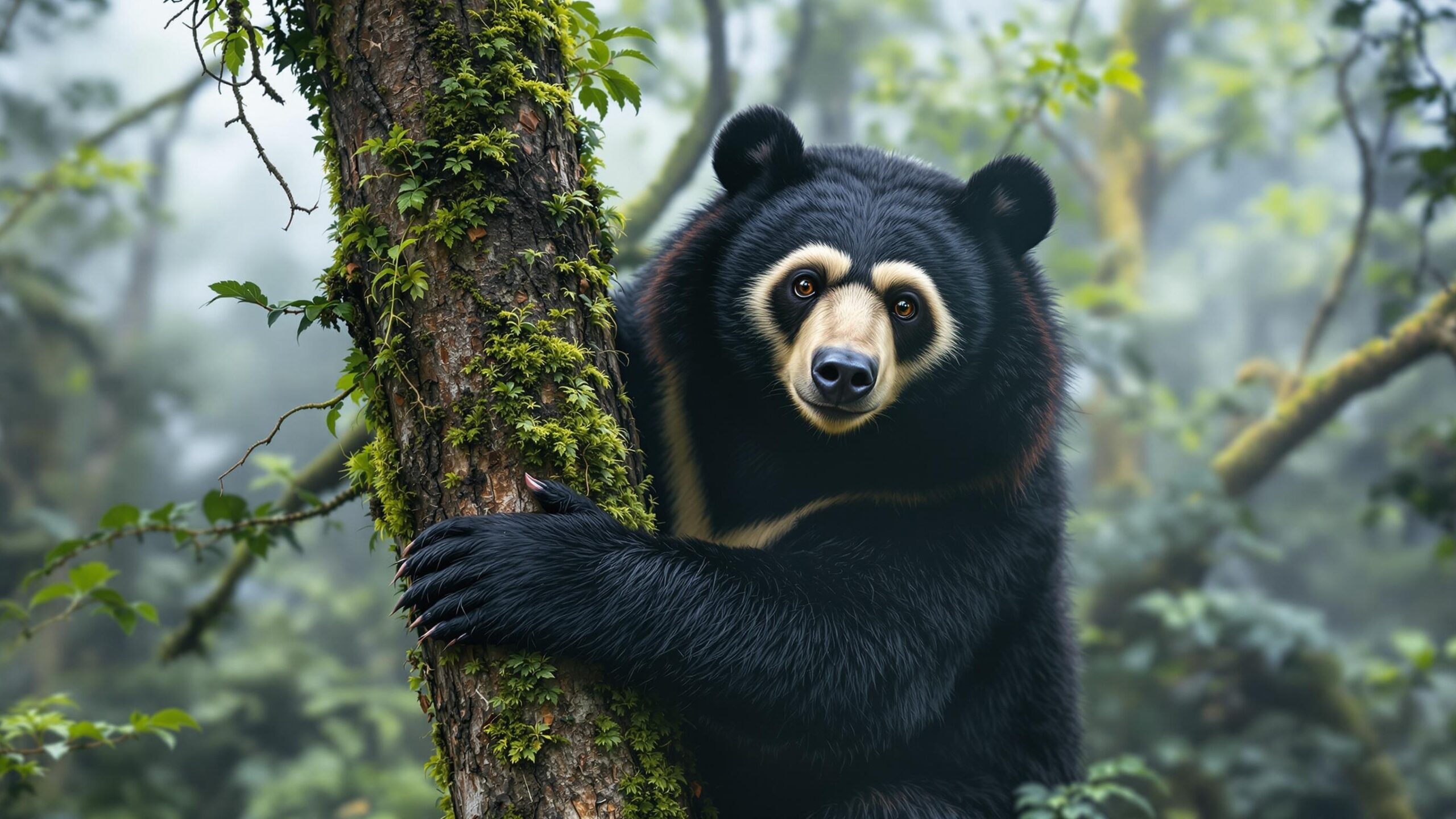
Guardians of the Andes: Discovering the World of the Spectacled Bear
High in the mist-shrouded cloud forests and rugged mountain slopes of the Andes lives one of the world’s most elusive and endearing bears: the Spectacled Bear. Also known as the Andean bear, this solitary, shaggy-coated mammal is South America’s only native bear species and one of the few remaining links to a once more widespread lineage of short-faced bears. With their distinctive facial markings that often resemble spectacles, these bears are not only icons of high-altitude wilderness but also keystone species in maintaining the health and vitality of their fragile ecosystems. The Spectacled Bear, scientifically known as Tremarctos ornatus, opens a fascinating window into a world of mountain biodiversity, ancient evolutionary history, and the quiet resilience of life lived among the clouds.
The Unique Biology and Significance of the Spectacled Bear
The Spectacled Bear is unlike any of its bear relatives. Weighing between 130 to 440 pounds, depending on sex and habitat, and measuring up to six feet in length, it is medium-sized by bear standards. What makes it immediately recognizable is the creamy or pale yellow markings on its face and chest, set against a dark brown or black coat. These markings are unique to each individual, providing not only identity but a sense of personality and charm. Adapted to life in the Andes, these bears are accomplished climbers, often found navigating steep terrain and dense forests with surprising agility. Their curved claws and strong forelimbs make them excellent at ascending trees and steep rocky faces in search of food. Omnivorous and opportunistic, Spectacled Bears consume a wide range of foods, with a diet heavily skewed toward fruits, bromeliads, cacti, and palm nuts. Despite their ability to hunt small animals, they are primarily herbivorous, which positions them as crucial seed dispersers in the ecosystems they inhabit. As ecosystem engineers, Spectacled Bears influence the distribution and regeneration of plant life throughout their range. Their foraging behaviors create paths through dense vegetation, and their droppings often germinate new plants. In this way, they sustain the forest as much as it sustains them, making them an essential part of the Andean ecological web.
Taxonomy And Identity
Also known as the Andean bear, this solitary, shaggy-coated mammal is South America’s only native bear species and one of the few remaining links to a once more widespread lineage of short-faced bears. Weighing between 130 to 440 pounds, depending on sex and habitat, and measuring up to six feet in length, it is medium-sized by bear standards. Adapted to life in the Andes, these bears are accomplished climbers, often found navigating steep terrain and dense forests with surprising agility.
Omnivorous and opportunistic, Spectacled Bears consume a wide range of foods, with a diet heavily skewed toward fruits, bromeliads, cacti, and palm nuts. Their foraging behaviors create paths through dense vegetation, and their droppings often germinate new plants. Bears in this sub-region have adapted to a humid, arboreal lifestyle, often climbing trees to sleep in leafy nests and forage for food.
Identification And Appearance
With their distinctive facial markings that often resemble spectacles, these bears are not only icons of high-altitude wilderness but also keystone species in maintaining the health and vitality of their fragile ecosystems. Weighing between 130 to 440 pounds, depending on sex and habitat, and measuring up to six feet in length, it is medium-sized by bear standards. What makes it immediately recognizable is the creamy or pale yellow markings on its face and chest, set against a dark brown or black coat.
These markings are unique to each individual, providing not only identity but a sense of personality and charm. Body form, markings, movement, and habitat work together to separate this animal from close relatives and lookalikes. Body form, markings, movement, and habitat work together to separate this animal from close relatives and lookalikes.
Anatomy And Adaptations
Adapted to life in the Andes, these bears are accomplished climbers, often found navigating steep terrain and dense forests with surprising agility. Bears in this sub-region have adapted to a humid, arboreal lifestyle, often climbing trees to sleep in leafy nests and forage for food. They have also been observed manipulating branches with remarkable dexterity, a behavior that underscores their intelligence and adaptability.
Yet, their continued presence in these semi-arid zones is a example of their adaptability and the interconnectedness of Andean habitats. The cubs remain with the mother for over a year, learning essential survival skills such as climbing, foraging, and avoiding threats. Body form, markings, movement, and habitat work together to separate this animal from close relatives and lookalikes.
Range And Wild Habitat
Also known as the Andean bear, this solitary, shaggy-coated mammal is South America’s only native bear species and one of the few remaining links to a once more widespread lineage of short-faced bears. Omnivorous and opportunistic, Spectacled Bears consume a wide range of foods, with a diet heavily skewed toward fruits, bromeliads, cacti, and palm nuts. As ecosystem engineers, Spectacled Bears influence the distribution and regeneration of plant life throughout their range.
Bears in this sub-region have adapted to a humid, arboreal lifestyle, often climbing trees to sleep in leafy nests and forage for food. This behavior links distinct ecosystems and underscores the importance of habitat connectivity across the Andean range. Weighing between 130 to 440 pounds, depending on sex and habitat, and measuring up to six feet in length, it is medium-sized by bear standards.
Wild Diet And Feeding
Their curved claws and strong forelimbs make them excellent at ascending trees and steep rocky faces in search of food. Omnivorous and opportunistic, Spectacled Bears consume a wide range of foods, with a diet heavily skewed toward fruits, bromeliads, cacti, and palm nuts. Bears in this sub-region have adapted to a humid, arboreal lifestyle, often climbing trees to sleep in leafy nests and forage for food.
Some individuals roam between cloud forests and lower dry forests, following food availability across vertical landscapes. Mothers raise one to two cubs, usually born during the wet season when food is abundant. The cubs remain with the mother for over a year, learning essential survival skills such as climbing, foraging, and avoiding threats.
Behavior
Also known as the Andean bear, this solitary, shaggy-coated mammal is South America’s only native bear species and one of the few remaining links to a once more widespread lineage of short-faced bears. Their foraging behaviors create paths through dense vegetation, and their droppings often germinate new plants. They have also been observed manipulating branches with remarkable dexterity, a behavior that underscores their intelligence and adaptability.
Also known as the Andean bear, this solitary, shaggy-coated mammal is South America’s only native bear species and one of the few remaining links to a once more widespread lineage of short-faced bears. Their foraging behaviors create paths through dense vegetation, and their droppings often germinate new plants. Behavior is easiest to understand when daily movement, social contact, communication, and risk avoidance are considered together.
Reproduction And Life Cycle
Bears in this sub-region have adapted to a humid, arboreal lifestyle, often climbing trees to sleep in leafy nests and forage for food. They build platforms or nests in trees to rest, often reusing or rebuilding these structures seasonally. Its daily life is shaped by where it moves, what it eats, how it avoids danger, and how it interacts with other animals.
Ecology And Role In The Environment
With their distinctive facial markings that often resemble spectacles, these bears are not only icons of high-altitude wilderness but also keystone species in maintaining the health and vitality of their fragile ecosystems. Despite their ability to hunt small animals, they are primarily herbivorous, which positions them as crucial seed dispersers in the ecosystems they inhabit. As ecosystem engineers, Spectacled Bears influence the distribution and regeneration of plant life throughout their range.
In this way, they sustain the forest as much as it sustains them, making them an essential part of the Andean ecological web. During the fruiting season, these bears play a vital ecological role, dispersing seeds far and wide through their travels. In this environment, their role as seed dispersers becomes even more crucial.
Conservation Status And Threats
Dry forest Spectacled Bears often face more significant conservation challenges due to habitat fragmentation and human-wildlife conflict. Cross-region migrators are particularly vulnerable to habitat loss, road development, and fencing, which can sever corridors essential to their survival. Preserving these travel routes is a top priority for conservationists working to protect not just individual populations, but the genetic and ecological flow between them.
These behaviors continue to intrigue researchers and conservationists who strive to unlock the secrets of their quiet lives. A Cultural and Conservation Icon In the mythologies of Andean cultures, the Spectacled Bear often features as a powerful spiritual being, a protector of the forest, and a symbol of strength and introspection. Spectacled Bears are now listed as Vulnerable by the IUCN, with populations declining due to habitat fragmentation, poaching, and conflict with agriculture.
Human Relationship
Despite their ability to hunt small animals, they are primarily herbivorous, which positions them as crucial seed dispersers in the ecosystems they inhabit. Their diets here are more varied and opportunistic, often including cacti, corn, and other cultivated crops, which brings them into more frequent contact with human communities. Dry forest Spectacled Bears often face more significant conservation challenges due to habitat fragmentation and human-wildlife conflict.
From land-roaming lions to ocean-gliding whales, from household pets to prehistoric giants, we explore top-rated products for enthusiasts, educators, and animal lovers alike. Its daily life is shaped by where it moves, what it eats, how it avoids danger, and how it interacts with other animals. Its daily life is shaped by where it moves, what it eats, how it avoids danger, and how it interacts with other animals.
Captive Care
Spectacled Bear is best treated as a wild animal whose needs depend on large habitat space, natural diet, social conditions, and specialist veterinary knowledge. Public education, rescue, rehabilitation, or accredited conservation work may be relevant in some cases, but casual private care is not an appropriate frame. The safest human role is to support habitat protection, responsible viewing, and professional wildlife care when intervention is truly needed.
Wild And Captive Variation
Wild Spectacled Bear behavior reflects natural movement, feeding, breeding, and social conditions that cannot be reduced to a simple display setting. Captive or managed observations can help education and science in limited contexts, but they do not replace the ecological complexity of wild habitat. Differences between wild and managed settings are most useful when they clarify welfare, conservation, and natural history.
Similar Species
The Unique Biology and Significance of the Spectacled Bear The Spectacled Bear is unlike any of its bear relatives. Its daily life is shaped by where it moves, what it eats, how it avoids danger, and how it interacts with other animals. Its daily life is shaped by where it moves, what it eats, how it avoids danger, and how it interacts with other animals.
Common Misconceptions
A Cultural and Conservation Icon In the mythologies of Andean cultures, the Spectacled Bear often features as a powerful spiritual being, a protector of the forest, and a symbol of strength and introspection. Its daily life is shaped by where it moves, what it eats, how it avoids danger, and how it interacts with other animals. Its daily life is shaped by where it moves, what it eats, how it avoids danger, and how it interacts with other animals.
FAQ
Sources
- https://animalstreets.com/mammals/land-mammals/bears/spectacled-bear/ Organization: animalstreets.com Source type: Live page or linked source URL: https://animalstreets.com/mammals/land-mammals/bears/spectacled-bear/ Information verified: Used for current-page extraction and source discovery; independent fact verification may still be required. Date checked: 2026-08-27 Reliability notes: Current page / internal source; use for audit context, not independent verification
- https://animalstreets.com/mammals-product-reviews/land-mammals-product-reviews/ Organization: animalstreets.com Source type: Live page or linked source URL: https://animalstreets.com/mammals-product-reviews/land-mammals-product-reviews/ Information verified: Used for current-page extraction and source discovery; independent fact verification may still be required. Date checked: 2026-08-27 Reliability notes: Current page / internal source; use for audit context, not independent verification
- https://animalstreets.com/animal-product-reviews/ Organization: animalstreets.com Source type: Live page or linked source URL: https://animalstreets.com/animal-product-reviews/ Information verified: Used for current-page extraction and source discovery; independent fact verification may still be required. Date checked: 2026-08-27 Reliability notes: Current page / internal source; use for audit context, not independent verification