
A Master of Many Habitats
One of the Sri Lankan leopard’s most impressive qualities is its adaptability. Though often associated with deep forest, these leopards have been found in a wide range of ecosystems across the island. They inhabit tropical rainforests in the wet zone, dry scrublands in the arid north and east, montane cloud forests in the central highlands, and even coastal belts. The only region where they are virtually absent is the most heavily urbanized or intensely cultivated zones.
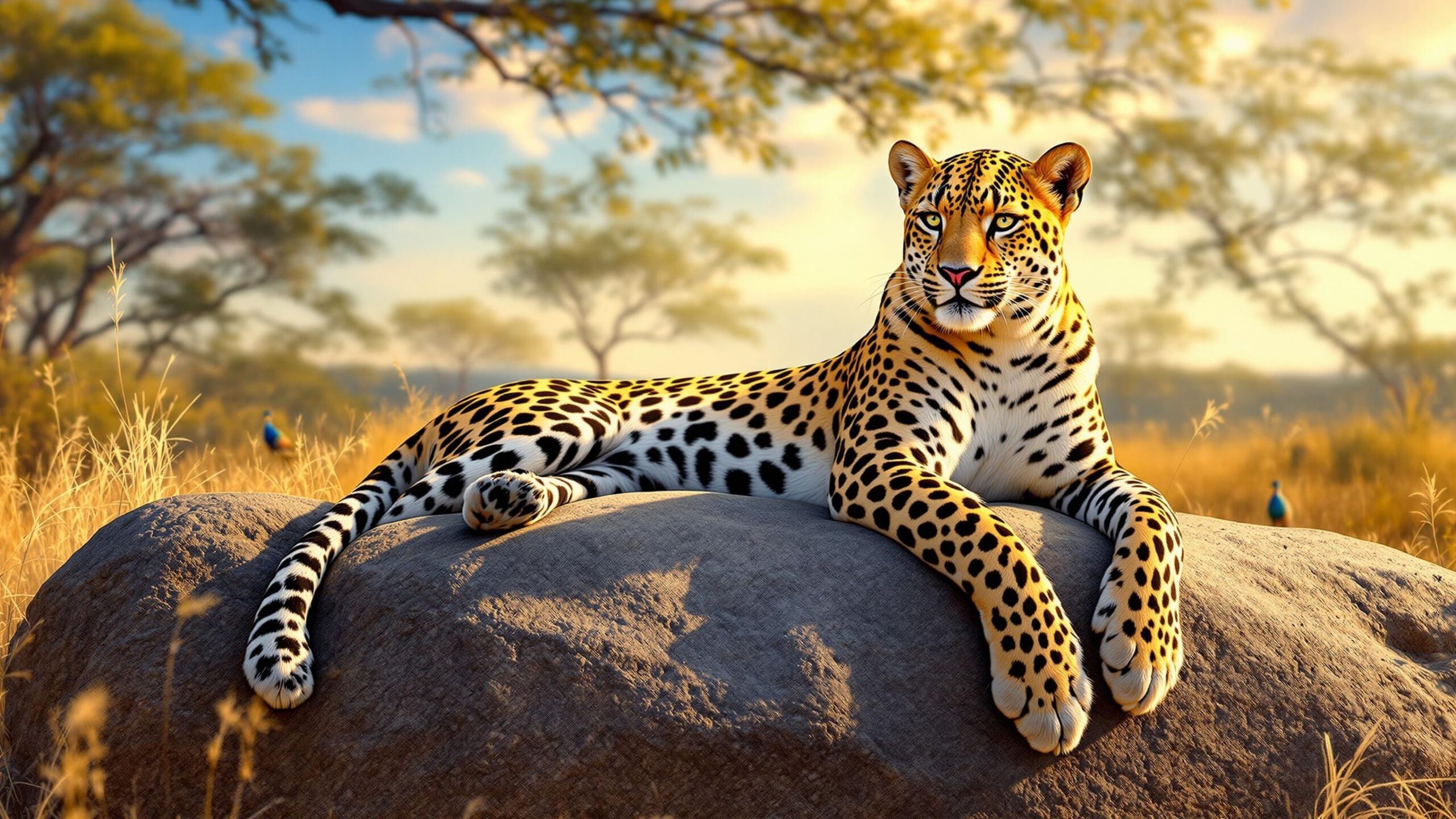
This habitat diversity reflects the leopard’s incredible versatility. In Yala National Park, for example, they thrive among open plains, thorny scrub, and rocky outcrops, often seen resting on exposed boulders during the heat of the day. In the Central Highlands, where forests grow thick with moss and mist, the leopards are more elusive, known mostly by tracks, camera traps, and the occasional glimpse. Unlike many big cats that are pushed to the fringes of their range by human activity, Sri Lankan leopards can still be found within protected areas and occasionally even near rural communities. This coexistence is fragile, but it speaks to the leopard’s quiet resilience.
A Solitary and Stealthy Predator
The Sri Lankan leopard is a creature of stealth, solitude, and surprising strength. It leads a largely solitary life, coming together with others only during mating or when females are raising cubs. These cats are territorial, with males maintaining large home ranges that may overlap with several females. A female’s territory, on the other hand, tends to be more tightly defined, particularly when she has young. These leopards are primarily nocturnal, preferring to hunt under the cover of darkness when their incredible night vision gives them an edge. However, in protected areas like Yala, where human disturbance is minimal, they are often active in the early morning and late afternoon, offering a rare chance for wildlife enthusiasts to spot them. Leopards are ambush predators, relying on patience and proximity rather than speed. The Sri Lankan leopard typically stalks its prey silently through dense cover, creeping close before pouncing with a sudden burst of power. Its diet is varied and opportunistic, ranging from spotted deer and wild boar to monkeys, birds, porcupines, and even small reptiles. This flexibility allows the leopard to survive in areas where other predators might struggle. Once a kill is made, the leopard often drags it into dense undergrowth or up a tree to feed in peace, away from scavengers such as jackals or crows. Its strong jaws, muscular limbs, and retractable claws make it perfectly equipped for this task.
The Secret Lives of Cubs
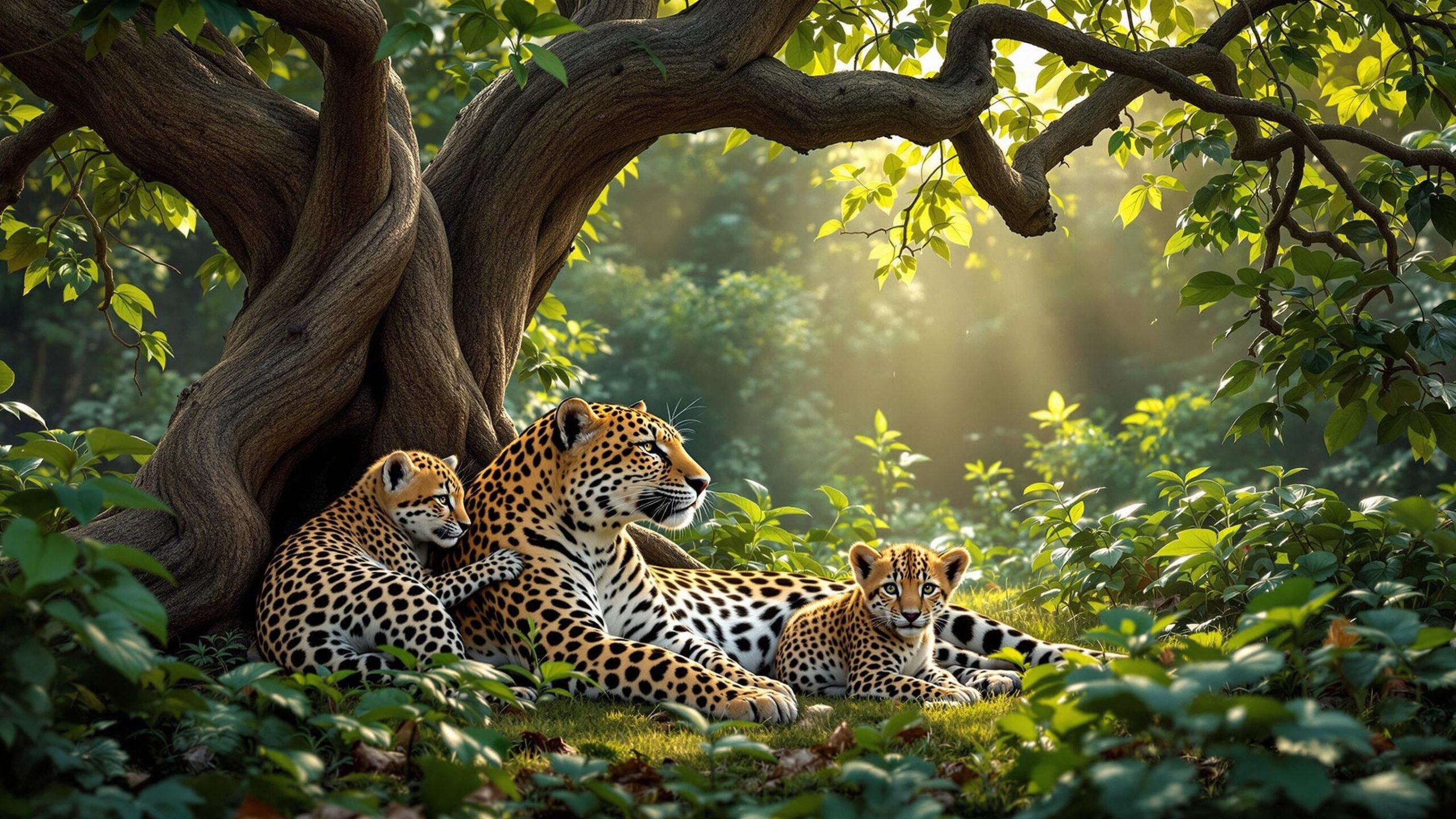
Reproduction among Sri Lankan leopards can occur year-round, though most births seem to take place in the dry season when hunting is easier and vegetation offers better cover. After a gestation period of around 90 to 105 days, a female will give birth to a litter of one to three cubs, usually in a hidden den—perhaps a rocky crevice, a hollow tree, or a thicket. Cubs are born blind and helpless, completely dependent on their mother. During the first few months, the mother keeps them well-hidden, moving them occasionally to avoid detection by other predators or rival males. As the cubs grow, she begins to teach them the essential skills of hunting, stalking, and territorial awareness.
By the age of six to eight months, cubs may begin to accompany their mother on hunting trips. Full independence typically comes around 18 to 24 months, though individual leopards may leave earlier or stay longer depending on environmental pressures. Young leopards face high mortality rates due to starvation, predation, disease, and human conflict. Those that survive must find and establish their own territory—a risky endeavor that often involves traveling long distances.
A Delicate Balance With People
Perhaps the greatest challenge faced by the Sri Lankan leopard today is learning to coexist with humans. As agriculture, infrastructure, and tourism expand across the island, the leopard’s natural habitat continues to shrink. Forest corridors are fragmented, and human settlements encroach deeper into once-wild zones. In many rural areas, leopards are viewed with a mix of awe and fear. Though they rarely pose a direct threat to people, attacks can occur—typically when a leopard is startled, cornered, or feels threatened. More commonly, leopards prey on livestock, particularly goats and dogs, leading to retaliation from farmers. One of the growing threats in Sri Lanka is snaring. These wire traps, often set for bushmeat or pest control, can accidentally catch and kill leopards. A single snare can cause devastating injuries or a slow, painful death. Conservation groups across Sri Lanka are working tirelessly to raise awareness about this issue, promote non-lethal livestock protection methods, and reduce the use of snares in and around leopard habitats. Still, there are encouraging signs. Public awareness of the Sri Lankan leopard’s importance is growing, thanks in part to education programs, media campaigns, and ecotourism. Leopards have become icons for the country’s conservation efforts, and sightings of these majestic cats are now considered highlights of any visit to parks like Yala, Wilpattu, or Horton Plains.
Conservation Without Alarmism
While the Sri Lankan leopard is currently listed as Vulnerable on the IUCN Red List, its population is believed to be declining due to habitat loss, poaching, and human conflict. However, it’s important to approach conservation not with despair, but with resolve. Several protected areas across Sri Lanka provide crucial safe havens for leopards. National parks, nature reserves, and forest corridors allow them to roam, hunt, and reproduce with minimal disturbance. In recent years, camera trapping surveys and field research have improved our understanding of leopard distribution, behavior, and threats.
Perhaps the most promising approach to conservation is one that works with local communities, not against them. By involving farmers, village leaders, schoolchildren, and rangers in leopard conservation, Sri Lanka is building a more sustainable future for its wildlife. Programs that offer compensation for livestock loss, training for coexistence, and support for sustainable tourism are already making a difference. Additionally, the Sri Lankan Department of Wildlife Conservation and organizations like the Wilderness and Wildlife Conservation Trust are conducting vital research and implementing grassroots strategies to safeguard the species for generations to come.

Cultural Significance and Symbolism
The Sri Lankan leopard holds a special place in the folklore and imagination of the island’s people. It appears in local stories as both a fearsome beast and a wise guardian of the forest. Ancient rock carvings, tribal motifs, and village tales often portray the leopard as a noble spirit, a creature that walks between worlds.
In modern times, this big cat has become a national symbol of wild Sri Lanka. Its image adorns wildlife posters, tourism brochures, and the branding of conservation efforts. But more than just a visual icon, the leopard reminds Sri Lankans—and the world—of the need to protect what remains wild and irreplaceable.
A Future in the Shadows—or the Light?
The story of the Sri Lankan leopard is still unfolding. It is a story of an animal perfectly adapted to its island home, navigating the tangled paths of rainforest and farmland, mountains and marshes, ancient ruins and new roads. It is a story of survival against growing odds. But it is also a story of hope. With increased awareness, scientific research, community involvement, and political will, the Sri Lankan leopard has a real chance of thriving well into the future. Unlike some big cats whose populations have plummeted beyond recovery, the Sri Lankan leopard still has strongholds, still reproduces successfully in the wild, and still commands both fear and admiration.
Whether it is lounging on a granite boulder in Yala’s heat or padding silently through the tea plantations of Nuwara Eliya, this elusive predator continues to inspire. Its survival doesn’t just depend on protected areas or camera traps—it depends on how we choose to value the wild within and around us. If you ever find yourself beneath a canopy of Sri Lankan trees, pause for a moment. The forest may seem still, but somewhere nearby, hidden in shadow and silence, the king of the island jungle may be watching. And perhaps that alone is reason enough to protect the forests, respect the balance, and let the wild ones roam.