
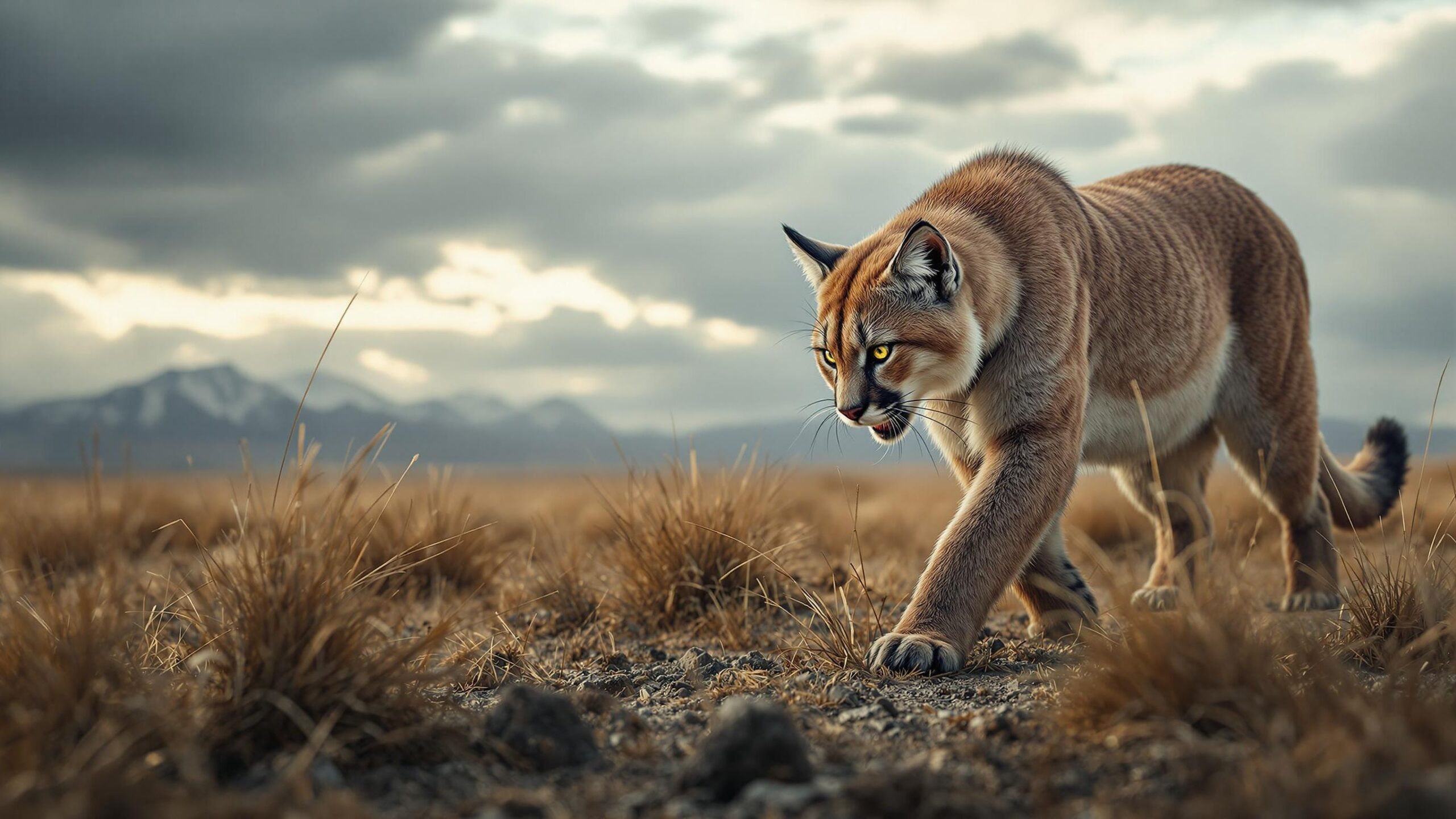
The Andean Puma: Silent Sovereign of South America’s Great Heights
In the thin, chilled air above the clouds, where the peaks of the Andes scrape the sky and condors ride the wind, a majestic and elusive feline prowls the highlands with quiet confidence. The Andean puma, scientifically known as Puma concolor puma, is one of the most iconic and widespread apex predators in the mountainous spine of South America. Adapted to extreme altitudes and rugged terrain, this powerful subspecies of cougar is both feared and revered throughout its range—from the windswept plateaus of Patagonia to the snow-capped volcanoes of Ecuador. Though it lacks the fame of the jaguar or the exotic allure of tropical big cats, the Andean puma embodies a unique combination of strength, adaptability, and mystique. As a top predator, a cultural symbol, and a critical component of the Andes’ ecosystem, the Andean puma stands as a living relic of ancient wilderness and a vital guardian of ecological balance in one of the world’s most dramatic landscapes.
A Subspecies of the Skies
The scientific name Puma concolor applies to the entire species of cougar, a big cat native to the Americas and known by many names—mountain lion, panther, cougar, or puma depending on the region. The puma subspecies, Puma concolor puma, is specifically associated with the southern Andes, including parts of Peru, Bolivia, Chile, and Argentina. The Andean puma is exceptionally well-adapted to high-elevation environments. These cats inhabit puna grasslands, rocky escarpments, arid deserts, and the windswept alpine zones of the Andes, often at altitudes exceeding 4,000 meters. They thrive where few other large predators can. With thick coats to withstand the cold, powerful limbs to traverse cliffs and ravines, and unmatched stealth in barren terrain, they have carved out a niche in one of the most inhospitable yet spectacular regions on Earth. Physically, Andean pumas have a tawny or grayish coat that blends perfectly with the rocky landscapes they inhabit. They tend to be slightly smaller than North American cougars, likely an adaptation to the lean prey base and steep, energy-demanding environments of their mountainous homes.
A: Start with body shape and habitat, then use color, markings, size, and behavior as confirmation.
A: Because Andean Puma has its own mix of structure, habitat, feeding, and comparison clues.
A: Compare it with the nearest parent, child, or lookalike pages before treating one trait as final.
A: No. Age, season, lighting, region, and posture can all change the first impression.
A: Look for the setting that explains the animal: water, cover, vegetation, substrate, altitude, reef, burrow, branch, or open ground.
A: The exact diet depends on the animal, but mouth shape, movement, and habitat usually reveal the feeding strategy.
A: Many animals change size, color, pattern, diet, risk, or habitat between young and adult stages.
A: Use the photo to check eye position, body outline, limbs or fins, texture, posture, and surrounding habitat.
A: Yes. Every animal affects food webs, habitat structure, competition, nutrient movement, or predator-prey balance in some way.
A: It should connect the animal's visible traits to how it survives, moves, feeds, and fits the taxonomy.
The Ancient Range of the Puma
The Andean puma’s roots are ancient. The ancestors of modern cougars migrated from North America to South America roughly three million years ago during the Great American Biotic Interchange. Over time, these cats adapted to the diverse ecosystems of the southern continent. While jaguars came to dominate the lowland forests and river basins, pumas found their stronghold in the highlands.
Today, the Andean puma’s range stretches across the Andes, from northern Peru and Ecuador to southern Patagonia. Though often associated with open alpine and steppe environments, they also move through cloud forests, shrublands, and transitional valleys depending on prey availability and human disturbance. This adaptability has allowed them to persist across a massive swath of geography, but their presence remains ghostlike—fleeting, often undocumented, and shaped by a deep aversion to human contact. For those lucky enough to spot one, the experience is unforgettable: a blur of movement across a ridge, a flash of gold in the dawn light, or a paw print in the dust on a high trail.
Life at Altitude
Survival in the Andes requires incredible resilience. For the Andean puma, life is a constant balancing act between energy conservation and efficient hunting. Their preferred prey includes vicuñas and guanacos—two native camelid species uniquely suited to the highlands—as well as deer, hares, foxes, birds, and occasionally livestock when wild prey is scarce. Because the landscape is so vast and rugged, these cats require large territories. Males range widely across hundreds of square kilometers, while females tend to occupy smaller, more focused ranges tied to denning sites and cub safety. Territory boundaries are maintained through scent marking and behavioral avoidance rather than direct confrontation. Andean pumas are solitary by nature and primarily crepuscular, hunting during dawn and dusk when temperatures are more forgiving and prey is most active. Their muscular builds, long tails, and keen senses allow them to stalk silently across steep terrain, ambushing prey with bursts of power and agility. A successful hunt often involves hours of stalking followed by a rapid strike. After the kill, the puma may remain with its meal for several days, feeding in seclusion and dragging the carcass to protected spots to avoid scavengers such as Andean condors, foxes, or bears.
Reproduction and Growth
Mating in Andean pumas can occur year-round, but it is generally more common in late winter or spring when conditions favor cub survival. After mating, the female carries her litter for approximately three months before giving birth in a concealed den—often a rocky outcrop, a cave, or dense vegetation.
Cubs are born blind, helpless, and speckled with dark spots that offer camouflage. A litter usually consists of one to four kittens. The mother alone is responsible for their care, nursing and protecting them for the first few weeks until they are strong enough to begin exploring. As the cubs grow, the mother introduces them to meat and begins teaching them hunting skills through play, demonstration, and practice. By the time they are one year old, the young pumas are capable of accompanying her on hunts and making their own kills. At 18 to 24 months, they begin to separate and search for new territories, starting the cycle again.
The Puma’s Role in Andean Ecosystems
As an apex predator, the Andean puma plays a crucial role in regulating the ecosystem. By preying on herbivores such as guanacos and deer, pumas help prevent overgrazing and maintain the health of highland vegetation. This, in turn, supports a cascade of biodiversity from insects to birds to rodents, contributing to the resilience of the ecosystem as a whole. Their presence also impacts the behavior of other species. When prey animals sense puma activity in an area, they alter their grazing and migration patterns. This natural pressure helps distribute herbivory more evenly across the landscape, protecting sensitive plant communities and water sources. Even in death, pumas contribute to the food chain. Carcasses left behind provide food for scavengers such as condors, caracaras, and foxes. In this way, the puma is both a keystone predator and a quiet sustainer of life across the mountains it calls home.
Cultural and Mythological Significance
The puma holds profound significance in Andean culture. For millennia, Indigenous peoples of the region have revered the puma as a sacred animal—strong, wise, and spiritually potent. In Incan cosmology, the puma represented the middle world (Kay Pacha), the plane of the living, while the condor symbolized the heavens and the serpent the underworld.
Puma figures were carved into temples, painted on pottery, and woven into textiles. In the city of Cusco—once the capital of the Inca Empire—the city’s layout was said to resemble the shape of a puma, with its head at the fortress of Sacsayhuamán. Such symbolism reveals the deep respect and awe these animals inspired in pre-Columbian societies. Even today, the puma remains a powerful symbol in Andean folklore, representing courage, wilderness, and guardianship. Stories of pumas appearing in dreams or as omens persist, and the animal continues to feature prominently in traditional songs, dances, and ceremonies.
Conservation in a Changing Landscape
While the Andean puma is currently classified as a subspecies of Least Concern by the IUCN, that label does not fully capture the complexity of its conservation status. In many regions, local populations face significant pressures. Habitat fragmentation, human-wildlife conflict, and retaliatory killings continue to threaten their numbers, particularly in areas where livestock herding overlaps with puma territories. As human development expands into highland areas—through mining, agriculture, and tourism—puma habitat becomes increasingly fragmented. Roads, fences, and settlements create barriers that isolate populations, disrupt migration, and increase the risk of conflict. When pumas prey on livestock, herders sometimes respond with lethal force.
Efforts to mitigate these conflicts include compensation programs, community education, and the use of non-lethal deterrents such as guard animals and improved fencing. In Argentina and Chile, national parks and protected areas have become crucial refuges for pumas, offering safe zones where they can hunt, mate, and raise cubs without interference. One promising approach is ecotourism. In regions like Torres del Paine National Park in Chile, puma tracking tours have become increasingly popular, generating income for local communities while fostering appreciation for the species. This growing interest can create powerful incentives to preserve pumas and their habitats, demonstrating that a living puma is more valuable than one lost to conflict.
Science and Study
Studying Andean pumas is a challenging endeavor. Their remote habitats, wide-ranging movements, and secretive nature make them difficult to monitor. But thanks to advances in camera trapping, satellite tracking, and DNA analysis, researchers are gaining deeper insights into puma behavior, genetics, and population dynamics. GPS collars allow scientists to track individual pumas across rugged landscapes, revealing migration routes, home ranges, and hunting behavior. These data are critical for designing wildlife corridors, assessing population health, and identifying areas of human-wildlife conflict.
Researchers are also investigating how pumas coexist with other large carnivores. In some parts of the Andes, they share territory with Andean bears and foxes. Understanding these relationships helps scientists better protect the ecological balance of highland ecosystems. Perhaps most importantly, this research feeds directly into conservation planning. By knowing where pumas live, what they eat, and how they move, conservationists can better protect them—and by extension, the landscapes they help define.
The Future of the Andean Puma
The fate of the Andean puma is closely tied to the health of the Andes. As long as highland ecosystems remain intact and communities are empowered to coexist with wildlife, the puma has a strong chance of survival. But this future depends on thoughtful land-use planning, long-term habitat protection, and a shift in public attitudes.
Education is key. Many people still see pumas as threats or nuisances. Changing that perception means helping people see pumas as vital contributors to ecosystem health—and as cultural treasures worth preserving. By connecting communities to their local wildlife through education and engagement, a new generation of guardians can be nurtured. Ultimately, the Andean puma is a survivor. It has endured ice ages, empires, and ecological upheaval. With the right support, it can continue to move through the high places of the Earth—silent, watchful, and sovereign.
A Living Legend of the Andes
The Andean puma is more than a predator. It is a symbol of endurance, adaptability, and natural elegance. It represents a world that is both ancient and alive, where mountains are not just barriers but bridges to wildness, where each paw print in the snow or dust is a reminder that untamed life still walks among us. To glimpse a puma in the Andes is to witness a living myth, a flash of muscle and motion shaped by time and terrain. And while few will ever see one in person, the knowledge that these cats still exist—still breathe, still hunt, still raise their young in the high silence—is enough to inspire awe and responsibility. In the end, the Andean puma does not ask for attention. It only asks for space. And if we are wise enough to give it, the wild heart of the Andes may continue to beat for centuries to come.
Animal Product Reviews
Dive into Animal Streets’ Animal Product Reviews — your guide to the best gear, gifts, books, and gadgets inspired by the animal kingdom. From land-roaming lions to ocean-gliding whales, from household pets to prehistoric giants, we explore top-rated products for enthusiasts, educators, and animal lovers alike. Whether you’re shopping for toys, decor, field gear, or fun collectibles, we’ve sniffed out the best so you can discover it all in one wild place!