
The High-Altitude Habitat
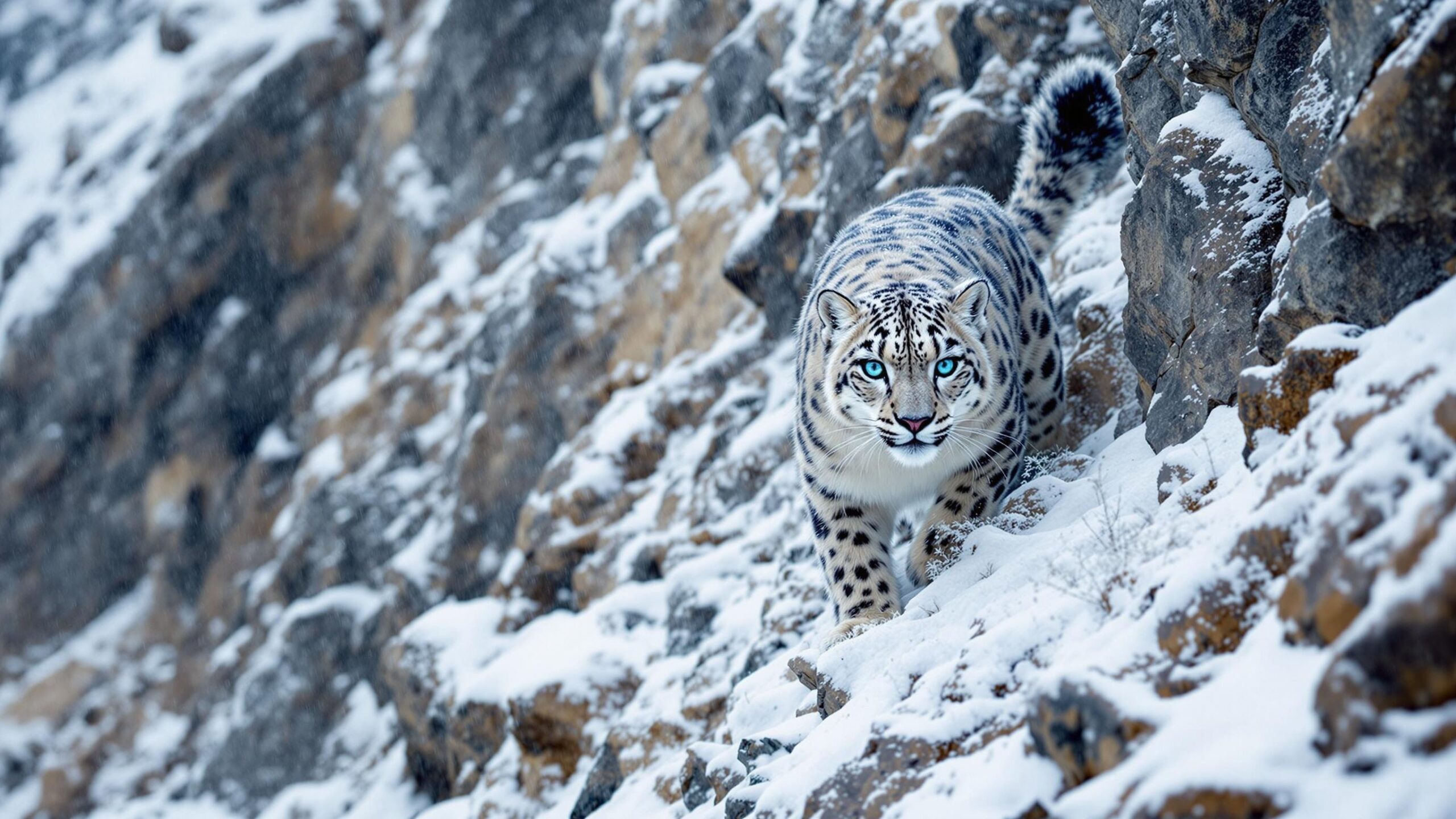
The Himalayan snow leopard lives at elevations ranging from 9,800 to over 16,000 feet above sea level, where oxygen is thin, temperatures plunge well below freezing, and life clings to survival. Their terrain spans high alpine meadows, steep cliffs, rocky outcrops, and frozen ridgelines. In summer, they often move higher, while in winter they descend to lower elevations where prey is more accessible.
Their primary stronghold lies in the Himalayas, especially in Nepal, Bhutan, India (notably in Ladakh and Himachal Pradesh), and parts of Tibet. These landscapes are not only remote but staggeringly beautiful, painted in blues, whites, and earthy tones where every shadow could be hiding a snow leopard. These cats play a vital ecological role at the top of the food chain, helping maintain healthy populations of herbivores like bharal (blue sheep), Himalayan tahr, ibex, and argali. This in turn ensures that alpine vegetation isn’t overgrazed, helping to preserve delicate ecosystems already vulnerable to climate change.
Diet and Hunting Behavior
Snow leopards are obligate carnivores and apex predators, though they rarely kill in dramatic fashion. Stealth is their strategy. With keen vision and an extraordinary ability to remain undetected, they stalk their prey through crag and crevice, often launching their attack from above. Their powerful hind legs allow them to leap over 30 feet—almost six times their body length—in pursuit of a target.
Blue sheep and ibex form the bulk of their diet in the Himalayas, though they are known to take marmots, hares, and occasionally domestic livestock, especially where natural prey is scarce. A single successful kill can feed a snow leopard for several days, and they often drag their prey to secluded rocky perches to eat in peace. Interestingly, snow leopards are usually solitary hunters and not particularly territorial compared to other big cats. Their ranges can span hundreds of square miles and often overlap with those of other snow leopards, with minimal conflict.
The Elusive Lifestyle
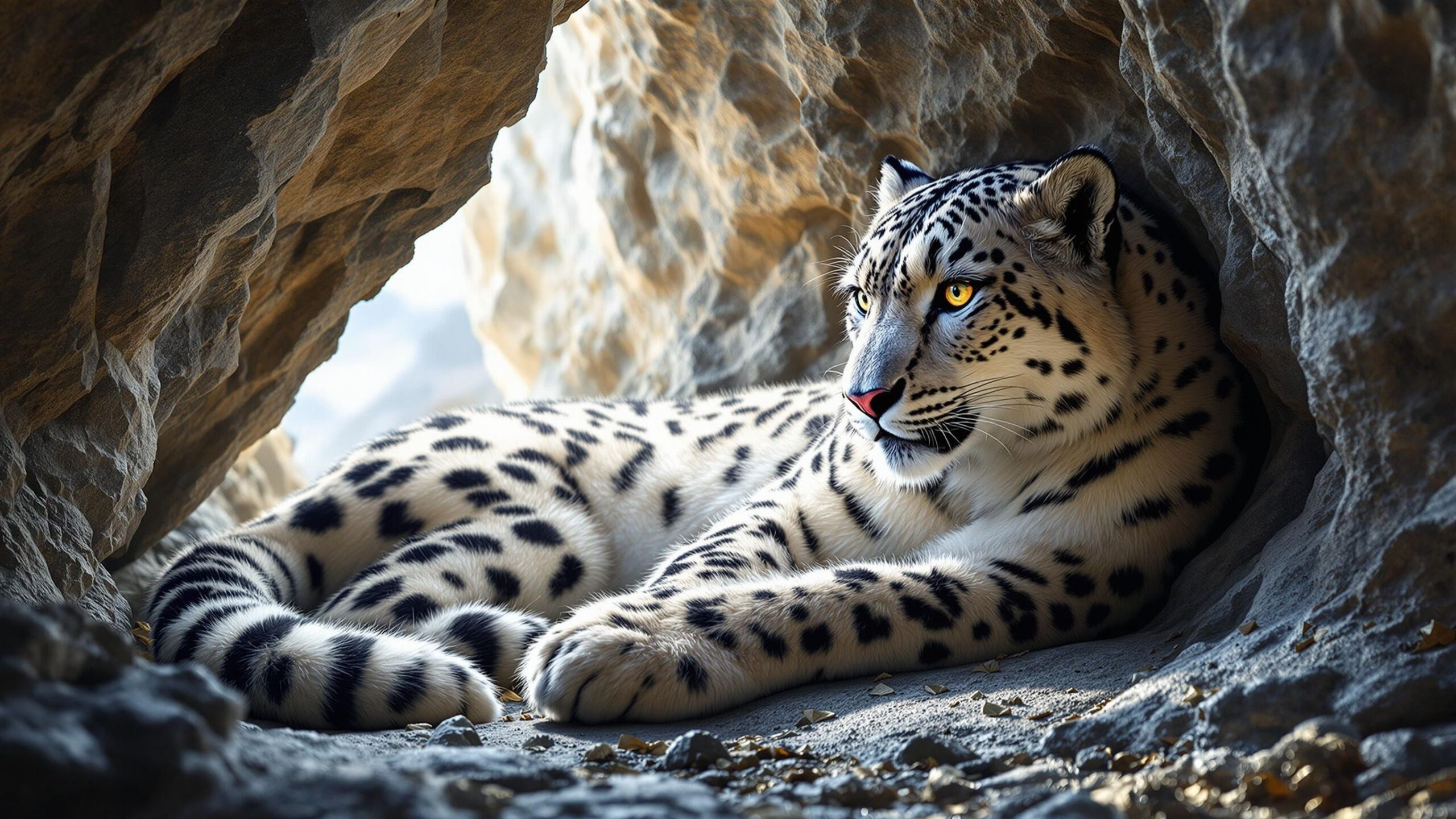
Himalayan snow leopards are masters of solitude. Their stealth is legendary—they blend into their surroundings so perfectly that even experienced wildlife researchers may go years without a clear sighting. Camera traps have been a game changer in understanding their habits, but even today, most knowledge about their daily lives remains veiled in mystery.
They are crepuscular, meaning they are most active during the early morning and evening hours. This timing allows them to hunt efficiently while avoiding the harshest daylight heat, even in alpine climates. Though often quiet, snow leopards can vocalize through low growls, yowls, and even a distinctive call known as a “chuff” when interacting with mates or cubs. Unlike lions or tigers, they cannot roar due to differences in their throat anatomy.
Females typically give birth every other year, usually in rocky dens that are well hidden from predators and the elements. A typical litter includes two to three cubs, born blind and helpless, relying entirely on their mother’s warmth and protection. Cubs remain with their mothers for up to two years, during which they learn how to hunt, navigate treacherous terrain, and eventually establish their own home ranges.
Cultural and Spiritual Significance
In the Himalayas, the snow leopard is more than just a cat—it is a symbol. It represents balance, mystery, and the raw power of nature. Tibetan Buddhism often portrays the snow leopard as a sacred animal, a guardian of the mountains. In local folklore, the creature is seen as a spirit being—watchful, wise, and not to be disrespected. These perceptions have, over time, helped protect the species, particularly in regions where religious or spiritual values discourage hunting. Monasteries across Nepal and Bhutan have participated in conservation programs that blend traditional beliefs with modern science, showing how culture and ecology can coexist.
Challenges and Threats
Despite its isolated domain, the Himalayan snow leopard faces serious threats. Chief among them is habitat loss. As human populations expand into mountainous regions for agriculture, infrastructure, and tourism, the fragile ecosystems snow leopards rely on are shrinking and fragmenting. Climate change is another silent adversary. Warming temperatures are altering the availability of prey, shifting vegetation zones, and reducing snow cover, which in turn may push snow leopards into more marginal areas or increase their encounters with human settlements.
Human-wildlife conflict, especially involving livestock predation, has long posed a danger to snow leopards. In some cases, herders retaliate by killing the cat responsible. However, such conflict is often fueled by economic hardship, not malice. Livelihoods in these regions are precarious, and losing even a single yak or sheep to a predator can be devastating. Poaching for the illegal wildlife trade is also a concern. Snow leopards are targeted for their luxurious pelts and bones, which are sold as traditional medicine or exotic decor in underground markets.
Conservation with Quiet Resolve
Though the threats are real, so too is the hope. Across the Himalayas and beyond, local communities, NGOs, and governments are quietly working to turn the tide for snow leopards. Conservation initiatives such as the Global Snow Leopard and Ecosystem Protection Program (GSLEP), a joint effort involving 12 range countries, aim to protect at least 20 key landscapes across the species’ range.
Organizations like the Snow Leopard Trust and WWF are collaborating with local communities through livestock insurance programs, predator-proof corrals, and eco-tourism ventures that benefit both people and leopards. By ensuring that the presence of a snow leopard brings income rather than loss, these programs foster a new kind of coexistence. Citizen science and camera trap projects also allow remote villagers to participate in wildlife monitoring, building pride and stewardship. School education programs help nurture the next generation of conservationists, ensuring that the snow leopard’s story is passed on.
A Global Icon of Wilderness
In recent years, the snow leopard has become something of a global ambassador for the wild. Its image appears on postage stamps, in nature documentaries, and even in literature and film. But beyond the romantic image lies a real animal with real needs, and a real future hanging in the balance.
Perhaps no other species so perfectly captures the grandeur and fragility of high-mountain ecosystems. Protecting the snow leopard isn’t just about saving a single species—it’s about safeguarding a vast mosaic of life, from alpine flowers to soaring eagles to nomadic shepherds. In essence, the snow leopard stands for a world still wild and worth protecting.
Surviving Against the Odds
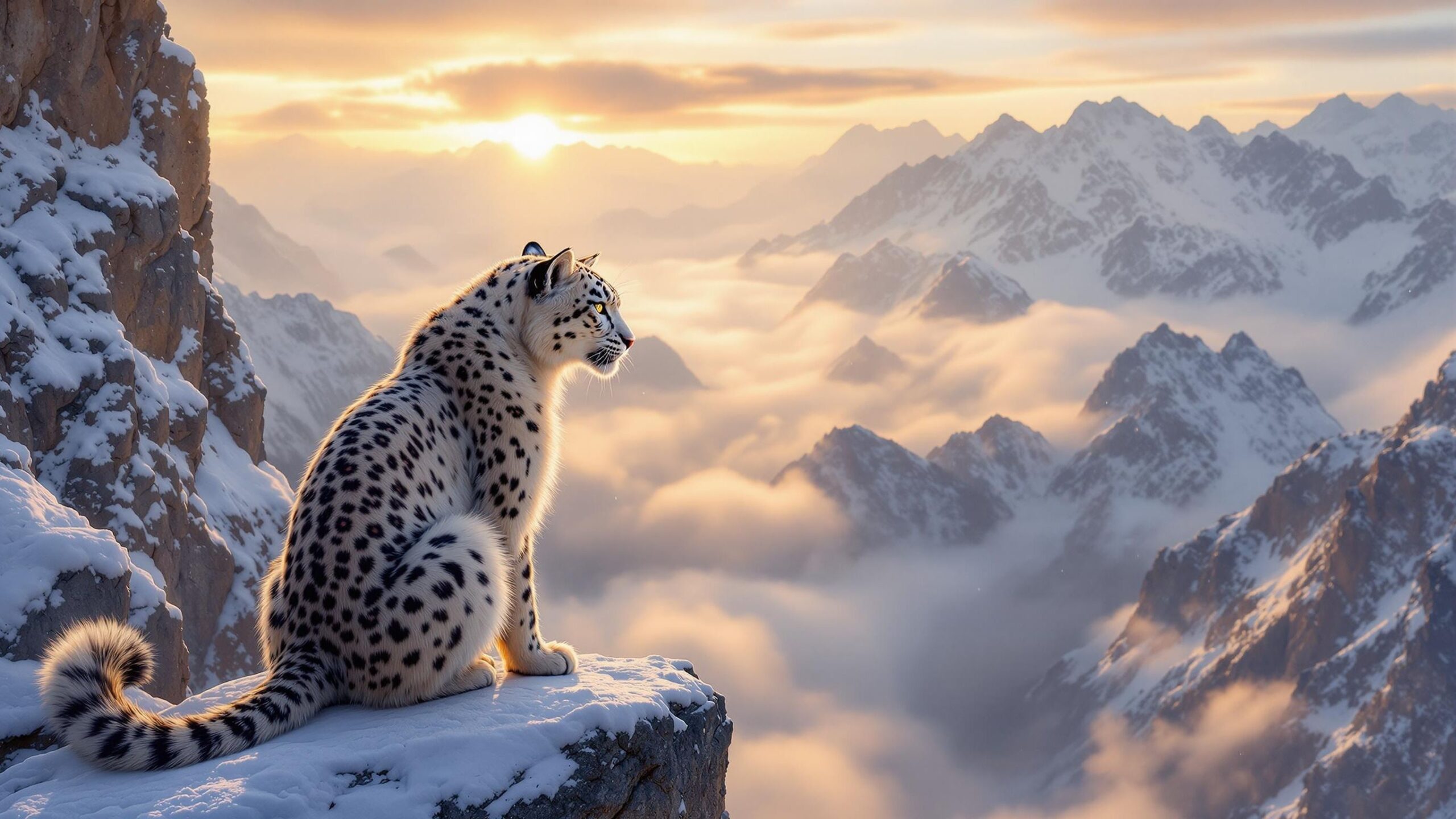
The resilience of the Himalayan snow leopard is nothing short of astonishing. It survives where most life falters—on wind-whipped cliffs and in valleys shadowed by glaciers. Every day it climbs where humans need oxygen tanks. Every winter it sleeps through howling storms in caves carved by time. And every spring, it lives to hunt again.
It is not a relic. It is not a ghost. It is a living, breathing example of nature’s ability to adapt and endure. Its survival is not a matter of charity—it’s a matter of legacy. If we protect the snow leopard, we protect the purity of the Himalayas, the balance of fragile ecosystems, and the ancient relationship between people and land.
The Spirit of the Himalayas
The Himalayan snow leopard may be shy and seldom seen, but its presence ripples through the landscape like an unseen wind. It shapes the behavior of prey, inspires local traditions, and awakens the imagination of all who dream of wilderness. As our world becomes more crowded and climate-stressed, the snow leopard reminds us that some parts of nature are meant to be quiet, remote, and fiercely wild. And yet, even the most elusive beings depend on our awareness and action. To glimpse a snow leopard is to witness a miracle of motion, mystery, and mastery of the mountains. But even if you never see one with your own eyes, to know they are out there—leaping across the snow, hidden in the high places—is to feel that our world still holds room for wonder.