

Habitat and Range: From Mountain Peaks to Rainforest Depths
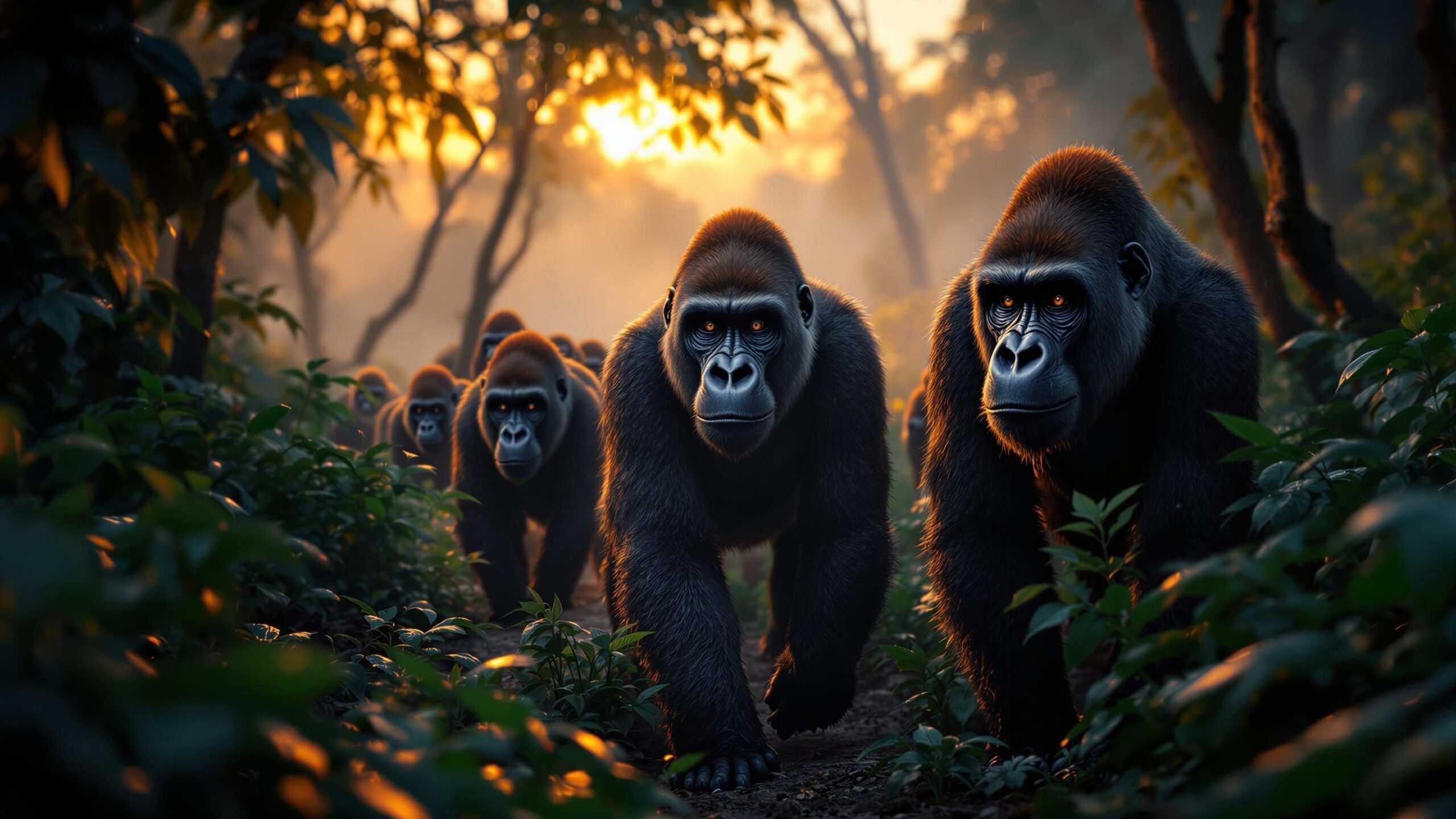
The Eastern Gorilla’s range is limited to a few specific pockets of forest in East and Central Africa, with habitats varying significantly between the two subspecies. Mountain Gorillas live in the volcanic mountain ranges straddling the borders of Rwanda, Uganda, and the Democratic Republic of the Congo. These high-altitude rainforests are often shrouded in mist and filled with ferns, bamboo, and moss-draped trees. The cool, moist environment supports dense vegetation and limited fruit availability, meaning these gorillas rely more heavily on leaves, shoots, and stems for sustenance.
Eastern Lowland Gorillas, or Grauer’s Gorillas, reside primarily in the lowland tropical rainforests of the eastern Democratic Republic of the Congo. These habitats are much warmer, with thick, multi-layered canopies and an abundance of fruit-bearing trees. Grauer’s Gorillas inhabit a larger home range than their mountain-dwelling cousins and move over greater distances in search of food. The survival of both subspecies is closely tied to the protection of these remaining habitats. Sadly, deforestation, mining, agriculture, and armed conflict continue to threaten their forest homes, especially in the lowlands.
Diet: Leafy Greens and Forest Feasts
Eastern Gorillas are primarily herbivorous, though their diets vary based on location and seasonal availability. Mountain Gorillas feed heavily on leafy vegetation, including nettles, thistles, celery, bamboo shoots, and other fibrous plants. Fruit is relatively rare in their high-altitude environment, making them well adapted to a folivorous diet. Grauer’s Gorillas, living in fruit-rich lowland forests, consume a greater proportion of fruit, along with leaves, stems, bark, and the occasional insect. Their diet shifts with the seasons, and they are known to travel significant distances to exploit fruiting trees.
Gorillas do not drink water directly from streams or rivers; instead, they derive moisture from the plants they consume. Their powerful jaws and broad molars allow them to chew and process tough, fibrous material with ease. Importantly, Eastern Gorillas play a crucial role in seed dispersal. As they move through the forest and consume a variety of fruits, they spread seeds through their droppings, promoting plant regeneration and forest diversity.

Social Life: A World of Family and Fidelity
Eastern Gorillas are profoundly social animals, living in stable family groups led by a dominant silverback. A typical group, or “troop,” may contain one silverback, several adult females, their offspring, and sometimes subordinate males known as blackbacks. Some larger groups may include multiple silverbacks, though a clear hierarchy is always maintained. The silverback is the undisputed leader, responsible for decision-making, group cohesion, conflict resolution, and protection. His presence is reassuring to the group and plays a central role in raising and safeguarding young gorillas.
Females typically remain in the same group for extended periods and form strong bonds with the silverback, often choosing him for his strength, experience, and stability. After weaning, juveniles stay close to their mothers while gradually becoming more independent. Young gorillas engage in frequent play, which includes wrestling, chasing, somersaulting, and climbing. Play is critical for developing social skills and physical coordination. Grooming, another essential behavior, helps strengthen relationships and maintain hygiene within the group. Group members communicate using a rich repertoire of vocalizations, facial expressions, and gestures. They grunt, bark, hum, hoot, and sometimes chest-beat to express emotions ranging from contentment to alarm.
Reproduction and Life Cycle: Growing Up Gorilla
Eastern Gorillas reproduce slowly, with long intervals between births and extended parental care. Females reach sexual maturity at around 10 years of age, while males mature closer to 12, though they may not become dominant silverbacks until their late teens or early twenties. After mating, the gestation period lasts approximately 8.5 months, and a single infant is born. Twins are exceedingly rare. Newborn gorillas are tiny, weighing only about four to five pounds, and are completely dependent on their mothers. They cling to their mother’s chest for the first few months and later ride on her back as they grow stronger.
Weaning usually occurs at around three to four years of age, though young gorillas continue to rely on their mothers for comfort and social learning well into their juvenile years. Because female gorillas reproduce only every four to six years, they may have no more than three to four offspring over their lifetime. This slow reproductive rate means that every individual gorilla is precious to the species’ long-term survival, especially given current threats and small population sizes.
Intelligence and Communication: Minds in the Mist
Eastern Gorillas are highly intelligent and emotionally complex. Observers frequently note the depth of their gaze and the apparent thoughtfulness of their actions. Their ability to problem-solve, use tools, and navigate complex social relationships points to a high degree of cognitive sophistication. In captivity, gorillas have been taught to use sign language, solve puzzles, and exhibit behaviors that demonstrate empathy, joy, curiosity, and even grief. In the wild, their intelligence is reflected in their strategic foraging, nest building, and conflict avoidance.
Each night, gorillas construct fresh sleeping nests from leaves and branches. Mothers build smaller nests for their infants. These nests are made on the ground or in trees, depending on safety and terrain. Gorilla communication includes a vast range of sounds and body language, from soft grunts and purrs during rest to loud chest beats, screams, and barks during confrontations. They also use direct eye contact, head tilts, and even touch to convey emotion and intent.
Threats to Survival: A Fragile Existence
The Eastern Gorilla faces numerous threats that continue to endanger its survival, even in protected areas. Both the Mountain Gorilla and Eastern Lowland Gorilla are listed as Critically Endangered on the IUCN Red List. Habitat loss is one of the most pressing concerns. Expanding agriculture, logging, and mining operations—particularly for resources like coltan and gold—have destroyed and fragmented critical forest habitats. This not only reduces available space for gorilla populations but also isolates groups, reducing genetic diversity.
Poaching and the illegal wildlife trade are also major concerns. While gorillas are not typically hunted for meat, they can become accidental victims of snares meant for other animals. In some cases, gorillas are killed for their body parts or captured as infants for illegal pet markets. Perhaps the most devastating biological threat is disease, particularly diseases transmitted by humans. Respiratory infections, Ebola, and other pathogens have caused significant mortality in gorilla populations. Because gorillas are genetically close to humans, they are vulnerable to many of the same illnesses. Political instability and armed conflict in parts of their range further complicate conservation efforts, especially in the eastern Democratic Republic of the Congo. Rangers and researchers often work in dangerous conditions to monitor and protect gorilla populations.
Conservation Efforts: Hope in the Highlands
Despite these challenges, the story of the Eastern Gorilla is not without hope. In fact, the Mountain Gorilla is one of the few great apes to show a slight population increase in recent years, thanks to intensive conservation measures. Protected areas such as Volcanoes National Park (Rwanda), Bwindi Impenetrable National Park (Uganda), and Virunga National Park (DRC) have become critical sanctuaries for the species. These areas are patrolled by trained rangers who monitor gorilla groups, remove snares, and deter poaching.
Community-based ecotourism has emerged as a game-changing conservation strategy. Carefully regulated gorilla trekking programs generate revenue for local communities, fund conservation initiatives, and raise public awareness. Tourists pay premium fees to observe gorillas in the wild, with strict guidelines in place to minimize stress and disease transmission. International NGOs, researchers, and government agencies collaborate to conduct health monitoring, habitat restoration, and anti-poaching campaigns. In recent years, DNA analysis and satellite tracking have improved our understanding of gorilla genetics and movement patterns, helping inform more effective management plans.
Ecological Role: Gardeners of the Forest
Eastern Gorillas are not just charismatic megafauna—they are keystone species with a profound impact on their ecosystems. Through their foraging behavior, they help shape vegetation patterns, disperse seeds, and promote plant diversity. By moving across the forest and consuming a wide variety of fruits and plants, gorillas create natural clearings, fertilize the soil, and allow sunlight to reach the understory. Their droppings provide nutrients for a host of organisms, and their trails serve as pathways for smaller animals. Protecting gorillas means protecting entire ecosystems, along with the myriad plant and animal species that share their habitat.
A Symbol of Strength and Survival
The Eastern Gorilla’s story is one of contrast—of immense strength and tender vulnerability, of grim threats and glimmers of hope. As ambassadors of the African rainforest and close relatives of humanity, these gorillas capture the imagination and stir the conscience. Every step taken to protect them—from enforcing anti-poaching laws to educating local children about the value of wildlife—moves us closer to a world where gorillas can thrive, not merely survive.
Guardians of the Mist
The Eastern Gorilla is more than a majestic presence in the forest—it is a living example of the beauty, complexity, and fragility of the natural world. With their powerful arms, soulful eyes, and unbreakable family bonds, these great apes remind us of our deep connection to the wild. They are guardians of the mist, sentinels of the forest, and silent teachers of compassion and community. By standing with them—through action, awareness, and support—we help preserve not only their future but the future of the forests they call home.