
Unmistakable Appearance: Designed for the Dark
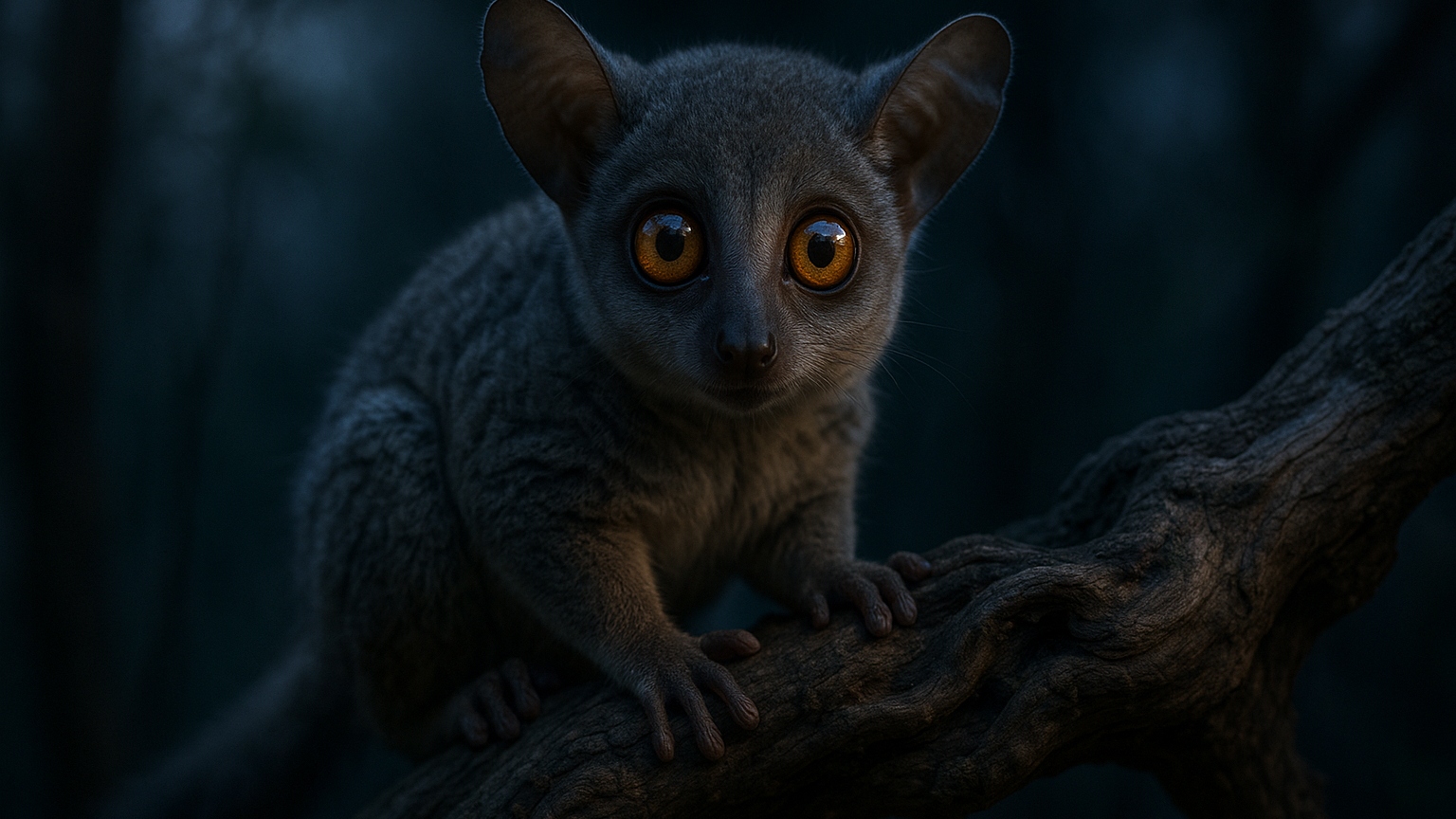
A bush baby’s appearance is both endearing and functionally refined. Most species are small, with body lengths ranging from just 5 to 12 inches, and tails that often exceed their body length. Their fur is soft and ranges in color from gray to brown or reddish tones, helping them blend seamlessly into their surroundings. Their most striking features are their enormous, round eyes, which provide exceptional night vision. These eyes reflect light like a cat’s, making them glow eerily when caught in torchlight—a trait that has inspired many a local legend. Unlike humans, bush babies rely heavily on visual cues in extremely low light, and their eye structure is specially adapted for this purpose. Equally remarkable are their ears, which are large, mobile, and capable of independently tracking sounds. This acute hearing enables them to locate insects and other prey in complete darkness. Their hands and feet are also uniquely adapted, featuring grasping toes and flattened pads that allow for a vice-like grip on branches, even during high-speed leaps.
Masterful Movers: Acrobatics in the Canopy
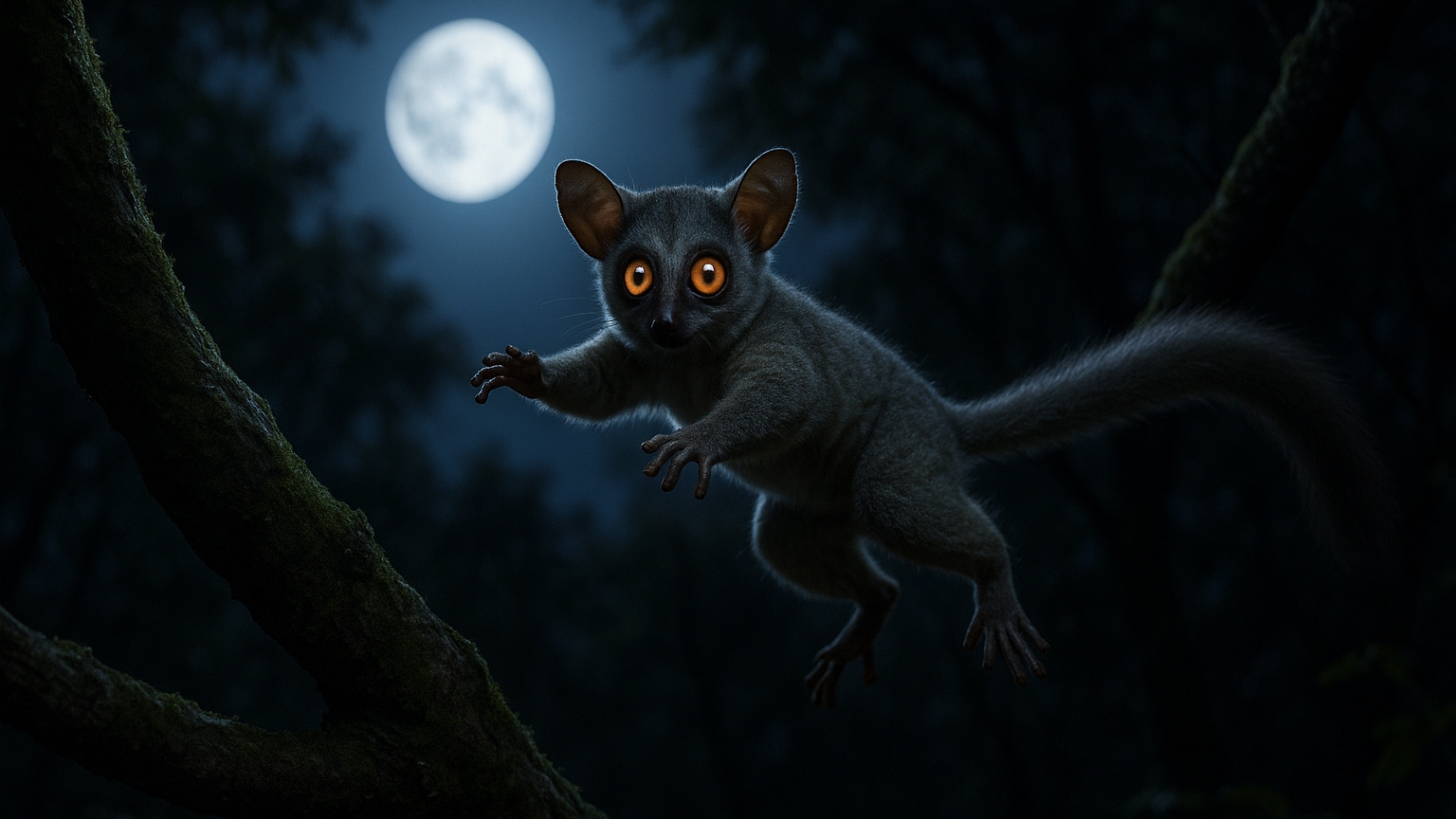
Perhaps the bush baby’s most celebrated trait is its unparalleled leaping ability. These primates are explosive jumpers, capable of launching themselves more than 10 times their body length in a single bound. Their powerful hind limbs act like loaded springs, propelling them from branch to branch with breathtaking speed and accuracy. This acrobatic skill is not just for show—it’s essential for both hunting and avoiding predators. Bush babies often navigate tangled foliage, tree trunks, and dense underbrush while foraging for insects or fruit. Their ability to leap silently and land precisely gives them a major advantage in the competitive world of nocturnal forest life. Galagos are also highly agile on the ground when necessary, able to run in short bursts or leap vertically to escape threats. This adaptability across multiple terrains makes them one of the most mobile small primates in Africa.
Feeding Habits: Opportunistic Omnivores
Bush babies are omnivores, and their diet varies depending on their habitat and the season. Insects make up a large portion of their intake—beetles, grasshoppers, moths, and caterpillars are all fair game. They use their sharp hearing to detect the flutter of wings or the rustle of leaves before pouncing with lightning speed. Fruits, flowers, and tree gums also feature prominently in their diet.
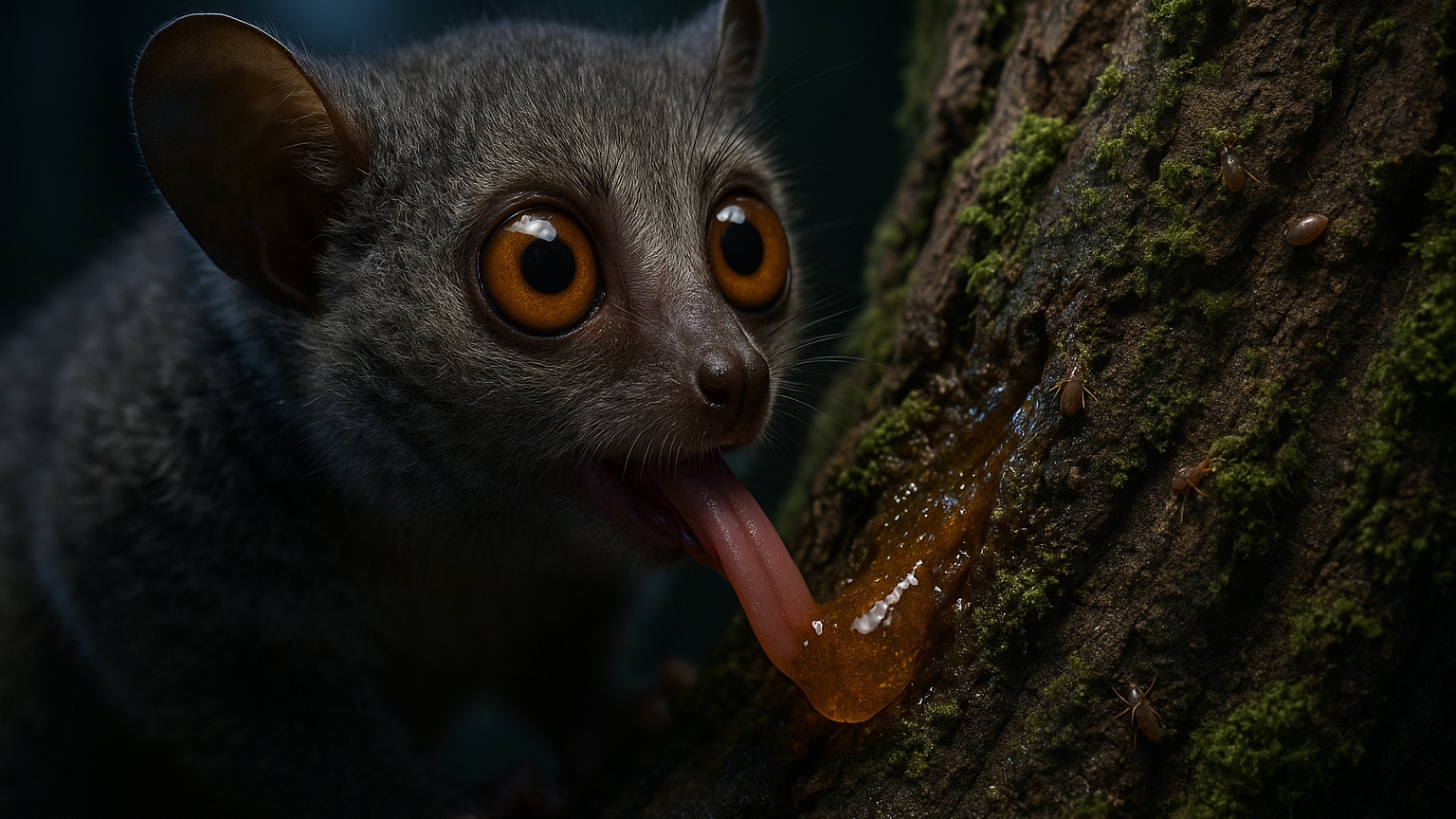
Gums, in particular, are a crucial food source during dry seasons when other resources are scarce. To access sap or gum, bush babies use their incisors to gnaw through bark, then return later to lick up the hardened resin. Their specialized toothcomb and elongated tongues are perfect tools for this task. Some larger species have even been observed preying on small birds, reptiles, and amphibians. This dietary flexibility allows bush babies to thrive in a wide variety of environments, from dense jungles to suburban gardens.
Social Lives and Communication
Despite their mostly solitary foraging behavior, bush babies are social animals with complex forms of communication. Most species form loose social groups based around a dominant female and several males. During the day, these groups may nest together in tree hollows, dense thickets, or vine tangles, often using calls to maintain contact in the dark. Their vocalizations are both varied and expressive, ranging from high-pitched chirps and whistles to loud wails and screams. These sounds serve multiple purposes: territory defense, locating mates, warning of predators, or signaling distress. The “cry” of a bush baby, which is said to sound like a human infant’s wail, is the origin of their common name. In addition to vocal cues, bush babies use scent marking to communicate. They have specialized glands that produce secretions used to mark territory, identify individuals, and signal reproductive status. Scent trails help them navigate and maintain social order in the forest.
Reproduction and Parental Care
The reproductive strategies of bush babies are closely tied to their environment. In regions with distinct wet and dry seasons, mating usually occurs during the dry months so that offspring are born during times of food abundance. Female galagos give birth to one or two infants after a gestation period of about 110 to 140 days, depending on the species. Infants are born with closed eyes and limited mobility. For the first few days, mothers keep them in nests or secluded branches, returning frequently to nurse. Remarkably, some mothers will carry their young in their mouths as they forage, tucking them into safe spots while they hunt. The period of parental care varies but often lasts several months, during which time the young gradually begin exploring and practicing leaping and hunting under their mother’s watchful eye. Males typically play little to no role in raising the young.
Range and Habitat: From Rainforest to Suburb
Bush babies are found throughout sub-Saharan Africa, with species distributed across a range of ecosystems. While many prefer moist, tropical forests, others have adapted to dry savannas, thorn scrub, and even highland plateaus. Their adaptability has allowed some species to expand into human-altered landscapes, including agricultural zones and urban parks.
In these areas, bush babies often make use of buildings, fences, and cultivated trees for shelter and food. Although habitat fragmentation remains a concern, their generalist habits and secretive nature have helped them persist in many areas where other primates might struggle. That said, each species has specific needs, and the long-term survival of bush babies hinges on maintaining corridors of native vegetation and preventing widespread deforestation.
Myth, Folklore, and Local Significance
Across Africa, bush babies have inspired a wealth of legends and folklore. Their eerie nocturnal cries, glowing eyes, and elusive movements have earned them reputations ranging from spiritual messengers to mischievous forest spirits. In some communities, they are believed to bring omens or guide ancestors; in others, their cries are thought to predict the weather or signal good fortune. While such myths reflect a deep cultural connection to these animals, they have also occasionally led to fear or misunderstanding. Conservation groups working in regions where galagos live often incorporate local stories into their education programs to foster appreciation and encourage protection rather than persecution.
Threats and Conservation: A Quiet Struggle
Though not as critically endangered as some of their primate cousins, bush babies face a variety of threats. Habitat loss from logging, farming, and urban development is a major issue, particularly for species with limited ranges. In addition, the pet trade and local hunting pressures—often for traditional medicine or bushmeat—can impact small populations. Despite these challenges, bush babies benefit from relative resilience and adaptability.
Many species are still listed as Least Concern by the IUCN, though others, like the Rondo dwarf galago (Galagoides rondoensis), are critically endangered due to extremely restricted habitats. Conservation efforts focus on habitat protection, ecological research, and public awareness campaigns. Protected areas like Tanzania’s Udzungwa Mountains and South Africa’s Kruger National Park provide vital safe zones. Scientific studies on population trends, genetics, and behavior continue to inform conservation strategies aimed at securing a future for these captivating primates.
Scientific Importance and Ongoing Research
For researchers, bush babies offer a wealth of scientific insight. Their unique locomotion has been studied extensively to understand biomechanics and primate evolution. Their vocalizations and social behaviors shed light on the early origins of communication in primates, while their dietary habits provide clues about forest ecology and food webs. Ongoing fieldwork continues to uncover new species and subspecies, particularly in understudied regions like Angola, the Congo Basin, and Malawi. Each discovery adds to our understanding of primate diversity and the evolutionary history of Africa’s fauna. Conservation biologists also study bush babies to gauge the health of ecosystems. As small, nocturnal animals that rely on a mix of insects and plants, galagos are good indicators of forest quality. When bush baby populations decline, it often signals broader environmental problems.
Ecotourism and Human Interaction
In some regions, bush babies have become minor stars in ecotourism. Their charismatic appearance and nighttime activity make them popular with tourists on guided night walks. Locations like Kenya’s Diani Forest or Tanzania’s Udzungwa region offer opportunities to glimpse these creatures in the wild, often with the aid of red-filtered lights that don’t disrupt their behavior. While some bush babies tolerate human presence, it’s important to maintain respectful distances and avoid feeding or attempting to handle them. Responsible tourism helps fund local conservation projects and fosters community pride in native wildlife, contributing to long-term protection efforts.
Nature’s Pocket-Sized Acrobat
The bush baby, with its saucer eyes, astonishing agility, and silent leaps through the night, embodies the magic and mystery of Africa’s nocturnal world. As both relics of an ancient evolutionary path and survivors of modern environmental challenges, galagos offer a compelling story of adaptation and resilience. Though they may never be as famous as gorillas or chimpanzees, bush babies deserve a spotlight of their own. Whether glimpsed darting through moonlit trees or studied through the lens of science, these enchanting primates continue to captivate all who encounter them. Their future depends on the preservation of forests, the protection of species diversity, and a deeper appreciation for the small wonders that share our planet. In the rustle of branches and the whisper of night calls, the bush baby leaps—quiet, mysterious, and full of life.