
Physical Characteristics: A Study in Contrast and Adaptation
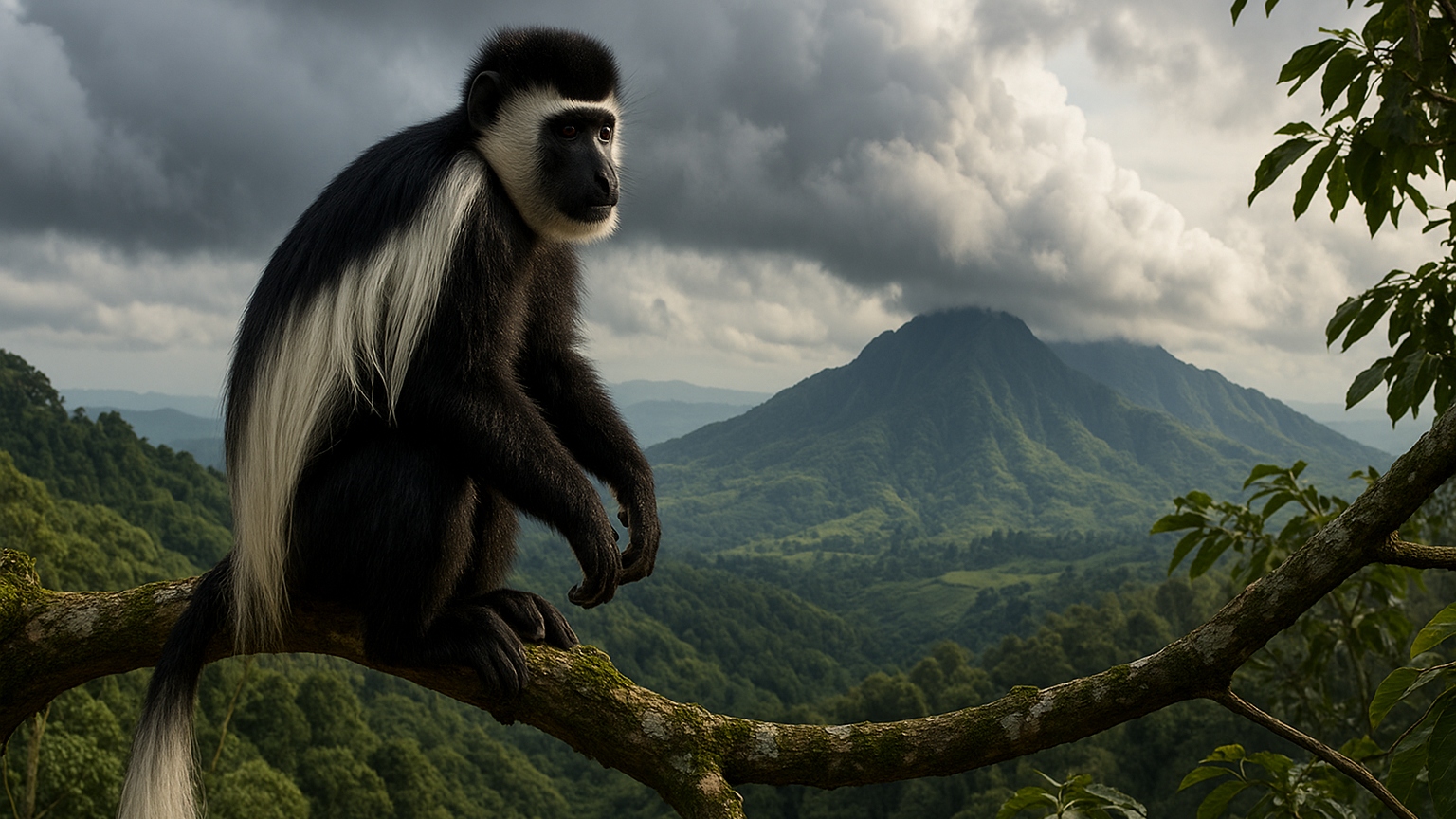
Colobus monkeys are easily recognized by their dramatic black-and-white coloration and long, flowing fur. The most familiar and widespread species, the mantled guereza, displays a stark black body accented by a U-shaped mantle of silky white fur running down its sides and a large, bushy white tail. Its face is framed by a white halo of fur, giving it a striking and almost ethereal appearance.
Their limbs are long and slender, perfectly adapted for an arboreal lifestyle. Although colobus monkeys lack opposable thumbs, their reduced digits allow for a hook-like grip ideal for brachiation—swinging between branches. This unique hand structure, paired with powerful legs and a light frame, enables them to make daring leaps of up to 50 feet between trees. Juvenile colobus monkeys are born entirely white and gradually develop their black markings over several months. This transition is not only a visual cue of age and development but may also help foster social bonds, as infants stand out and attract communal care within their group.
Habitat and Range: Forested Strongholds Across Africa
Colobus monkeys inhabit a wide range of forested environments across central and eastern Africa, including highland rainforests, gallery forests along rivers, and lowland woodlands. Countries such as Kenya, Uganda, Tanzania, Nigeria, Ghana, and Cameroon are home to various species of colobus, each with habitat preferences shaped by geography, climate, and vegetation.
The mantled guereza, for instance, is particularly adaptable and can be found in both montane and lowland forests. In contrast, the king colobus has a more restricted range in the forests of West Africa, where it prefers dense, undisturbed woodland. These monkeys are almost exclusively arboreal, descending to the ground only rarely. Their agility in the treetops is not just impressive—it’s essential. The canopy provides shelter from predators, access to food, and safe pathways through their territories. A single troop of colobus monkeys may roam across several dozen acres of forest, moving daily in search of the freshest and most nutritious leaves.
Diet and Digestive Strategy: Masters of Leaf-Eating
Colobus monkeys are among the few primates that have successfully specialized in folivory—the consumption of leaves as a primary food source. While many other monkeys eat fruit, insects, and small animals, colobus monkeys rely on a steady intake of leaves, supplemented occasionally by seeds, flowers, and unripe fruit. This dietary specialization is made possible by their multi-chambered stomachs, which house symbiotic bacteria capable of breaking down cellulose.
Food is fermented in stages, allowing colobus monkeys to extract maximum nutrition from otherwise indigestible plant matter. This process is slow but efficient, and it enables them to survive in forests where other primates might struggle to find enough food. Because their food is abundant but low in energy, colobus monkeys tend to spend a significant portion of their day resting and digesting. Their quiet and laid-back nature reflects this energy-conserving lifestyle, which helps them maintain health and social cohesion within their groups.
Social Structure and Group Dynamics
Colobus monkeys live in cohesive social groups typically composed of one dominant male, several females, and their offspring. Group sizes can range from five to fifteen individuals, though in some areas, larger bands with multiple males have been observed. The dominant male plays a key role in group defense, using loud calls to announce his presence and deter rivals. His leadership is based more on presence than aggression, and physical conflict is relatively rare. Within the group, grooming, close contact, and synchronized behaviors help reinforce bonds and reduce stress.
Females form the social core of the troop. They often remain with their natal group for life, while males disperse upon maturity. Infants are cared for communally, with females frequently sharing responsibility for carrying, grooming, and protecting the young. This cooperative rearing strengthens group cohesion and increases the survival chances of infants. Communication among colobus monkeys includes a mix of vocalizations, facial expressions, and postural cues. Deep, resonant calls echo through the forest at dawn and dusk, likely serving both territorial and social functions. These sounds, though few in number compared to some other primates, are powerful and can travel great distances through the trees.
Locomotion and Leaping: Aerial Artists of the Canopy
One of the most impressive aspects of colobus monkey behavior is their incredible leaping ability. Watching a group in motion is like witnessing a slow-motion ballet high in the trees. With long limbs, reduced thumbs, and weight-saving adaptations, colobus monkeys are built for life on the move among the branches. They move through the forest primarily via leaps, launching from one tree and landing with precision on another.
Their bushy tails act as stabilizers, helping them maintain balance mid-air and soften their landings. These agile movements are not only efficient—they’re vital for survival. Fast and coordinated motion through the canopy allows them to evade predators, find food, and navigate their complex forest terrain. Unlike ground-dwelling monkeys that rely on sprinting or climbing, colobus monkeys are almost exclusively aerial acrobats. This specialized mode of travel has shaped not only their physical structure but also their social organization and behavioral rhythms.

Reproduction and Development
Reproduction in colobus monkeys follows a seasonal pattern in some regions, coinciding with peaks in food availability. After a gestation period of around five to six months, a single infant is born. The birth of a baby is a communal event, and mothers often receive help from other females in the group. Infants, with their snowy white fur and tiny black faces, are highly visible and elicit care from almost every member of the group.
Allomothering, or shared parenting, is common in colobus society, and it may play a role in teaching young females about motherhood while lightening the burden on the mother. The infant’s fur begins to darken after about a month, and by three to six months of age, it resembles that of an adult. During this time, young monkeys learn social cues, test their physical abilities, and gradually begin to forage for solid food. Juvenile colobus monkeys are playful, curious, and often seen wrestling or chasing each other through the branches.
Ecological Importance: Gardeners of the Forest
Colobus monkeys are more than just residents of the treetops—they are essential contributors to the health and regeneration of forest ecosystems. As folivores, they play a role in pruning trees and shaping plant growth. By consuming leaves and occasionally spreading seeds through their droppings, they influence forest structure and diversity.
Their selective feeding habits can stimulate new growth in certain tree species, helping maintain a balance within the forest canopy. In this way, colobus monkeys act as natural gardeners, participating in the cycles that sustain their habitat and the many other creatures who depend on it. In ecosystems where colobus populations have declined, shifts in vegetation patterns and forest composition have been observed—underscoring their role as a keystone species.
Conservation and Threats
Though colobus monkeys are not as immediately endangered as some of Africa’s larger primates, they face growing threats from habitat loss, hunting, and fragmentation. Logging, agriculture, and human settlement continue to chip away at the forests they depend on. In some regions, colobus monkeys are hunted for bushmeat or traditional medicines, putting pressure on already declining populations. The mantled guereza remains relatively widespread and is listed as Least Concern by the IUCN, but other species such as the king colobus and ursine colobus face greater threats and are considered Vulnerable or Endangered.
The fragmentation of forests not only reduces the monkeys’ living space but also isolates populations, reducing genetic diversity and increasing the risk of local extinction. Conservation efforts include the establishment of protected areas, sustainable forest management, and community-based education programs that highlight the ecological value of colobus monkeys. Ecotourism initiatives in places like Uganda’s Kibale National Park have also helped raise awareness while generating income for local communities.
Cultural Perceptions and Human Connections
Throughout Africa, colobus monkeys appear in traditional stories and art. Their ghost-like appearance and quiet nature often imbue them with symbolic meaning—sometimes as forest spirits, other times as wise observers of the natural world. In modern times, their graceful presence and photogenic appearance have made them a favorite among wildlife photographers and travelers. Observing colobus monkeys in the wild is a serene experience, offering a glimpse into the quiet elegance of primate life far from the noise and chaos of more rambunctious species. They have also been featured in scientific research, particularly in studies of digestion, locomotion, and social evolution, helping scientists better understand primate biology and adaptation.
The Quiet Keepers of the Canopy
The colobus monkey is a creature of elegance and resilience. With its flowing black-and-white coat, powerful leaps, and peaceful demeanor, it is both a symbol of nature’s artistry and a vital thread in the web of African forest life. These monkeys remind us that not all beauty in the wild shouts for attention—some of it whispers from the treetops, carried on the breeze between the leaves. As guardians of the green world above, colobus monkeys deserve our respect and protection. Their survival depends not only on conservationists and governments but on a collective awareness of the interconnectedness of all life in the forest. By preserving the habitats they call home, we preserve a legacy of grace, balance, and biodiversity for future generations to marvel at and learn from.