
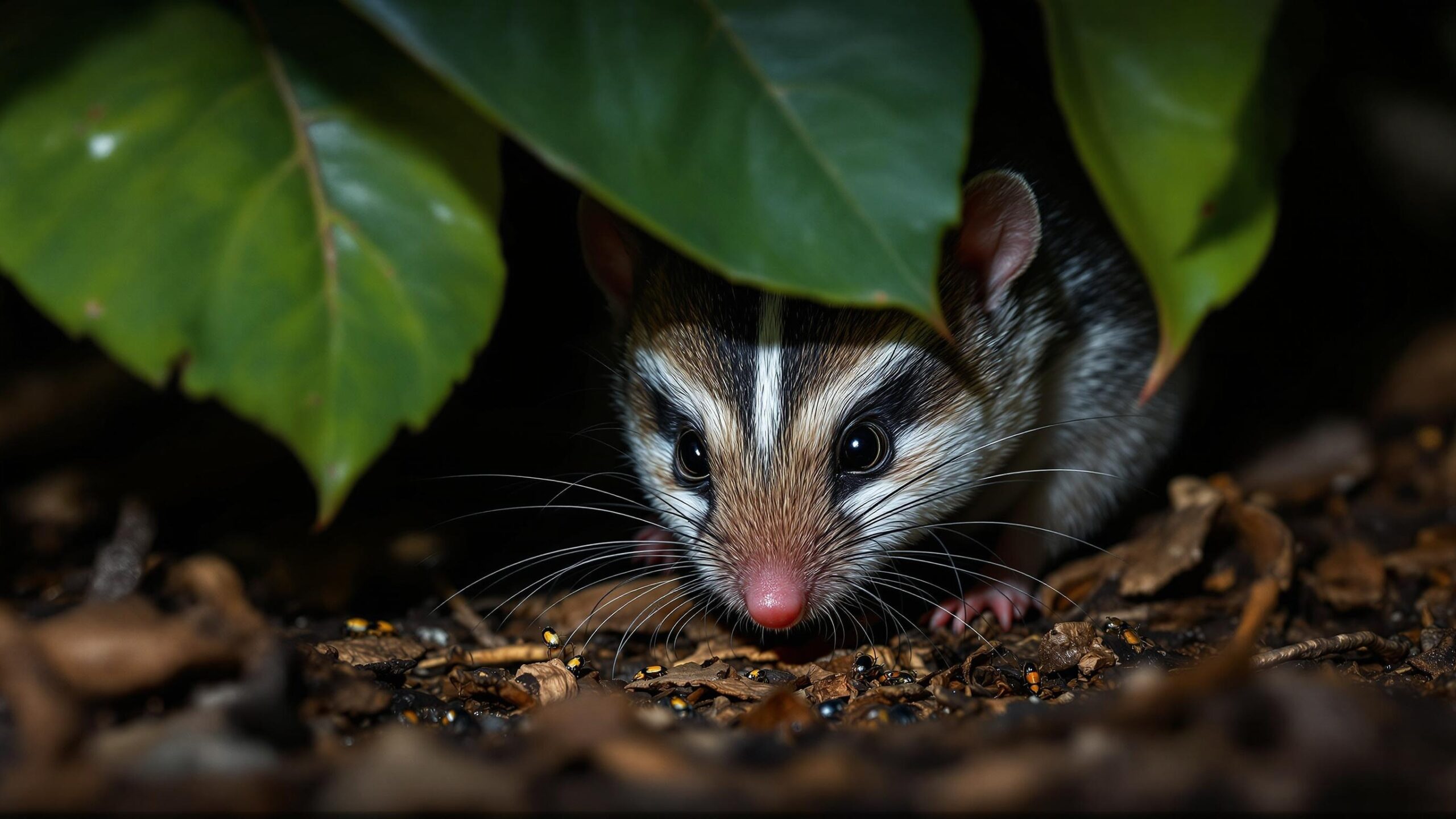
Tiny Marsupial Predators of the Australian Wilderness
Among Australia’s astonishing variety of marsupials—kangaroos, koalas, quokkas, and more—there exists a lesser-known but equally captivating group of tiny, sharp-snouted, high-energy mammals called dunnarts. Though often overlooked due to their size and shy nature, dunnarts are important, fascinating contributors to the ecosystems of the outback, the bush, and the coast. They may be small, but their ecological roles, survival strategies, and unique behaviors make them giants in the world of tiny predators. The dunnart belongs to the genus Sminthopsis, which includes over 20 recognized species. These minute marsupials are native only to Australia and parts of New Guinea, and while they may resemble mice or shrews at first glance, they are more closely related to other carnivorous marsupials like quolls and Tasmanian devils. Equipped with speed, stealth, and an appetite for insects, dunnarts are built for a life of nocturnal foraging and fierce independence.
What Is a Dunnart?
Dunnarts are small insectivorous marsupials belonging to the family Dasyuridae. The name “dunnart” is thought to originate from an Aboriginal word and has been used to describe a wide range of tiny marsupials that share similar physical traits and hunting behavior. With more than 20 species scattered across Australia, the genus Sminthopsis is remarkably diverse, with species adapted to deserts, forests, coastal plains, and alpine heathlands.
Some of the better-known species include the fat-tailed dunnart (Sminthopsis crassicaudata), the stripe-faced dunnart (Sminthopsis macroura), and the Kangaroo Island dunnart (Sminthopsis aitkeni), the latter of which has recently gained attention due to its vulnerability following bushfires. Despite their differences, all dunnarts share a common body shape, lifestyle, and reproductive approach. Unlike rodents, dunnarts are marsupials, meaning the females carry and nurse their young in a pouch. They are also strictly carnivorous, relying on insects, larvae, spiders, and small vertebrates as their main source of food. This makes them valuable pest controllers and vital parts of the food chain in their respective ecosystems.
Taxonomy And Identity
The dunnart belongs to the genus Sminthopsis , which includes over 20 recognized species. Dunnarts are small insectivorous marsupials belonging to the family Dasyuridae. With more than 20 species scattered across Australia, the genus Sminthopsis is remarkably diverse, with species adapted to deserts, forests, coastal plains, and alpine heathlands.
This diversity reflects the evolutionary success of the genus Sminthopsis , which has radiated into nearly every corner of the continent. Dunnarts is best understood through its anatomy, habitat, diet, behavior, and place in its ecosystem. Dunnarts is best understood through its anatomy, habitat, diet, behavior, and place in its ecosystem.
Identification And Appearance
Though often overlooked due to their size and shy nature, dunnarts are important, fascinating contributors to the ecosystems of the outback, the bush, and the coast. The dunnart belongs to the genus Sminthopsis , which includes over 20 recognized species. Some of the better-known species include the fat-tailed dunnart ( Sminthopsis crassicaudata ), the stripe-faced dunnart ( Sminthopsis macroura ), and the Kangaroo Island dunnart ( Sminthopsis aitkeni ), the latter of which has recently gained attention due to its vulnerability following bushfires.
Despite their differences, all dunnarts share a common body shape, lifestyle, and reproductive approach. Body form, markings, movement, and habitat work together to separate this animal from close relatives and lookalikes. Body form, markings, movement, and habitat work together to separate this animal from close relatives and lookalikes.
Anatomy And Adaptations
With more than 20 species scattered across Australia, the genus Sminthopsis is remarkably diverse, with species adapted to deserts, forests, coastal plains, and alpine heathlands. Their limbs are short but strong, and their claws are adapted for digging, climbing, and holding onto prey. Some species, like the fat-tailed dunnart, store fat reserves in their tail—an adaptation that allows them to survive during food shortages or drought.
They can dart rapidly in unpredictable directions, using camouflage and speed to escape detection. This fast-paced life cycle allows them to reproduce quickly and adapt to changing environmental conditions, though it also means populations can fluctuate dramatically based on seasonal pressures. Their adaptability allows them to occupy a broad range of habitats, from dry inland deserts to coastal heath, grassy woodlands, alpine meadows, and tropical savannas.
Range And Wild Habitat
These minute marsupials are native only to Australia and parts of New Guinea, and while they may resemble mice or shrews at first glance, they are more closely related to other carnivorous marsupials like quolls and Tasmanian devils. The name “dunnart” is thought to originate from an Aboriginal word and has been used to describe a wide range of tiny marsupials that share similar physical traits and hunting behavior. They consume a wide range of invertebrates, including beetles, crickets, moths, spiders, and ants.
Litters can range from 6 to 10 young, depending on the species. Species Diversity and Distribution Dunnarts are found throughout mainland Australia and in some parts of Tasmania and New Guinea. Their adaptability allows them to occupy a broad range of habitats, from dry inland deserts to coastal heath, grassy woodlands, alpine meadows, and tropical savannas.
Wild Diet And Feeding
They are also strictly carnivorous, relying on insects, larvae, spiders, and small vertebrates as their main source of food. This makes them valuable pest controllers and vital parts of the food chain in their respective ecosystems. The head of a dunnart is pointed and triangular, with a narrow snout designed for probing into crevices and beneath leaves in search of prey.
Their limbs are short but strong, and their claws are adapted for digging, climbing, and holding onto prey. Some species, like the fat-tailed dunnart, store fat reserves in their tail—an adaptation that allows them to survive during food shortages or drought. They rely on stealth, speed, and scent to locate prey.
Behavior
They may be small, but their ecological roles, survival strategies, and unique behaviors make them giants in the world of tiny predators. Equipped with speed, stealth, and an appetite for insects, dunnarts are built for a life of nocturnal foraging and fierce independence. The name “dunnart” is thought to originate from an Aboriginal word and has been used to describe a wide range of tiny marsupials that share similar physical traits and hunting behavior.
They may be small, but their ecological roles, survival strategies, and unique behaviors make them giants in the world of tiny predators. Equipped with speed, stealth, and an appetite for insects, dunnarts are built for a life of nocturnal foraging and fierce independence. Behavior is easiest to understand when daily movement, social contact, communication, and risk avoidance are considered together.
Reproduction And Life Cycle
They are also strictly carnivorous, relying on insects, larvae, spiders, and small vertebrates as their main source of food. At night, they leave their nests to forage, often traveling long distances in relation to their body size. They typically nest in hidden locations—under rocks, logs, in abandoned burrows, or beneath dense vegetation.
Nest construction is basic and varies depending on the habitat. Due to their small size and solitary habits, dunnarts rarely interact with others of their kind except during the breeding season. Reproduction and Life Cycle Dunnarts have a short but intense breeding cycle.
Ecology And Role In The Environment
Tiny Marsupial Predators of the Australian Wilderness Among Australia’s astonishing variety of marsupials—kangaroos, koalas, quokkas, and more—there exists a lesser-known but equally captivating group of tiny, sharp-snouted, high- energy mammals called dunnarts. Though often overlooked due to their size and shy nature, dunnarts are important, fascinating contributors to the ecosystems of the outback, the bush, and the coast. They may be small, but their ecological roles, survival strategies, and unique behaviors make them giants in the world of tiny predators.
This makes them valuable pest controllers and vital parts of the food chain in their respective ecosystems. The head of a dunnart is pointed and triangular, with a narrow snout designed for probing into crevices and beneath leaves in search of prey. Their limbs are short but strong, and their claws are adapted for digging, climbing, and holding onto prey.
Conservation Status And Threats
This fast-paced life cycle allows them to reproduce quickly and adapt to changing environmental conditions, though it also means populations can fluctuate dramatically based on seasonal pressures. Meanwhile, the Kangaroo Island dunnart is restricted to a small island and has suffered habitat loss and fire damage in recent years. However, the highly specialized nature of many species also makes them vulnerable to changes in their environment, particularly those caused by humans.
As insectivores, they help regulate populations of invertebrates, including some species considered agricultural pests. Declines in local dunnart populations can signal broader environmental degradation, such as overgrazing, deforestation, or increased fire frequency. Conservation and Challenges While some dunnart species are common and adaptable, others are under serious threat.
Human Relationship
Equipped with speed, stealth, and an appetite for insects, dunnarts are built for a life of nocturnal foraging and fierce independence. The name “dunnart” is thought to originate from an Aboriginal word and has been used to describe a wide range of tiny marsupials that share similar physical traits and hunting behavior. Males typically roam in search of receptive females, and competition can be fierce.
However, the highly specialized nature of many species also makes them vulnerable to changes in their environment, particularly those caused by humans. Its daily life is shaped by where it moves, what it eats, how it avoids danger, and how it interacts with other animals. Its daily life is shaped by where it moves, what it eats, how it avoids danger, and how it interacts with other animals.
Captive Care
Dunnarts is best treated as a wild animal whose needs depend on large habitat space, natural diet, social conditions, and specialist veterinary knowledge. Public education, rescue, rehabilitation, or accredited conservation work may be relevant in some cases, but casual private care is not an appropriate frame. The safest human role is to support habitat protection, responsible viewing, and professional wildlife care when intervention is truly needed.
Wild And Captive Variation
Tiny Marsupial Predators of the Australian Wilderness Among Australia’s astonishing variety of marsupials—kangaroos, koalas, quokkas, and more—there exists a lesser-known but equally captivating group of tiny, sharp-snouted, high- energy mammals called dunnarts. Due to their small size and solitary habits, dunnarts rarely interact with others of their kind except during the breeding season. Reproduction and Life Cycle Dunnarts have a short but intense breeding cycle.
Similar Species
The name “dunnart” is thought to originate from an Aboriginal word and has been used to describe a wide range of tiny marsupials that share similar physical traits and hunting behavior. Unlike rodents, dunnarts are marsupials, meaning the females carry and nurse their young in a pouch. Its daily life is shaped by where it moves, what it eats, how it avoids danger, and how it interacts with other animals.
The name “dunnart” is thought to originate from an Aboriginal word and has been used to describe a wide range of tiny marsupials that share similar physical traits and hunting behavior. Unlike rodents, dunnarts are marsupials, meaning the females carry and nurse their young in a pouch. Its daily life is shaped by where it moves, what it eats, how it avoids danger, and how it interacts with other animals.
Common Misconceptions
Tiny Marsupial Predators of the Australian Wilderness Among Australia’s astonishing variety of marsupials—kangaroos, koalas, quokkas, and more—there exists a lesser-known but equally captivating group of tiny, sharp-snouted, high- energy mammals called dunnarts. Though often overlooked due to their size and shy nature, dunnarts are important, fascinating contributors to the ecosystems of the outback, the bush, and the coast. They may be small, but their ecological roles, survival strategies, and unique behaviors make them giants in the world of tiny predators.
These minute marsupials are native only to Australia and parts of New Guinea, and while they may resemble mice or shrews at first glance, they are more closely related to other carnivorous marsupials like quolls and Tasmanian devils. The name “dunnart” is thought to originate from an Aboriginal word and has been used to describe a wide range of tiny marsupials that share similar physical traits and hunting behavior. With more than 20 species scattered across Australia, the genus Sminthopsis is remarkably diverse, with species adapted to deserts, forests, coastal plains, and alpine heathlands.
FAQ
What is a Dunnarts?
The dunnart belongs to the genus Sminthopsis , which includes over 20 recognized species. Dunnarts are small insectivorous marsupials belonging to the family Dasyuridae. With more than 20 species scattered across Australia, the genus Sminthopsis is remarkably diverse, with species adapted to deserts, forests, coastal plains, and alpine heathlands.
Where does the Dunnarts live in the wild?
These minute marsupials are native only to Australia and parts of New Guinea, and while they may resemble mice or shrews at first glance, they are more closely related to other carnivorous marsupials like quolls and Tasmanian devils. The name “dunnart” is thought to originate from an Aboriginal word and has been used to describe a wide range of tiny marsupials that share similar physical traits and hunting behavior. They consume a wide range of invertebrates, including beetles, crickets, moths, spiders, and ants.
How can someone identify a Dunnarts?
Though often overlooked due to their size and shy nature, dunnarts are important, fascinating contributors to the ecosystems of the outback, the bush, and the coast. The dunnart belongs to the genus Sminthopsis , which includes over 20 recognized species. Some of the better-known species include the fat-tailed dunnart ( Sminthopsis crassicaudata ), the stripe-faced dunnart ( Sminthopsis macroura ), and the Kangaroo Island dunnart ( Sminthopsis aitkeni ), the latter of which has recently gained attention due to its vulnerability following bushfires.
What does the Dunnarts eat?
They are also strictly carnivorous, relying on insects, larvae, spiders, and small vertebrates as their main source of food. This makes them valuable pest controllers and vital parts of the food chain in their respective ecosystems. The head of a dunnart is pointed and triangular, with a narrow snout designed for probing into crevices and beneath leaves in search of prey.
How does the Dunnarts behave?
They may be small, but their ecological roles, survival strategies, and unique behaviors make them giants in the world of tiny predators. Equipped with speed, stealth, and an appetite for insects, dunnarts are built for a life of nocturnal foraging and fierce independence. The name “dunnart” is thought to originate from an Aboriginal word and has been used to describe a wide range of tiny marsupials that share similar physical traits and hunting behavior.
How does the Dunnarts reproduce?
The dunnart belongs to the genus Sminthopsis , which includes over 20 recognized species. Dunnarts are small insectivorous marsupials belonging to the family Dasyuridae. With more than 20 species scattered across Australia, the genus Sminthopsis is remarkably diverse, with species adapted to deserts, forests, coastal plains, and alpine heathlands.
Sources
- https://animalstreets.com/mammals/land-mammals/small-mammals/carnivorous-small-mammals/dunnarts/ Organization: animalstreets.com Source type: Live page or linked source URL: https://animalstreets.com/mammals/land-mammals/small-mammals/carnivorous-small-mammals/dunnarts/ Information verified: Used for current-page extraction and source discovery; independent fact verification may still be required. Date checked: 2026-08-27 Reliability notes: Current page / internal source; use for audit context, not independent verification
- https://animalstreets.com/mammals-product-reviews/land-mammals-product-reviews/ Organization: animalstreets.com Source type: Live page or linked source URL: https://animalstreets.com/mammals-product-reviews/land-mammals-product-reviews/ Information verified: Used for current-page extraction and source discovery; independent fact verification may still be required. Date checked: 2026-08-27 Reliability notes: Current page / internal source; use for audit context, not independent verification
- https://animalstreets.com/animal-product-reviews/ Organization: animalstreets.com Source type: Live page or linked source URL: https://animalstreets.com/animal-product-reviews/ Information verified: Used for current-page extraction and source discovery; independent fact verification may still be required. Date checked: 2026-08-27 Reliability notes: Current page / internal source; use for audit context, not independent verification