
Habitat and Range
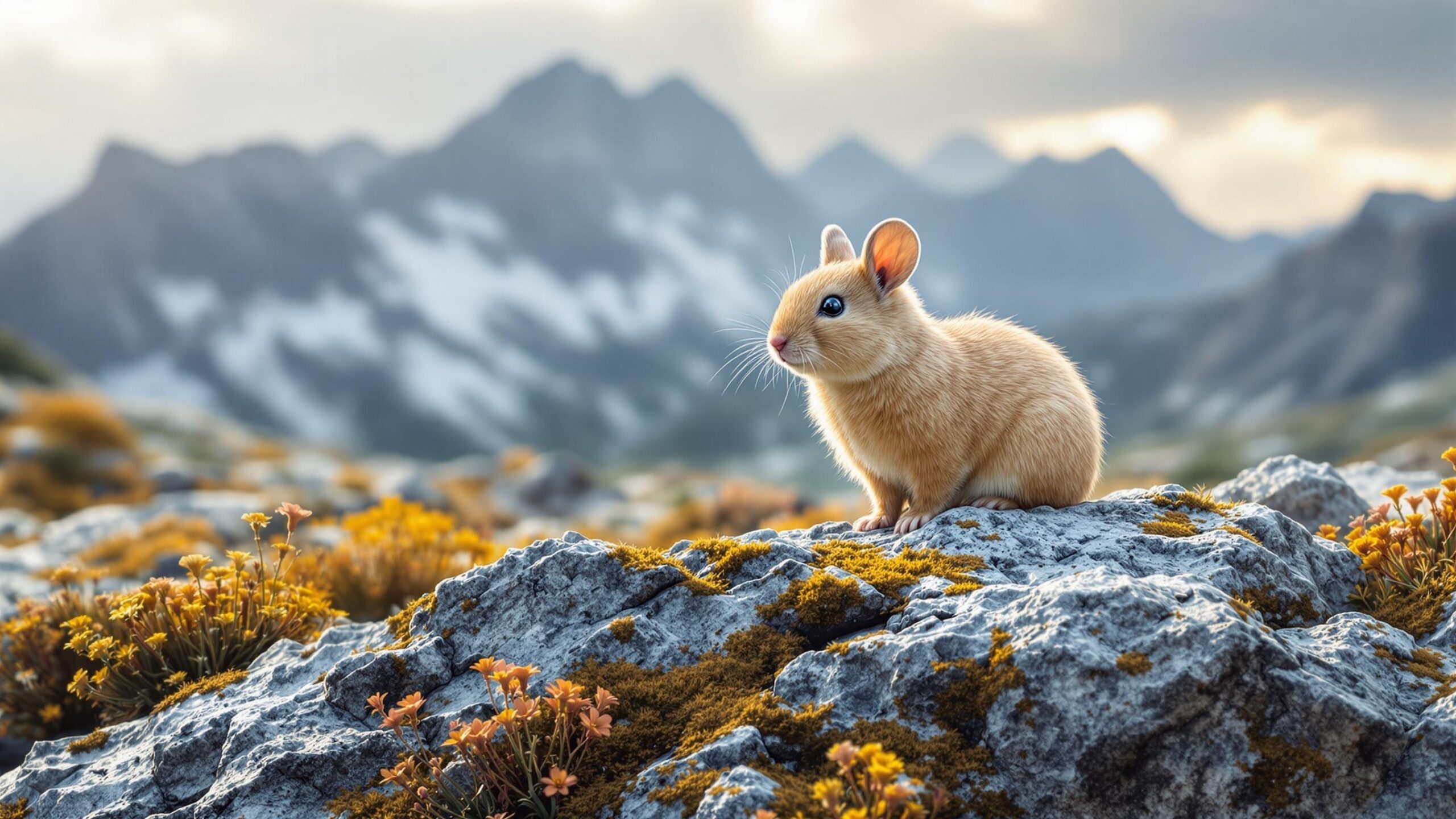
Pikas are adapted to some of the most extreme environments on Earth. Their primary habitats are talus fields—loose rock piles found at the base of cliffs or mountain slopes—interspersed with alpine meadows that provide vegetation for foraging. These talus fields offer both protection from predators and a buffer against extreme temperatures. The maze-like crevices within the rock serve as insulation against harsh winters and a cool refuge during summer heat.
In North America, the American pika is found in the Rocky Mountains, Sierra Nevada, and Cascade Range, typically above 7,000 feet in elevation. These high-altitude zones provide the cold climates that pikas need to survive. In Asia, species like the Northern Pika (Ochotona hyperborea) and the Plateau Pika (Ochotona curzoniae) inhabit even more expansive ranges, including open steppes and high grasslands of the Tibetan Plateau. Despite their alpine affinities, not all pikas live above the treeline. Some species in Central Asia dwell in forested or shrubby areas at lower elevations, although these tend to be the exceptions. The one constant across all pika habitats is their need for cold climates and reliable access to vegetation, which makes their ecosystems highly sensitive to environmental disturbances.
Diet and the Art of Haypiling
Pikas are strict herbivores, feeding on a variety of alpine plants including grasses, sedges, wildflowers, mosses, and lichens. Their diet changes with the seasons and availability of plants. In the brief summer months, they forage intensively to gather enough food for the winter—a process that has made them famous for their “haypiles.” Haypiling is a unique and highly organized behavior in which pikas collect, dry, and store vegetation in stacks hidden among rocks. Unlike rabbits, pikas do not hibernate. Instead, they rely on these carefully curated haypiles to sustain them through the snow-covered months when fresh food is unavailable.
Each individual may construct multiple haypiles, often tailored to maximize nutritional diversity and prevent spoilage. Observations have shown that pikas sort plants by type, toxicity, and drying properties, revealing a remarkable instinct for long-term survival. This behavior is not only essential to the pika’s individual survival but also plays a role in the broader alpine ecosystem. By gathering and transporting plant material, pikas inadvertently help in seed dispersal and contribute to plant community dynamics, making them tiny but important ecological engineers.
Social Behavior and Communication
Pikas are territorial and solitary for most of the year, especially in North America. Each individual typically maintains its own territory and haypile, often defending its cache with shrill warning calls and aggressive chases. These high-pitched vocalizations are one of the most recognizable signs of pika presence in the wild. They serve as both alarm signals and territorial markers, alerting neighbors and intruders alike to their presence. During the brief breeding season, which usually begins in spring or early summer depending on elevation, pikas may tolerate close contact for mating.
Female pikas give birth to litters ranging from two to five young after a gestation period of about 30 days. In favorable conditions, some may have two litters per season. The young are born altricial—blind, hairless, and dependent on their mother—but grow rapidly and are weaned within a month. While American pikas tend to be solitary, some Asian species, such as the Plateau Pika, exhibit more social behavior. These pikas often live in communal burrows and show cooperative traits, especially in foraging and predator detection. This variation in social structure among pika species is an intriguing area of study for behavioral ecologists and sheds light on how environmental pressures can shape social systems.
Pikas and Their Ecosystem Role
Though small and elusive, pikas play outsized roles in the ecosystems they inhabit. As prey animals, they provide an essential food source for predators like weasels, foxes, hawks, and owls. Their haypiling behavior affects local plant communities, and their movement of soil and vegetation helps influence nutrient cycling in otherwise nutrient-poor alpine soils.
In regions like the Tibetan Plateau, the role of the Plateau Pika extends even further. Here, these animals help aerate the soil through their burrowing and grazing activities, contributing to pasture health and biodiversity. While they are sometimes considered agricultural pests in these regions due to competition with livestock, their ecological contributions are increasingly recognized by conservationists and land managers alike.
The presence—or absence—of pikas in an environment can also serve as an indicator of climate and habitat health. Because of their narrow thermal tolerance, pikas are often among the first species to show signs of stress when temperatures rise or when snowpack diminishes earlier than usual. As such, they are considered “sentinel species” for monitoring environmental change in alpine and montane ecosystems.
Sensitivity to Climate Change
Few animals illustrate the tangible effects of climate change as clearly as the pika. These creatures are highly sensitive to rising temperatures and changes in snowpack, both of which are becoming more pronounced due to global warming. Pikas require cool, moist environments, and prolonged exposure to temperatures above 77°F (25°C) can be fatal. This makes heatwaves and habitat fragmentation particularly dangerous for isolated populations. In recent decades, scientists have documented local extinctions of pika populations across parts of the American West. As lower-elevation habitats warm, some populations have been forced to retreat upslope. Unfortunately, mountains are finite, and this phenomenon—known as the “escalator to extinction”—can eventually leave pikas with nowhere to go.
Yet the full picture is complex. Some studies suggest that pikas can adapt behaviorally by seeking out cooler microclimates among rocks or adjusting their foraging times. Not all populations are declining; some remain stable or even expanding within suitable habitats. This variability emphasizes the importance of localized monitoring and habitat protection rather than broad generalizations. While conservation concerns exist, it is equally important to acknowledge the pika’s resilience and adaptability. Their story is not solely one of vulnerability, but also of incredible tenacity in the face of changing landscapes.

Cultural Significance and Public Interest
Though not as widely recognized as polar bears or elephants, pikas have developed a devoted following among naturalists, hikers, and wildlife enthusiasts. In national parks across the western United States and Canada, their chirping calls are often one of the first sounds hikers hear above the treeline. Their cuteness, industriousness, and vulnerability have made them unofficial mascots of alpine conservation.
In parts of Asia, pikas appear in folklore and traditional ecological knowledge. Their presence in grasslands and mountains is sometimes seen as a sign of seasonal change, and their burrows and haypiles have been used by local peoples as indicators of weather patterns or forage conditions. More recently, pikas have gained attention as symbols of climate awareness. Scientists, photographers, and educators use these small mammals to convey the broader impacts of environmental change on wildlife. Their visibility in popular science publications and nature documentaries has helped raise awareness, making them ambassadors for fragile ecosystems around the globe.
Species Diversity Within the Genus Ochotona
Though the American pika is the best-known species to many, the genus Ochotona is rich with diversity. More than 30 species exist, each adapted to a specific region and environment. The Northern Pika (Ochotona hyperborea) is widespread across Russia and northern Asia, thriving in taiga and mountainous regions. The Alpine Pika (Ochotona alpina) lives in Siberia and Mongolia, while the Daurian Pika (Ochotona dauurica) prefers grassland and steppe habitats. The Plateau Pika (Ochotona curzoniae) stands out for its high population density and communal lifestyle on the Tibetan Plateau. Though sometimes regarded as a nuisance by pastoralists, this species is essential to the ecosystem, supporting predators and maintaining soil health through its burrowing. Each of these species faces different conservation pressures, from climate change to land use conflict. Continued research is vital for understanding the needs of each species and crafting region-specific conservation strategies.
Conservation and Protection Efforts
Conservation efforts for pikas vary by region and species. In the United States, the American pika is not currently listed as endangered or threatened under the Endangered Species Act, though advocacy groups have repeatedly petitioned for its protection. Monitoring programs, habitat modeling, and climate resilience studies are ongoing, particularly in national parks and protected wilderness areas.
In Asia, conservation is more complicated due to overlapping issues of land use, livestock grazing, and agricultural expansion. Pikas in regions like the Tibetan Plateau are sometimes subject to population control measures, which can have unintended ecological consequences. Fortunately, shifts in ecological understanding have led to a reevaluation of such practices in some regions. Ultimately, protecting pikas means preserving the mountain ecosystems they call home. This includes safeguarding alpine habitats, limiting human development in sensitive areas, and addressing global climate change. Supporting public education and fostering appreciation for these animals can also build momentum for more targeted conservation policies.
In The End
The pika may be small, but it is anything but insignificant. With its round body, sharp calls, and tireless energy, this high-altitude mammal thrives in places that most animals find inhospitable. It forages, builds, calls, and navigates a world shaped by cold, stone, and snow, making it one of nature’s most endearing specialists.
From their complex behaviors to their role as ecological sentinels, pikas deserve a place in our collective awareness—not only as icons of alpine life but also as reminders of nature’s interconnectedness and vulnerability. Their survival depends on a delicate balance of climate, vegetation, and terrain. And in a changing world, that balance grows ever more fragile. To protect pikas is to protect the quiet corners of the world where few others tread. Their story speaks to the heart of conservation—honoring resilience, preserving diversity, and listening closely for the smallest voices among the stones.