
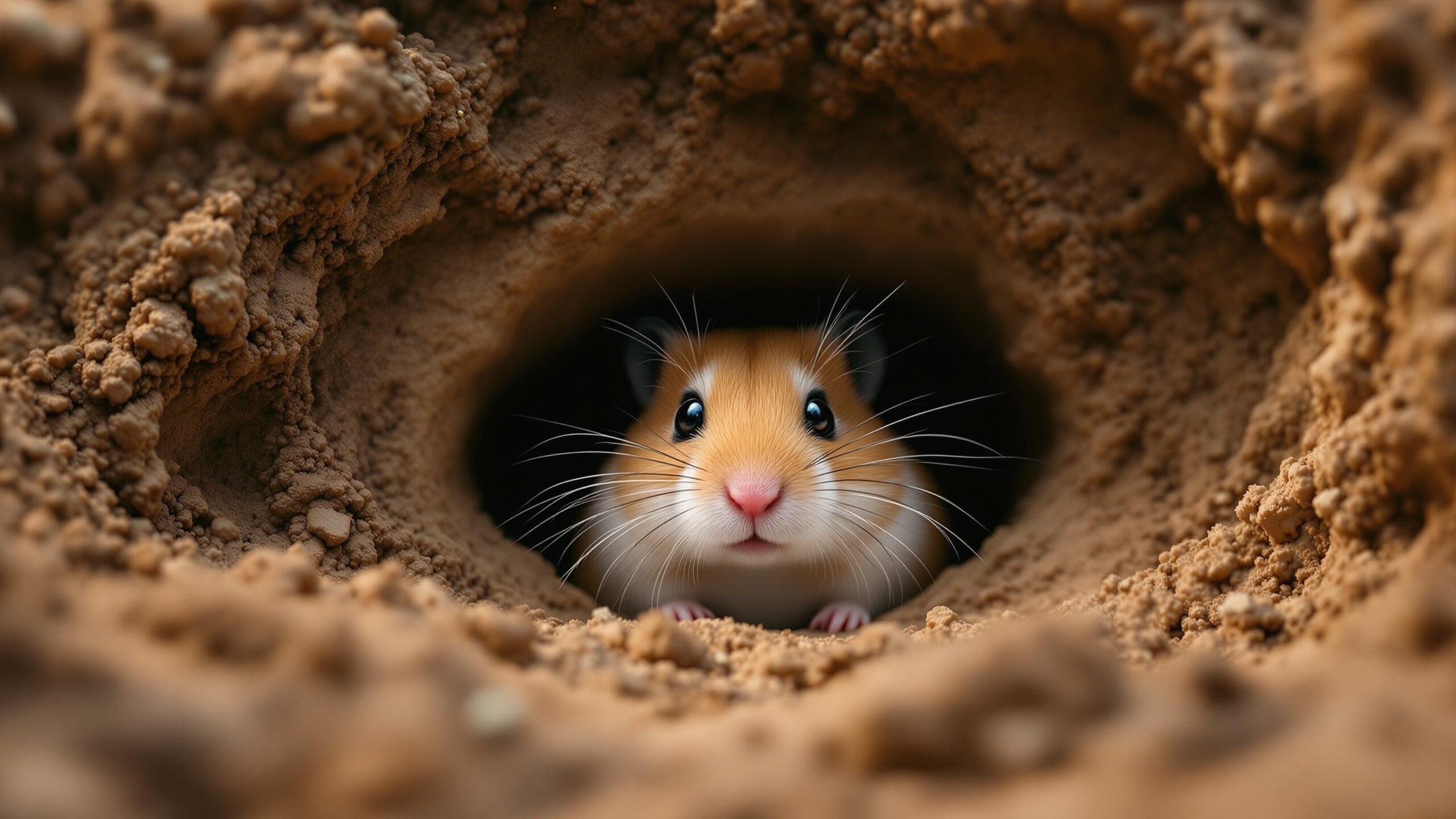
Hamsters: Tiny Titans of the Rodent World
With twitching whiskers, ever-spinning wheels, and cheeks that can puff up like balloons, hamsters may seem like miniature entertainers of the animal kingdom. But these tiny mammals are far more than just adorable companions or classroom pets. Hamsters, belonging to the subfamily Cricetinae, are highly specialized rodents with unique adaptations, complex behaviors, and remarkable ecological roles. While they are familiar in homes across the world, their wild relatives are resilient survivors shaped by harsh deserts, mountain valleys, and temperate grasslands.
From solitary Syrian hamsters burrowing beneath Syrian fields to dwarf species darting across Central Asian steppes, this diverse group of small mammals showcases a surprising range of lifestyles, habitats, and evolutionary strategies. Hamsters represent a fascinating segment of the rodent family tree, one that blends charm with scientific significance.
In this comprehensive guide to the world of hamsters, we’ll uncover their biological foundations, explore their key types, and gain new appreciation for how these creatures live, survive, and—yes—stuff their faces with incredible efficiency.
A Closer Look: What Makes a Hamster a Hamster?
Hamsters are members of the subfamily Cricetinae, within the family Cricetidae, which also includes voles, lemmings, and New World rats and mice. There are currently 18 recognized species of hamsters, grouped into several genera. Though they vary in size and habitat, they share a set of common biological traits that define them.
Perhaps most iconic are their cheek pouches—elastic, fur-lined cavities on each side of the head that extend back to the shoulders. These pouches allow hamsters to carry food, bedding, or even their young when necessary. In the wild, this adaptation helps them gather food quickly in exposed environments before returning to the safety of their burrows.
Hamsters have stout bodies, short legs, and small, rounded ears. Most are nocturnal or crepuscular, meaning they are active during the night or twilight hours. Their eyesight is generally poor, but they compensate with an acute sense of smell and hearing. Many species are solitary and territorial, especially the larger kinds, while some of the smaller varieties are more tolerant of social interaction.
Their natural habitats span dry deserts, scrublands, alpine meadows, and agricultural regions. In the wild, hamsters are proficient diggers, constructing intricate burrow systems that offer protection from predators and extreme temperatures. Their diets are omnivorous and highly adaptable, including seeds, roots, insects, fruits, and vegetation.
These characteristics make hamsters not only adorable but also highly efficient survivors. Understanding the various types of hamsters allows us to appreciate their full diversity and significance beyond the pet store cage.
Taxonomy And Identity
Hamsters represent a fascinating segment of the rodent family tree, one that blends charm with scientific significance. Hamsters are members of the subfamily Cricetinae, within the family Cricetidae, which also includes voles, lemmings, and New World rats and mice. Their evolutionary niche as climbers and their contribution to science make them a valuable yet understated branch of the hamster family tree.
Hamsters represent a fascinating segment of the rodent family tree, one that blends charm with scientific significance. Hamsters are members of the subfamily Cricetinae, within the family Cricetidae, which also includes voles, lemmings, and New World rats and mice. Hamsters is best understood through its anatomy, habitat, diet, behavior, and place in its ecosystem.
Identification And Appearance
From solitary Syrian hamsters burrowing beneath Syrian fields to dwarf species darting across Central Asian steppes, this diverse group of small mammals showcases a surprising range of lifestyles, habitats, and evolutionary strategies. There are currently 18 recognized species of hamsters, grouped into several genera. Though they vary in size and habitat, they share a set of common biological traits that define them.
Perhaps most iconic are their cheek pouches—elastic, fur-lined cavities on each side of the head that extend back to the shoulders. Body form, markings, movement, and habitat work together to separate this animal from close relatives and lookalikes. Body form, markings, movement, and habitat work together to separate this animal from close relatives and lookalikes.
Anatomy And Adaptations
Hamsters, belonging to the subfamily Cricetinae, are highly specialized rodents with unique adaptations, complex behaviors, and remarkable ecological roles. In the wild, this adaptation helps them gather food quickly in exposed environments before returning to the safety of their burrows. Their diets are omnivorous and highly adaptable, including seeds, roots, insects, fruits, and vegetation.
But beyond the cages and colorful toys of domestic life lies a fascinating creature of resilience, adaptability, and surprising complexity. This tiny rodent, famous for its seasonal white fur and compact, rounded physique, is a beloved pet around the globe and a remarkable example of adaptation in the wild. It’s known for its thick fur, adaptability to cold environments, and playful demeanor.
Range And Wild Habitat
From solitary Syrian hamsters burrowing beneath Syrian fields to dwarf species darting across Central Asian steppes, this diverse group of small mammals showcases a surprising range of lifestyles, habitats, and evolutionary strategies. Their natural habitats span dry deserts, scrublands, alpine meadows, and agricultural regions. Native to the vast deserts and dry steppes of Central Asia, this lightning-fast hamster has a big personality packed into a miniature frame.
Native to the arid lands of northern Syria and southern Turkey, it was first scientifically described in 1839 but wasn’t successfully bred in captivity until the 1930s. Its close cousin, the winter white dwarf hamster ( Phodopus sungorus ), also hails from Siberian regions and is famed for changing coat color—from brown-gray to white—in response to seasonal daylight changes. Native to the deserts of Mongolia and northern China, these hamsters are hyperactive and curious but often too quick and timid to be handled frequently.
Wild Diet And Feeding
These pouches allow hamsters to carry food, bedding, or even their young when necessary. In the wild, this adaptation helps them gather food quickly in exposed environments before returning to the safety of their burrows. They carry food in their cheeks back to underground chambers, some of which can be more than three feet deep.
Unlike many of its smaller relatives, it hibernates during winter months, often building elaborate burrows with separate chambers for food, nesting, and waste. Its cheek pouches are large enough to transport entire food reserves in a single foraging trip. It preys on insects and occasionally small vertebrates, serves as food for raptors and foxes, and plays a key role in soil aeration through its burrowing.
Behavior
Hamsters, belonging to the subfamily Cricetinae, are highly specialized rodents with unique adaptations, complex behaviors, and remarkable ecological roles. From solitary Syrian hamsters burrowing beneath Syrian fields to dwarf species darting across Central Asian steppes, this diverse group of small mammals showcases a surprising range of lifestyles, habitats, and evolutionary strategies. Most are nocturnal or crepuscular, meaning they are active during the night or twilight hours.
Many species are solitary and territorial, especially the larger kinds, while some of the smaller varieties are more tolerant of social interaction. Behavior is easiest to understand when daily movement, social contact, communication, and risk avoidance are considered together. Behavior is easiest to understand when daily movement, social contact, communication, and risk avoidance are considered together.
Reproduction And Life Cycle
These tunnels feature storage rooms, nesting areas, and latrines—a example of their instinctive engineering. Unlike many of its smaller relatives, it hibernates during winter months, often building elaborate burrows with separate chambers for food, nesting, and waste. Many dig elaborate burrow systems, some of which are lined with grass and feathers to insulate nests against the cold.
Learning about their natural behaviors—such as burrowing, foraging, and nesting—can help pet owners provide better lives for their tiny companions. Dwarf hamsters typically have shorter lifespans and weigh less than 50 grams, yet they’re full of personality. Learning about their natural behaviors—such as burrowing, foraging, and nesting—can help pet owners provide better lives for their tiny companions.
Ecology And Role In The Environment
Hamsters, belonging to the subfamily Cricetinae, are highly specialized rodents with unique adaptations, complex behaviors, and remarkable ecological roles. In the wild, hamsters are proficient diggers, constructing intricate burrow systems that offer protection from predators and extreme temperatures. Their diets are omnivorous and highly adaptable, including seeds, roots, insects, fruits, and vegetation.
Their speed and agility are evolutionary adaptations to avoid predators in open terrain. Though less commonly seen in captivity, the European hamster is a vital member of its ecosystem. It preys on insects and occasionally small vertebrates, serves as food for raptors and foxes, and plays a key role in soil aeration through its burrowing.
Conservation Status And Threats
Despite its robust nature, the European hamster has seen dramatic population declines in recent decades due to habitat fragmentation, modern agriculture, and urbanization. Once considered an agricultural pest, it is now protected in many countries and has become a flagship species for conservation programs focused on European farmland biodiversity. As agricultural practices expand and wildlands shrink, some wild hamster populations have declined, prompting conservation monitoring in select areas.
Despite its robust nature, the European hamster has seen dramatic population declines in recent decades due to habitat fragmentation, modern agriculture, and urbanization. Once considered an agricultural pest, it is now protected in many countries and has become a flagship species for conservation programs focused on European farmland biodiversity. Its daily life is shaped by where it moves, what it eats, how it avoids danger, and how it interacts with other animals.
Human Relationship
But these tiny mammals are far more than just adorable companions or classroom pets. Understanding the various types of hamsters allows us to appreciate their full diversity and significance beyond the pet store cage. Its daily life is shaped by where it moves, what it eats, how it avoids danger, and how it interacts with other animals.
Captive Care
In the wild, hamsters are proficient diggers, constructing intricate burrow systems that offer protection from predators and extreme temperatures. These hamsters are solitary to a fault—placing two adults in the same enclosure can result in serious aggression. Many pet hamsters suffer from inadequate care due to misunderstanding their needs.
Wild And Captive Variation
Many species are solitary and territorial, especially the larger kinds, while some of the smaller varieties are more tolerant of social interaction. But beyond the cages and colorful toys of domestic life lies a fascinating creature of resilience, adaptability, and surprising complexity. Today, virtually all domestic Syrian hamsters descend from a small number of wild individuals originally captured for research.
Similar Species
Syrian hamsters are relatively large compared to their cousins, growing up to seven inches in length. Unlike many of its smaller relatives, it hibernates during winter months, often building elaborate burrows with separate chambers for food, nesting, and waste. Native to northern China and Mongolia, this species is not technically a dwarf hamster but shares a similar size.
Although little-studied compared to their domesticated cousins, wild hamsters offer valuable insights into rodent evolution, adaptation, and ecosystem roles. Its daily life is shaped by where it moves, what it eats, how it avoids danger, and how it interacts with other animals. Its daily life is shaped by where it moves, what it eats, how it avoids danger, and how it interacts with other animals.
Common Misconceptions
Hamsters, belonging to the subfamily Cricetinae, are highly specialized rodents with unique adaptations, complex behaviors, and remarkable ecological roles. From solitary Syrian hamsters burrowing beneath Syrian fields to dwarf species darting across Central Asian steppes, this diverse group of small mammals showcases a surprising range of lifestyles, habitats, and evolutionary strategies. Though they vary in size and habitat, they share a set of common biological traits that define them.
In the wild, this adaptation helps them gather food quickly in exposed environments before returning to the safety of their burrows. Their natural habitats span dry deserts, scrublands, alpine meadows, and agricultural regions. In the wild, hamsters are proficient diggers, constructing intricate burrow systems that offer protection from predators and extreme temperatures.
FAQ
Sources
- https://animalstreets.com/mammals/land-mammals/small-mammals/rodents/hamsters/ Organization: animalstreets.com Source type: Live page or linked source URL: https://animalstreets.com/mammals/land-mammals/small-mammals/rodents/hamsters/ Information verified: Used for current-page extraction and source discovery; independent fact verification may still be required. Date checked: 2026-08-27 Reliability notes: Current page / internal source; use for audit context, not independent verification
- https://animalstreets.com/mammals-product-reviews/land-mammals-product-reviews/ Organization: animalstreets.com Source type: Live page or linked source URL: https://animalstreets.com/mammals-product-reviews/land-mammals-product-reviews/ Information verified: Used for current-page extraction and source discovery; independent fact verification may still be required. Date checked: 2026-08-27 Reliability notes: Current page / internal source; use for audit context, not independent verification
- https://animalstreets.com/mammals/land-mammals/small-mammals/rodents/hamsters/campbells-dwarf-hamster/ Organization: animalstreets.com Source type: Live page or linked source URL: https://animalstreets.com/mammals/land-mammals/small-mammals/rodents/hamsters/campbells-dwarf-hamster/ Information verified: Used for current-page extraction and source discovery; independent fact verification may still be required. Date checked: 2026-08-27 Reliability notes: Current page / internal source; use for audit context, not independent verification
- https://animalstreets.com/mammals/land-mammals/small-mammals/rodents/hamsters/chinese-hamster/ Organization: animalstreets.com Source type: Live page or linked source URL: https://animalstreets.com/mammals/land-mammals/small-mammals/rodents/hamsters/chinese-hamster/ Information verified: Used for current-page extraction and source discovery; independent fact verification may still be required. Date checked: 2026-08-27 Reliability notes: Current page / internal source; use for audit context, not independent verification
- https://animalstreets.com/mammals/land-mammals/small-mammals/rodents/hamsters/roborovski-dwarf-hamster/ Organization: animalstreets.com Source type: Live page or linked source URL: https://animalstreets.com/mammals/land-mammals/small-mammals/rodents/hamsters/roborovski-dwarf-hamster/ Information verified: Used for current-page extraction and source discovery; independent fact verification may still be required. Date checked: 2026-08-27 Reliability notes: Current page / internal source; use for audit context, not independent verification
- https://animalstreets.com/mammals/land-mammals/small-mammals/rodents/hamsters/syrian-hamster/ Organization: animalstreets.com Source type: Live page or linked source URL: https://animalstreets.com/mammals/land-mammals/small-mammals/rodents/hamsters/syrian-hamster/ Information verified: Used for current-page extraction and source discovery; independent fact verification may still be required. Date checked: 2026-08-27 Reliability notes: Current page / internal source; use for audit context, not independent verification
- https://animalstreets.com/mammals/land-mammals/small-mammals/rodents/hamsters/winter-white-dwarf-hamster/ Organization: animalstreets.com Source type: Live page or linked source URL: https://animalstreets.com/mammals/land-mammals/small-mammals/rodents/hamsters/winter-white-dwarf-hamster/ Information verified: Used for current-page extraction and source discovery; independent fact verification may still be required. Date checked: 2026-08-27 Reliability notes: Current page / internal source; use for audit context, not independent verification
- https://animalstreets.com/animal-product-reviews/ Organization: animalstreets.com Source type: Live page or linked source URL: https://animalstreets.com/animal-product-reviews/ Information verified: Used for current-page extraction and source discovery; independent fact verification may still be required. Date checked: 2026-08-27 Reliability notes: Current page / internal source; use for audit context, not independent verification