
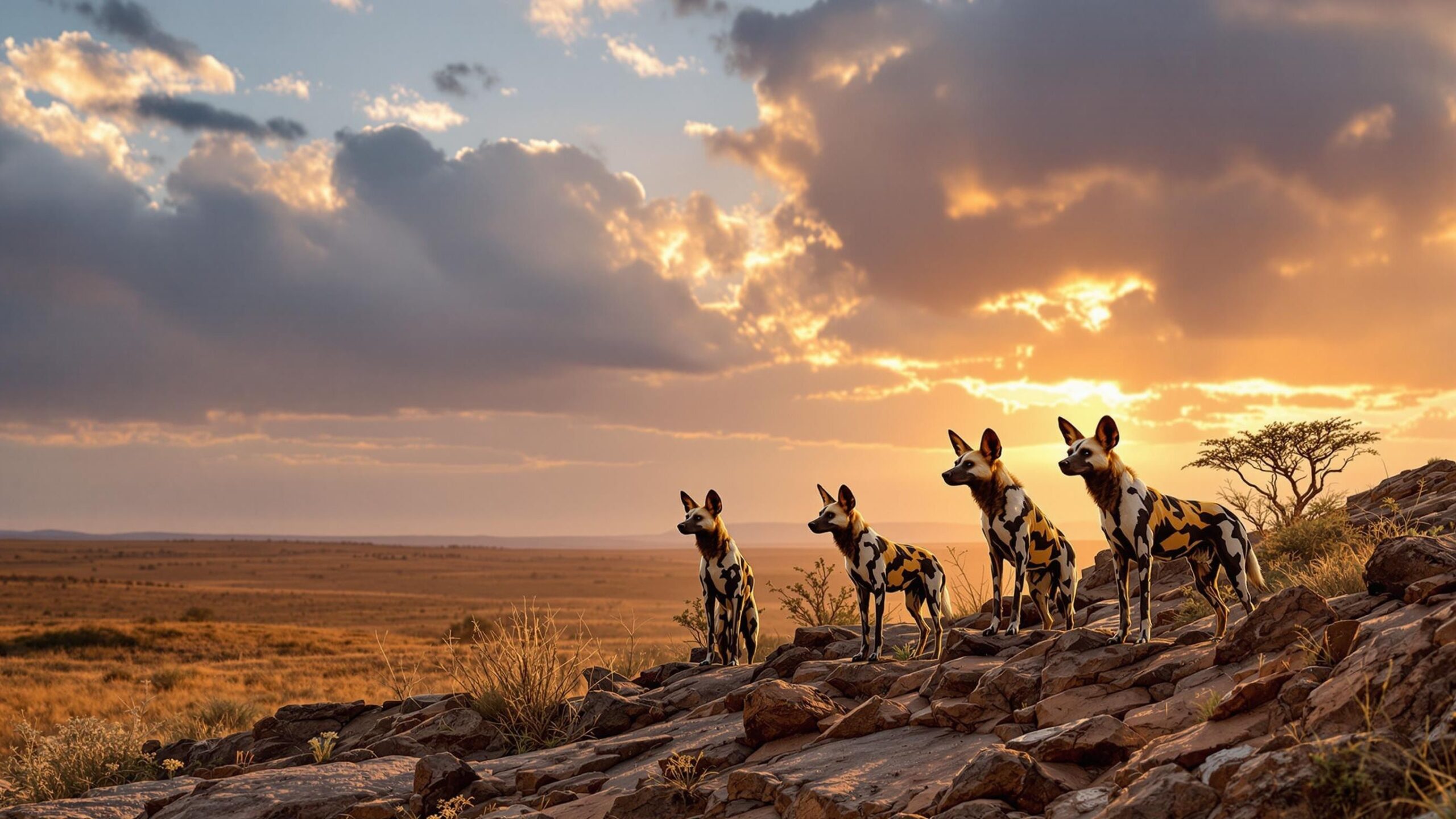
East African Painted Dog: The Wild Spirit of the Savanna
Scientific Name: Lycaon pictus
In the heart of East Africa’s golden savannas and rugged woodlands roams one of the continent’s most charismatic and misunderstood predators—the East African Painted Dog (Lycaon pictus). Known for its striking coat, tireless endurance, and intricate pack dynamics, this animal is not only a symbol of wild Africa but also a vital thread in the fabric of its ecosystems. Sometimes called the African wild dog or simply painted wolf, this subspecies is a marvel of social cooperation, intelligence, and sheer beauty. Yet, despite its prowess and importance, it remains one of the most endangered carnivores in the world. Let’s journey into the vibrant, perilous world of the East African Painted Dog, uncovering its habits, habitat, biology, and the subtle yet pressing conservation story that surrounds it.
A Coat Like No Other: Appearance and Adaptations
The East African Painted Dog is a visual spectacle in motion. Unlike any other canine, its fur is a patchwork of black, white, yellow, and reddish-brown, arranged in patterns so unique that no two individuals are exactly alike—much like human fingerprints. These colors help break up their outline in the dappled light of their environment, acting as natural camouflage.
They are slender, long-legged hunters, weighing between 40 and 70 pounds, with males typically slightly heavier than females. Their large, rounded ears aren’t just endearing—they serve vital functions in thermoregulation and detecting distant sounds, enabling the dogs to stay in touch over long distances during their hunts or travels. The muzzle is dark and narrow, the limbs are built for speed and stamina, and the tail, often tipped in white, helps pack members keep visual contact during fast-paced chases. What’s missing, notably, is a dewclaw—a feature present in most dogs. Evolution, it seems, trimmed away anything that would slow them down. The East African Painted Dog is leaner, lighter, and built purely for efficiency.
Taxonomy And Identity
Yet, despite its prowess and importance, it remains one of the most endangered carnivores in the world. Let’s journey into the vibrant, perilous world of the East African Painted Dog, uncovering its habits, habitat, biology, and the subtle yet pressing conservation story that surrounds it. They are slender, long-legged hunters, weighing between 40 and 70 pounds, with males typically slightly heavier than females.
Its habitat includes a mix of open plains, wooded savannas, and dry forests. These regions offer a rich tapestry of prey animals and enough cover for denning and raising pups. Today, human expansion and habitat fragmentation have pushed their range into isolated pockets, making it harder for separate packs to interbreed or migrate.
Identification And Appearance
Unlike any other canine, its fur is a patchwork of black, white, yellow, and reddish-brown, arranged in patterns so unique that no two individuals are exactly alike—much like human fingerprints. These colors help break up their outline in the dappled light of their environment, acting as natural camouflage. The muzzle is dark and narrow, the limbs are built for speed and stamina, and the tail, often tipped in white, helps pack members keep visual contact during fast-paced chases.
Unlike any other canine, its fur is a patchwork of black, white, yellow, and reddish-brown, arranged in patterns so unique that no two individuals are exactly alike—much like human fingerprints. These colors help break up their outline in the dappled light of their environment, acting as natural camouflage. Body form, markings, movement, and habitat work together to separate this animal from close relatives and lookalikes.
Anatomy And Adaptations
These colors help break up their outline in the dappled light of their environment, acting as natural camouflage. Body form, markings, movement, and habitat work together to separate this animal from close relatives and lookalikes. Body form, markings, movement, and habitat work together to separate this animal from close relatives and lookalikes.
Range And Wild Habitat
Unlike any other canine, its fur is a patchwork of black, white, yellow, and reddish-brown, arranged in patterns so unique that no two individuals are exactly alike—much like human fingerprints. These regions offer a rich tapestry of prey animals and enough cover for denning and raising pups. Today, human expansion and habitat fragmentation have pushed their range into isolated pockets, making it harder for separate packs to interbreed or migrate.
The dogs use a range of vocalizations including chirps, squeaks, and a unique twittering sound to stay in touch. Across Africa, fewer than 6,000 individuals remain in the wild, and within the East African region, their numbers are thought to be in the low hundreds. Let’s journey into the vibrant, perilous world of the East African Painted Dog, uncovering its habits, habitat, biology, and the subtle yet pressing conservation story that surrounds it.
Wild Diet And Feeding
Yet, despite its prowess and importance, it remains one of the most endangered carnivores in the world. These regions offer a rich tapestry of prey animals and enough cover for denning and raising pups. Their need to travel great distances during a hunt—sometimes covering over 12 miles in a day—means small reserves or fenced landscapes are often insufficient for sustaining viable populations.
For instance, when one member is injured or sick, others will feed and protect it. Once prey is spotted—usually medium-sized ungulates like impalas, gazelles, or even young wildebeest—the dogs set off in a strategic pursuit. Some individuals chase and drive the prey, while others flank or intercept.
Behavior
Sometimes called the African wild dog or simply painted wolf, this subspecies is a marvel of social cooperation, intelligence, and sheer beauty. Today, human expansion and habitat fragmentation have pushed their range into isolated pockets, making it harder for separate packs to interbreed or migrate. Behavior is easiest to understand when daily movement, social contact, communication, and risk avoidance are considered together.
Reproduction And Life Cycle
They are slender, long-legged hunters, weighing between 40 and 70 pounds, with males typically slightly heavier than females. Today, human expansion and habitat fragmentation have pushed their range into isolated pockets, making it harder for separate packs to interbreed or migrate. Isolation reduces genetic diversity and increases the likelihood of inbreeding.
They are slender, long-legged hunters, weighing between 40 and 70 pounds, with males typically slightly heavier than females. Today, human expansion and habitat fragmentation have pushed their range into isolated pockets, making it harder for separate packs to interbreed or migrate. Its daily life is shaped by where it moves, what it eats, how it avoids danger, and how it interacts with other animals.
Ecology And Role In The Environment
Known for its striking coat, tireless endurance, and intricate pack dynamics, this animal is not only a symbol of wild Africa but also a vital thread in the fabric of its ecosystems. These regions offer a rich tapestry of prey animals and enough cover for denning and raising pups. Unlike ambush predators such as leopards or solitary hunters like cheetahs, painted dogs rely on endurance, coordination, and speed.
Once prey is spotted—usually medium-sized ungulates like impalas, gazelles, or even young wildebeest—the dogs set off in a strategic pursuit. Some individuals chase and drive the prey, while others flank or intercept. Its daily life is shaped by where it moves, what it eats, how it avoids danger, and how it interacts with other animals.
Conservation Status And Threats
Yet, despite its prowess and importance, it remains one of the most endangered carnivores in the world. Let’s journey into the vibrant, perilous world of the East African Painted Dog, uncovering its habits, habitat, biology, and the subtle yet pressing conservation story that surrounds it. Still, in protected areas like Serengeti National Park, Selous Game Reserve, and Laikipia Plateau, some of the healthiest populations continue to thrive—albeit under the watchful eye of researchers and conservationists.
Their need to travel great distances during a hunt—sometimes covering over 12 miles in a day—means small reserves or fenced landscapes are often insufficient for sustaining viable populations. These dens provide shelter from predators and harsh weather during the pups’ most vulnerable early weeks. As human development, agriculture, and roads carve up the landscape, the painted dogs lose the room they need to roam, hunt, and connect with other populations.
Human Relationship
Yet, despite its prowess and importance, it remains one of the most endangered carnivores in the world. Unlike any other canine, its fur is a patchwork of black, white, yellow, and reddish-brown, arranged in patterns so unique that no two individuals are exactly alike—much like human fingerprints. They are slender, long-legged hunters, weighing between 40 and 70 pounds, with males typically slightly heavier than females.
Their large, rounded ears aren’t just endearing—they serve vital functions in thermoregulation and detecting distant sounds, enabling the dogs to stay in touch over long distances during their hunts or travels. Its daily life is shaped by where it moves, what it eats, how it avoids danger, and how it interacts with other animals. Its daily life is shaped by where it moves, what it eats, how it avoids danger, and how it interacts with other animals.
Captive Care
Painted dogs display a rare sense of unity and mutual care. Responsible care depends on matching space, diet, social conditions, climate, and veterinary oversight to the animal’s biology. Responsible care depends on matching space, diet, social conditions, climate, and veterinary oversight to the animal’s biology.
Wild And Captive Variation
Today, human expansion and habitat fragmentation have pushed their range into isolated pockets, making it harder for separate packs to interbreed or migrate. Isolation reduces genetic diversity and increases the likelihood of inbreeding. Rabies and canine distemper, often spread by domestic dogs, can wipe out entire packs in a matter of weeks.
Similar Species
Unlike any other canine, its fur is a patchwork of black, white, yellow, and reddish-brown, arranged in patterns so unique that no two individuals are exactly alike—much like human fingerprints. A dominant alpha pair leads the pack, but unlike in many mammalian societies, leadership here doesn’t rely on brute strength. Unlike ambush predators such as leopards or solitary hunters like cheetahs, painted dogs rely on endurance, coordination, and speed.
Unlike any other canine, its fur is a patchwork of black, white, yellow, and reddish-brown, arranged in patterns so unique that no two individuals are exactly alike—much like human fingerprints. A dominant alpha pair leads the pack, but unlike in many mammalian societies, leadership here doesn’t rely on brute strength. Its daily life is shaped by where it moves, what it eats, how it avoids danger, and how it interacts with other animals.
Common Misconceptions
FAQ
How does the East African Painted Dog behave?
Sometimes called the African wild dog or simply painted wolf, this subspecies is a marvel of social cooperation, intelligence, and sheer beauty. Today, human expansion and habitat fragmentation have pushed their range into isolated pockets, making it harder for separate packs to interbreed or migrate. Its daily life is shaped by where it moves, what it eats, how it avoids danger, and how it interacts with other animals.
Sources
- https://animalstreets.com/mammals/land-mammals/wild-canids/african-wild-dogs/east-african-painted-dog/ Organization: animalstreets.com Source type: Live page or linked source URL: https://animalstreets.com/mammals/land-mammals/wild-canids/african-wild-dogs/east-african-painted-dog/ Information verified: Used for current-page extraction and source discovery; independent fact verification may still be required. Date checked: 2026-08-27 Reliability notes: Current page / internal source; use for audit context, not independent verification
- https://animalstreets.com/mammals-product-reviews/land-mammals-product-reviews/ Organization: animalstreets.com Source type: Live page or linked source URL: https://animalstreets.com/mammals-product-reviews/land-mammals-product-reviews/ Information verified: Used for current-page extraction and source discovery; independent fact verification may still be required. Date checked: 2026-08-27 Reliability notes: Current page / internal source; use for audit context, not independent verification
- https://animalstreets.com/animal-product-reviews/ Organization: animalstreets.com Source type: Live page or linked source URL: https://animalstreets.com/animal-product-reviews/ Information verified: Used for current-page extraction and source discovery; independent fact verification may still be required. Date checked: 2026-08-27 Reliability notes: Current page / internal source; use for audit context, not independent verification