
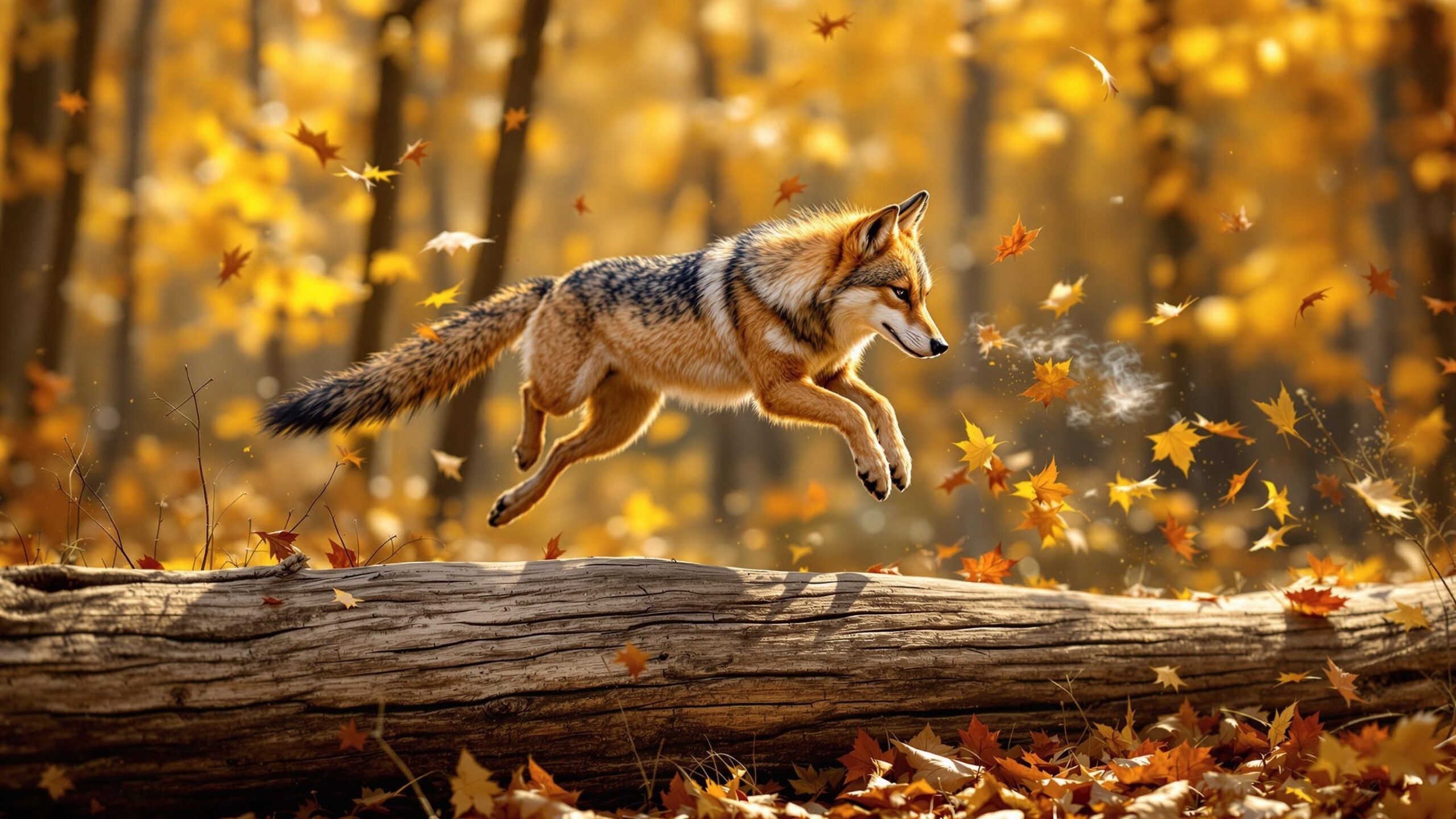
Eastern Coyote: The Adaptive Predator of the East
Scientific Name: Canis latrans var.
In the forests, fields, and even the suburban sprawl of eastern North America, a quiet and clever predator has staked its claim. The Eastern Coyote, Canis latrans var., is a creature of resilience, intelligence, and controversy. Neither fully wolf nor purely coyote, this hybrid species has adapted remarkably to landscapes shaped by human activity, thriving in places where larger carnivores have long vanished. With a haunting howl, watchful eyes, and a ghost-like presence, the Eastern Coyote embodies the wild spirit of adaptation in a changing world. As a relative newcomer to the East, the Eastern Coyote has not only established itself as a top predator but has also captured the curiosity of biologists, ecologists, and the public. It is an animal that tells a story of movement, evolution, and survival, all unfolding right in our backyards.
Origins and Evolution: A Hybrid Born of Necessity
The story of the Eastern Coyote begins with the westward expansion of European settlers. As gray wolves were exterminated from much of eastern North America in the 19th and early 20th centuries, the ecological void they left behind slowly drew in coyotes from the West. Originally native to the central plains and deserts, the Western Coyote (Canis latrans) began moving eastward as forests were cleared and wolf populations declined.
However, as these western coyotes crossed into the Great Lakes and parts of Canada, they encountered remnants of wolf populations—especially eastern wolves and, to a lesser extent, gray wolves. The result was interbreeding between species that once rarely shared territory. This hybridization produced a larger, stronger, and more adaptable version of the coyote: the Eastern Coyote. Genetic studies have shown that the Eastern Coyote is a unique mixture, comprising mostly coyote DNA with notable contributions from eastern wolves, gray wolves, and even a touch of domestic dog. This genetic blend has given rise to a new kind of predator, one capable of exploiting a broader range of habitats and prey than its ancestors.
Taxonomy And Identity
Socially, Eastern Coyotes form loose family groups rather than tightly structured wolf-like packs. Family units usually stay together until the fall, when most pups disperse to establish their own territories. The eastern coyote is best understood through its anatomy, habitat, diet, behavior, and place in its ecosystem.
Identification And Appearance
Their coats are generally tawny gray or reddish-brown, flecked with black and white, and often resemble the colors of the Eastern forest floor. The bushy tail, carried low, and pointed ears give them a distinctly wild appearance. They quickly identify food sources, adapt to new hazards, and alter behavior to avoid threats such as roads, traps, or human encounters.
Their coats are generally tawny gray or reddish-brown, flecked with black and white, and often resemble the colors of the Eastern forest floor. The bushy tail, carried low, and pointed ears give them a distinctly wild appearance. Body form, markings, movement, and habitat work together to separate this animal from close relatives and lookalikes.
Anatomy And Adaptations
Neither fully wolf nor purely coyote, this hybrid species has adapted remarkably to landscapes shaped by human activity, thriving in places where larger carnivores have long vanished. With a haunting howl, watchful eyes, and a ghost-like presence, the Eastern Coyote embodies the wild spirit of adaptation in a changing world. This hybridization produced a larger, stronger, and more adaptable version of the coyote: the Eastern Coyote.
From urban alleyways to deep woods, it has adapted both behaviorally and physically to a variety of environments. This adaptability is a major reason behind the species’ widespread success across the Northeast, Mid-Atlantic, and even into parts of the South. These groups cooperate in rearing pups and defending territory, though hunting is often a solitary or duo effort.
Range And Wild Habitat
Originally native to the central plains and deserts, the Western Coyote ( Canis latrans ) began moving eastward as forests were cleared and wolf populations declined. This genetic blend has given rise to a new kind of predator, one capable of exploiting a broader range of habitats and prey than its ancestors. Its range stretches from the eastern provinces of Canada—including Ontario, Quebec, and Nova Scotia—down through New England, New York, the Mid-Atlantic states, and as far south as North Carolina and even Georgia.
Despite being highly mobile, Eastern Coyotes tend to remain within familiar ranges unless pushed by competition or food scarcity. In the forests, fields, and even the suburban sprawl of eastern North America, a quiet and clever predator has staked its claim. Originally native to the central plains and deserts, the Western Coyote ( Canis latrans ) began moving eastward as forests were cleared and wolf populations declined.
Wild Diet And Feeding
Neither fully wolf nor purely coyote, this hybrid species has adapted remarkably to landscapes shaped by human activity, thriving in places where larger carnivores have long vanished. However, as these western coyotes crossed into the Great Lakes and parts of Canada, they encountered remnants of wolf populations—especially eastern wolves and, to a lesser extent, gray wolves. This genetic blend has given rise to a new kind of predator, one capable of exploiting a broader range of habitats and prey than its ancestors.
These canids are opportunistic omnivores, capable of adjusting their hunting strategies based on location, season, and available prey. In rural areas, they may feed on deer, rabbits, and rodents. In urban settings, they scavenge from trash cans, eat fruit from trees, and prey on small pets or urban wildlife like squirrels and pigeons.
Behavior
From urban alleyways to deep woods, it has adapted both behaviorally and physically to a variety of environments. They are primarily nocturnal, especially in human-dominated landscapes, but in more remote areas, they may be active during daylight hours. Behavior is easiest to understand when daily movement, social contact, communication, and risk avoidance are considered together.
Reproduction And Life Cycle
The result was interbreeding between species that once rarely shared territory. A typical group consists of a monogamous breeding pair and their offspring from previous years. After a gestation period of around 63 days, the female gives birth in a den—usually in a secluded spot such as a burrow, hollow log, or brush pile.
Both the male and female participate in raising the young, and older offspring often help care for the new litter. Dispersal distances vary but can be significant—some juveniles have been known to travel over 100 miles in search of new territory. Its daily life is shaped by where it moves, what it eats, how it avoids danger, and how it interacts with other animals.
Ecology And Role In The Environment
In the forests, fields, and even the suburban sprawl of eastern North America, a quiet and clever predator has staked its claim. As a relative newcomer to the East, the Eastern Coyote has not only established itself as a top predator but has also captured the curiosity of biologists, ecologists, and the public. As gray wolves were exterminated from much of eastern North America in the 19th and early 20th centuries, the ecological void they left behind slowly drew in coyotes from the West.
This genetic blend has given rise to a new kind of predator, one capable of exploiting a broader range of habitats and prey than its ancestors. These canids are opportunistic omnivores, capable of adjusting their hunting strategies based on location, season, and available prey. In urban settings, they scavenge from trash cans, eat fruit from trees, and prey on small pets or urban wildlife like squirrels and pigeons.
Conservation Status And Threats
Originally native to the central plains and deserts, the Western Coyote ( Canis latrans ) began moving eastward as forests were cleared and wolf populations declined. However, as these western coyotes crossed into the Great Lakes and parts of Canada, they encountered remnants of wolf populations—especially eastern wolves and, to a lesser extent, gray wolves. While they are not the primary population control for deer, they play a useful ecological role in maintaining balance, particularly in areas with overabundant deer populations.
In regions where apex predators such as wolves and cougars have been eliminated, coyotes have stepped into the role of mesopredator—a middle-tier predator that keeps populations of smaller animals in check. They help regulate rodent populations, reduce carrion, and indirectly benefit plant growth by managing herbivore numbers. Their predation on fawns also has a subtle but meaningful impact on deer population dynamics, which in turn influences forest regeneration and biodiversity.
Human Relationship
Neither fully wolf nor purely coyote, this hybrid species has adapted remarkably to landscapes shaped by human activity, thriving in places where larger carnivores have long vanished. These canids are opportunistic omnivores, capable of adjusting their hunting strategies based on location, season, and available prey. In urban settings, they scavenge from trash cans, eat fruit from trees, and prey on small pets or urban wildlife like squirrels and pigeons.
They are primarily nocturnal, especially in human-dominated landscapes, but in more remote areas, they may be active during daylight hours. Its daily life is shaped by where it moves, what it eats, how it avoids danger, and how it interacts with other animals. Its daily life is shaped by where it moves, what it eats, how it avoids danger, and how it interacts with other animals.
Captive Care
Both the male and female participate in raising the young, and older offspring often help care for the new litter. Responsible care depends on matching space, diet, social conditions, climate, and veterinary oversight to the animal’s biology. Responsible care depends on matching space, diet, social conditions, climate, and veterinary oversight to the animal’s biology.
Wild And Captive Variation
The result was interbreeding between species that once rarely shared territory. Genetic studies have shown that the Eastern Coyote is a unique mixture, comprising mostly coyote DNA with notable contributions from eastern wolves, gray wolves, and even a touch of domestic dog. From urban alleyways to deep woods, it has adapted both behaviorally and physically to a variety of environments.
Similar Species
Unlike many predators, which struggle to survive in fragmented or urbanized habitats, the Eastern Coyote flourishes. Its daily life is shaped by where it moves, what it eats, how it avoids danger, and how it interacts with other animals. Its daily life is shaped by where it moves, what it eats, how it avoids danger, and how it interacts with other animals.
Common Misconceptions
In the forests, fields, and even the suburban sprawl of eastern North America, a quiet and clever predator has staked its claim. Neither fully wolf nor purely coyote, this hybrid species has adapted remarkably to landscapes shaped by human activity, thriving in places where larger carnivores have long vanished. With a haunting howl, watchful eyes, and a ghost-like presence, the Eastern Coyote embodies the wild spirit of adaptation in a changing world.
As a relative newcomer to the East, the Eastern Coyote has not only established itself as a top predator but has also captured the curiosity of biologists, ecologists, and the public. Originally native to the central plains and deserts, the Western Coyote ( Canis latrans ) began moving eastward as forests were cleared and wolf populations declined. The result was interbreeding between species that once rarely shared territory.
FAQ
What is a Eastern Coyote?
Socially, Eastern Coyotes form loose family groups rather than tightly structured wolf-like packs. Family units usually stay together until the fall, when most pups disperse to establish their own territories. In the forests, fields, and even the suburban sprawl of eastern North America, a quiet and clever predator has staked its claim.
How does the Eastern Coyote behave?
From urban alleyways to deep woods, it has adapted both behaviorally and physically to a variety of environments. They are primarily nocturnal, especially in human-dominated landscapes, but in more remote areas, they may be active during daylight hours. Its daily life is shaped by where it moves, what it eats, how it avoids danger, and how it interacts with other animals.
Additional Natural History Notes
Eastern Coyote is best interpreted through habitat, seasonal food supply, movement, social behavior, breeding timing, and the pressures created by predators, competitors, and people. Coat color, limb shape, ears, teeth, and body size connect to how the animal travels, finds food, avoids danger, and raises young. Wild behavior also differs from observations made in parks, zoos, farms, rescue settings, or neighborhoods, where space, diet, risk, and human influence can change daily activity.
A complete account also benefits from scale and season. Many animals change their movements, calls, feeding choices, or visibility as weather, water, prey, nesting sites, or shelter change through the year. Those rhythms can make the same species look secretive in one setting and bold in another. By connecting anatomy, habitat, and seasonal behavior, the animal becomes easier to understand as a living part of its ecosystem rather than a list of isolated facts.