
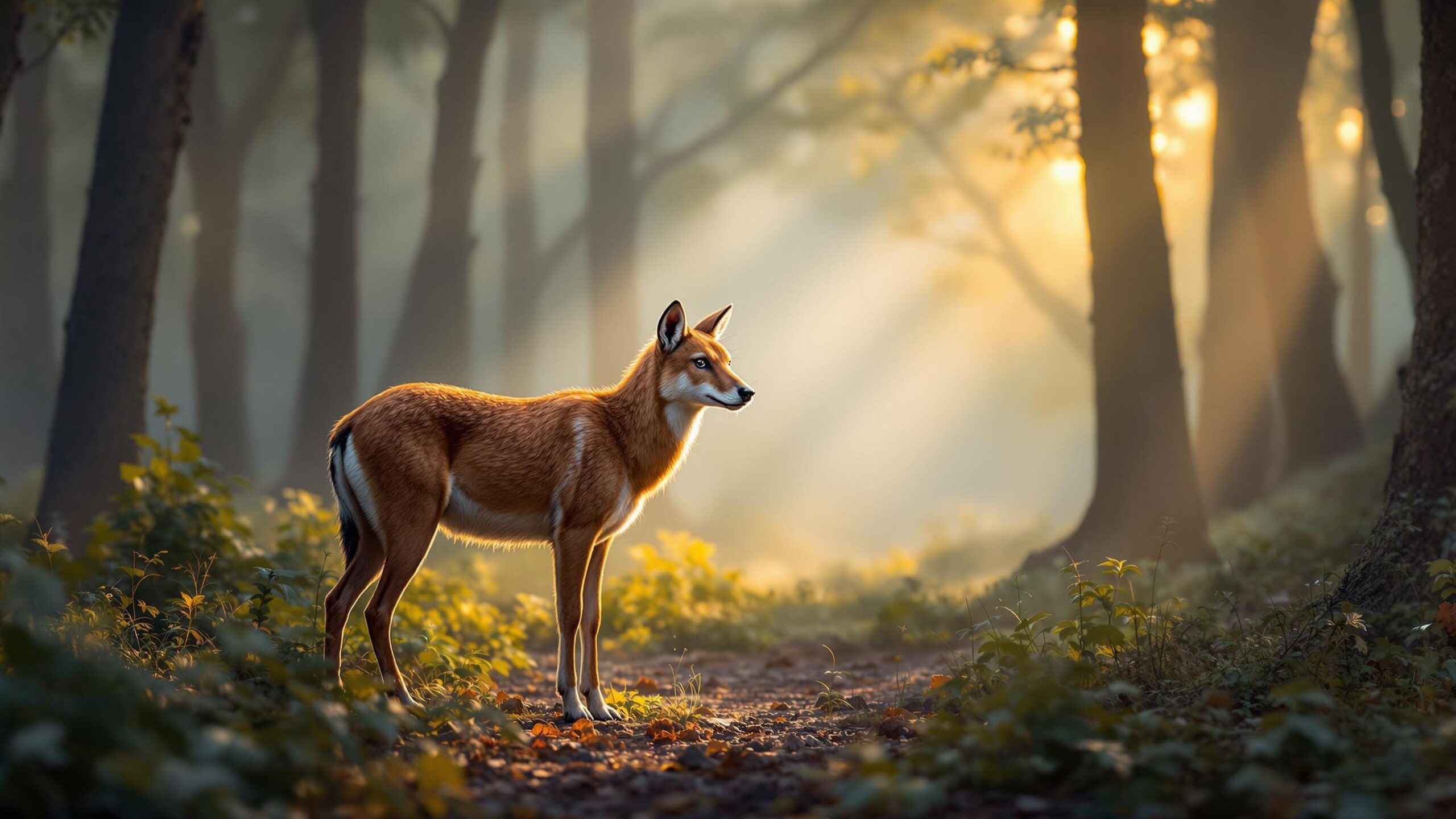
The Indian Dhole: Asia’s Wild Crimson Hunter
Meet the Indian dhole (Cuon alpinus), one of the most enigmatic and misunderstood predators of Asia’s wild landscapes. Also known as the Asiatic wild dog, whistling dog, or red dog, the dhole is a strikingly social, fiercely intelligent, and ecologically vital canid that roams the dense jungles, deciduous forests, and mountainous terrains of the Indian subcontinent. Though often overshadowed by India’s more charismatic carnivores like the Bengal tiger or the Indian leopard, the dhole plays a unique and irreplaceable role in maintaining the balance of nature. Let us step into the world of this fiery-coated, elusive predator—where loyalty, coordination, and resilience define a life forged in the wild.
A Canine Unlike Any Other
Despite often being dubbed “wild dogs,” dholes are not simply feral versions of domesticated dogs or relatives of wolves. In fact, they are the sole surviving members of the genus Cuon, a distinct evolutionary lineage that diverged from other canids millions of years ago. Their anatomy and behavior set them apart. With a lean frame, bushy black-tipped tail, large rounded ears, and a short, fox-like muzzle, dholes are built for stamina and teamwork. Their coats range from rusty-red to sandy brown, providing camouflage in the Indian forests where they predominantly reside. The dhole’s dental structure is also unique. Unlike other wild canids, dholes have fewer molars—an evolutionary trait that allows them to shear meat more efficiently and devour their prey quickly. This adaptation, paired with their tightly-knit pack behavior, makes them highly effective predators.
Taxonomy And Identity
In fact, they are the sole surviving members of the genus Cuon , a distinct evolutionary lineage that diverged from other canids millions of years ago. The indian dhole is best understood through its anatomy, habitat, diet, behavior, and place in its ecosystem. The indian dhole is best understood through its anatomy, habitat, diet, behavior, and place in its ecosystem.
Identification And Appearance
Let us step into the world of this fiery-coated, elusive predator—where loyalty, coordination, and resilience define a life forged in the wild. With a lean frame, bushy black-tipped tail, large rounded ears, and a short, fox-like muzzle, dholes are built for stamina and teamwork. The Pups and the Process of Growing Up Mating in dholes typically occurs between November and March, and the alpha female gives birth to a litter of 6 to 8 pups after a gestation period of about two months.
Let us step into the world of this fiery-coated, elusive predator—where loyalty, coordination, and resilience define a life forged in the wild. With a lean frame, bushy black-tipped tail, large rounded ears, and a short, fox-like muzzle, dholes are built for stamina and teamwork. Body form, markings, movement, and habitat work together to separate this animal from close relatives and lookalikes.
Anatomy And Adaptations
Their coats range from rusty-red to sandy brown, providing camouflage in the Indian forests where they predominantly reside. This adaptation, paired with their tightly-knit pack behavior, makes them highly effective predators. However, they are also surprisingly adaptable, capable of surviving in high-altitude Himalayan terrain, arid scrub forests, and montane woodlands—though they avoid human-dominated landscapes when possible.
They are pragmatic and not territorial toward other predators, but if challenged, a pack of dholes will aggressively defend their kill—even against leopards or sloth bears. Body form, markings, movement, and habitat work together to separate this animal from close relatives and lookalikes. Body form, markings, movement, and habitat work together to separate this animal from close relatives and lookalikes.
Range And Wild Habitat
Their coats range from rusty-red to sandy brown, providing camouflage in the Indian forests where they predominantly reside. Within India, dholes are most commonly found in protected areas and forest reserves such as Karnataka’s Nagarhole and Bandipur National Parks, the Western Ghats, and parts of Central and Northeast India. They live, hunt, and raise young in packs that typically range from five to twelve individuals, though super-packs of up to thirty dholes have been documented.
Ironically, while dholes rarely target domestic animals when wild prey is abundant, they are still viewed as vermin in some regions—a reputation stemming more from myth than fact. From land-roaming lions to ocean-gliding whales, from household pets to prehistoric giants, we explore top-rated products for enthusiasts, educators, and animal lovers alike. Also known as the Asiatic wild dog, whistling dog, or red dog, the dhole is a strikingly social, fiercely intelligent, and ecologically vital canid that roams the dense jungles, deciduous forests, and mountainous terrains of the Indian subcontinent.
Wild Diet And Feeding
Though often overshadowed by India’s more charismatic carnivores like the Bengal tiger or the Indian leopard, the dhole plays a unique and irreplaceable role in maintaining the balance of nature. Unlike other wild canids, dholes have fewer molars—an evolutionary trait that allows them to shear meat more efficiently and devour their prey quickly. Dholes are especially fond of deciduous and evergreen forests, where deer, wild boar, and other prey species are abundant.
All members contribute to the care of pups, including regurgitating food for them—a behavior shared with only a handful of other wild carnivores. While individual dholes are not physically powerful enough to take down large prey, the pack more than makes up for it through precision, endurance, and cooperation. Their prey includes chital (spotted deer), sambar, wild boar, langurs, and even young gaur (Indian bison).
Behavior
Also known as the Asiatic wild dog, whistling dog, or red dog, the dhole is a strikingly social, fiercely intelligent, and ecologically vital canid that roams the dense jungles, deciduous forests, and mountainous terrains of the Indian subcontinent. Their anatomy and behavior set them apart. This adaptation, paired with their tightly-knit pack behavior, makes them highly effective predators.
Also known as the Asiatic wild dog, whistling dog, or red dog, the dhole is a strikingly social, fiercely intelligent, and ecologically vital canid that roams the dense jungles, deciduous forests, and mountainous terrains of the Indian subcontinent. Their anatomy and behavior set them apart. Behavior is easiest to understand when daily movement, social contact, communication, and risk avoidance are considered together.
Reproduction And Life Cycle
Packs revolve around breeding pairs and a network of helpers. This communal lifestyle not only strengthens group cohesion but also enhances survival rates for offspring. The Pups and the Process of Growing Up Mating in dholes typically occurs between November and March, and the alpha female gives birth to a litter of 6 to 8 pups after a gestation period of about two months.
The juveniles begin joining adult hunts by the time they are six to seven months old. As forests shrink and human settlements expand, dhole territories are being squeezed into smaller, disconnected patches, reducing their access to prey and increasing the risk of inbreeding. Its daily life is shaped by where it moves, what it eats, how it avoids danger, and how it interacts with other animals.
Ecology And Role In The Environment
Also known as the Asiatic wild dog, whistling dog, or red dog, the dhole is a strikingly social, fiercely intelligent, and ecologically vital canid that roams the dense jungles, deciduous forests, and mountainous terrains of the Indian subcontinent. Let us step into the world of this fiery-coated, elusive predator—where loyalty, coordination, and resilience define a life forged in the wild. Unlike other wild canids, dholes have fewer molars—an evolutionary trait that allows them to shear meat more efficiently and devour their prey quickly.
This adaptation, paired with their tightly-knit pack behavior, makes them highly effective predators. Dholes are especially fond of deciduous and evergreen forests, where deer, wild boar, and other prey species are abundant. While individual dholes are not physically powerful enough to take down large prey, the pack more than makes up for it through precision, endurance, and cooperation.
Conservation Status And Threats
A Predator with a Precarious Future Despite their prowess, dholes are quietly slipping through the cracks of conservation attention. Classified as “Endangered” by the International Union for Conservation of Nature (IUCN), dholes face a slew of challenges—many of them human-induced. Several protected reserves across southern and central India have witnessed stable or even increasing dhole populations thanks to better habitat protection and stricter anti-poaching laws.
Organizations such as the Wildlife Conservation Society (WCS) and the Wildlife Institute of India are studying dhole ecology, behavior, and genetics to inform policy decisions and landscape management. Community-based conservation, where local people are empowered to act as stewards of the forest, is proving especially effective in areas bordering dhole habitats. The more people understand the dhole’s role in maintaining healthy prey populations and forest ecosystems, the more likely they are to support conservation measures.
Human Relationship
However, they are also surprisingly adaptable, capable of surviving in high-altitude Himalayan terrain, arid scrub forests, and montane woodlands—though they avoid human-dominated landscapes when possible. They live, hunt, and raise young in packs that typically range from five to twelve individuals, though super-packs of up to thirty dholes have been documented. These sounds help pack members stay in contact in dense forests, signal danger, or orchestrate hunting strategies.
However, they are also surprisingly adaptable, capable of surviving in high-altitude Himalayan terrain, arid scrub forests, and montane woodlands—though they avoid human-dominated landscapes when possible. They live, hunt, and raise young in packs that typically range from five to twelve individuals, though super-packs of up to thirty dholes have been documented. Its daily life is shaped by where it moves, what it eats, how it avoids danger, and how it interacts with other animals.
Captive Care
All members contribute to the care of pups, including regurgitating food for them—a behavior shared with only a handful of other wild carnivores. What makes the dhole unique among wild canids is the intensive cooperative care their young receive. Responsible care depends on matching space, diet, social conditions, climate, and veterinary oversight to the animal’s biology.
Wild And Captive Variation
A Canine Unlike Any Other Despite often being dubbed “wild dogs,” dholes are not simply feral versions of domesticated dogs or relatives of wolves. Packs revolve around breeding pairs and a network of helpers. As forests shrink and human settlements expand, dhole territories are being squeezed into smaller, disconnected patches, reducing their access to prey and increasing the risk of inbreeding.
Similar Species
A Canine Unlike Any Other Despite often being dubbed “wild dogs,” dholes are not simply feral versions of domesticated dogs or relatives of wolves. Unlike other wild canids, dholes have fewer molars—an evolutionary trait that allows them to shear meat more efficiently and devour their prey quickly. Unlike other canids that operate under a strict alpha hierarchy, dhole packs tend to be more cooperative and democratic in their social structure.
A Canine Unlike Any Other Despite often being dubbed “wild dogs,” dholes are not simply feral versions of domesticated dogs or relatives of wolves. Unlike other wild canids, dholes have fewer molars—an evolutionary trait that allows them to shear meat more efficiently and devour their prey quickly. Its daily life is shaped by where it moves, what it eats, how it avoids danger, and how it interacts with other animals.
Common Misconceptions
Ironically, while dholes rarely target domestic animals when wild prey is abundant, they are still viewed as vermin in some regions—a reputation stemming more from myth than fact. Its daily life is shaped by where it moves, what it eats, how it avoids danger, and how it interacts with other animals. Its daily life is shaped by where it moves, what it eats, how it avoids danger, and how it interacts with other animals.
FAQ
What is a Indian Dhole?
In fact, they are the sole surviving members of the genus Cuon , a distinct evolutionary lineage that diverged from other canids millions of years ago. Let us step into the world of this fiery-coated, elusive predator—where loyalty, coordination, and resilience define a life forged in the wild. Their anatomy and behavior set them apart.
Sources
- https://animalstreets.com/mammals/land-mammals/wild-canids/dholes/indian-dhole/ Organization: animalstreets.com Source type: Live page or linked source URL: https://animalstreets.com/mammals/land-mammals/wild-canids/dholes/indian-dhole/ Information verified: Used for current-page extraction and source discovery; independent fact verification may still be required. Date checked: 2026-08-27 Reliability notes: Current page / internal source; use for audit context, not independent verification
- https://animalstreets.com/mammals-product-reviews/land-mammals-product-reviews/ Organization: animalstreets.com Source type: Live page or linked source URL: https://animalstreets.com/mammals-product-reviews/land-mammals-product-reviews/ Information verified: Used for current-page extraction and source discovery; independent fact verification may still be required. Date checked: 2026-08-27 Reliability notes: Current page / internal source; use for audit context, not independent verification
- https://animalstreets.com/animal-product-reviews/ Organization: animalstreets.com Source type: Live page or linked source URL: https://animalstreets.com/animal-product-reviews/ Information verified: Used for current-page extraction and source discovery; independent fact verification may still be required. Date checked: 2026-08-27 Reliability notes: Current page / internal source; use for audit context, not independent verification