
Built for the Cold: Masterpieces of Evolution
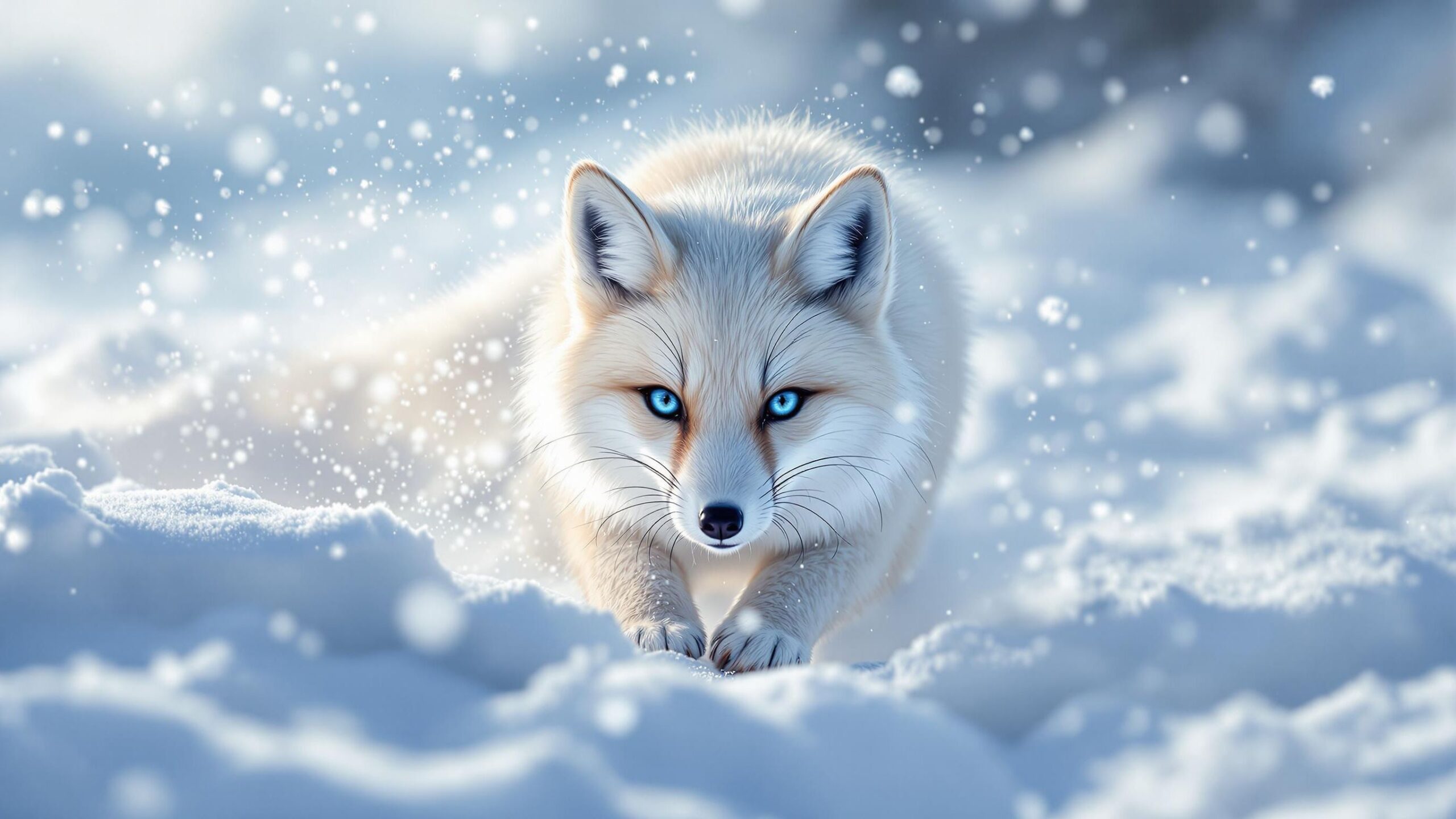
Everything about the Arctic fox’s body is designed to conserve heat. Its compact shape minimizes exposed surface area. With short legs, rounded ears, and a short snout, the Arctic fox reduces the pathways through which it could lose warmth. Its fur is among the thickest and warmest of any mammal, and it changes color with the seasons: pristine white in winter to blend in with the snow, and brown or gray in summer for camouflage against rocks and tundra vegetation. The Arctic fox also has a highly developed metabolic system that enables it to maintain a stable core temperature despite external extremes. Its blood vessels constrict in cold conditions, limiting blood flow to the extremities and keeping warmth centralized. At night or during storms, it curls into a tight ball and wraps its tail around its body like a blanket, tucking its nose beneath to preserve heat. These adaptations make the Arctic fox not just a winter specialist but a master of thermoregulation and endurance.
A Habitat of Ice and Wind
The Arctic fox is found throughout the circumpolar Arctic. This includes the tundra zones of Canada, Alaska, Russia, Greenland, Iceland, Norway, and Svalbard. Within this frozen domain, it makes its home in rocky crevices, snow burrows, or dens dug into the permafrost or sandy soil during summer. Unlike some animals that migrate or hibernate, Arctic foxes remain active year-round. They are incredibly mobile, with some individuals traveling hundreds or even thousands of miles across sea ice in search of food. In fact, researchers have tracked Arctic foxes walking from Norway to Canada—a trek of more than 2,000 miles—proving just how vast and dynamic their movements can be. They are territorial in some areas, especially where food is abundant, but in regions with lower prey density, they may become nomadic, constantly exploring new terrain in their quest for survival.
The Arctic Fox’s Seasonal Menu
As opportunistic omnivores, Arctic foxes consume a wide variety of foods, and their diet shifts with the seasons. In winter, their primary food source is the lemming—a small, mouse-like rodent that lives beneath the snow. A single fox may consume dozens of lemmings in a day. When lemming populations are high, Arctic foxes can thrive and even raise larger litters. When numbers crash, foxes must turn to scavenging or seek out other prey. In coastal areas, Arctic foxes feed on seabirds, fish, seal carrion, and eggs. They often follow polar bears, scavenging leftovers from seal kills. During the summer months, the menu becomes more diverse, with access to berries, insects, and vegetation. Foxes living near bird colonies may raid nests for eggs and chicks. Incredibly, Arctic foxes have been observed caching food—burying surplus meat in the ground or snow to eat later during leaner times. This behavior reflects their adaptability and long-term survival strategy in an unpredictable environment.
Silent Hunters with Sensitive Senses
The Arctic fox is a solitary hunter and forager, relying on acute senses to locate prey beneath snow and ice. It uses its exceptional hearing to detect the movement of lemmings tunneling under the snow. Once the sound is pinpointed, the fox will pounce—leaping high into the air before diving snout-first into the snow to catch its target. This hunting technique, known as “mousing,” is not only effective but also spectacular to observe. In areas with thick snow cover, this skill becomes essential for winter survival. Its sense of smell is equally sharp, allowing it to locate carrion, food caches, and even the scent trails of other animals. Eyesight is adapted for both daylight and dim Arctic twilight, helping the fox remain active throughout the year’s dramatic light cycles.
Raising the Next Generation in the Arctic
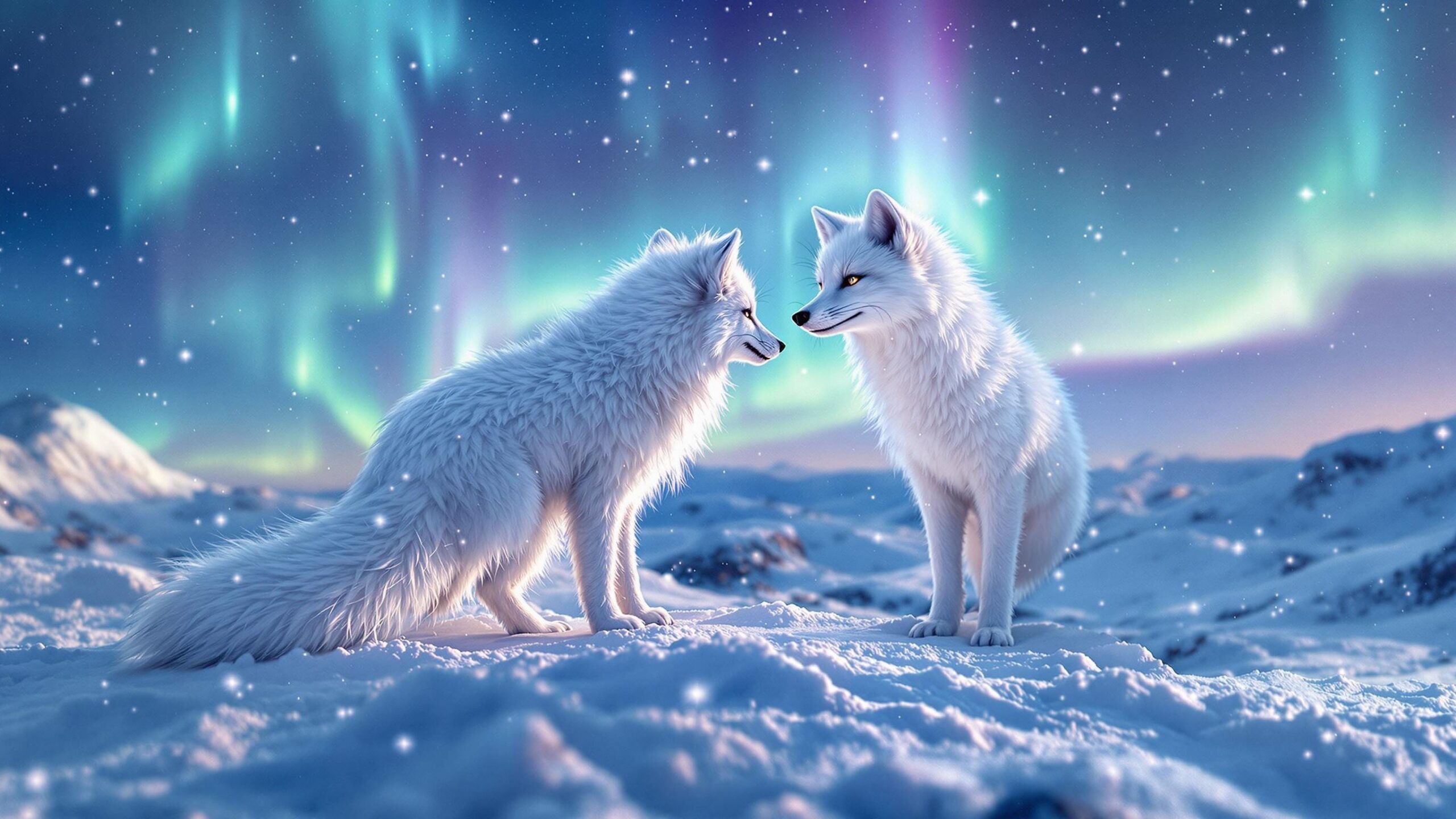
Mating season begins in early spring, typically from February to April. Arctic foxes form monogamous pairs that often mate for life. After mating, the female gives birth in early summer—usually in June—after a gestation period of about 52 days. She selects a den—sometimes one that has been used for generations—and gives birth to a litter ranging from 5 to 10 pups, though litters as large as 15 have been recorded, especially in areas with high lemming populations. The den is often large and complex, with multiple entrances and chambers to protect the pups from predators and harsh weather. Both parents participate in raising the pups. The male provides food, while the female nurses and cares for the young. By four weeks of age, the pups begin to explore outside the den, and by autumn, they are nearly full-grown and ready to disperse. This family-oriented approach helps ensure a higher survival rate in a habitat where danger and scarcity are constant threats.
Fur, Threats, and Human Connection
The Arctic fox’s beautiful fur, while essential for survival, has historically made it a target for the fur trade. For centuries, Indigenous peoples have hunted Arctic foxes for meat and pelts, and in many cases, they continue to do so sustainably. However, commercial trapping and fur farming introduced additional pressures on fox populations in the 19th and 20th centuries. In the wild, the Arctic fox faces natural predators such as golden eagles, snowy owls, wolverines, and red foxes. The latter pose a growing threat as climate change allows red foxes to move farther north into Arctic habitats, where they outcompete their smaller cousins for food and dens.
Though the species as a whole is listed as Least Concern by the International Union for Conservation of Nature (IUCN), some regional populations are in serious decline. In Fennoscandia—covering parts of Norway, Sweden, and Finland—the Arctic fox is critically endangered due to habitat fragmentation, reduced lemming populations, and red fox encroachment. Conservation efforts in these areas include feeding stations, predator control, and protected reserves. International cooperation and climate change mitigation are also crucial for the long-term survival of Arctic ecosystems.
Climate Change and a Shifting Arctic
Perhaps the most significant long-term threat to the Arctic fox is climate change. As global temperatures rise, the Arctic’s delicate balance is being disrupted. Melting sea ice, thawing permafrost, and shifting ecosystems are reshaping the landscape faster than many species can adapt. For the Arctic fox, this means a loss of suitable habitat, fewer prey animals, and more competition from red foxes. In tundra zones that once supported stable Arctic fox populations, warming has led to declines in lemming cycles and earlier spring snowmelts, both of which reduce food availability during critical breeding and denning periods. Despite these challenges, the Arctic fox remains a symbol of resilience. Its ability to traverse extreme distances, switch food sources, and withstand sub-zero temperatures makes it one of nature’s most adaptable survivors. But continued conservation efforts and a global commitment to curbing emissions will be essential to ensure this icon of the north doesn’t disappear from its frozen home.
The Arctic Fox in Culture and Story
In many Arctic cultures, the Arctic fox holds special significance. Indigenous groups like the Inuit and Sámi have long admired the fox for its cleverness, stealth, and spirit. It often appears in legends as a cunning figure—sometimes a trickster, other times a guardian or a symbol of guidance in the snow. In Norse mythology, foxes were associated with the goddess Skadi, who represented winter and the wilderness. In modern literature, films, and folklore, the Arctic fox continues to charm audiences as a character embodying beauty, mystery, and independence. From the snowy pages of children’s books to the icy frames of nature documentaries, the Arctic fox remains a beloved subject of fascination and admiration.
A Life on the Move: Nomads of Ice
Unlike many animals that live within relatively fixed home ranges, Arctic foxes can be true nomads. Studies using GPS collars have shown foxes embarking on journeys that defy expectation. One individual, tagged in Svalbard, was tracked as it journeyed over 2,000 miles in just a few months, crossing frozen sea ice and remote territories to reach northern Canada. This capacity for long-distance travel is not just extraordinary—it is critical. In the ever-shifting landscape of the Arctic, mobility equals survival. When local food sources dwindle, an Arctic fox’s best strategy is to move, explore, and adapt to new areas. It is this spirit of movement, of constant exploration, that perhaps best defines the Arctic fox—not as a resident of a single patch of land, but as a citizen of the entire polar world.
Endurance in Silence
The Arctic fox does not roar, trumpet, or howl. It moves quietly across a silent land, leaving light tracks in the snow, surviving with patience, intelligence, and resilience. It is not a beast of brawn, but one of exquisite adaptation—proving that even in the most desolate corners of the Earth, life finds a way. It teaches us that beauty and strength can exist in the most unexpected places. Its story is not just one of survival, but of balance—between predator and prey, between warmth and cold, between stillness and motion. As the Arctic changes, so too must our understanding of and commitment to the creatures who live there. For now, the Arctic fox continues its journey, weaving through snow drifts, listening for the rustle beneath the ice, and enduring the endless winter as it has for millennia. And if we are wise, we will ensure that this elegant traveler of the north remains part of our planet’s story for generations to come.