
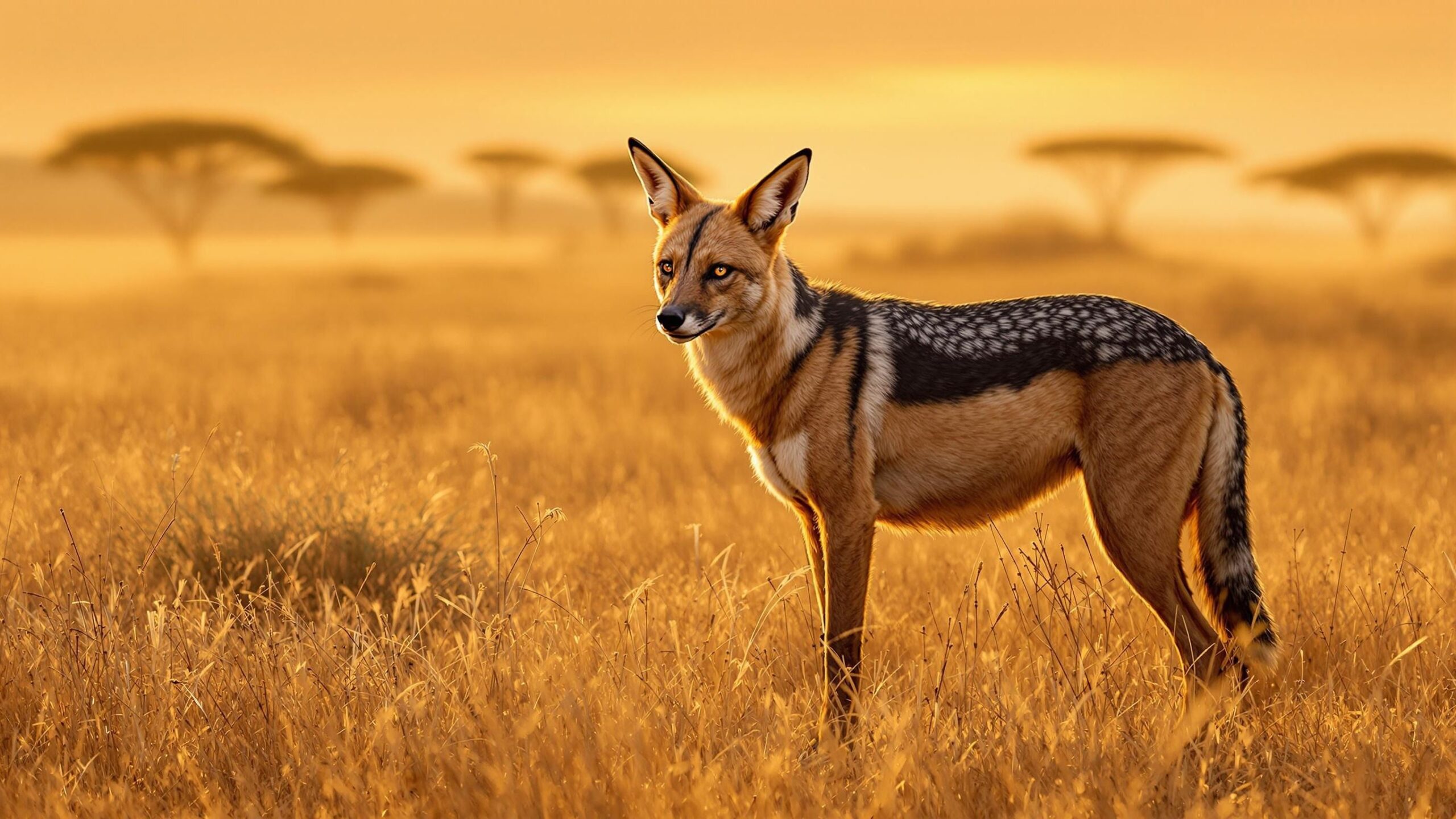
The Black-Backed Jackal: Africa’s Bold and Clever Canid
Scientific Name: Canis mesomelas
In the heartlands of Africa, from windswept coastal plains to dry scrublands and open savannahs, roams one of the continent’s most underrated predators—the Black-backed Jackal (Canis mesomelas). This cunning and adaptable carnivore, known for its sharp wits and striking appearance, is one of the oldest canid species still alive today. Often overshadowed by larger carnivores like lions or hyenas, the Black-backed Jackal has earned a place of its own in the African ecosystem with its resourcefulness, resilience, and surprisingly complex social structure.
This article dives deep into the world of the Black-backed Jackal, shedding light on its behavior, ecology, evolutionary history, interactions with humans, and current conservation status. Whether you’re a wildlife enthusiast, a curious reader, or someone passionate about African biodiversity, this guide will open your eyes to the remarkable life of this oft-overlooked species.
A Distinctive Profile: What Makes the Black-backed Jackal Unique
The Black-backed Jackal is named for the bold black saddle of fur that runs down the center of its back, sharply contrasting with the rust-colored flanks and white underbelly. This distinctive coloration makes it easy to tell apart from other African jackals or wild canids. It is a medium-sized carnivore, typically weighing between 15 to 30 pounds and standing about 16 inches at the shoulder. Despite its small stature, it is a confident and often fearless animal, known to challenge much larger predators for food and territory. Their bushy tails, tipped with black, and their narrow, fox-like faces give them an alert and intelligent appearance. Their large, upright ears are not just for show—they help the jackal detect even the faintest sounds in its environment, making it a master of awareness in the African wilderness.
Taxonomy And Identity
When hunting in pairs or family groups, they can take down larger prey, sometimes even harassing wounded ungulates or chasing off vultures from carcasses. Social Structure and Family Life Although they may look like loners at first glance, Black-backed Jackals are surprisingly social. Mated pairs form the core of a family group, and their bonds are reinforced through constant communication—both vocal and physical.
Juvenile jackals remain in the family group until they reach sexual maturity, around one year of age, after which they often disperse to find new territories and mates. These vocalizations serve various functions—defending territory, coordinating with family members, or simply warning rivals to stay away. The black-backed jackal is best understood through its anatomy, habitat, diet, behavior, and place in its ecosystem.
Identification And Appearance
This distinctive coloration makes it easy to tell apart from other African jackals or wild canids. It is a medium-sized carnivore, typically weighing between 15 to 30 pounds and standing about 16 inches at the shoulder. Their bushy tails, tipped with black, and their narrow, fox-like faces give them an alert and intelligent appearance.
This distinctive coloration makes it easy to tell apart from other African jackals or wild canids. It is a medium-sized carnivore, typically weighing between 15 to 30 pounds and standing about 16 inches at the shoulder. Body form, markings, movement, and habitat work together to separate this animal from close relatives and lookalikes.
Anatomy And Adaptations
This cunning and adaptable carnivore, known for its sharp wits and striking appearance, is one of the oldest canid species still alive today. Unlike wolves, foxes, and coyotes that underwent significant evolutionary adaptations, the Black-backed Jackal’s basic design has proven successful enough to remain consistent through time. Its continued survival across vast regions of Africa is proof of its adaptability and intelligence.
Their diet is remarkably varied and seasonally adaptable, allowing them to thrive in a wide range of environments. These vocalizations serve various functions—defending territory, coordinating with family members, or simply warning rivals to stay away. In other cases, they adapt quickly to changes in human behavior, learning to exploit new food sources or avoid persecution.
Range And Wild Habitat
Its continued survival across vast regions of Africa is proof of its adaptability and intelligence. They are primarily found in two distinct populations: one in eastern Africa (including Ethiopia, Kenya, Somalia, and Tanzania) and another in the southern regions (including Namibia, South Africa, Botswana, and Zimbabwe). However, they tend to avoid dense forests or high mountain regions, where their hunting style and communication strategies are less effective.
Their diet is remarkably varied and seasonally adaptable, allowing them to thrive in a wide range of environments. They use scent marking, body language, and a wide range of calls, from yelps and howls to cackles and high-pitched screams, to maintain contact and signal territorial boundaries. These two populations are separated by a broad belt of central African forest and savanna where the species is absent, likely due to ecological differences and competition.
Wild Diet And Feeding
This cunning and adaptable carnivore, known for its sharp wits and striking appearance, is one of the oldest canid species still alive today. Often overshadowed by larger carnivores like lions or hyenas, the Black-backed Jackal has earned a place of its own in the African ecosystem with its resourcefulness, resilience, and surprisingly complex social structure. It is a medium-sized carnivore, typically weighing between 15 to 30 pounds and standing about 16 inches at the shoulder.
Despite its small stature, it is a confident and often fearless animal, known to challenge much larger predators for food and territory. Unlike many carnivores, they are quite tolerant of human presence and are often seen near farms and villages, scavenging for food scraps and preying on rodents and poultry. Their diet is remarkably varied and seasonally adaptable, allowing them to thrive in a wide range of environments.
Behavior
Often overshadowed by larger carnivores like lions or hyenas, the Black-backed Jackal has earned a place of its own in the African ecosystem with its resourcefulness, resilience, and surprisingly complex social structure. This article dives deep into the world of the Black-backed Jackal, shedding light on its behavior, ecology, evolutionary history, interactions with humans, and current conservation status. However, they tend to avoid dense forests or high mountain regions, where their hunting style and communication strategies are less effective.
Often overshadowed by larger carnivores like lions or hyenas, the Black-backed Jackal has earned a place of its own in the African ecosystem with its resourcefulness, resilience, and surprisingly complex social structure. This article dives deep into the world of the Black-backed Jackal, shedding light on its behavior, ecology, evolutionary history, interactions with humans, and current conservation status. Behavior is easiest to understand when daily movement, social contact, communication, and risk avoidance are considered together.
Reproduction And Life Cycle
They are monogamous animals, often mating for life. A female usually gives birth to three to six pups after a gestation of around 60 days. Both parents are involved in rearing the young, and older offspring from previous litters often stick around to help raise their younger siblings—a behavior known as cooperative breeding.
Juvenile jackals remain in the family group until they reach sexual maturity, around one year of age, after which they often disperse to find new territories and mates. Its daily life is shaped by where it moves, what it eats, how it avoids danger, and how it interacts with other animals. Its daily life is shaped by where it moves, what it eats, how it avoids danger, and how it interacts with other animals.
Ecology And Role In The Environment
Often overshadowed by larger carnivores like lions or hyenas, the Black-backed Jackal has earned a place of its own in the African ecosystem with its resourcefulness, resilience, and surprisingly complex social structure. Despite its small stature, it is a confident and often fearless animal, known to challenge much larger predators for food and territory. These two populations are separated by a broad belt of central African forest and savanna where the species is absent, likely due to ecological differences and competition.
Unlike many carnivores, they are quite tolerant of human presence and are often seen near farms and villages, scavenging for food scraps and preying on rodents and poultry. During lean times, they also consume carrion, fruits, seeds, and even human refuse. Their hunting strategies vary depending on the prey.
Conservation Status And Threats
This article dives deep into the world of the Black-backed Jackal, shedding light on its behavior, ecology, evolutionary history, interactions with humans, and current conservation status. They are primarily found in two distinct populations: one in eastern Africa (including Ethiopia, Kenya, Somalia, and Tanzania) and another in the southern regions (including Namibia, South Africa, Botswana, and Zimbabwe). These two populations are separated by a broad belt of central African forest and savanna where the species is absent, likely due to ecological differences and competition.
Conservationists are working to foster coexistence by promoting non-lethal deterrents and highlighting the jackal’s important role in controlling rodent populations and cleaning up carrion. As both predators and scavengers, they help keep the populations of small mammals, insects, and even diseased animals in check. In areas where larger predators are absent or in decline, jackals often step into a more prominent ecological niche.
Human Relationship
This article dives deep into the world of the Black-backed Jackal, shedding light on its behavior, ecology, evolutionary history, interactions with humans, and current conservation status. These two populations are separated by a broad belt of central African forest and savanna where the species is absent, likely due to ecological differences and competition. Unlike many carnivores, they are quite tolerant of human presence and are often seen near farms and villages, scavenging for food scraps and preying on rodents and poultry.
However, they tend to avoid dense forests or high mountain regions, where their hunting style and communication strategies are less effective. Its daily life is shaped by where it moves, what it eats, how it avoids danger, and how it interacts with other animals. Its daily life is shaped by where it moves, what it eats, how it avoids danger, and how it interacts with other animals.
Captive Care
The survival rate of pups is relatively high compared to other wild canids, largely due to the extensive care provided by the pack. Responsible care depends on matching space, diet, social conditions, climate, and veterinary oversight to the animal’s biology. Responsible care depends on matching space, diet, social conditions, climate, and veterinary oversight to the animal’s biology.
Wild And Captive Variation
Both parents are involved in rearing the young, and older offspring from previous litters often stick around to help raise their younger siblings—a behavior known as cooperative breeding. Its daily life is shaped by where it moves, what it eats, how it avoids danger, and how it interacts with other animals. Its daily life is shaped by where it moves, what it eats, how it avoids danger, and how it interacts with other animals.
Similar Species
Unlike wolves, foxes, and coyotes that underwent significant evolutionary adaptations, the Black-backed Jackal’s basic design has proven successful enough to remain consistent through time. Unlike many carnivores, they are quite tolerant of human presence and are often seen near farms and villages, scavenging for food scraps and preying on rodents and poultry. For small animals, they use a stalk-and-pounce method similar to foxes.
The survival rate of pups is relatively high compared to other wild canids, largely due to the extensive care provided by the pack. Unlike wolves that howl in deep, mournful tones, jackals use more piercing and quick sounds. Its daily life is shaped by where it moves, what it eats, how it avoids danger, and how it interacts with other animals.
Common Misconceptions
This mythological status mirrors their real-life reputation for cunning and adaptability. Its daily life is shaped by where it moves, what it eats, how it avoids danger, and how it interacts with other animals. Its daily life is shaped by where it moves, what it eats, how it avoids danger, and how it interacts with other animals.
FAQ
Additional Natural History Notes
Black-backed Jackal is best interpreted through habitat, seasonal food supply, movement, social behavior, breeding timing, and the pressures created by predators, competitors, and people. Coat color, limb shape, ears, teeth, and body size connect to how the animal travels, finds food, avoids danger, and raises young. Wild behavior also differs from observations made in parks, zoos, farms, rescue settings, or neighborhoods, where space, diet, risk, and human influence can change daily activity.
A complete account also benefits from scale and season. Many animals change their movements, calls, feeding choices, or visibility as weather, water, prey, nesting sites, or shelter change through the year. Those rhythms can make the same species look secretive in one setting and bold in another. By connecting anatomy, habitat, and seasonal behavior, the animal becomes easier to understand as a living part of its ecosystem rather than a list of isolated facts.