
Physical Characteristics
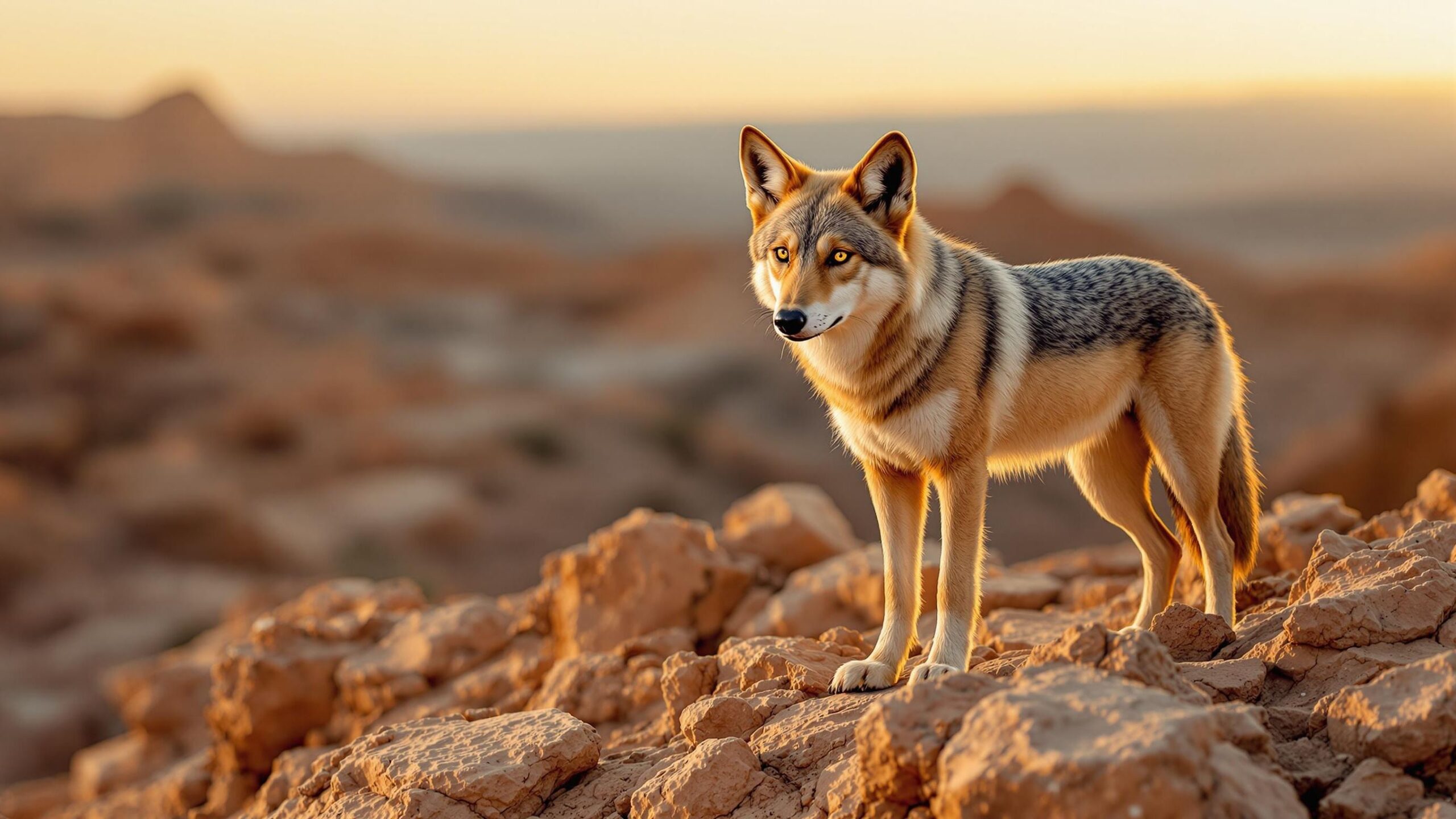
The Arabian wolf is significantly smaller than its European, North American, or even Indian counterparts. Adults typically weigh between 40 and 55 pounds and stand about 25 inches tall at the shoulder. Its body is slender and long-legged, ideal for covering large distances in search of food and water.
The coat is a mixture of pale gray, beige, and sandy tones, providing effective camouflage in the desert landscape. During the cooler months, the fur thickens slightly, though it remains sparse compared to wolves from colder regions. The muzzle is narrow, the nose black, and the eyes amber or gold, often radiating a sharp, penetrating intelligence. One of the Arabian wolf’s most notable features is its large, pointed ears. These are not just a visual distinction—they help regulate body temperature by releasing excess heat, a vital function in desert habitats where daytime temperatures can exceed 45°C (113°F).
Range and Habitat
The Arabian wolf’s range spans several countries within the Arabian Peninsula and extends into parts of the Levant. Though it once roamed more widely across the region, its current distribution is fragmented due to habitat loss, hunting, and expanding human settlements.
This adaptable predator can be found in a variety of habitats, including rocky plateaus, gravel plains, scrublands, wadis, and desert fringes. In Oman and Saudi Arabia, it has even been observed in remote mountain ranges and highland plateaus, where temperatures are slightly more moderate. The Arabian wolf is primarily nocturnal, using the cooler hours of the night to hunt and travel. During the day, it seeks shelter in caves, crevices, or under vegetation, minimizing exposure to the sun. Its home range varies widely, depending on food availability and environmental conditions. Unlike larger wolf packs in temperate regions, Arabian wolves often live in smaller groups or pairs, a direct reflection of the resource-scarce environment in which they live.
Diet and Hunting Strategy
The Arabian wolf is an opportunistic feeder, taking full advantage of whatever the desert has to offer. Its diet typically includes hares, rodents, reptiles, birds, and insects, along with larger prey such as mountain goats, gazelles, and livestock—when available and accessible. In coastal areas, they have even been known to scavenge on fish and crabs.
The scarcity of prey has led the Arabian wolf to adopt a highly versatile foraging strategy. It will scavenge carcasses left by other predators, raid garbage dumps near human settlements, and occasionally hunt in pairs or small groups to bring down larger animals. Unlike their counterparts in lusher environments, Arabian wolves rarely form large packs, as the limited prey base cannot support many mouths. Their keen senses of smell and hearing, combined with endurance and patience, make them skilled desert hunters. They can travel long distances each night, often covering 20 to 30 kilometers in a single hunt. When attacking prey, they rely on surprise, speed, and coordinated chases across open terrain.
Behavior and Social Structure
The social structure of Arabian wolves reflects their need to be highly adaptable. While some individuals live and hunt alone, many form loose pairs or family units. A typical social group might consist of a breeding pair and their most recent litter, though the dynamics can vary greatly based on environmental factors. Reproduction usually takes place between November and January, with pups born after a gestation period of about 63 days. Litters range from two to five pups, born in dens hidden among rocks, crevices, or burrows. Both parents participate in raising the pups, and the young typically remain with the family unit for up to a year before dispersing to establish their own territory.
Arabian wolves are territorial but less confrontational than larger wolf subspecies. Vocalizations such as howls, growls, and yips are used to maintain contact, warn off intruders, and coordinate activities. Scent marking is another essential part of communication, helping define territorial boundaries without direct conflict. Unlike wolves in colder regions, Arabian wolves do not need to rely on dense fur or large body mass for survival. Instead, their adaptations are behavioral and physiological—ranging from social flexibility to water conservation strategies. They can go for days without drinking, obtaining moisture from prey and dew.
Cultural Significance and Folklore
Throughout history, the Arabian wolf has occupied a complex place in Middle Eastern culture and folklore. In ancient times, it was both feared and admired—viewed as a symbol of wilderness, cunning, and even moral lesson. In Bedouin tradition, wolves are often mentioned in poetry and proverbs. They are associated with endurance, independence, and desert wisdom. Unlike lions, which were symbols of nobility and kingship, wolves were seen as survivors—resourceful and relentless, traits greatly valued in desert societies.
At the same time, the Arabian wolf was historically viewed as a threat to livestock and livelihoods, especially by pastoralist communities. This perception contributed to its persecution, including organized hunts and poisoning campaigns throughout the 20th century. Despite this, the wolf’s image in local lore has always retained a certain mystique—one that has allowed a modern reimagining of the species as a vital part of the region’s natural heritage.
Conservation and Modern Challenges
The Arabian wolf faces a precarious future. Its population has declined sharply over the past century due to habitat destruction, fragmentation, and conflict with humans. Expanding agriculture, roads, urban development, and competition with feral dogs have further eroded its range. Though exact numbers are difficult to determine due to the species’ elusive nature, conservationists estimate there are only a few hundred Arabian wolves remaining in the wild. Small, scattered populations survive in parts of Oman, southern Israel, western Saudi Arabia, and Jordan. In other countries, such as the UAE and Yemen, the species is either locally extinct or functionally absent from the wild.
One of the greatest threats to the Arabian wolf is retaliatory killing. Livestock depredation—real or perceived—often leads to lethal control measures by herders. Poisoning, trapping, and shooting remain common in many regions, despite legal protections in some countries. However, the tide may be slowly turning. In Israel, the Arabian wolf is fully protected and monitored by wildlife authorities, and conservation education is gradually gaining ground in other parts of the Arabian Peninsula. Ecotourism and scientific interest have sparked new conversations about the wolf’s role in regional ecosystems. Captive breeding programs, habitat conservation plans, and community-based initiatives are helping lay the foundation for coexistence.
The Arabian Wolf and Ecosystem Health
As an apex predator, the Arabian wolf plays an important role in maintaining ecological balance. By controlling herbivore and mesopredator populations, wolves help regulate vegetation growth, reduce crop raiding by feral species, and preserve biodiversity.
In areas where the Arabian wolf has vanished, ecosystems often experience shifts in balance—rising populations of rodents or feral dogs, overgrazing by unchecked herbivores, and increased competition for resources. The Arabian wolf’s return to such regions could act as a natural corrective, restoring ancient dynamics between predator and prey. Wolves are also bioindicators—species whose health reflects the condition of the ecosystem they inhabit. Protecting the Arabian wolf often means protecting vast swaths of arid habitat that are home to countless other species, from endangered reptiles to desert foxes and rare birds of prey.
A Wolf of Many Contrasts
What makes the Arabian wolf particularly compelling is the series of contrasts it embodies. It is both ancient and modern—an echo of the Pleistocene predator and a survivor of the Anthropocene age. It is elusive, yet resilient; feared, yet respected. It lives at the edges of civilization but is increasingly recognized as part of the region’s ecological and cultural identity.
The wolf’s ability to persist through millennia of climatic shifts, human expansion, and ecological disruption speaks volumes about its adaptability and importance. Its story is not one of dominance, but of quiet survival—under threat but not yet extinguished, hidden but not forgotten.
Hope on the Horizon
Although challenges persist, hope remains. Increased regional awareness, international cooperation, and targeted conservation efforts are gradually making a difference. Protected areas, such as nature reserves in Oman and Saudi Arabia, are providing safe havens for remaining populations. Research into the Arabian wolf’s behavior, genetics, and ecological role is helping inform policy and public outreach.
Perhaps most importantly, there is a growing recognition that conserving the Arabian wolf is about more than just saving a single species—it is about preserving the delicate relationship between humans and the land they share with wild creatures. In this context, the Arabian wolf becomes a symbol of a more sustainable future, one in which nature is not something to be conquered, but something to live alongside.
Ghost of the Desert
The Arabian wolf is a creature of shadows and survival. It slips between dunes and rocks, navigating a world that offers little mercy but much mystery. Its call—rare and often unheard—echoes through the valleys of the Middle East, a reminder that wilderness still endures, even at the margins.
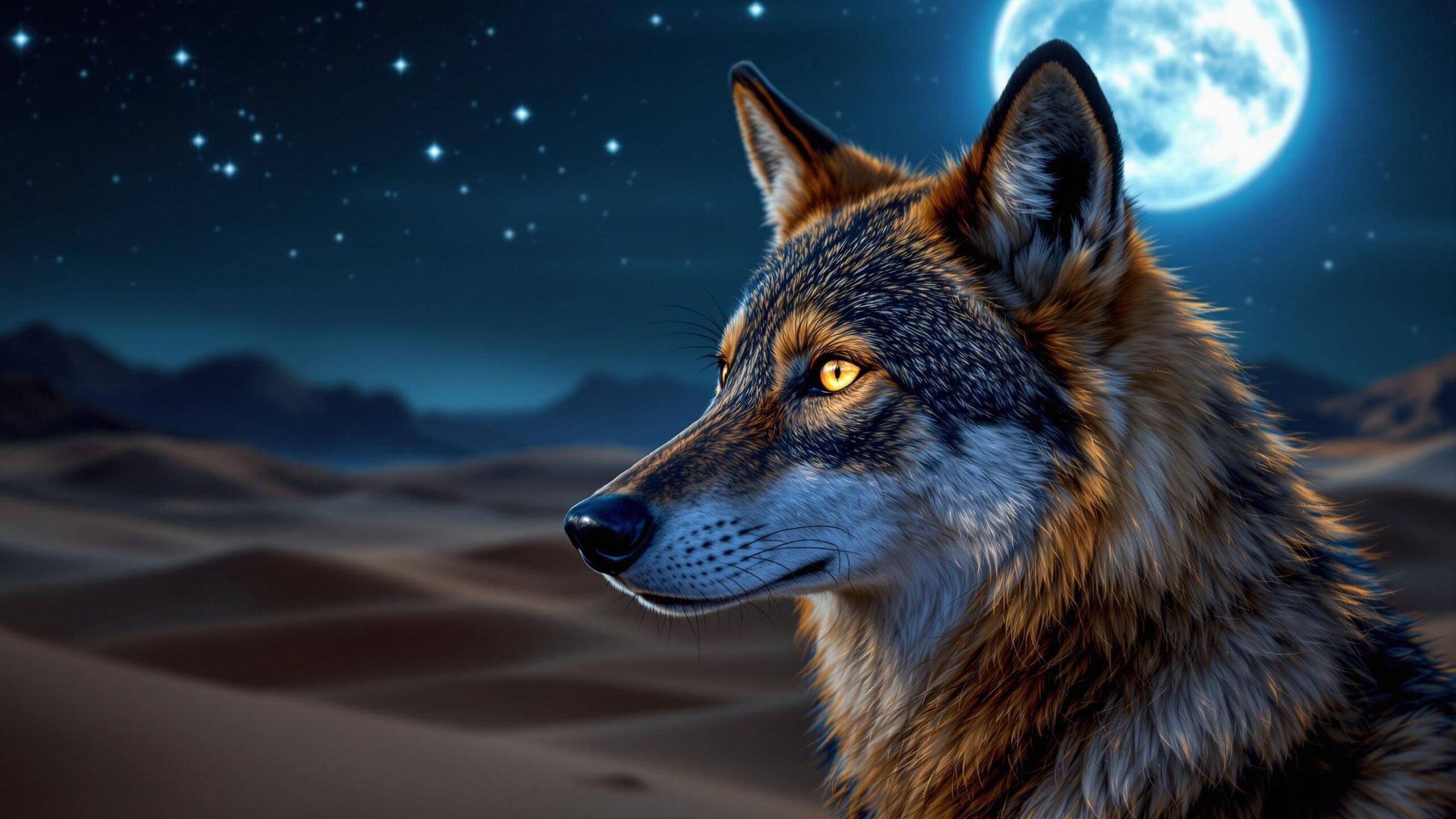
As one of the last great predators of the Arabian Peninsula, the Arabian wolf deserves more than survival—it deserves understanding, protection, and appreciation. It is a relic of the region’s wild past and a potential guide to a wilder, more balanced future. The next time the desert wind stirs under the moonlight, and a distant howl cuts through the silence, remember that the Arabian wolf is still out there—watchful, wise, and waiting.