
Physical Characteristics: Built for Survival
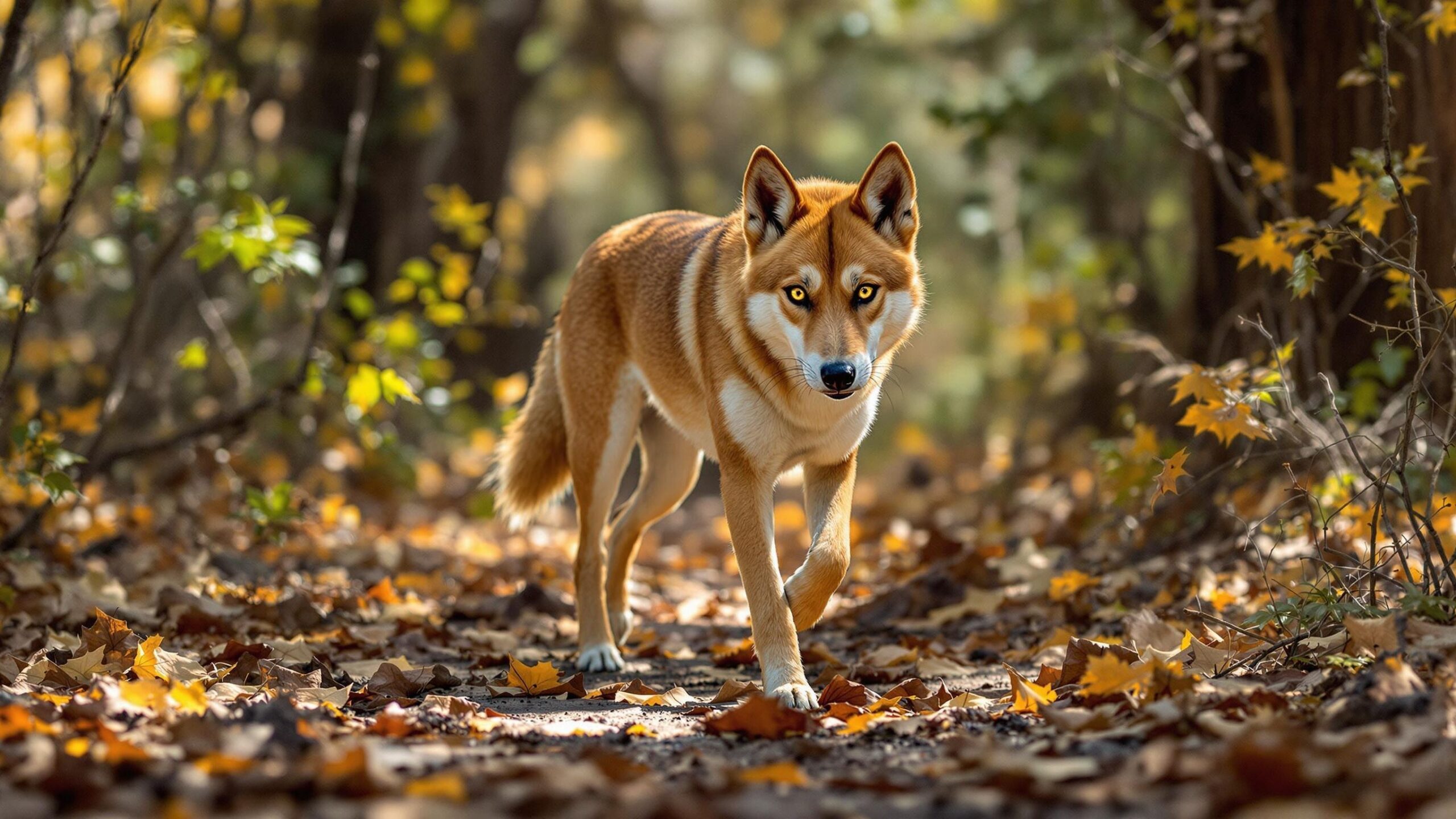
Dingoes are medium-sized canids with a slim, athletic build that reflects their need to cover long distances across arid and semi-arid terrain. They typically weigh between 22 to 44 pounds and stand about 20 inches tall at the shoulder. Their coat is short and ranges in color from sandy yellow to reddish-brown, though some individuals may be black-and-tan or even white. A bushy tail, upright ears, and an angular head give them a wild, alert appearance.
Unlike domestic dogs, dingoes are known for their unique skeletal structure, particularly their flexible wrists and larger carnassial teeth. These physical traits make them exceptional hunters capable of taking down prey much larger than themselves. They also have a highly mobile neck and a head capable of tilting at angles that aid in tracking prey or navigating dense underbrush.
Behavior and Intelligence: A Wild Mind
The dingo is remarkably intelligent and adaptable. It displays advanced problem-solving skills, a strong memory, and the ability to work both individually and in coordinated groups. In many ways, its cognitive abilities surpass those of domestic dogs, particularly in solving mechanical puzzles or escaping enclosures—an area in which dingoes are notorious escape artists.
Socially, dingoes are highly flexible. While they are capable of forming packs—especially in areas with abundant prey—they are also comfortable living and hunting alone. Packs are usually composed of a dominant breeding pair and their offspring, but these units are not rigid; individuals may disperse or switch packs depending on food availability, mating opportunities, and environmental conditions. Communication among dingoes involves a range of vocalizations, including howls, growls, and whines. Unlike domestic dogs, they rarely bark. Their howls, often heard at dusk or dawn, serve to coordinate with pack members or mark territory against rivals.
Habitat and Distribution: Masters of the Outback
Today, dingoes are found across most of mainland Australia, except for the southeastern corner, including parts of New South Wales and Victoria, where they are either locally extinct or severely restricted due to human development and management practices. The iconic image of a dingo roaming the red sands of the Outback is accurate, but these canids are far more versatile than their desert association might suggest.
Dingoes thrive in a range of habitats—from arid deserts and open grasslands to alpine forests and tropical woodlands. Their ability to exploit diverse environments is one of the reasons they have persisted for thousands of years in an ever-changing Australian landscape. In some areas, particularly near human settlements or national parks, dingoes come into contact with domestic dogs. This overlap has led to one of the most significant modern threats to their survival: hybridization.

Diet and Hunting: Carnivores with a Versatile Palate
Dingoes are opportunistic carnivores with a diet that reflects the ecological diversity of their environment. Their primary prey includes kangaroos, wallabies, rabbits, rodents, birds, and lizards. In coastal areas, they may even consume fish, crabs, and stranded marine animals.
While capable of taking down large prey in coordinated groups, dingoes often rely on stealth and patience when hunting alone. Their slender build and quiet gait allow them to stalk prey with surprising effectiveness. Once close enough, they rely on a rapid burst of speed and agility to make the final strike. In times of scarcity, dingoes may scavenge or turn to less conventional food sources, including fruits, insects, and human refuse. Their ability to adapt their diet is another key to their success as a species.
Reproduction and Life Cycle: Raising the Next Generation
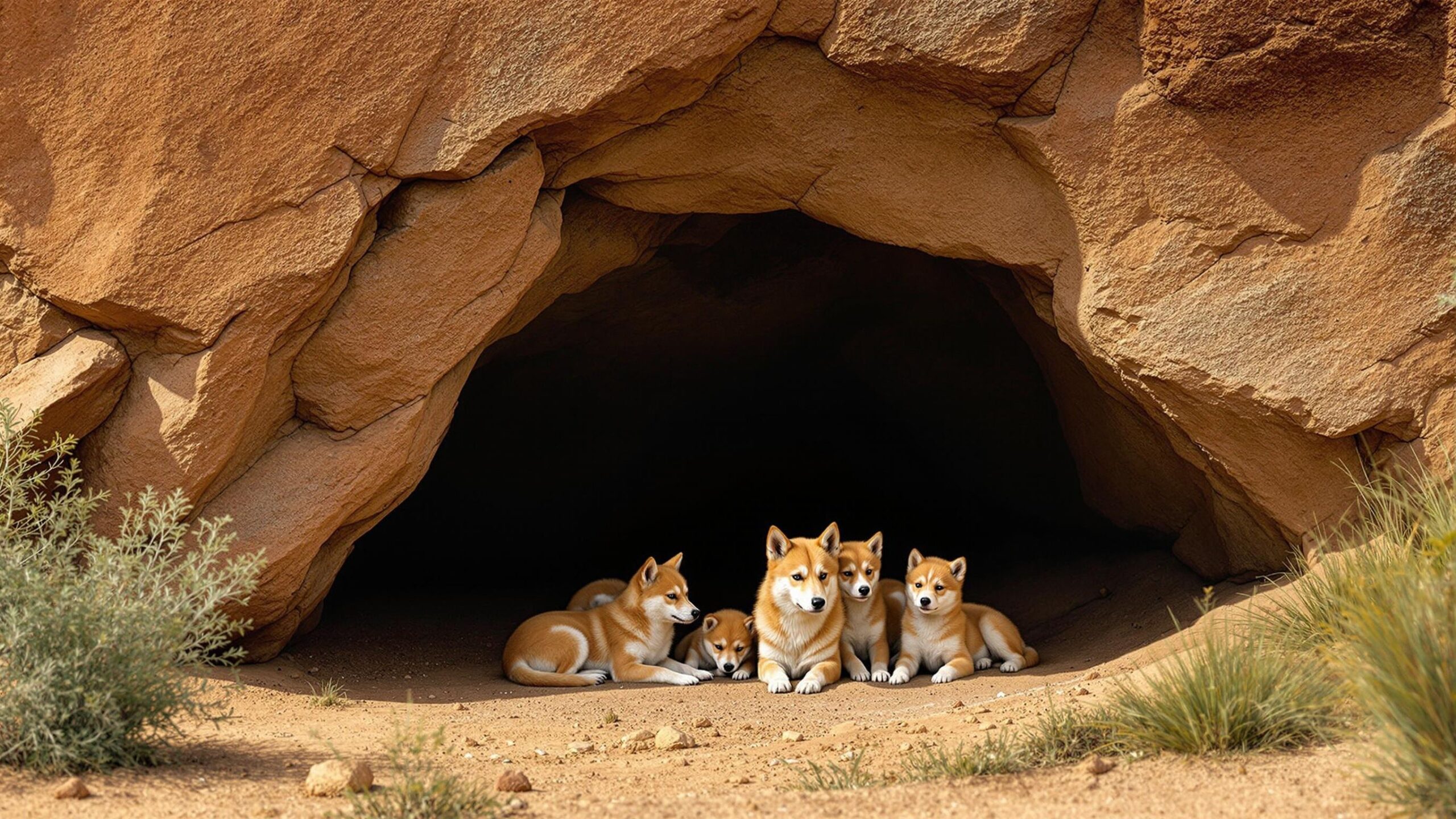
Dingoes breed once a year, typically during the Australian autumn (March to May), with pups born after a gestation period of around 63 days. A litter usually consists of four to six pups, though up to ten is possible under optimal conditions.
Reproduction is usually restricted to the dominant pair within a pack, while subordinate individuals help raise the young. This cooperative breeding system improves pup survival rates and reinforces social bonds within the group. Pups are weaned at about two months but stay with their parents for up to a year before dispersing to find their own territory or form new packs. Young dingoes are born blind and helpless but grow quickly, reaching near-adult size within their first year. They begin to accompany adults on hunting trips at just a few months of age, learning essential survival skills through observation and experience.
Cultural Significance: Revered and Reviled
For Indigenous Australians, the dingo holds significant spiritual and practical importance. In many Aboriginal cultures, the dingo is a totemic animal associated with ancestral beings, dreamtime stories, and traditional law. Historically, dingoes were companions, camp guardians, and even warmth providers, especially for children during cold desert nights.
However, European settlers viewed the dingo through a very different lens. Farmers and pastoralists often saw them as pests responsible for livestock losses. This perception led to widespread control efforts, including bounties, poisoning campaigns, and the construction of the Dingo Fence—a 5,600-kilometer barrier designed to keep dingoes out of southeastern grazing lands. The fence remains one of the longest man-made structures in the world and symbolizes the deep-seated conflict between agricultural development and predator conservation in Australia.
Hybridization and Genetic Threats: The Vanishing Purebred
One of the greatest modern threats to the dingo is hybridization with domestic and feral dogs. In areas near human settlements, interbreeding has resulted in mixed offspring, often indistinguishable in appearance but genetically distinct. This dilution of the dingo gene pool raises serious concerns about the long-term viability of the species.
Hybrid dingoes may exhibit behavioral traits or physical features that differ from pure dingoes, potentially affecting their ecological role and survival strategies. Conservationists and researchers continue to study the extent of hybridization and explore ways to preserve the genetic integrity of wild populations, particularly in remote regions like northern and central Australia where pure dingoes are more likely to persist.
Ecological Role: Predator and Balancer
As apex predators, dingoes play a vital role in maintaining the balance of Australia’s ecosystems. They help regulate populations of herbivores such as kangaroos and wallabies, which, if left unchecked, can cause significant damage to vegetation and soil structure. Dingoes may also suppress populations of invasive species like feral cats and foxes, both of which are responsible for the decline of many native animals. Studies have shown that ecosystems with healthy dingo populations often support greater biodiversity than those without. This has led some ecologists to advocate for the dingo’s role as a natural asset in land management and conservation planning.
Conservation and Management: A Delicate Balancing Act
The conservation status of the dingo is complex and often controversial. While not officially listed as endangered at the national level, regional protections vary widely. In some states, dingoes are classified as pests with few legal safeguards, while in others, they are protected wildlife.
Management policies are often driven by agricultural interests, especially in sheep-farming regions where predation remains a concern. Yet some conservationists argue that a more nuanced approach is needed—one that recognizes the dingo’s ecological importance and its status as Australia’s only native wild dog. Efforts are underway to develop strategies that balance conservation goals with economic realities. These include the use of guardian animals, improved fencing, and targeted livestock management techniques that reduce the need for lethal control.
The Fraser Island (K’gari) Dingoes: A Unique Population
One of the most well-known and genetically distinct populations of dingoes lives on K’gari (formerly known as Fraser Island), off the coast of Queensland. These dingoes are among the purest remaining populations in the country, protected by the island’s isolation and conservation policies.
However, their proximity to tourism has sparked its own set of challenges. Human interactions—whether feeding, approaching, or provoking dingoes—have sometimes led to dangerous encounters and aggressive behavior. As a result, some dingoes have been euthanized, prompting debate about the balance between wildlife protection and public safety. Education campaigns and visitor regulations now emphasize keeping a respectful distance from dingoes and securing food to reduce habituation.
A Future at the Crossroads
The future of the dingo is uncertain, shaped by shifting perceptions, scientific discovery, and environmental pressures. What is clear, however, is that the dingo is much more than a nuisance or a stray—it is a keystone species, a cultural figure, and a unique thread in the fabric of Australia’s natural heritage.
Protecting the dingo will require a collaborative effort that spans science, tradition, policy, and public awareness. Whether through genetic research, community engagement, or the reimagining of land management practices, the goal remains the same: to ensure that this extraordinary animal continues to roam free across the vast and varied landscapes of Australia.
Australia’s Wild Spirit
In the soft howl echoing across the Outback or the flicker of golden fur at the forest’s edge, the spirit of the dingo lives on—a wild heart beating in rhythm with the land it has called home for millennia. As the line between wild and tame continues to blur in our changing world, the dingo stands as a symbol of resilience, adaptability, and the untamed essence of the Australian wilderness.