
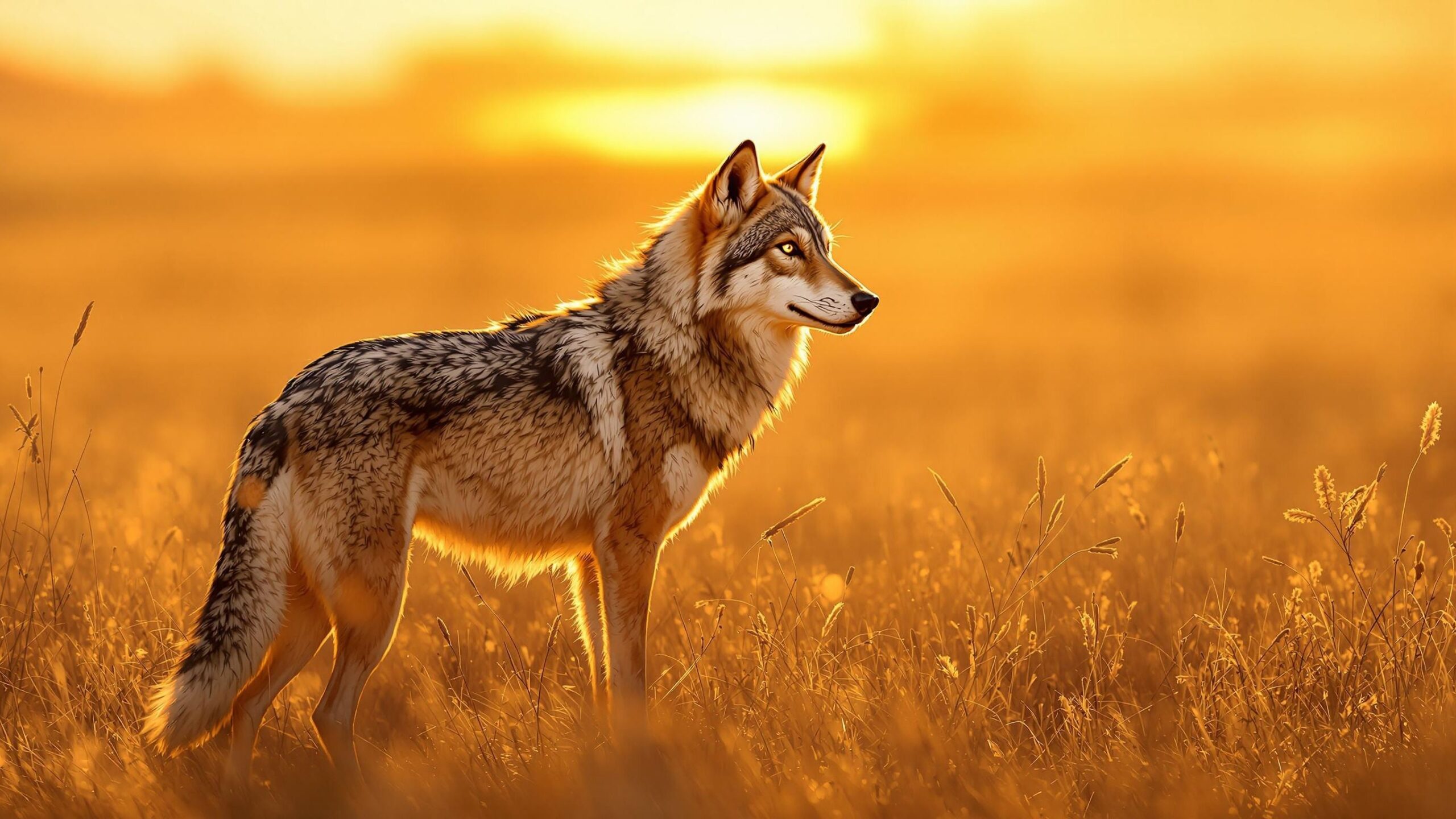
The Indian Wolf: Elusive Spirit of the Subcontinent
In the vast and varied landscapes of the Indian subcontinent, from golden grasslands to arid plateaus, roams a creature that has inspired myths, stirred ancient fears, and continues to quietly shape the balance of nature — the Indian wolf. Scientifically known as Canis lupus pallipes, this subspecies of the gray wolf (Canis lupus) is one of the oldest and most genetically distinct wolf lineages in the world. Despite its deep roots and evolutionary significance, the Indian wolf remains a lesser-known figure in the world of wildlife, often overshadowed by the region’s more charismatic megafauna like tigers, elephants, and leopards. Yet, this shy, slender predator has its own fascinating story — one of resilience, adaptation, mystery, and an uncertain future.
A Lineage of Legends: Evolution and Taxonomy
The Indian wolf is believed to have diverged from other wolf lineages more than 400,000 years ago, making it one of the most ancient wolf lineages still in existence. Unlike its northern relatives, which are bulkier and often associated with snowy forests and tundras, the Indian wolf has adapted to the dry, hot environments of the Indian subcontinent. Taxonomically, Canis lupus pallipes was first described in 1832 by British zoologist Brian Houghton Hodgson. For decades, its classification remained contentious, with some arguing that it should be considered a separate species entirely due to its unique morphology, behavior, and genetic structure. However, it currently sits as a distinct subspecies of the gray wolf. Its closest relatives are the Himalayan wolf and the Arabian wolf, both of which have similarly adapted to harsh, open environments.
Taxonomy And Identity
Yet, this shy, slender predator has its own fascinating story — one of resilience, adaptation, mystery, and an uncertain future. Unlike its northern relatives, which are bulkier and often associated with snowy forests and tundras, the Indian wolf has adapted to the dry, hot environments of the Indian subcontinent. Its closest relatives are the Himalayan wolf and the Arabian wolf, both of which have similarly adapted to harsh, open environments.
Its coat is short and coarse, an evolutionary adaptation to the heat of the plains and deserts. Its preferred habitats include parts of central and western India, particularly in the states of Maharashtra, Madhya Pradesh, Rajasthan, Gujarat, and Karnataka. Unlike many large carnivores that depend on dense forests or specific altitudes, the Indian wolf’s adaptability allows it to survive in human-dominated landscapes, though this often puts it in direct conflict with local communities.
Identification And Appearance
The fur ranges from pale brown to reddish-gray, often blending seamlessly with dry grasses and sandy soil. Unlike its Arctic cousins, the Indian wolf lacks a thick undercoat and does not develop the plush winter fur seen in colder climates. Everything about this wolf — from its musculature to its muted coloring — speaks of speed, stealth, and survival in open, arid terrains.
The fur ranges from pale brown to reddish-gray, often blending seamlessly with dry grasses and sandy soil. Unlike its Arctic cousins, the Indian wolf lacks a thick undercoat and does not develop the plush winter fur seen in colder climates. Body form, markings, movement, and habitat work together to separate this animal from close relatives and lookalikes.
Anatomy And Adaptations
Its coat is short and coarse, an evolutionary adaptation to the heat of the plains and deserts. Unlike many large carnivores that depend on dense forests or specific altitudes, the Indian wolf’s adaptability allows it to survive in human-dominated landscapes, though this often puts it in direct conflict with local communities. Moreover, this wolf shares certain genetic affinities with the Himalayan wolf ( Canis lupus chanco or possibly Canis himalayensis ) — another unique lineage adapted to extreme conditions.
Range And Wild Habitat
Despite its deep roots and evolutionary significance, the Indian wolf remains a lesser-known figure in the world of wildlife, often overshadowed by the region’s more charismatic megafauna like tigers, elephants, and leopards. The fur ranges from pale brown to reddish-gray, often blending seamlessly with dry grasses and sandy soil. It thrives in grasslands, scrub forests, thorny plains, and semi-arid regions.
Small, isolated populations are also found in southern Nepal and parts of Pakistan. This downsized social structure is likely a response to the lower availability of prey and the harsher conditions in their range. Unlike its northern relatives, which are bulkier and often associated with snowy forests and tundras, the Indian wolf has adapted to the dry, hot environments of the Indian subcontinent.
Wild Diet And Feeding
Its coat is short and coarse, an evolutionary adaptation to the heat of the plains and deserts. Unlike many large carnivores that depend on dense forests or specific altitudes, the Indian wolf’s adaptability allows it to survive in human-dominated landscapes, though this often puts it in direct conflict with local communities. This downsized social structure is likely a response to the lower availability of prey and the harsher conditions in their range.
Small mammals, birds, and even rodents supplement their diet when larger game is scarce. Pups are cared for communally, with older siblings sometimes helping to feed and protect younger ones. It is a species of the open country — running silently across stubbled fields, sleeping in rocky crevices, and hunting by moonlight.
Behavior
This downsized social structure is likely a response to the lower availability of prey and the harsher conditions in their range. Behavior is easiest to understand when daily movement, social contact, communication, and risk avoidance are considered together. Behavior is easiest to understand when daily movement, social contact, communication, and risk avoidance are considered together.
Reproduction And Life Cycle
Mating occurs during the cooler months between November and January, with pups born around February or March after a gestation period of approximately 63 days. Its daily life is shaped by where it moves, what it eats, how it avoids danger, and how it interacts with other animals. Its daily life is shaped by where it moves, what it eats, how it avoids danger, and how it interacts with other animals.
Ecology And Role In The Environment
Yet, this shy, slender predator has its own fascinating story — one of resilience, adaptation, mystery, and an uncertain future. This downsized social structure is likely a response to the lower availability of prey and the harsher conditions in their range. These wolves are also known scavengers and won’t hesitate to capitalize on carrion left by other predators or roadkills.
These dual narratives — fear and reverence — reflect the complex relationship between humans and this often-misunderstood predator. As apex predators in grassland ecosystems, they regulate herbivore populations, curb disease spread through scavenging, and even indirectly influence vegetation patterns through their prey choices. Its daily life is shaped by where it moves, what it eats, how it avoids danger, and how it interacts with other animals.
Conservation Status And Threats
Small, isolated populations are also found in southern Nepal and parts of Pakistan. It is not officially recognized as a separate species by the IUCN and is grouped under the broad listing of the gray wolf ( Canis lupus ), which does not reflect its regional vulnerabilities. Habitat loss, retaliatory killings, road mortality, and the spread of canine diseases through feral dogs are among the greatest threats.
Conservation efforts are complicated by the wolf’s low visibility and lack of public interest. As apex predators in grassland ecosystems, they regulate herbivore populations, curb disease spread through scavenging, and even indirectly influence vegetation patterns through their prey choices. Protecting the Indian wolf also means protecting the dwindling grasslands of the subcontinent — ecosystems that are among the most threatened and least conserved in India.
Human Relationship
Unlike many large carnivores that depend on dense forests or specific altitudes, the Indian wolf’s adaptability allows it to survive in human-dominated landscapes, though this often puts it in direct conflict with local communities. It is a species of the open country — running silently across stubbled fields, sleeping in rocky crevices, and hunting by moonlight. Their hunting tactics are refined and intelligent.
Unlike many large carnivores that depend on dense forests or specific altitudes, the Indian wolf’s adaptability allows it to survive in human-dominated landscapes, though this often puts it in direct conflict with local communities. It is a species of the open country — running silently across stubbled fields, sleeping in rocky crevices, and hunting by moonlight. Its daily life is shaped by where it moves, what it eats, how it avoids danger, and how it interacts with other animals.
Captive Care
Pups are cared for communally, with older siblings sometimes helping to feed and protect younger ones. Simple measures like improved livestock enclosures, timely compensation for losses, and support for grassland protection can reduce conflict and boost tolerance. Responsible care depends on matching space, diet, social conditions, climate, and veterinary oversight to the animal’s biology.
Wild And Captive Variation
Ongoing research into the Indian wolf’s genome could also reveal clues about its disease resistance, environmental tolerances, and potential evolutionary future — particularly as it continues to interact with domestic dogs and fragmented habitats. Its daily life is shaped by where it moves, what it eats, how it avoids danger, and how it interacts with other animals. Its daily life is shaped by where it moves, what it eats, how it avoids danger, and how it interacts with other animals.
Similar Species
Unlike its northern relatives, which are bulkier and often associated with snowy forests and tundras, the Indian wolf has adapted to the dry, hot environments of the Indian subcontinent. Its closest relatives are the Himalayan wolf and the Arabian wolf, both of which have similarly adapted to harsh, open environments. Unlike its Arctic cousins, the Indian wolf lacks a thick undercoat and does not develop the plush winter fur seen in colder climates.
Unlike many large carnivores that depend on dense forests or specific altitudes, the Indian wolf’s adaptability allows it to survive in human-dominated landscapes, though this often puts it in direct conflict with local communities. Unlike large carnivores that require vast, untouched forests, the Indian wolf has proven capable of surviving in human-modified environments. Its daily life is shaped by where it moves, what it eats, how it avoids danger, and how it interacts with other animals.
Common Misconceptions
FAQ
How does the Indian Wolf behave?
This downsized social structure is likely a response to the lower availability of prey and the harsher conditions in their range. Its daily life is shaped by where it moves, what it eats, how it avoids danger, and how it interacts with other animals. Its daily life is shaped by where it moves, what it eats, how it avoids danger, and how it interacts with other animals.
Additional Natural History Notes
Indian Wolf is best interpreted through habitat, seasonal food supply, movement, social behavior, breeding timing, and the pressures created by predators, competitors, and people. Coat color, limb shape, ears, teeth, and body size connect to how the animal travels, finds food, avoids danger, and raises young. Wild behavior also differs from observations made in parks, zoos, farms, rescue settings, or neighborhoods, where space, diet, risk, and human influence can change daily activity.
A complete account also benefits from scale and season. Many animals change their movements, calls, feeding choices, or visibility as weather, water, prey, nesting sites, or shelter change through the year. Those rhythms can make the same species look secretive in one setting and bold in another. By connecting anatomy, habitat, and seasonal behavior, the animal becomes easier to understand as a living part of its ecosystem rather than a list of isolated facts.
Regional history adds another layer. Islands, mountains, deserts, forests, rivers, and grasslands can isolate populations long enough for small differences in size, color, diet, or behavior to matter. Local names, field reports, museum records, and modern genetic work often fit together slowly, especially when the animal is rare, nocturnal, migratory, or difficult to observe. The strongest interpretation treats those clues as part of one natural history rather than separate trivia.