
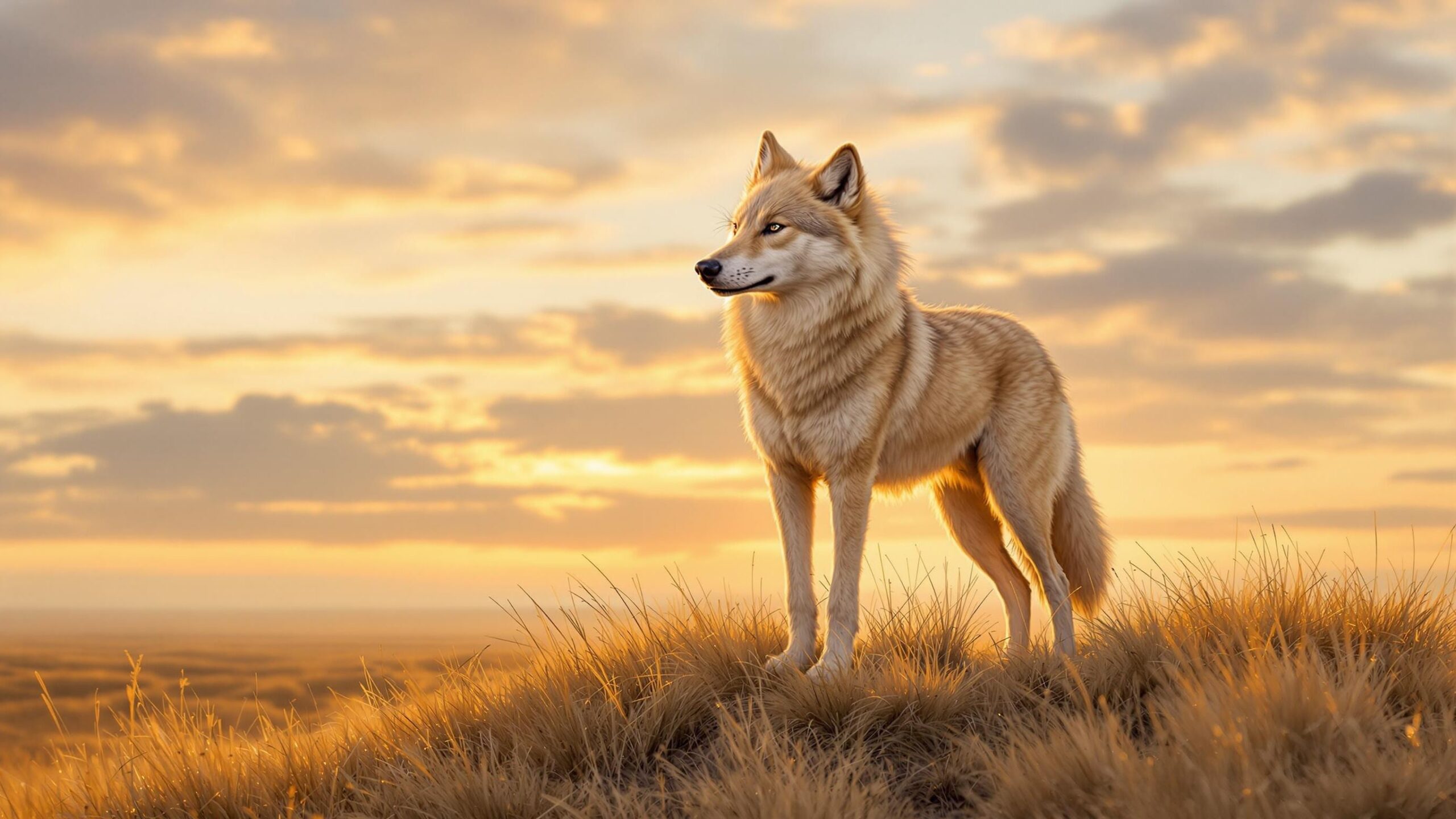
The Steppe Wolf: Silent Hunter of the Open Plains
Across the vast, sun-scorched grasslands of Central Asia and Eastern Europe prowls a powerful and resilient predator: the Steppe Wolf. Scientifically known as Canis lupus campestris, this subspecies of the gray wolf is as enigmatic as the windswept steppes it calls home. Adapted to life in expansive, open terrain, the Steppe Wolf thrives in a landscape that demands endurance, adaptability, and sharp instincts.
While the Steppe Wolf may not be as widely known as its Arctic or forest-dwelling relatives, it holds a unique and vital place in the ecological fabric of Eurasia’s heartlands. Fiercely independent, impressively resourceful, and supremely well-suited to its environment, this wolf tells a story of ancient survival, cultural symbolism, and quiet ecological importance. Let’s explore the world of the Steppe Wolf, from its physical traits and habitat to its hunting habits, social structures, and the challenges it faces in the modern world.
Meet Canis lupus campestris: Wolf of the Open Country
The Steppe Wolf is a distinct subspecies of the gray wolf (Canis lupus) found primarily in the steppes of Kazakhstan, southern Russia, parts of the Caucasus, Turkmenistan, Uzbekistan, and northern Iran and Afghanistan. Its name, campestris, comes from Latin and roughly translates to “of the plains” or “of the fields,” a reference to the wide-open landscapes in which it lives.
These wolves are typically lighter in color than their forest relatives, often displaying pale gray, beige, or sandy-colored fur that blends seamlessly into their grassland surroundings. Their coats are thinner than those of tundra wolves but still well adapted for the region’s seasonal extremes—blistering summers and freezing winters. Slightly smaller than some northern wolf subspecies, Steppe Wolves are nonetheless powerful and athletic. They are built for long-distance travel and have excellent endurance, with strong limbs and lean muscle that allow them to traverse flat terrain quickly and efficiently.
A: A subspecies of the gray wolf adapted to life in the grasslands and plains of Eurasia.
A: Primarily in the steppes of Central Asia, including Kazakhstan, southern Russia, and Mongolia.
A: Rarely. They usually avoid humans unless provoked or extremely hungry.
A: Small mammals, birds, carrion, and occasionally livestock.
A: They are more lightly built, paler in color, and adapted for open, dry environments.
A: Yes, their howls can travel long distances across the flat terrain.
A: Not globally, but they are hunted in some regions due to livestock conflicts.
A: Yes, though pack sizes are often smaller than those of forest wolves.
A: Through vocalizations, scent marking, and body language.
A: Yes, like other wolves, they can hybridize with domestic dogs.
Anatomy of a Steppe Specialist
The physical appearance of the Steppe Wolf is closely tied to its environment. Their relatively slender builds are perfect for chasing prey across wide, open plains. Weighing between 65 and 100 pounds, and measuring around 4.5 to 6 feet from nose to tail, they are medium-sized among wolf subspecies but well-balanced in both strength and speed.
Their coats are often a blend of earthy tones—gray, tan, light brown, and dusty yellow—which serves as natural camouflage against the dry grasses and rocky hills. In winter, their fur thickens and lightens in color, providing additional warmth and further blending them into the snow-covered steppes. Their paws are wide and strong, ideal for covering large distances over hard, dry soil or packed snow. Steppe Wolves also possess keen senses: sharp hearing for detecting prey, acute eyesight for scanning open landscapes, and an exceptional sense of smell for tracking across long distances.
A Harsh Homeland: The Steppe Ecosystem
The steppes of Central Asia are vast grassland plains stretching from the Caspian Sea to Mongolia. This biome is characterized by minimal tree cover, expansive horizons, and dramatic seasonal shifts in temperature. Summers can be scorching, with temperatures soaring above 40°C (104°F), while winters plunge below freezing with howling winds and deep snow.
Within this challenging environment, the Steppe Wolf has carved out a niche as one of the region’s apex predators. The open landscape may lack the cover that forest wolves use for ambushes, but it offers visibility and space for coordinated chases and long-range tracking. The Steppe Wolf shares its territory with a range of other animals: wild boars, saiga antelope, hares, marmots, foxes, and domestic livestock. It is a top predator and plays a vital role in maintaining the health and balance of these grassland ecosystems by controlling populations of herbivores and scavenging carcasses.
Life in the Pack: Social Bonds and Structure
Like most wolves, the Steppe Wolf is a highly social creature. Packs typically consist of a breeding pair and their offspring from recent years. Depending on prey availability and population density, Steppe Wolf packs can vary in size, but usually range from four to eight individuals. In regions with abundant food or during migrations, packs may temporarily expand.
The pack is a cohesive unit with strong familial bonds. Each wolf plays a role in hunting, defending territory, caring for pups, and maintaining social harmony. Hierarchies are present but often less rigid than in some North American wolf populations. Leadership is typically provided by the alpha male and female, though decisions like when to hunt or where to travel are often influenced by group behavior and experience. Communication is critical. The Steppe Wolf uses a combination of body language, vocalizations, and scent marking to maintain pack order and navigate the vast territory. Their howls can carry for miles across the flat land and serve to rally the pack, declare territory, or signal danger.
The Art of the Chase: Hunting and Diet
The Steppe Wolf is a carnivore with a broad and opportunistic diet. Its primary prey includes wild boar, roe deer, saiga antelope, hares, and rodents like marmots. In some areas, especially near human settlements or in winter, livestock such as sheep, goats, and cattle may be targeted, which can bring the wolves into conflict with pastoralists. Hunting on the steppe is very different from the stealthy forest ambushes of other wolf subspecies. The lack of cover means that Steppe Wolves rely more on speed, stamina, and coordinated pursuit. Packs will often fan out to approach prey from different angles, working together to isolate weak or young individuals.
During leaner months, they also scavenge—feeding on carrion left behind by other predators or human hunters. This behavior not only sustains them in hard times but also helps clean the landscape of disease-carrying remains, contributing to ecological health. Steppe Wolves are also known for caching food, burying excess meat to retrieve later when food is scarce—an important survival strategy in an environment where prey populations can fluctuate dramatically.
Pups of the Plains: Reproduction and Growth
Mating season for Steppe Wolves generally takes place between January and March. The breeding pair will stay close during this period, seeking shelter in elevated or hidden terrain to prepare a den site. Dens are usually dug into hillsides or found in naturally sheltered areas like caves or rocky outcrops. After a gestation period of about 63 days, the female gives birth to a litter of four to seven pups, though larger litters are possible in food-rich regions. The pups are born blind and helpless, relying entirely on their mother and the pack for warmth and nourishment.
By three weeks of age, their eyes open and they begin exploring the den site. At around five to six weeks, they start eating regurgitated food from adult pack members. As summer progresses, the pups grow rapidly, learning essential hunting and survival skills through observation and play. By autumn, the young wolves are strong enough to participate in pack activities. Some may eventually disperse to form their own packs, while others stay and strengthen the existing family unit.
Voices on the Wind: Communication and Intelligence
The howl of a Steppe Wolf echoing across the grasslands is a powerful and evocative sound. This iconic call serves numerous purposes: keeping the pack together, signaling territory to rival packs, and expressing emotional states. The howl can change in pitch, tone, and duration depending on the context.
Vocalizations also include yips, growls, whines, and barks. Combined with subtle body language and facial expressions, wolves convey dominance, submission, excitement, warning, or reassurance to one another. The Steppe Wolf is a highly intelligent animal capable of problem-solving, learning from experience, and displaying advanced social behavior. These mental abilities are crucial in their ever-changing environment, where flexibility and teamwork can mean the difference between feast and famine.
Relationship with Humans: Conflict and Coexistence
The relationship between humans and Steppe Wolves has long been a complicated one. In nomadic and pastoral cultures, wolves are often seen as both competitors and symbols of power. While they have been hunted to protect livestock, they are also respected for their intelligence, endurance, and tenacity. In many steppe cultures, including Kazakh and Turkmen traditions, wolves appear in folklore, mythology, and even as totems of strength and survival. Some ancient legends depict them as guides, protectors, or ancestors, while others cast them as cunning tricksters or fierce adversaries.
In modern times, conflict arises primarily due to livestock predation. In regions with poor fencing or limited prey, wolves may turn to domestic animals for food. This has led to culling campaigns and habitat fragmentation in some areas. However, conservation programs are working to shift public attitudes and find better solutions for human-wolf coexistence. Guard dogs, improved herding practices, and compensation programs for farmers are among the strategies being explored to reduce retaliatory killings and support sustainable wolf populations.
Conservation and the Steppe’s Future
The Steppe Wolf is currently not considered endangered, and in some parts of its range, populations are stable or even increasing. Its adaptability, generalist diet, and tolerance for human-altered environments have helped it survive where other large predators have vanished.
However, this doesn’t mean it is free from threats. Habitat loss due to agriculture, infrastructure development, and energy exploration is a growing concern. Poisoning and unregulated hunting still occur in some areas. Climate change is also subtly altering the steppe ecosystem, affecting prey availability and vegetation patterns. Efforts are underway to monitor Steppe Wolf populations more closely and implement region-specific conservation strategies. Protecting natural migration corridors, establishing protected reserves, and increasing community engagement are key to maintaining a healthy balance between wolves, humans, and the landscape they share.
A Wild Legacy on the Wind
The Steppe Wolf stands as a example of the enduring power of wild nature. It has survived millennia of climatic shifts, human expansion, and ecological upheaval—not by brute strength alone, but through intelligence, cooperation, and a remarkable ability to adapt.
In the golden light of the steppe, where herds graze and eagles soar, the Steppe Wolf still roams, a silent guardian of the grasslands. Its presence keeps prey populations healthy, shapes the behaviors of smaller carnivores, and connects the modern steppes to an ancient, wilder past. To know the Steppe Wolf is to appreciate not only the complexity of this remarkable animal but also the fragile beauty of the ecosystem it calls home. Whether you are a scientist, a traveler, a shepherd, or simply a lover of wildlife, the Steppe Wolf offers a reminder of what it means to move with the wind, live by instinct, and belong to the land.
Animal Product Reviews
Dive into Animal Streets’ Animal Product Reviews — your guide to the best gear, gifts, books, and gadgets inspired by the animal kingdom. From land-roaming lions to ocean-gliding whales, from household pets to prehistoric giants, we explore top-rated products for enthusiasts, educators, and animal lovers alike. Whether you’re shopping for toys, decor, field gear, or fun collectibles, we’ve sniffed out the best so you can discover it all in one wild place!