
One Life Cycle, Several Ways to Recognize It
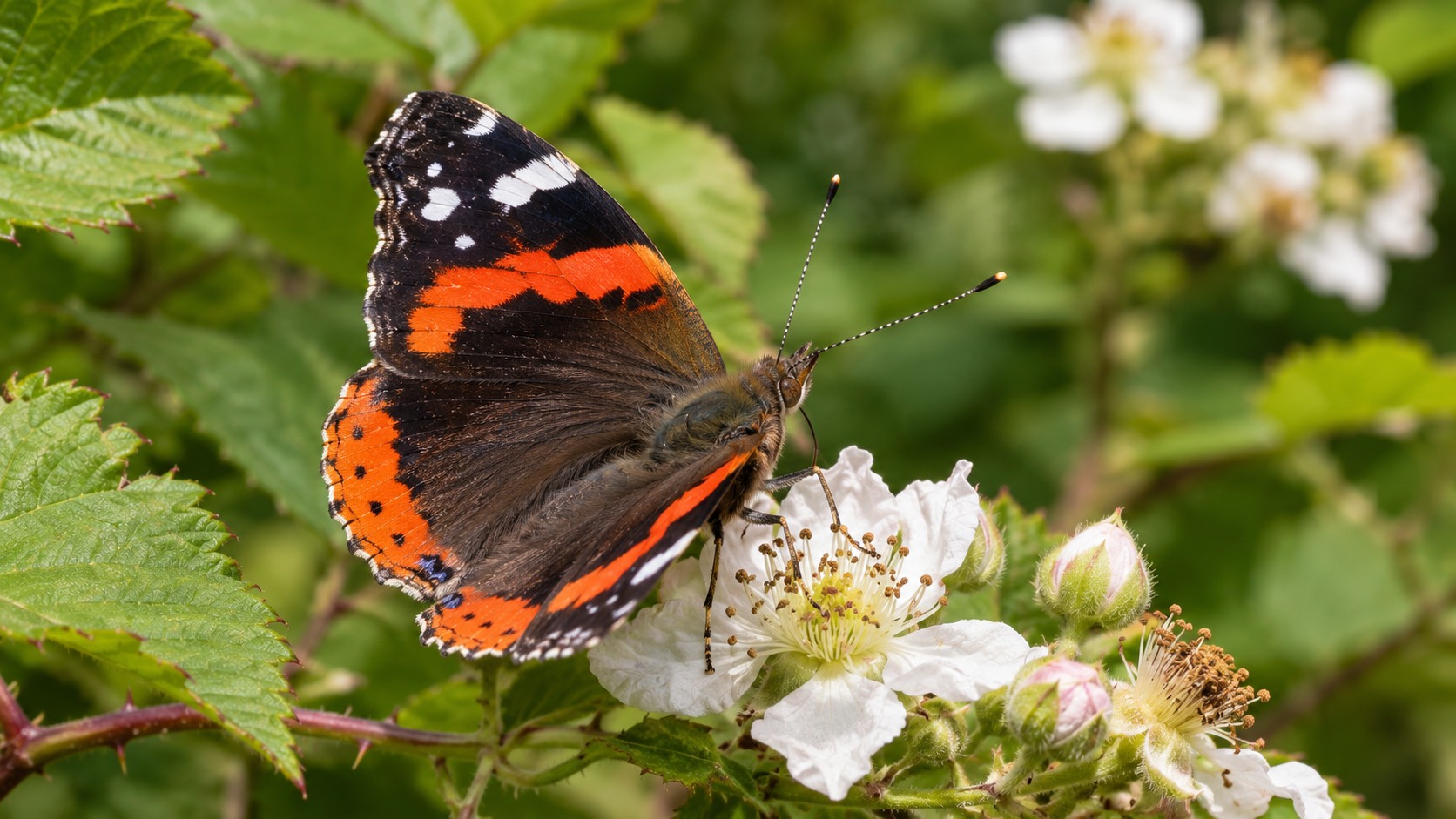
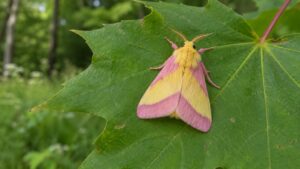
A caterpillar chewing a leaf and a butterfly visiting a blossom can be successive forms of the same animal, while the patterned moth resting nearby belongs to the same larger insect order. Butterflies and moths make up Lepidoptera, a group associated with tiny scales on adult wings and a complete transformation from egg through larva and pupa to adult. Their beauty is only one entry point. Antennae, host plants, feeding structures, seasonal timing, and the places used between flights explain how these animals live. Following those connections makes it easier to compare the familiar winged forms without forgetting the less conspicuous stages that produced them.
A: No. Some moths are brightly colored and active during the day.
A: A cocoon is a silk covering, while the pupa is the developing insect inside or elsewhere.
A: Yes. A chewing caterpillar and a liquid-feeding adult use different equipment and resources.
A: No. Some adults use other resources, and some do not feed at all.
A: The young may require host plants that are absent from the flowering patch.
A: It needs time for its wings to expand and become functional.
A: It can change markings or proportions as it grows through successive molts.
A: No. Different stages may be concealed or active at other times.
A: Contact can remove scales or injure the delicate wing.
A: Use multiple anatomical clues and connect them with life stage, behavior, and habitat.
Butterflies
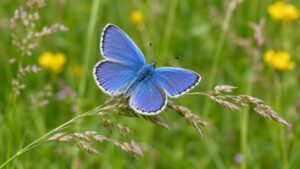
Watch butterflies through their daily behavior: warming for flight, feeding with a proboscis, taking minerals from damp ground, choosing plants, and moving through a changing landscape.
What Unites Lepidoptera
The name Lepidoptera refers to the scale-bearing wings characteristic of most adults. Under magnification, the wing surface contains tiny overlapping structures rather than a coating of loose colored powder. These scales contribute to appearance and other functions, and they can be lost through wear or contact. A worn individual may therefore look different from the crisp pattern shown in an identification guide.
Butterflies are part of this broader evolutionary group, rather than an unrelated category placed beside moths merely for convenience. The familiar butterfly-moth distinction is useful in everyday observation, but it does not divide Lepidoptera into two equivalent, neatly separated halves. Shared development and anatomy explain why the groups belong together even when their typical resting postures or flight times seem different.
Antennae Offer Better Evidence Than Color
Clubbed antennae are a useful general butterfly clue, while moth antennae are often threadlike or feathery. Skippers add a variation with distinctive hooked tips, and specialist identification can require more detail than one trait. Bright wings, a fuzzy body, or daytime activity should not carry the whole decision: some moths fly by day, and many are colorful. Use antennae along with wing structure, body form, behavior, and location. A set of converging clues is stronger than a single remembered rule about which animal is supposed to appear after dark.
From Egg to a Growing Caterpillar
The egg begins a life whose first substantial feeding stage is usually the caterpillar. Many females place eggs where the young can reach an appropriate food resource, often a particular host plant or group of plants. Egg position can vary, so searching only one leaf surface or expecting an obvious cluster will miss some species. Tiny eggs may be difficult to notice even when the plant is supporting a successful life cycle.
A caterpillar’s chewing mouthparts suit growth through feeding, while its body differs sharply from the eventual winged adult. True legs occur on the thorax near the head, and fleshy prolegs on the abdomen help many caterpillars grip a surface. Those prolegs should not be counted as additional pairs of ordinary insect legs. They are part of the immature form’s specialized way of moving and holding onto food.
Growth involves repeated molts rather than uninterrupted expansion of one fixed skin. A caterpillar may change its proportions, markings, or other visible features as it passes through successive stages. An early photograph and a later one can therefore show the same species looking surprisingly different. Identification benefits from knowing both the stage and the plant being used instead of assuming an adult field guide will explain every larval appearance.
The Pupa and the Silk Around It
The pupa is the developmental stage between caterpillar and adult, during which major reorganization occurs. Chrysalis is the usual term for a butterfly pupa. A cocoon, by contrast, is a protective silk structure made by some caterpillars around the pupal stage. The cocoon and the pupa are not two names for precisely the same object.
Nor does every moth produce a conspicuous silk envelope hanging from a twig. Pupation sites and coverings differ, with some animals using soil, leaves, or other sheltered places. A season without visible chrysalises is not evidence that no transformation is happening. Much of the process may be hidden in the habitat that surrounds the more easily observed feeding caterpillars.
Emergence Is a Beginning, Not Instant Flight
A newly emerged adult must bring its wings into their functional condition before ordinary flight is possible. The small folded surfaces seen just after emergence expand and then firm, and the animal needs a suitable place and time for that process. An adult resting quietly with fresh wings may therefore be completing development rather than behaving abnormally. Disturbance at that moment can interfere with a vulnerable transition, so watching without handling provides a better view of the process than moving the insect for a photograph.
Adult Feeding Does Not Describe the Whole Diet
Many adult butterflies and moths take liquids with a proboscis, often coiled when it is not in use. Nectar is familiar, but adults of some species use other liquid resources, and some moth adults do not feed at all. Their reproductive activity depends on reserves gathered earlier. It is therefore inaccurate to describe every adult as a flower-feeding animal with the same mouth and daily requirements.
The caterpillar’s diet can be much narrower than the range of flowers visited by the adult. A butterfly may take nectar from several plants while its larvae can develop only on suitable hosts. This distinction explains why an attractive patch of blossoms can draw adults without supporting a new generation. Feeding opportunities and reproductive habitat are connected but not interchangeable.
For observation, the most useful question is which stage is using which resource. A chewed leaf, a feeding caterpillar, and an adult on a blossom record different activities. None of them alone represents the complete diet or habitat. Putting the observations together reveals the sequence of needs that makes the winged visitor possible.
Patterns Work in Context
Wing and body patterns can help conceal an animal, signal to other organisms, or contribute to interactions involving resemblance and recognition. A mottled moth against bark and a conspicuous butterfly in open sunlight demonstrate very different visual situations. The pattern does not act independently of posture, background, light, and the animal viewing it.
Color can also come from different physical mechanisms, including pigments and the structure of scales. A surface that changes with viewing angle should not be interpreted exactly like a flat painted marking. A photograph records one illumination and angle, so useful identification includes stable pattern features and anatomical clues as well as the most striking color visible in that moment.
Daylight and Darkness Are Not Absolute Categories
Many butterflies are active by day, and many moths fly at night, but those tendencies are not rigid definitions. Day-flying moths are an important reminder that activity time cannot replace identification. A bright insect on a midday flower may still be a moth. Conversely, discovering a resting butterfly after sunset does not tell an observer when it normally flies.
Time also influences which behavior is visible. Resting, basking, feeding, mate seeking, and egg laying can happen under different conditions, and a short visit captures only a slice of that activity. Temperature, weather, and season change the opportunity for observation. Repeated visits to a place build a more informative picture than expecting one afternoon to reveal its entire Lepidoptera community.
For night-active species, darkness is part of the normal setting rather than an inconvenience to be removed. Artificial light can alter how insects behave around a site, so a gathering at a lamp should be understood as an interaction with that light. It is useful evidence of nearby animals, but not an undisturbed portrait of how every individual would otherwise spend the night.
A Seasonal Calendar With Hidden Stages
The winged adult may be the briefest visible part of a much longer seasonal story. Depending on the species and climate, eggs, caterpillars, pupae, or adults can bridge unfavorable periods, and the timing of growth and flight varies. Some populations produce several generations in a year; others follow a different schedule. A bare-looking garden after a flight season can still contain developing or resting stages. Local records and life-history information are more reliable than a universal calendar for every butterfly and moth.
Habitats Must Supply More Than Blossoms
Supporting Lepidoptera involves the places used for feeding, egg laying, pupation, shelter, and seasonal survival. Suitable host plants are central for many species, while adults may need a succession of food resources across their active period. A landscape rich in one attractive bloom can still be missing something essential. The best habitat question is what completes the life cycle for the animals actually present.
Leaf litter, standing stems, bark, and other sheltered substrates may support stages that are easy to overlook during maintenance. Their value differs with the local community, so habitat work should be guided by regional species and conditions. Retaining appropriate shelter alongside plants gives a more complete result than treating adults as visitors that arrive independently of everything beneath and around the flowers.
Pollinators, Plant Eaters, and Food for Others
Adult flower visits can contribute to pollination, while caterpillars consume plant material and both adults and larvae become food for other animals. Those roles coexist within the same group. A caterpillar eating a leaf is not an ecological mistake simply because the adult is admired, and a pollinating adult does not erase every context in which a species may damage a crop. Identifying the animal and the actual situation supports a better judgment than assigning all butterflies one role and all moths another.
Observe Without Losing the Evidence
Good records include the date, place, habitat, and the features visible at the stage being observed. For an adult, antennae and both upper and lower wing patterns can help when naturally available. For a caterpillar, the host plant and body details are valuable. No photograph needs to reveal every character to be useful, and uncertainty should remain explicit when the necessary evidence is hidden.
Avoid touching wings or moving an unfamiliar caterpillar just to obtain a clearer view. Scales can be rubbed away, and some larvae have irritating hairs or other defenses. Watching in place also preserves the association with the plant and substrate, which may be important to identification. The strongest record is often the one that keeps the animal’s surroundings attached to the close-up.
Families Reveal More Than a Butterfly–Moth Divide
Papilionidae includes swallowtails, whose larvae possess a defensive osmeterium and whose familiar pupae often use a silk girdle. Pieridae includes whites and yellows, such as the Cabbage White. Nymphalidae contains brush-footed butterflies, including monarchs, painted ladies, morphos, and owl butterflies. Their reduced forelegs can make adults appear to stand on four legs even though the insect body plan still includes three pairs.
Among moths, Saturniidae includes Luna, Atlas, and Cecropia moths, whose large adults generally rely on resources gathered as caterpillars. Sphingidae includes hawk moths, with strong flight and nectar-feeding specialists alongside adults that do not feed. These family examples show why a simple rule about wings, flowers, or nighttime activity cannot cover the order. Feeding anatomy and development organize the differences more reliably than brightness alone.
A Caterpillar Uses More Than Its Mouth
The caterpillar’s three pairs of true legs attach near the head on the thorax. Fleshy abdominal prolegs provide additional grip in many species, allowing the larva to hold leaves and stems while its mouth removes tissue. Their distribution differs among groups. Inchworm-like movement, for example, results from an arrangement unlike the more evenly supported appearance of many familiar caterpillars. A larva’s gait can therefore provide useful information about its body.
Silk adds another means of interacting with a plant. Caterpillars can use it for support, shelter, attachment, or pupation, with the function depending on the species. A Painted Lady’s leaf shelter and a silk moth’s cocoon are different constructions serving different stages. Neither is evidence that the insect has become a spider. A material produced by the larva can continue shaping its safety after the larva has stopped eating.
Plant defenses make feeding an active biological relationship. Leaves differ in chemistry, toughness, surface hairs, and other characteristics. Some caterpillars specialize on a narrow set of hosts, while others tolerate a broader range. A host plant can therefore be abundant in the landscape yet unusable by a particular insect. The adult’s ability to reach another garden does not mean its offspring can develop on whichever leaves happen to be available there.
Adult Food Reflects Different Energy Strategies
A nectar-feeding adult takes sugars that can support movement and reproduction, but nectar is not the only liquid resource. Common morphos and owl butterflies use fruit and sap, while Zebra Longwings process pollen as well as taking nectar. Some adults feed at damp ground, obtaining dissolved substances not supplied in the same proportions by flowers. These behaviors belong to distinct diets rather than departures from a compulsory floral lifestyle.
Nonfeeding adults follow a different strategy. A Luna Moth cannot replace spent energy by visiting another bloom because its adult feeding apparatus is not functional. Caterpillar growth must supply the resources used for metamorphosis, flight, and reproduction. Adult longevity and behavior therefore depend partly on an earlier life in foliage. Comparing this moth with a nectar-feeding hawk moth makes the contrast clearer than describing every winged adult as a pollinator.
Winter Does Not Require One Kind of Shelter
Unfavorable seasons can be passed in different developmental stages. A species overwintering as a pupa has different requirements from one surviving as an egg mass or an adult. The spongy moth’s eggs persist beneath a protective covering, while a Cecropia pupa remains inside a silk cocoon. A location that appears empty of flying insects can still contain the stages from which the next active season will develop.
Diapause is a regulated developmental state rather than a simple sign that an animal is too cold to move. Seasonal cues interact with the insect’s biology to synchronize later activity. Moving a protected stage into warmth can therefore alter the conditions it would normally experience. The ecological role of a stem, branch, or patch of litter can extend through months when its occupant is almost impossible to detect casually.
Predators Encounter Different Defenses
A leaflike outline can conceal a resting animal, while a warning pattern can advertise chemical protection. Some moths suddenly expose eyespots; others have structures that influence an echolocating bat’s attack. These defenses operate through different sensory systems and at different moments. A protected-looking adult can still be eaten by a predator able to tolerate or bypass its particular defense.
The ecological outcome also changes with life stage. A caterpillar’s spines, host chemistry, or shelter need not resemble anything the adult uses. Protecting Lepidoptera therefore means preserving more than attractive flying forms. Suitable food plants, developmental shelter, dark periods, and connected habitat allow the whole sequence to persist. Threats to a specialist’s host or overwintering conditions can remain serious even when common butterflies and moths are still easy to find nearby.
Following the Group Into Its Branches
The shared framework makes the narrower butterfly and moth groups easier to explore. Antennae and wing features help with adult recognition, but host plants and caterpillar development explain how the adults came to be there. Pupation, seasonal shelter, and changing activity complete the connection.
Begin with the animal in front of you, then ask what stage preceded it and which habitat will support the next one. A butterfly on a blossom, a moth against bark, and a caterpillar gripping a leaf are not separate kinds of nature stories. They are different views of a group whose defining transformation links plants, insects, and the surrounding food web.
The easiest habit to develop is returning to the same small place. A leaf that held eggs may later show feeding damage, while a familiar bark surface can reveal a resting moth only after the observer learns its outline. Record what is actually visible, and allow the rest of the story to remain a question until evidence appears. That patient approach makes transformation something to follow in a real habitat rather than only a sequence remembered from a diagram.
Animal Product Reviews
Dive into Animal Streets’ Animal Product Reviews — your guide to the best gear, gifts, books, and gadgets inspired by the animal kingdom. From land-roaming lions to ocean-gliding whales, from household pets to prehistoric giants, we explore top-rated products for enthusiasts, educators, families, and curious animal lovers.