
More Than a Brown Shape at the Porch Light
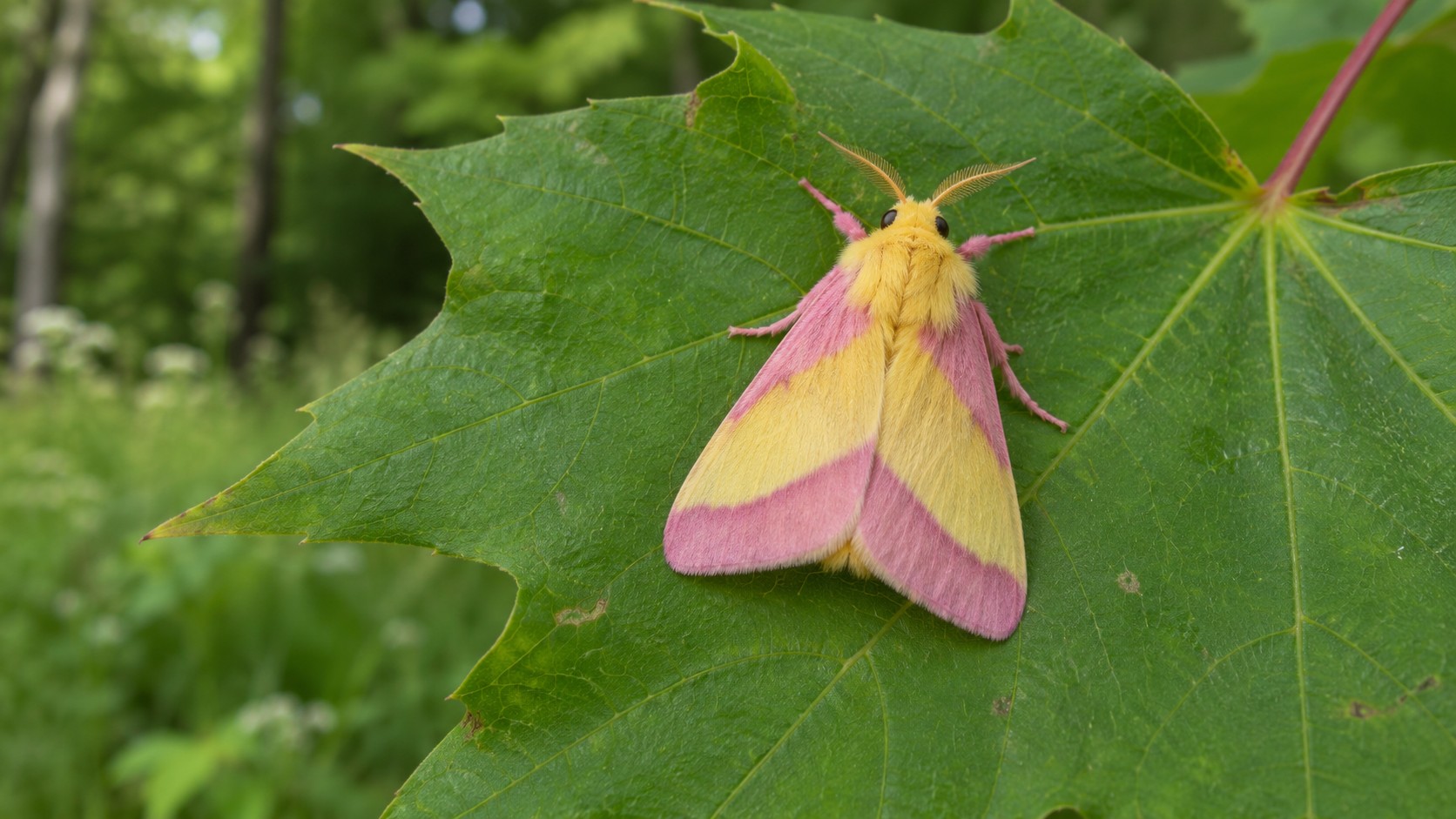
A pink-and-yellow moth on a maple leaf, an orange-winged tiger moth, and a pale patterned moth disappearing against bark can seem like entirely different kinds of insects. They are all part of the diversity hidden by the simple word moth. The familiar image of a small brown animal circling a lamp represents only a narrow encounter with a much larger world. Moths include day-flying species, night visitors to flowers, adults that never feed, and caterpillars using many different resources. Understanding them means replacing a few convenient stereotypes with closer attention to anatomy, life stage, and behavior. The reward is an expanded view of the insects already living around gardens, woodlands, fields, and homes.
A: No. Both belong to Lepidoptera and share a common developmental plan.
A: No. Many have vivid colors, and some fly during daylight or twilight.
A: It consists of scales that cover the wing surfaces.
A: No. Feeding strategies vary, and some adults do not feed at all.
A: The rosy maple moth relies on resources acquired during its caterpillar stage.
A: No. The cocoon is a protective structure made around the pupa by some species.
A: No. Their color forms involve inherited variation, with survival differences affecting populations over generations.
A: Artificial light can disrupt an orientation response used during flight.
A: No. Damage needs identification and evidence connecting the relevant species and stage to the material.
A: Yes. Adult flowers and larval host resources can be quite different.
Atlas Moth
Inspect the Atlas Moth’s broad patterned wings, translucent windows, comb-shaped antennae, and durable silk cocoon, then connect those features with the feeding work of its caterpillar.
A Shared Order, Not Two Opposite Worlds
Moths and butterflies belong to Lepidoptera, a name associated with their scaly wings. Butterflies represent one recognizable part of that evolutionary diversity, while moth is the familiar label used for many other lineages. The everyday division is useful for conversation, but it should not suggest two unrelated kinds of insects. Their shared developmental plan explains why both have caterpillar larvae, pupal transformation, and winged adults.
Calling an insect a moth therefore begins an identification rather than completing it. Different families include small leaf miners, stout nocturnal visitors, large silk moths, and streamlined fliers. No one moth can stand in for the entire group without leaving important exceptions behind.
Scales Create Texture as Well as Pattern
The fine material on a moth’s wings is made of scales, not loose decorative dust that serves no purpose. Scales cover surfaces in overlapping arrangements and contribute to color, texture, and other wing properties. Some patterns blend with bark, others form bold bands or contrasting patches. A close photograph reveals how much detail can occupy a surface that first looked plain. Handling can remove scales or damage the wing, so careful viewing should not require rubbing the surface to demonstrate what it is made of.
Antennae Are Clues With Exceptions
Threadlike and feathery antennae are common among moths, contrasting with the familiar club-tipped antennae of butterflies. In some moths the antennae are impressively branched; in others they are much less conspicuous. Their form participates in sensing the surroundings, including chemical information. It is not simply an ornamental feature added to a fuzzy head.
Useful clues should not be converted into absolute shortcuts. Body hairiness, resting wing position, color, and time of flight each have exceptions. A moth can be brightly colored, and a butterfly can have subdued wings. Identification works better when antennae are considered alongside the overall body, wing pattern, and regional possibilities rather than treating one familiar rule as decisive in every case.
Night Is Important, but It Is Not a Definition
Many moths are active after dark, which is one reason people notice them near artificial lighting rather than during ordinary daytime walks. Other species fly by day or around twilight, and some use more than one part of the daily cycle. A moth at a flower in sunshine has not broken a biological rule. It belongs to a group whose activity schedules are more varied than its reputation suggests.
Daytime resting moths can also be encountered even when their normal flight occurs later. An animal on bark may remain still for hours, allowing a close view of posture and pattern. That observation records a resting period, not proof that the insect never flies. Time and conditions help separate what the observer happened to see from the species’ broader schedule.
This matters when comparing sites. A sunny-afternoon visit and a sheltered evening watch sample different opportunities for detection. An apparently moth-poor garden during the day may host activity that was simply missed. Consistent observation at appropriate times gives a more meaningful comparison than assuming that every species should be visible whenever a person is outdoors.
Adult Feeding Has More Than One Answer
Many moth adults use a proboscis to obtain liquid food, often nectar. Others use different liquid resources, and some adults do not feed at all. The rosy maple moth is an example of a nonfeeding adult that relies on resources acquired during its caterpillar stage. Its attractive colors do not imply that it should be offered a flower or that a failure to drink means something is wrong. Species identity is essential before assigning any individual a universal adult menu.
Pollination Can Continue After Sunset
Nectar-feeding moths can transport pollen as they move among flowers. Their bodies and mouthparts contact different floral structures depending on the plant and the way they feed. Some settle while taking nectar, while others can feed in flight. Pollination is an outcome of those interactions, not a role automatically performed by every moth regardless of its diet.
Night-blooming flowers and evening scent can make certain plants accessible or detectable to nocturnal visitors. Some plant-moth relationships are highly specialized, while others involve a wider range of flowers. A flower visit establishes contact, but understanding the plant’s reproductive benefit may require evidence about pollen movement beyond the photograph itself.
The Caterpillar Uses a Different Resource Map
Larval diets can be much more specific than the resources visited by an adult. Leaves of particular trees, shrubs, herbs, or grasses support many species, while other larvae feed within plant tissues or use different organic materials. A caterpillar mining inside a leaf and one feeding openly on a branch occupy different settings even though both will become moths. Their host requirements are not interchangeable.
That is why flowers alone cannot support every part of a moth’s life. A garden may feed mobile adults while providing few suitable larval resources. Equally, an unremarkable host tree can support development without being the most colorful feature in the landscape. Looking for the plant relationship reveals habitat value that a survey based only on blossoms would miss.
Feeding marks can provide clues, but the animal should still be identified when possible. Rolled leaves, mines, holes, and silk can be produced by different insects. A photograph combining the larva, the plant, and the trace is more informative than a damaged leaf separated from its setting. Uncertain records can remain useful when their limits are made clear.
A Cocoon Is Not the Pupa Itself
Complete metamorphosis proceeds through egg, larva, pupa, and adult. The pupa is the developmental stage between caterpillar and winged insect; a cocoon is a protective structure that some larvae construct around it. Not every moth makes an obvious silk cocoon. Pupation can occur in soil, among leaves, within plant material, or in another protected setting, depending on the species. The familiar silk case is one arrangement, not a compulsory feature of all moth development.
Camouflage Depends on the Setting
A moth’s pattern becomes meaningful against the surface where it rests. Fine gray and dark markings can break up the outline against bark, while leaflike shapes and colors can make another species harder to notice among vegetation. An insect that looks obvious against a clean white wall may be less conspicuous on its natural background. The photograph’s backdrop changes how the pattern is experienced.
The peppered moth is a well-studied example of color variation and selection through differential survival. Its pale and dark forms are not individuals choosing to repaint themselves to match a tree. Inherited variation and differences in survival can change the frequency of forms across generations. Keeping the population process separate from an individual’s appearance preserves the biological lesson behind the familiar camouflage story.
Bright Wings Belong Here Too
The group also includes striking pinks, yellows, oranges, and bold contrasting markings. A garden tiger moth can reveal bright hindwings beneath its patterned forewings, while a rosy maple moth makes the brown-only stereotype untenable. Color has different roles in different species, including concealment, signaling, and defensive interactions. A conspicuous pattern by itself does not establish exactly what a predator perceives or guarantee that the moth cannot be eaten.
Artificial Light Can Disrupt Flight
The circling seen around a lamp is not adequately explained by imagining that moths deliberately seek a dangerous bright object. Research tracking flying insects near artificial light has shown how an orientation response can become disrupted. Insects may tilt their dorsal surface toward the light, a response useful when the brightest region is above but problematic beside a nearby lamp. The result can include orbiting, stalling, or inversion rather than ordinary forward travel.
This mechanism helps explain observed flight patterns without requiring a claim that every insect at every light behaves identically. Species, light arrangement, and conditions can influence the encounter. A porch light also provides a biased sample: it shows the animals that arrive and remain detectable there, not every moth present in the surrounding habitat.
Darkness is consequently part of habitat, not just empty time between daylight activities. Reducing unnecessary illumination can preserve more natural conditions for night-active wildlife. Necessary lighting can be directed and used for limited periods, following appropriate local guidance. The goal is to support ordinary movement and feeding rather than make the entire outdoor space a permanent observation station.
Do Not Let a Few Household Pests Define the Group
Certain moth larvae damage stored foods, fabrics, crops, or ornamental plants, but those species represent only a small part of moth diversity. A woodland moth outside a window should not be blamed for every hole in clothing or garden leaf. The affected material, the larval stage, and a correct identification all matter. An adult seen nearby may have no connection to the problem being investigated.
Likewise, a caterpillar eating a host plant is not automatically a garden emergency. Its significance depends on the species, plant, abundance, and purpose of the planting. A wildlife area and a food-production bed may justify different decisions. Accurate identification makes that distinction possible without treating every moth as either a pest to eliminate or a harmless animal whose effects never need attention.
A Better Way to Notice Moths
Begin with the moth’s natural position and record its markings, approximate size, location, and date. Include a view of the head and antennae when possible, along with the whole wing outline. Do not force the wings open or repeatedly disturb a resting animal to obtain another angle. Local references can then narrow the possibilities, while an unresolved identification can remain at family or group level. A careful partial record is more useful than a confident species name unsupported by visible features.
Families Reveal Different Ways of Being a Moth
Recognizing a family makes moth diversity more manageable. Geometridae includes the geometer moths, whose familiar inchworm larvae move by bringing their rear end toward the front and then extending again. Many Noctuidae have sturdier bodies and forewings patterned for inconspicuous rest. Sphingidae contains hawk moths with powerful flight, while Saturniidae includes giant silk moths such as Luna and Atlas. These families differ in much more than adult color.
Erebidae includes tiger moths and underwings, among many other forms. Clearwing moths in Sesiidae can resemble wasps, while small families contain flower visitors easily overlooked beside the larger moths. Similar common names do not necessarily mean close relationships: a clearwing sphinx and a clearwing in Sesiidae belong to different families. Wing structure, antennae, body shape, and regional identification characters help resolve those lookalikes.
Family recognition is a useful level of identification when a species cannot be established. It can reveal which biological comparisons are relevant without inventing a precise name. A slender geometer and a heavy-bodied sphinx may both appear at the same light, but their larval shapes and feeding relationships need not resemble each other.
Sound Creates Another Predator-Prey Environment
For a night-flying moth, an approaching bat can present an acoustic threat as well as a visual one. Bats send out ultrasound and interpret returning echoes to locate prey. Different moth lineages have evolved different responses to that hunting system. Concealing a resting wing against bark and reducing an echo during flight solve distinct problems.
Research published in 2020 showed that the scale layers of studied moth wings can absorb ultrasound. The scales and the membrane beneath them act together as a very thin sound-absorbing structure. This is a physical property of the wing surface, not a decision by a moth to switch off a bat’s senses. It also demonstrates that wing scales can contribute functions beyond the colors people notice.
Some moths instead detect ultrasound, make defensive sounds, or use wing extensions that affect an attacker’s aim. No one response describes the whole group. A useful comparison separates avoiding detection, warning a predator, and surviving a strike: each acts at a different point in the encounter, and each requires its own evidence.
A Small Moth Can Pollinate With Deliberate Movements
Yucca moths offer a particularly specialized plant relationship. In pollinating species, females gather pollen with modified mouthparts, carry it to another flower, and deliberately place it on the stigma. The female also lays eggs in the flower’s reproductive structures. Her larvae subsequently eat some of the developing seeds, while seeds left intact can produce new plants.
This is more intimate than pollen brushing accidentally onto a passing insect. Successful pollination creates the food on which the moth’s young depend. The plant gains fertilization, and the moth gains a developmental resource. Both organisms’ reproductive schedules therefore matter to the outcome.
The eastern Joshua tree, Yucca jaegeriana, and its pollinator Tegeticula antithetica provide a named example investigated by the U.S. Geological Survey. Research examines how flowering and moth activity coincide under different temperature and rainfall conditions. A mismatch can concern the timing of an interaction, even where both the plant and its pollinating insect are present in the wider landscape.
Migration Can Depend on the Night Sky
Australia’s Bogong moth, Agrotis infusa, makes a seasonal journey very different from a short flight between flowers. Individuals can travel up to approximately 1,000 kilometers to cool caves in the Australian Alps, where they spend the hot summer in a dormant state called aestivation. The same individuals return toward breeding areas in autumn.
A study published in 2025 tested migrants in a flight simulator under projected night skies. Even with the geomagnetic field cancelled experimentally, moths oriented in their seasonally appropriate direction beneath a realistic star pattern. Their responses supported the use of stellar information as a compass, alongside the magnetic information established in earlier work.
The finding concerns a particular migratory species; it is not evidence that every moth circling a garden lamp is navigating to an alpine cave. It does show how a small nocturnal insect can use large-scale environmental information. Flight, summer shelter, and breeding areas form parts of a seasonal system extending far beyond one resting place.
Different Threats Require Different Evidence
A moth can be widespread while a related species is restricted to a small habitat. Singapore’s national species records, for example, distinguish conservation categories among moth species rather than assigning one status to all Lepidoptera. Host loss, changes in forest structure, and disruption of nighttime conditions can affect different lineages in different ways.
Monitoring therefore gains value from recording species and life stage, not simply a total number of moths. A season with many mobile adults can still conceal changes in a resident specialist. The diversity visible in a trap, on a tree, or at a flower represents interacting populations with different histories and requirements.
Making Room for the Less Visible Stages
Supporting moth diversity means considering host plants, adult food where appropriate, sheltered development sites, and the nighttime environment together. Native vegetation suited to the region can provide relationships that decorative flowers alone do not replace. Leaving some appropriate leaf litter and undisturbed areas can retain places used by certain species, although the details differ among habitats. A single prescribed arrangement cannot cover the full range of moth lives.
The most useful change in perspective is to stop asking what all moths do and begin asking which moth is present. The rosy maple adult, garden tiger, and peppered moth each offer a different introduction, and none exhausts the group. Their shared ancestry connects them; their distinct habits supply the detail. Moths become easier to appreciate when diversity is the starting point rather than an exception to a brown, nocturnal stereotype.
Animal Product Reviews
Dive into Animal Streets’ Animal Product Reviews — your guide to the best gear, gifts, books, and gadgets inspired by the animal kingdom. From land-roaming lions to ocean-gliding whales, from household pets to prehistoric giants, we explore top-rated products for enthusiasts, educators, families, and curious animal lovers.