The Anatomy of Speed: What Makes a Cheetah the Fastest Land Animal on Earth
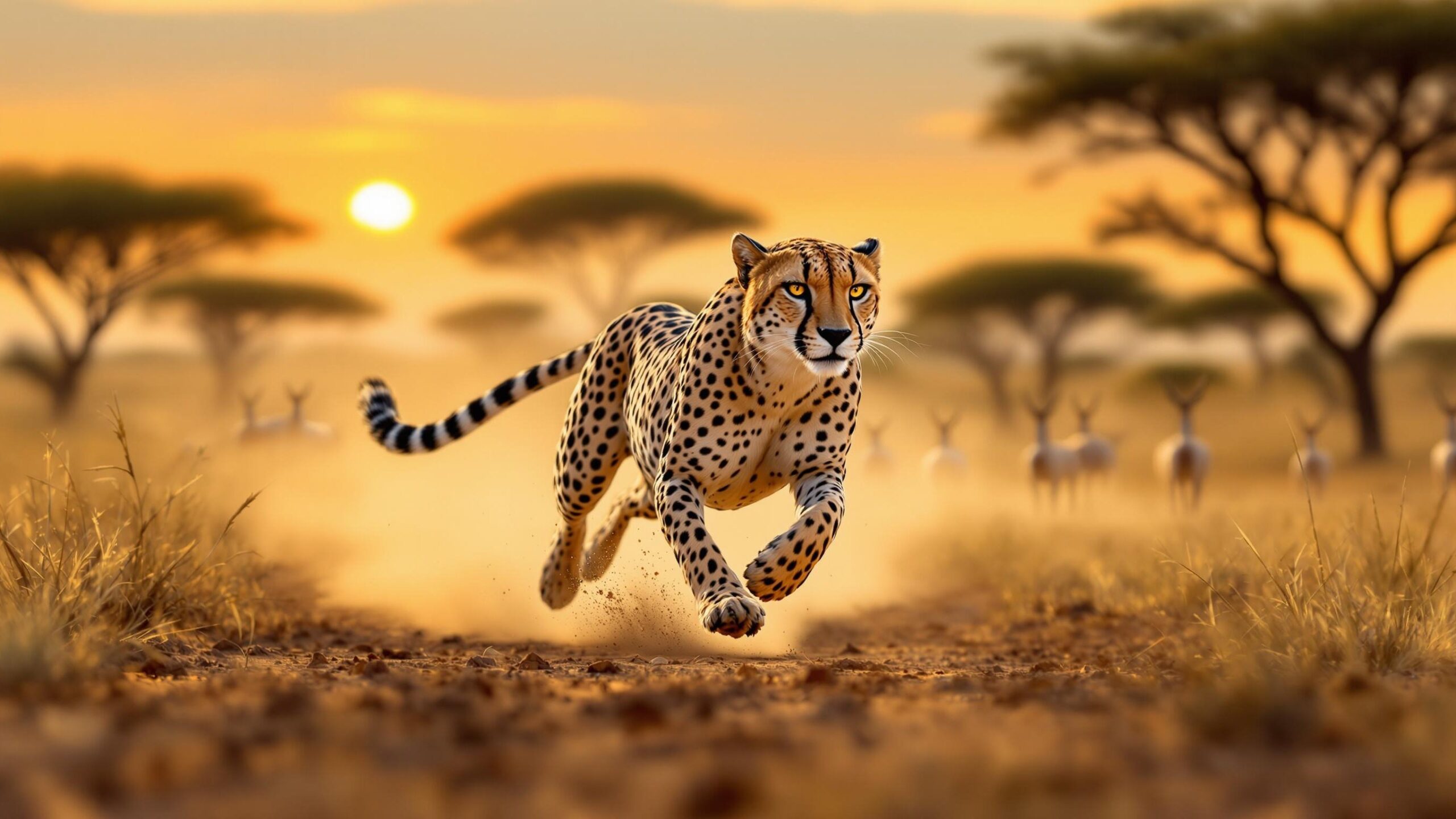
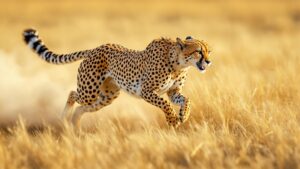
The cheetah (Acinonyx jubatus) is a singular marvel in the feline world. Unlike lions, tigers, or leopards, cheetahs belong to their own unique genus, and their entire physique is a masterclass in speed optimization. Built like a sprinter, the cheetah boasts an aerodynamic body, long legs, and a small collarbone that allows for an extended stride. Its large nasal passages and lungs ensure maximum oxygen intake during a chase, while its semi-retractable claws provide extra traction, like cleats on a track. A cheetah can accelerate from 0 to 60 miles per hour in just three seconds—rivaling a Formula One car—and can reach peak speeds of 70 miles per hour in short bursts. But speed alone doesn’t win the hunt. The cheetah’s long tail acts as a rudder, providing balance and direction mid-sprint. Its flexible spine contracts and stretches with each stride, almost doubling its reach. And those black tear markings? They reduce sun glare and help with spotting prey over long distances. However, this specialization comes at a cost. Cheetahs are not built for endurance or brute strength. Their light frame makes them vulnerable to competition from lions, leopards, and hyenas. After an exhausting chase, a cheetah must rest before eating—leaving its kill at risk of being stolen. This delicate balance between peak performance and vulnerability defines the cheetah’s existence in the wild.
African Cheetahs: Sprinting Across the Continent’s Vast Grasslands
The African cheetah is the most widespread and recognizable subspecies, found in more than a dozen countries across East, Southern, and parts of West Africa. These cheetahs are adapted to life on open plains, where visibility is high and sprinting room is ample. They thrive in ecosystems like the Serengeti, the Kalahari, and the Maasai Mara, where their primary prey—gazelles, impalas, and other small to medium antelopes—also dwell. Cheetahs in Africa are diurnal hunters, often hunting in the cooler hours of early morning or late afternoon. This daytime activity helps them avoid larger nocturnal predators and reduces direct competition. They rely on stalking within 100 meters of their prey before initiating a high-speed chase that typically lasts less than a minute.
These cheetahs live solitary lives, with the exception of mothers and cubs or male coalitions—small groups of brothers who hunt and defend territory together. This coalition behavior is unique among big cats and significantly increases the males’ hunting success and territorial defense. Conservation efforts for African cheetahs include habitat preservation, human-wildlife conflict mitigation, and genetic diversity management. Organizations like the Cheetah Conservation Fund are working tirelessly to ensure cheetahs have the space and security they need to thrive.
Asiatic Cheetahs: Ghosts of the Iranian Desert and Echoes of an Ancient Past
Once ranging from the Arabian Peninsula to India, the Asiatic cheetah (Acinonyx jubatus venaticus) is now critically endangered, surviving only in isolated pockets of Iran. These cheetahs are smaller and lighter than their African counterparts, with paler coats and a more elusive lifestyle suited to the arid deserts and semi-arid mountain regions they now inhabit.
Unlike African cheetahs, the Asiatic cheetahs must cover vast, rugged terrain to find prey such as goitered gazelles and wild sheep. Their existence is marked by silence, isolation, and an almost mythical quality. Spotting one in the wild is an extraordinary rarity, and each documented sighting is a example of their resilience against near-impossible odds.
The Iranian government and international partners have launched conservation programs focused on education, captive breeding, anti-poaching enforcement, and protected area expansion. Despite these efforts, fewer than 50 individuals remain in the wild, making the Asiatic cheetah one of the most endangered big cats in the world. Their survival may depend on aggressive international collaboration and swift action.
King Cheetahs: The Rare Royals of the African Wild
Among African cheetahs, a rare and visually stunning variant exists—the King Cheetah. Distinguished by its dramatically different coat pattern, this cheetah has large, blotchy spots that merge into stripes down the back. The King Cheetah’s coat also appears darker and more richly textured, giving it an almost regal aura. This striking pattern is not a subspecies, but a genetic mutation tied to a recessive gene. King Cheetahs are found almost exclusively in parts of southern Africa, particularly Zimbabwe, Botswana, and South Africa. They are no different in size or hunting ability from other cheetahs, but their unique appearance has made them a subject of fascination. King Cheetahs are extremely rare in the wild but have been more successfully bred in protected reserves and captivity. Their beauty highlights the genetic diversity still hidden within cheetah populations and underscores the importance of preserving as many individuals as possible to maintain evolutionary resilience.
Cheetah Cubs: The Hidden Struggle Behind the Speed
Beneath the sleek, athletic exterior of the adult cheetah lies a far more fragile story of survival: the plight of the cheetah cub. Cheetah mothers give birth to litters of three to five cubs, usually in secluded thickets or tall grasses. For the first few weeks of life, the cubs are blind and completely dependent on their mother, who must hunt and protect them simultaneously. Cubs have a unique grayish mantle running down their backs, possibly serving as camouflage or mimicry to resemble the fearsome honey badger. Despite these adaptations, cub mortality rates are extraordinarily high—often over 70 percent in the wild. Predators like lions, hyenas, jackals, and even eagles can threaten cubs, and a distracted or injured mother may lose her entire litter. Those that do survive begin following their mother on hunts after about six weeks and begin practicing pouncing and chasing games. By 18 months, they leave to establish their own territories. Conservation breeding programs and sanctuaries aim to support cub survival through careful genetic pairing, enriched environments, and gradual wild reintroduction.
Cheetahs and Humans: From Pharaohs to Farm Conflict
Humans have had a long and complicated relationship with cheetahs. Ancient Egyptians revered them, keeping them as semi-domesticated hunting companions and featuring them in royal iconography. In India, Mughal emperors also trained cheetahs for use in the hunt. These cats were admired for their grace and controlled aggression, often seen as extensions of royal power. Today, that relationship has taken a darker turn. As human populations expand, cheetahs face increasing threats from land development, poaching, and retaliatory killings. Farmers in parts of Africa often view cheetahs as livestock threats, despite their preference for wild game. In areas where wild prey is scarce, cheetahs may indeed turn to livestock, escalating conflict.
Education and compensation programs have made strides in easing this tension. Some communities now deploy guard dogs, fencing, and non-lethal deterrents to reduce cheetah-livestock encounters. In Namibia and Botswana, conservation outreach has empowered local farmers to become wildlife stewards, protecting cheetahs as part of a shared ecological heritage.
The Role of Cheetahs in the Ecosystem
Cheetahs are vital to the health of the ecosystems they inhabit. By selectively preying on the young, weak, or injured members of prey species, cheetahs help maintain balanced populations. This prevents overgrazing and supports plant regeneration, which in turn sustains other herbivores and predators. Cheetahs also influence predator dynamics. As subordinate carnivores, they must often relinquish their kills to more dominant species. This behavior shapes their movement patterns and can affect the behavior of prey and scavengers. In many ways, the cheetah’s mere presence creates a ripple effect of activity and adaptation among other wildlife. Losing cheetahs from an ecosystem doesn’t just reduce biodiversity—it dismantles a delicate chain of interactions that support everything from insect life to tree growth. Protecting cheetahs is, in effect, protecting the balance of life across vast landscapes.
Challenges in Cheetah Conservation and Genetic Diversity
One of the most pressing challenges in cheetah conservation is the species’ low genetic diversity. A genetic bottleneck that occurred thousands of years ago drastically reduced variation in the cheetah genome, leaving modern cheetahs more genetically uniform than almost any other wild mammal. This lack of diversity makes them more vulnerable to disease, reproductive issues, and environmental changes. Efforts to preserve genetic health involve strategic breeding programs, genetic mapping, and careful management of both wild and captive populations. Scientists are working to identify and preserve the most genetically diverse individuals, using this data to guide mating decisions in breeding centers around the world. Habitat fragmentation adds another layer of difficulty. Cheetahs need large, open territories to hunt and breed. When habitats are cut by roads, fences, or urban development, it limits gene flow and isolates populations. Wildlife corridors and large protected areas are essential to counter this fragmentation and allow cheetah populations to move and mix freely.
Innovative Conservation Efforts and the Future of Cheetahs
Across the globe, innovative projects are shaping the future of cheetah conservation. In Namibia, cheetah-friendly farms incorporate eco-tourism and wildlife photography to create income streams that benefit both humans and animals. In India, an ambitious reintroduction project is underway, aiming to reestablish a population of cheetahs after more than 70 years of extinction within the country.
Captive breeding centers like those in South Africa not only focus on reproduction but also educate the public about cheetahs’ role in the wild. GPS tracking collars and camera traps help researchers understand cheetah behavior, mortality causes, and habitat use in real time. This data fuels smarter conservation strategies that can be adapted to local realities. Collaboration is key. Conservation doesn’t work in isolation. Governments, researchers, communities, and NGOs must come together to share knowledge, resources, and responsibilities. Only by acting collectively can we preserve the wild sprint of the cheetah.
Racing Against Time to Save a Living Legend
The cheetah is more than just a speedster—it is a living relic of evolutionary perfection, a creature that blends elegance with explosiveness, silence with spectacle. From the sun-baked plains of Africa to the quiet deserts of Iran, cheetahs carry stories of survival, loss, and rebirth. Each subspecies and population brings new insights into adaptability, behavior, and the intricate dance between predator and prey. But the race is on—not just in the savanna, but for conservationists, scientists, and wildlife lovers. Time is not on the cheetah’s side. The threats are numerous, and the margins are thin. Yet the cheetah’s story is far from over. Now is the moment to dive deeper. Learn more about their subspecies, their cubs, their history with humans, and the science behind their astonishing biology. The cheetah’s world is wide, complex, and beautiful—and it needs our attention.