
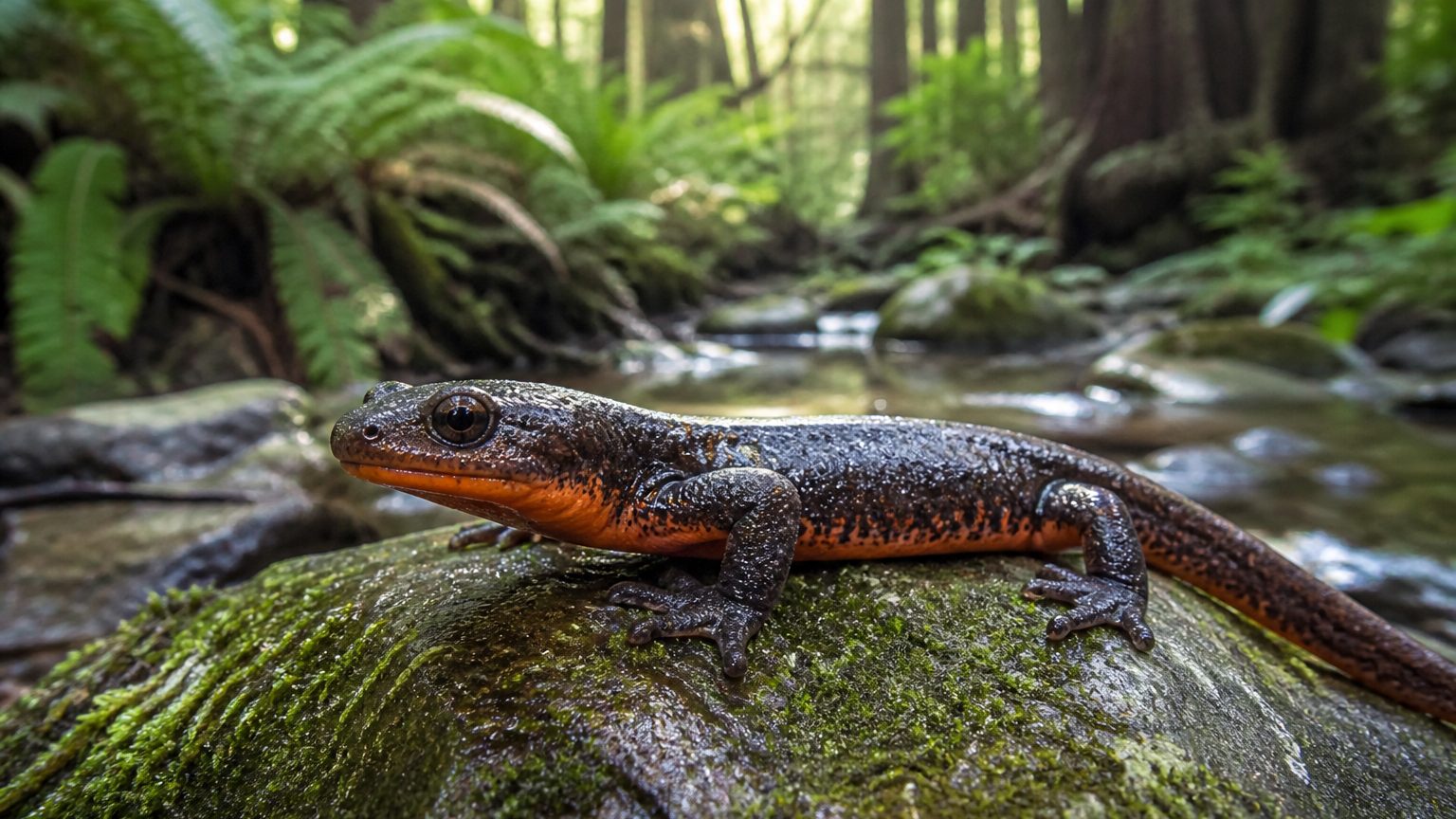
The California newt, scientifically known as Taricha torosa, is one of the most intriguing amphibians found along the western coast of North America. Despite its modest size and unassuming presence, this species carries a fascinating blend of beauty, resilience, and potent chemical defense that has captured the attention of scientists and nature enthusiasts alike. Found primarily in California’s coastal and foothill regions, the California newt thrives in environments where water and woodland meet, making it a vital part of local ecosystems. What makes the California newt especially compelling is the contrast between its gentle movements and its powerful survival adaptations. With a bright orange underside and earthy brown or olive back, it signals danger to potential predators through a form of natural warning coloration. Beneath that vivid display lies one of the most potent toxins found in the animal kingdom, making this small amphibian both a marvel of evolution and a reminder of nature’s complexity.
A: Start with body shape and habitat, then use color, markings, size, and behavior as confirmation.
A: Because California Newt has its own mix of structure, habitat, feeding, and comparison clues.
A: Compare it with the nearest parent, child, or lookalike pages before treating one trait as final.
A: No. Age, season, lighting, region, and posture can all change the first impression.
A: Look for the setting that explains the animal: water, cover, vegetation, substrate, altitude, reef, burrow, branch, or open ground.
A: The exact diet depends on the animal, but mouth shape, movement, and habitat usually reveal the feeding strategy.
A: Many animals change size, color, pattern, diet, risk, or habitat between young and adult stages.
A: Use the photo to check eye position, body outline, limbs or fins, texture, posture, and surrounding habitat.
A: Yes. Every animal affects food webs, habitat structure, competition, nutrient movement, or predator-prey balance in some way.
A: It should connect the animal's visible traits to how it survives, moves, feeds, and fits the taxonomy.
Where Forest Meets Water: Habitat and Range
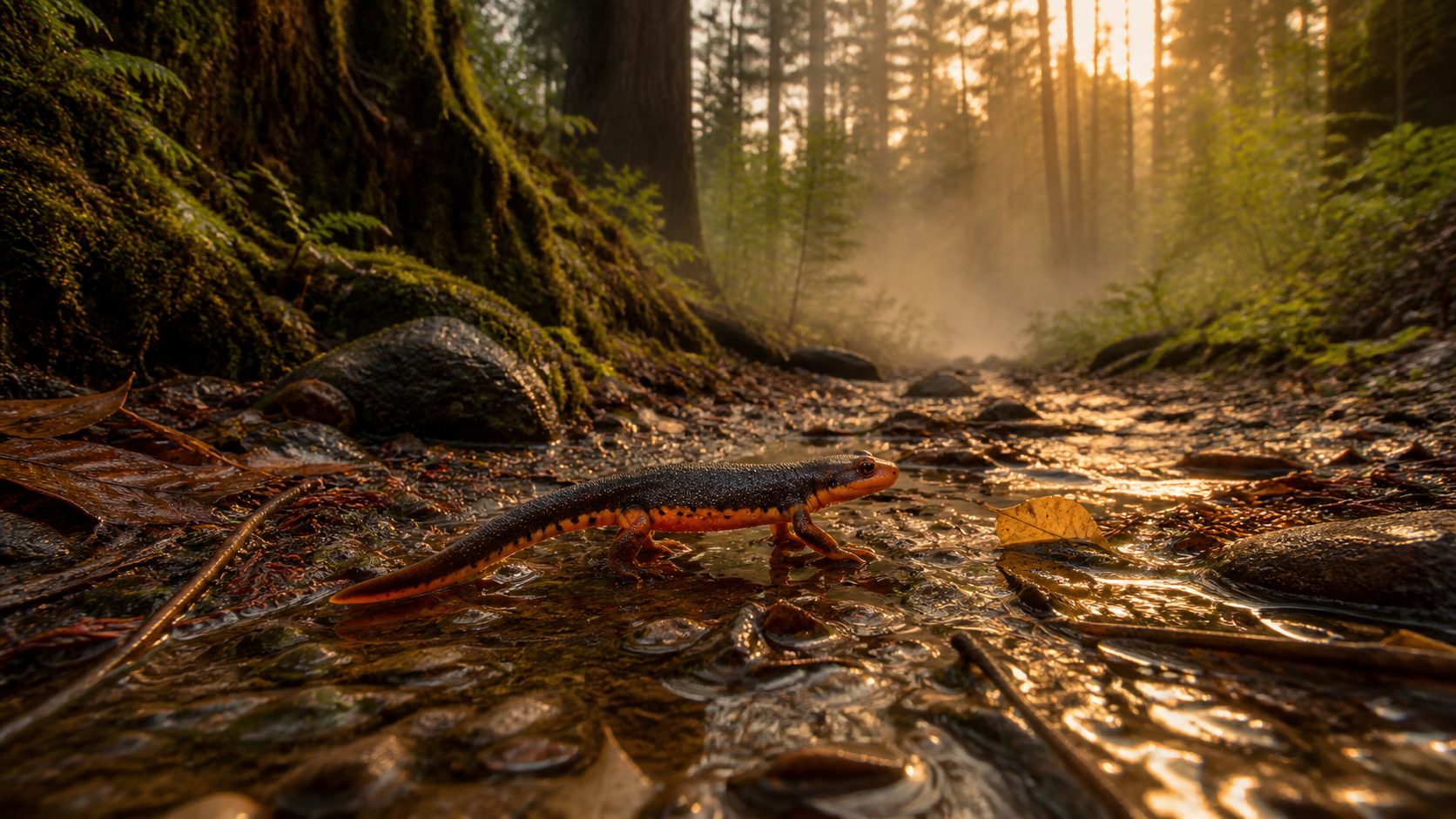
The California newt is most commonly found in moist, shaded habitats such as oak woodlands, coastal forests, and chaparral regions. These amphibians depend heavily on proximity to freshwater sources, especially during their breeding season, when they migrate to ponds, streams, and slow-moving rivers. Their range stretches across much of California, from coastal zones to inland valleys and foothills, where seasonal rainfall creates ideal breeding conditions.
Outside of breeding periods, California newts spend much of their time on land, often hiding beneath logs, rocks, or leaf litter to retain moisture. Their ability to transition between aquatic and terrestrial environments is a key aspect of their survival strategy. This dual lifestyle allows them to exploit different ecological niches while avoiding prolonged exposure to predators or harsh environmental conditions.
A Striking Appearance with a Purpose
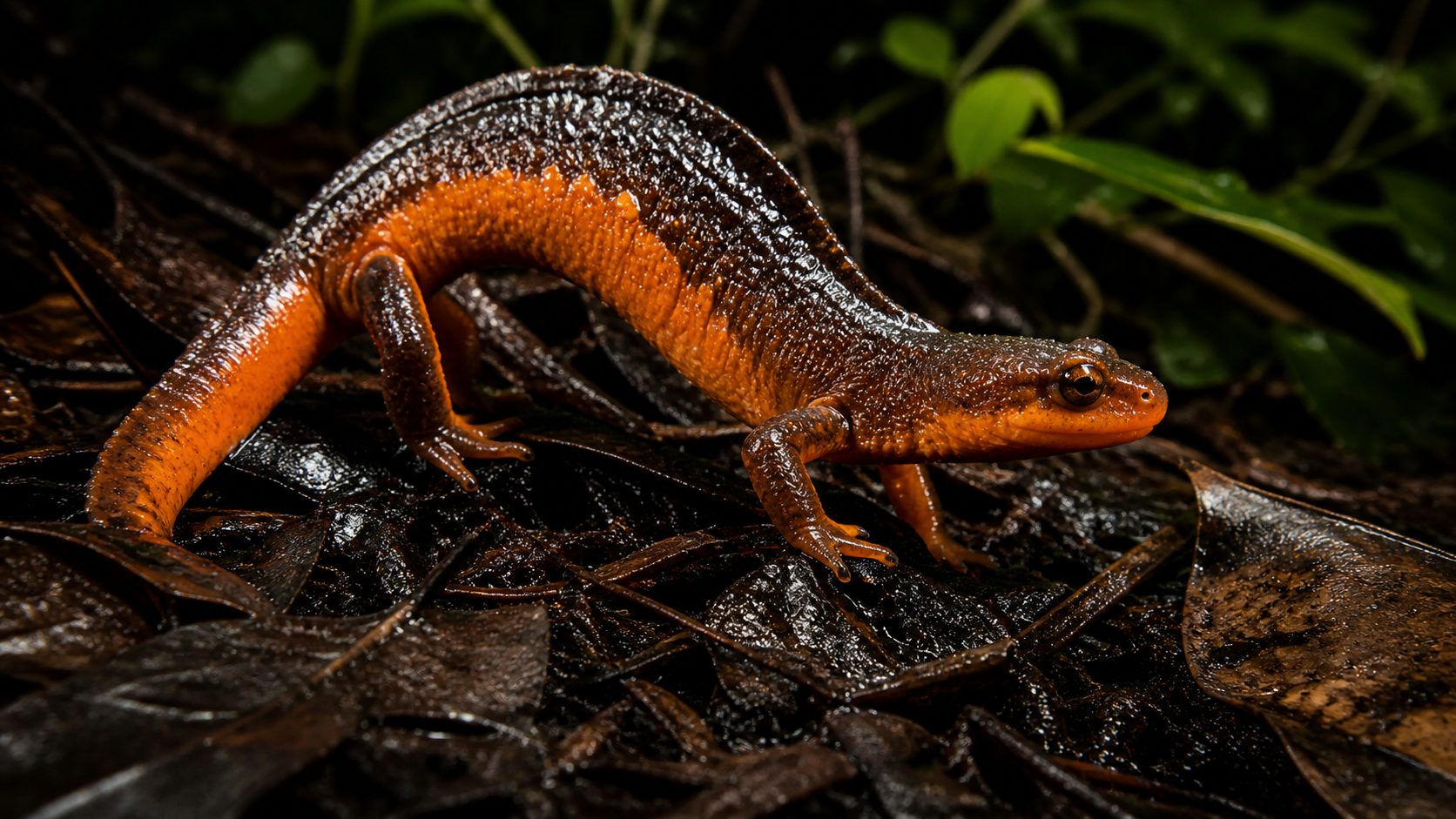
The California newt’s appearance is both functional and visually distinctive. Its rough, granular skin gives it a textured look that helps retain moisture and provides some protection against environmental stress. The dorsal side typically ranges from dark brown to olive green, allowing it to blend seamlessly into forest floors, while its underside is a vivid orange or yellow. This bright coloration is not merely decorative but serves as a warning signal to predators. Known as aposematic coloration, this visual cue communicates that the newt is toxic and should not be eaten. When threatened, the California newt may adopt a defensive posture known as the “unken reflex,” arching its back to prominently display its bright underside, reinforcing the message that it is not a safe meal.
Toxic Defense: Nature’s Chemical Shield
One of the most remarkable features of the California newt is its production of tetrodotoxin, a powerful neurotoxin that can interfere with nerve signals and muscle function. This toxin is found in the skin and is potent enough to deter most predators, including mammals, birds, and reptiles. In some cases, even a small amount can be lethal, making the newt one of the more chemically defended amphibians in North America.
Interestingly, this toxin has led to an evolutionary arms race between the California newt and certain predators, such as garter snakes. Some snake populations have developed resistance to tetrodotoxin, allowing them to prey on newts without being affected. This ongoing interaction between predator and prey highlights the dynamic nature of evolution and the intricate balance within ecosystems.
Life Cycle: From Water to Land and Back Again
The life cycle of the California newt is closely tied to seasonal changes and water availability. Breeding typically occurs during the rainy season, when adults migrate to freshwater habitats to mate and lay eggs. Females attach their eggs to submerged vegetation, where they develop safely in the aquatic environment. Once hatched, the larvae resemble small fish with external gills and spend several months growing in the water. As they mature, they undergo metamorphosis, developing lungs and limbs suited for life on land. Juvenile newts, often called efts, leave the water and begin a terrestrial phase that can last several years before they return to aquatic habitats as adults to reproduce.
Behavior in Motion: Slow, Steady, and Strategic
California newts are not known for speed or agility, but their behavior reflects a careful and deliberate approach to survival. They move slowly, often pausing to assess their surroundings, which helps conserve energy and reduces the likelihood of attracting attention. Their reliance on chemical defense rather than physical escape allows them to maintain this unhurried lifestyle.
During dry periods, newts may enter a state of reduced activity, seeking shelter in moist microhabitats to avoid dehydration. Their ability to adapt their behavior to environmental conditions is crucial for survival in regions where water availability can fluctuate dramatically throughout the year.
Diet and Feeding Habits
The California newt is a carnivorous amphibian with a diet that varies depending on its life stage and habitat. Adult newts primarily feed on small invertebrates such as insects, worms, and snails, which they capture using quick, precise movements. In aquatic environments, they may also consume small crustaceans and other aquatic organisms. Larval newts, on the other hand, feed on microscopic organisms and tiny aquatic creatures. As they grow, their diet expands to include larger prey, reflecting their increasing size and hunting capabilities. This adaptability in feeding behavior allows the California newt to thrive in a variety of ecological conditions.
Seasonal Rhythms and Migration
One of the most fascinating aspects of the California newt’s life is its seasonal migration to breeding sites. Triggered by rainfall and temperature changes, these amphibians travel from their terrestrial habitats to nearby bodies of water, often covering considerable distances. This migration is a critical part of their reproductive cycle and is typically synchronized within populations.
During this time, newts can often be seen crossing roads and trails, which unfortunately exposes them to risks such as vehicle traffic. Despite these challenges, their instinctual drive to return to breeding sites ensures the continuation of their species. After breeding, they gradually return to their terrestrial habitats, completing the cycle.
A Quiet Role in a Complex Ecosystem
The California newt plays an important role in maintaining ecological balance within its habitat. As both predator and prey, it contributes to the regulation of insect populations while also serving as a food source for specialized predators that can tolerate its toxin. Its presence indicates a healthy ecosystem with clean water and suitable environmental conditions. Because amphibians are sensitive to environmental changes, the California newt can also serve as an indicator species. Changes in its population or behavior may signal broader ecological shifts, making it an important subject of study for scientists and conservationists alike.
Human Encounters and Safety Awareness
While the California newt is not aggressive, it is important for humans to exercise caution when encountering one. The toxin present in its skin can be harmful if ingested and may cause irritation if it comes into contact with mucous membranes. For this reason, it is best to observe these animals from a distance and avoid handling them.
Education and awareness play a key role in ensuring safe interactions between humans and wildlife. By understanding the unique characteristics of the California newt, people can appreciate its beauty and ecological importance without putting themselves or the animal at risk.
Conservation in Perspective
The California newt is not currently considered endangered, but like many amphibians, it faces challenges from habitat loss, pollution, and climate variability. Urban development and changes in land use can disrupt breeding sites and migration routes, while water pollution can impact the quality of aquatic habitats. Efforts to preserve natural habitats and maintain clean water sources are essential for supporting healthy populations of California newts. While the situation is not dire, continued attention to environmental stewardship will help ensure that this remarkable species remains a part of California’s natural landscape for generations to come.
Why the California Newt Still Captivates
The California newt stands as a compelling example of how even small creatures can embody extraordinary adaptations and ecological significance. Its combination of striking coloration, potent chemical defense, and complex life cycle makes it a subject of enduring fascination. For those who encounter it in the wild, it offers a glimpse into the delicate balance of nature and the remarkable strategies that species use to survive.
In a world where larger and more dramatic animals often capture the spotlight, the California newt reminds us that wonder can be found in the quiet corners of forests and streams. Its story is one of resilience, adaptation, and subtle beauty, making it a true icon of the landscapes it inhabits.
Animal Product Reviews
Dive into Animal Streets’ Animal Product Reviews — your guide to the best gear, gifts, books, and gadgets inspired by the animal kingdom. From land-roaming lions to ocean-gliding whales, from household pets to prehistoric giants, we explore top-rated products for enthusiasts, educators, and animal lovers alike. Whether you’re shopping for toys, decor, field gear, or fun collectibles, we’ve sniffed out the best so you can discover it all in one wild place!