
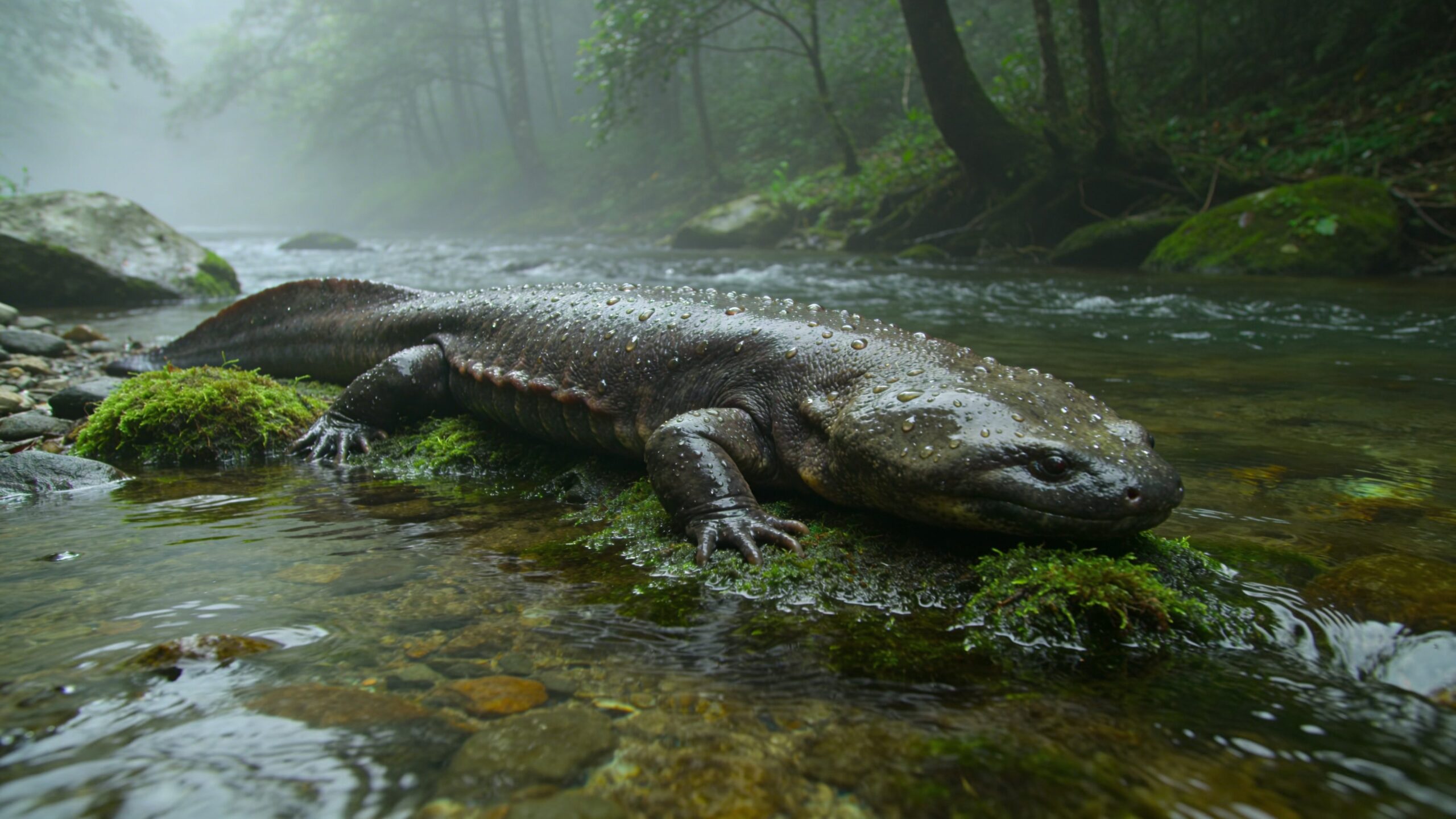
The Chinese giant salamander, scientifically known as Andrias davidianus, is one of the most extraordinary amphibians on Earth and holds the distinction of being the largest living amphibian species. Native to freshwater systems in China, this elusive creature has fascinated scientists and nature enthusiasts alike for centuries due to its immense size, ancient lineage, and unusual appearance. It belongs to a group of amphibians that have changed very little over millions of years, making it a living link to prehistoric ecosystems. Despite its impressive presence, it spends most of its life hidden beneath rocks or submerged in murky riverbeds, rarely seen by humans. Understanding this species provides a window into both natural history and the delicate balance of freshwater ecosystems. The Chinese giant salamander can grow to lengths exceeding five feet, with a broad, flattened body and wrinkled skin that helps it absorb oxygen directly from water. It is often referred to as a “living fossil,” not only because of its ancient ancestry but also because it retains primitive characteristics that have long disappeared in other amphibians. This article explores its biology, habitat, behavior, and ecological importance in a way that remains accessible and engaging for general readers.
A: Yes, it holds the record for the largest living amphibian species.
A: In cool, fast-flowing rivers and streams in China.
A: It uses lungs but primarily absorbs oxygen through its skin.
A: Fish, insects, crustaceans, and other small aquatic animals.
A: No, it is generally shy and avoids human interaction.
A: It uses vibration sensors and quick jaw movements to capture prey.
A: It is almost entirely aquatic and rarely leaves the water.
A: It can live for several decades under suitable conditions.
A: Because it has changed very little over millions of years.
A: Its size, ancient lineage, and skin-based respiration set it apart.
A Giant Among Amphibians
The sheer size of the Chinese giant salamander sets it apart from nearly all other amphibians in the world. Adults can reach lengths of up to 1.8 meters, though most individuals are smaller in the wild. Their bodies are thick and muscular, with short limbs and a broad head that gives them a somewhat prehistoric appearance. Their skin is typically dark brown or gray with mottled patterns that provide excellent camouflage against river stones and muddy bottoms. This natural disguise allows them to remain hidden from both predators and prey.
Unlike many amphibians that rely heavily on lungs, the Chinese giant salamander absorbs much of its oxygen through its skin, which is why it thrives in cold, fast-flowing streams with high oxygen content. The folds and wrinkles on its skin increase surface area, enhancing this unique breathing method. Its eyes are small and poorly adapted for vision, reflecting its reliance on other senses to navigate and hunt. This combination of physical traits makes it a highly specialized and effective inhabitant of its aquatic environment.

Ancient Lineage and Evolutionary Story
The Chinese giant salamander belongs to a lineage that dates back over 170 million years, placing it among the most ancient amphibians still alive today. Fossil records reveal that its ancestors roamed the Earth alongside dinosaurs, surviving dramatic shifts in climate, geography, and biodiversity. While many species have evolved significantly over time, this salamander has retained many primitive features, offering scientists valuable insights into early amphibian evolution. Its evolutionary stability is both remarkable and rare in the natural world. This ancient heritage is evident in its physiology and behavior, which differ noticeably from more modern amphibians like frogs and newts. Its reproductive strategies, skeletal structure, and aquatic lifestyle all reflect adaptations that have remained effective for millions of years. Studying the Chinese giant salamander helps researchers understand how certain species can persist with minimal evolutionary change, provided their environments remain stable. It is a living reminder of the deep history embedded within Earth’s ecosystems.
Natural Habitat and Geographic Range
The Chinese giant salamander is primarily found in cool, fast-flowing mountain streams and rivers throughout central and southern China. These habitats are characterized by clean, well-oxygenated water and rocky substrates that provide ample hiding places. The salamanders prefer areas with minimal disturbance, often selecting locations where they can remain concealed beneath large stones or within underwater crevices. Their survival is closely tied to the quality of these freshwater systems.
Seasonal changes influence their activity levels, with cooler temperatures generally supporting higher levels of movement and feeding. During warmer periods, they may retreat deeper into shaded or underground refuges to maintain suitable conditions. The fragmentation of river systems and changes in water quality have made their natural habitats increasingly isolated, which can affect population dynamics over time. Despite these challenges, the species continues to occupy pockets of suitable environments where conditions remain favorable.
Behavior Beneath the Surface
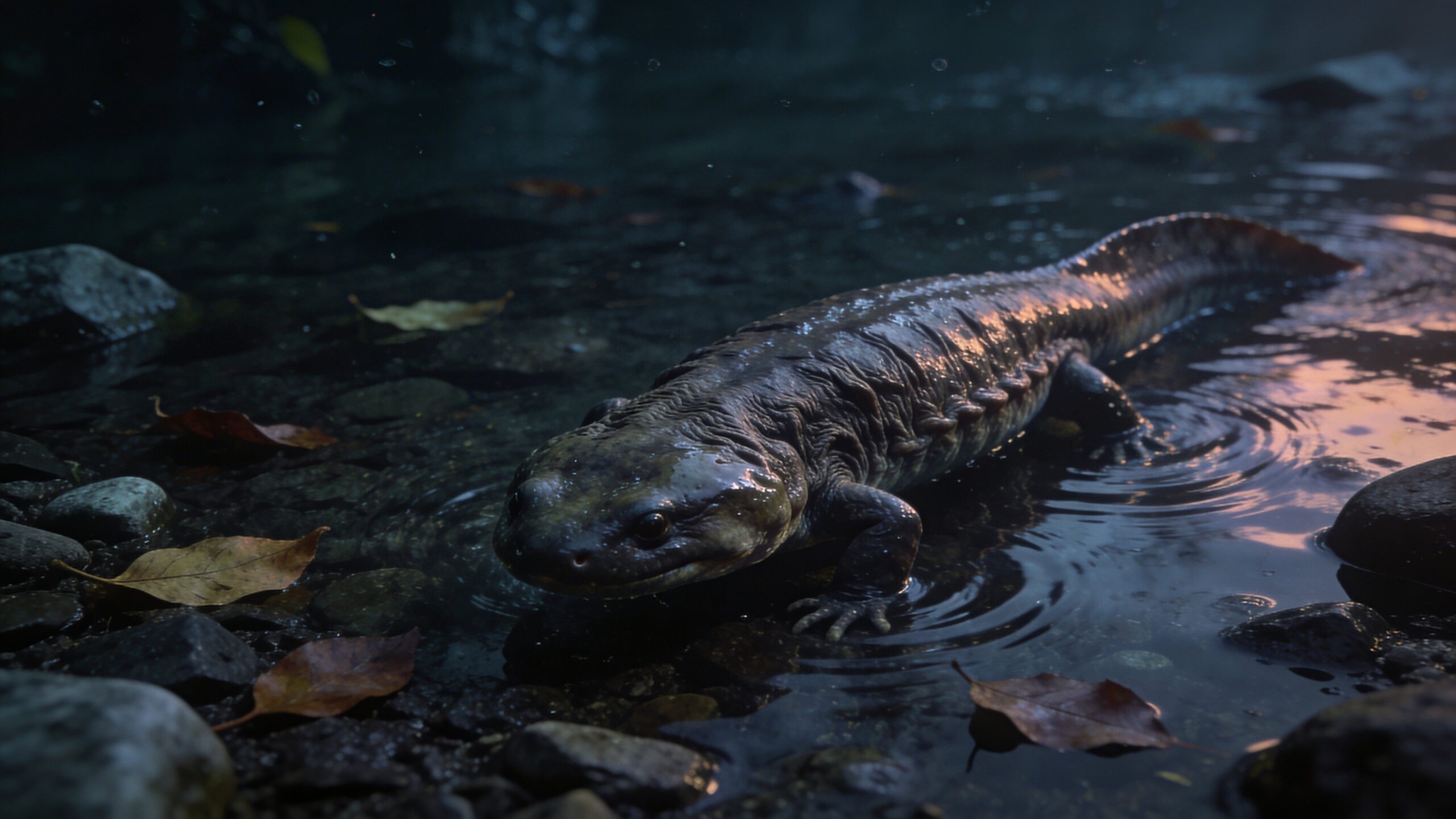
The Chinese giant salamander is primarily nocturnal, becoming most active during the night when it ventures out to hunt and explore its surroundings. During the day, it remains hidden, relying on its camouflage and the protection of its environment to avoid detection. Its movements are slow and deliberate, conserving energy while maintaining a steady presence in its habitat. This behavior reflects a strategy that prioritizes efficiency over speed. Rather than relying on vision, the salamander uses specialized sensory organs along its body to detect vibrations and changes in water pressure. These sensory adaptations allow it to locate prey even in complete darkness or murky conditions. When it detects movement, it strikes quickly, using its powerful jaws to capture food. This combination of patience and precision makes it an effective predator within its ecological niche.
Diet and Feeding Habits
The diet of the Chinese giant salamander consists mainly of aquatic organisms such as fish, crustaceans, insects, and smaller amphibians. It is an opportunistic feeder, meaning it will consume a wide range of prey depending on availability. Its feeding strategy involves waiting motionless until prey comes within reach, then snapping its jaws shut with surprising speed. This ambush technique is well-suited to its low-energy lifestyle.
Juvenile salamanders tend to feed on smaller organisms, gradually shifting to larger prey as they grow. Their slow metabolism allows them to survive on relatively infrequent meals, which is advantageous in environments where food availability may fluctuate. By preying on a variety of species, they play a role in maintaining balance within their ecosystems. Their feeding habits contribute to the regulation of aquatic populations and the overall health of freshwater habitats.
Reproduction and Life Cycle
Reproduction in the Chinese giant salamander is a fascinating process that typically occurs during the late summer months. Males establish and defend underwater nesting sites, often located in cavities or burrows along riverbanks. Females deposit strings of eggs within these nests, which the males then guard diligently. This level of parental care is relatively uncommon among amphibians and highlights the species’ unique reproductive strategy. After fertilization, the eggs develop into larvae that resemble miniature versions of the adults, complete with external gills. As they mature, they undergo gradual changes that allow them to adapt fully to their aquatic environment. The growth process is slow, and individuals may take several years to reach maturity. This extended development period makes stable environmental conditions especially important for successful reproduction.
Ecological Importance in Freshwater Systems
The Chinese giant salamander plays a significant role in the ecosystems it inhabits, acting as both predator and indicator of environmental health. By feeding on a variety of aquatic organisms, it helps maintain balanced populations and prevents any single species from dominating the ecosystem. This balance is essential for the long-term stability of freshwater environments, where even small disruptions can have cascading effects.
Additionally, the presence of these salamanders often signals a healthy, well-functioning ecosystem. Because they require clean, oxygen-rich water, their survival is closely linked to water quality. Changes in their populations can provide valuable information about the state of their habitat. As such, they are often considered a key species for understanding and monitoring freshwater ecosystems.
Human Connections and Cultural Significance
Throughout history, the Chinese giant salamander has held a place in local culture and folklore. In some regions, it has been associated with myths and legends, often regarded as a mysterious or even mystical creature due to its unusual appearance and elusive nature. Its deep, croaking vocalizations have contributed to its reputation, sometimes earning it the nickname “baby fish” in local traditions. Human interaction with this species has varied over time, ranging from curiosity and reverence to practical use. In modern times, it has become a subject of scientific interest and conservation awareness. Educational efforts have helped increase public understanding of its importance, encouraging a more balanced relationship between people and this remarkable amphibian. Its cultural and scientific significance continues to evolve as awareness grows.
Subtle Conservation Realities
While discussions around conservation are often complex, it is clear that the Chinese giant salamander faces a range of environmental pressures. Changes in habitat quality, water conditions, and ecosystem dynamics all influence its long-term survival. Efforts to protect freshwater systems and maintain ecological balance can benefit not only this species but also the many organisms that share its environment.
Conservation approaches often focus on preserving natural habitats and supporting sustainable interactions between humans and ecosystems. By promoting awareness and responsible stewardship, it becomes possible to maintain the conditions that allow species like the Chinese giant salamander to thrive. These efforts reflect a broader commitment to preserving biodiversity and ensuring that unique species continue to exist for future generations.
Why This Species Still Matters Today
The Chinese giant salamander remains a powerful symbol of resilience and continuity in the natural world. Its survival across millions of years demonstrates the strength of well-adapted species and the importance of stable environments. For general readers, it offers a compelling example of how ancient life forms continue to shape modern ecosystems. Its presence invites curiosity and encourages a deeper appreciation for the diversity of life on Earth. In a rapidly changing world, understanding species like this salamander helps bridge the gap between past and present. It reminds us that even the most ancient creatures still have a place in today’s ecosystems, contributing to their complexity and richness. By learning about the Chinese giant salamander, we gain insight not only into one species but also into the broader story of life itself.
Animal Product Reviews
Dive into Animal Streets’ Animal Product Reviews — your guide to the best gear, gifts, books, and gadgets inspired by the animal kingdom. From land-roaming lions to ocean-gliding whales, from household pets to prehistoric giants, we explore top-rated products for enthusiasts, educators, and animal lovers alike. Whether you’re shopping for toys, decor, field gear, or fun collectibles, we’ve sniffed out the best so you can discover it all in one wild place!