
A Distinctive Appearance in the Amphibian World
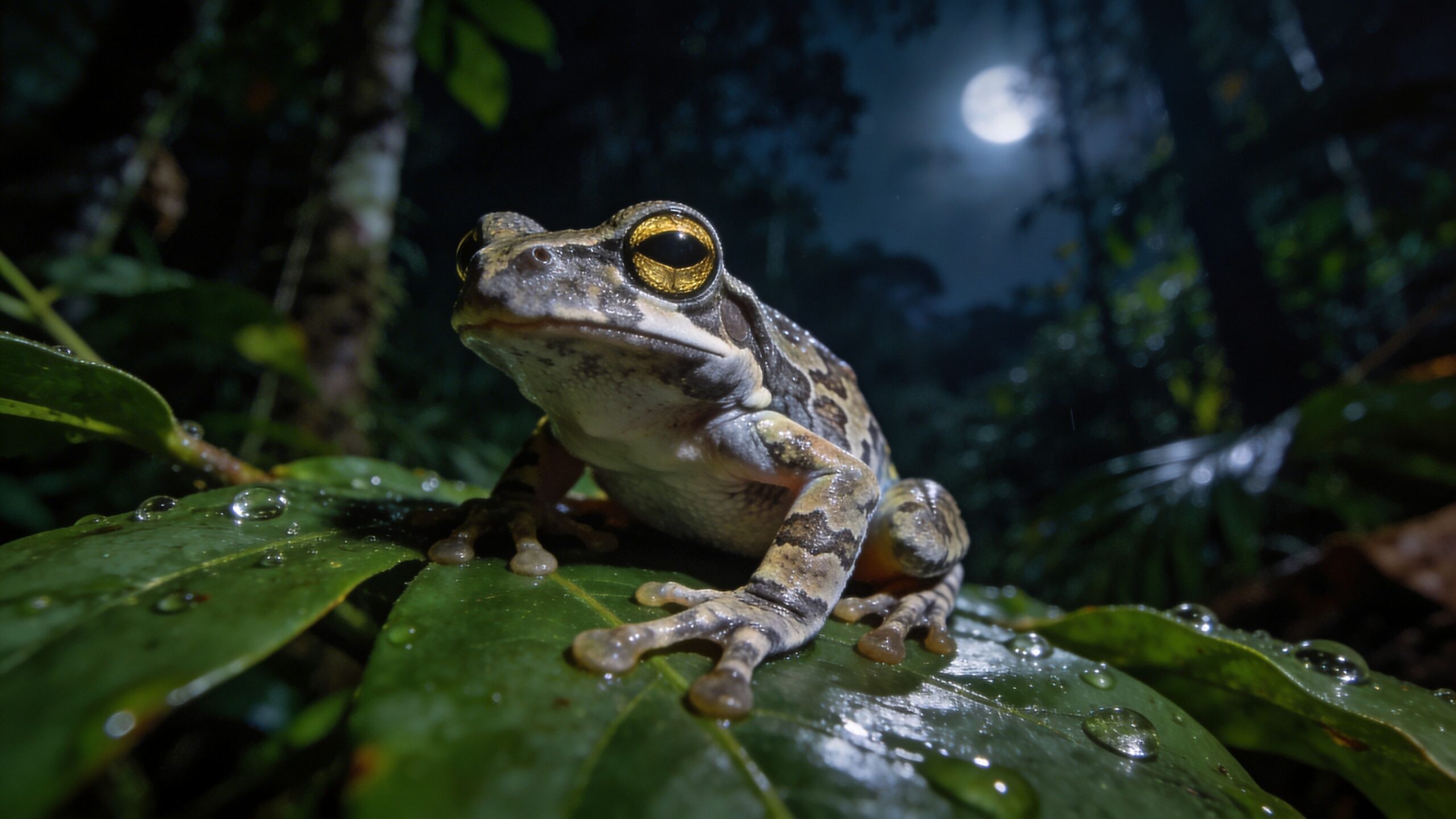
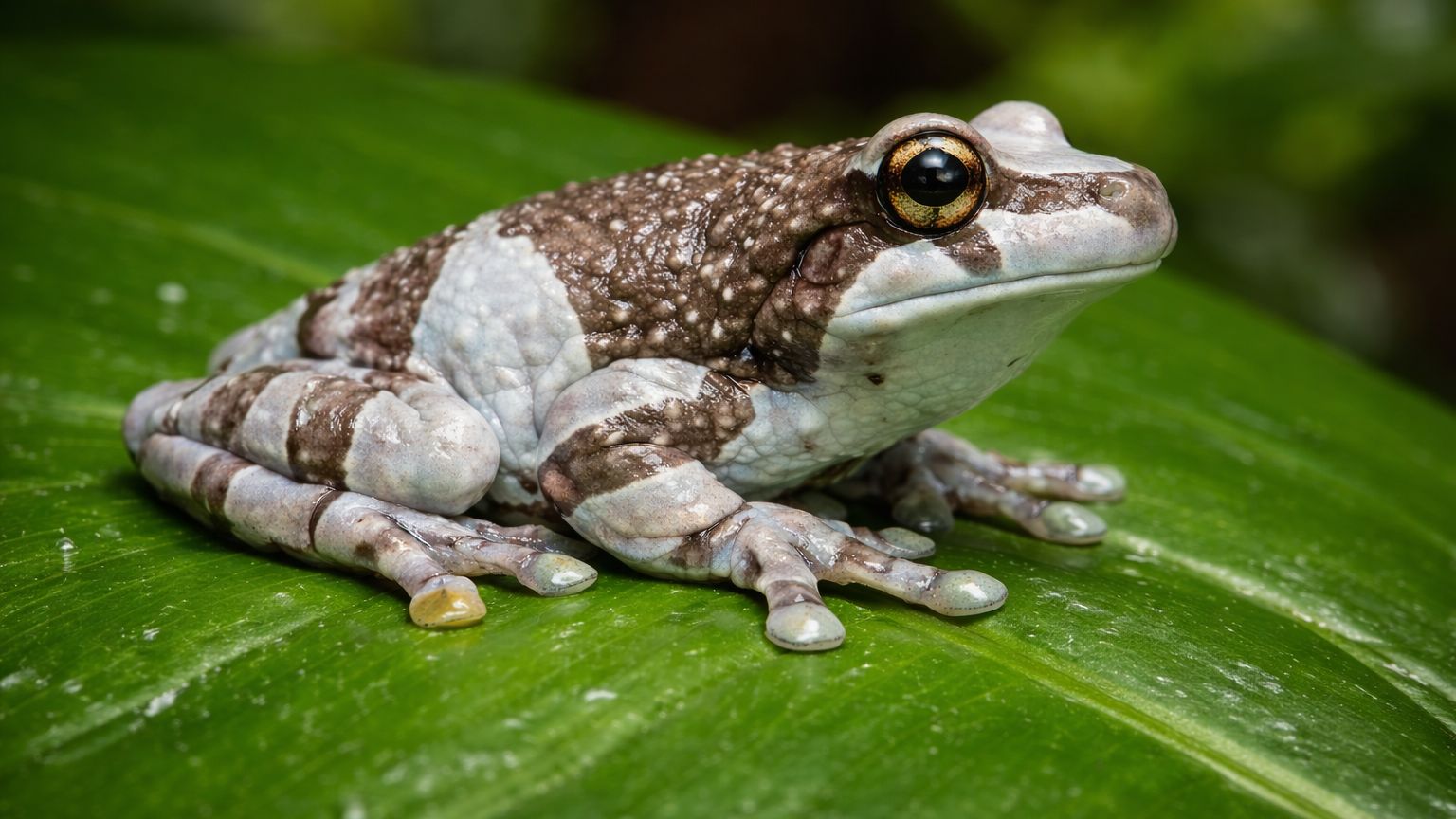
One of the first things people notice about the Amazon Milk Frog is its striking skin pattern. Its body is typically a mixture of light gray, bluish gray, or pale silver covered with dark brown or chocolate-colored bands and blotches. This marbled pattern acts as natural camouflage against tree bark, moss, and shadowed rainforest surfaces. The frog’s skin also has a slightly bumpy texture, which helps it blend into the rough surfaces of branches and trunks. The frog’s eyes are another standout feature. Large, round, and usually golden or copper-colored, they give the Amazon Milk Frog a surprisingly expressive appearance. These eyes provide excellent nighttime vision, allowing the frog to detect insects and small prey in low light conditions. Vertical pupils also help regulate the amount of light entering the eye, improving its ability to function both during twilight and in complete darkness.
Adult Amazon Milk Frogs are relatively large compared to many other tree frogs. They typically reach lengths of about two and a half to four inches. Their limbs are strong and muscular, with large toe pads that function like natural suction cups. These pads allow them to cling firmly to leaves, vines, and smooth tree bark, even in wet and slippery rainforest environments. Combined with flexible joints and powerful legs, these adaptations make them excellent climbers.
Life in the Trees: Habitat and Range
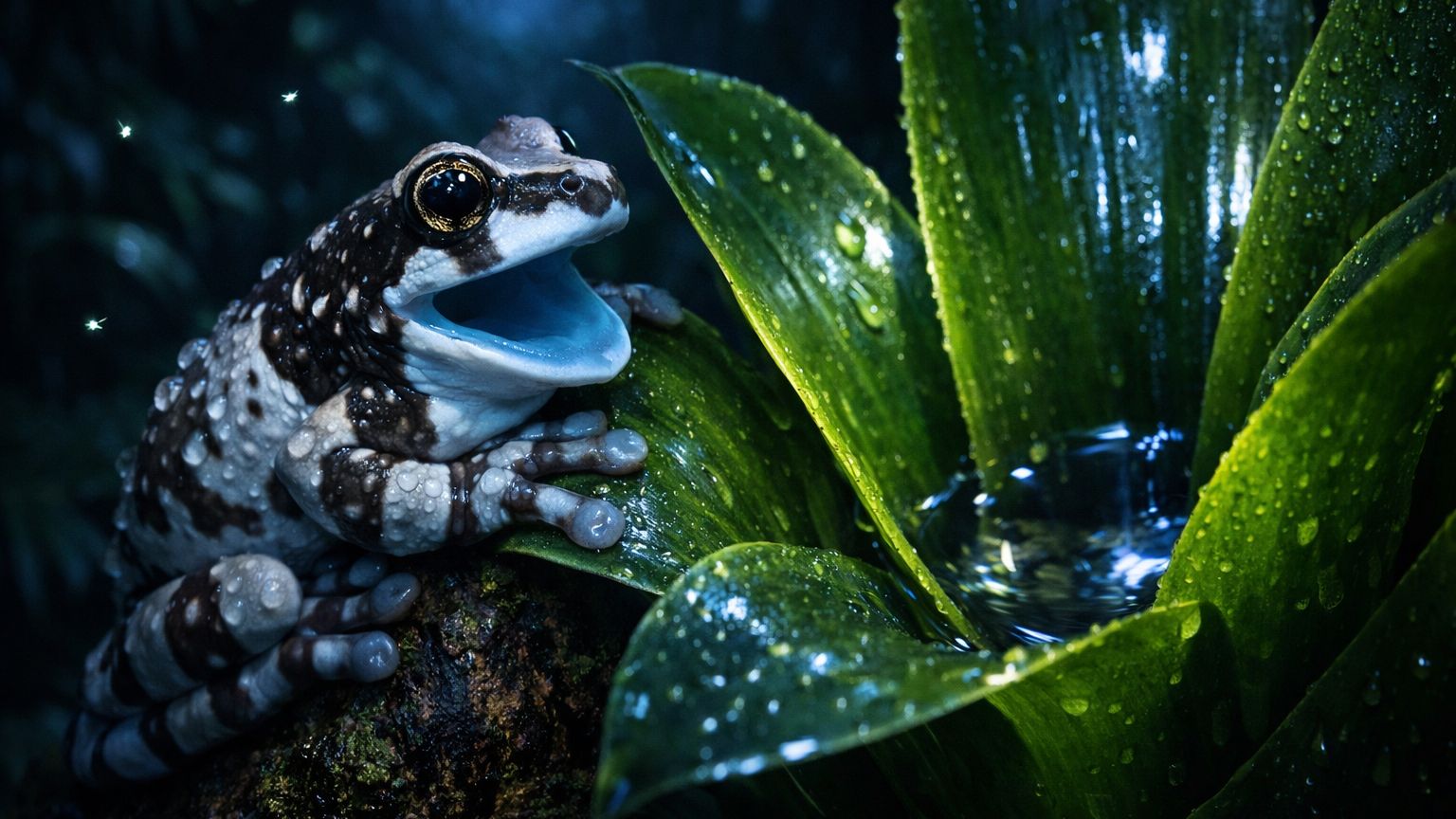
The Amazon Milk Frog is native to tropical rainforests where warm temperatures and high humidity dominate year-round. These frogs are most often found in the upper layers of forests, where thick vegetation and tree cavities provide shelter. Hollow branches, tree holes, and water-filled plants such as bromeliads often serve as safe resting spots during the day. These locations protect the frog from predators and maintain the moisture needed for amphibian skin health.
Rainforests provide an ideal environment because they offer constant access to water and abundant insect life. The dense canopy also moderates temperature and shields animals from direct sunlight. The Amazon Milk Frog benefits from this stable climate, as amphibians depend heavily on moisture to prevent their skin from drying out. Their skin is highly permeable, meaning it can absorb water directly from the environment.
Although they prefer untouched rainforest habitats, Amazon Milk Frogs are surprisingly adaptable. They may occasionally be found near forest edges or areas where trees remain plentiful. However, they still rely on tree cavities and elevated pools of water for reproduction and shelter. This reliance on specific tree structures makes mature forests particularly important for their survival.
Nighttime Hunters of the Rainforest
Like many amphibians, the Amazon Milk Frog is primarily nocturnal. As darkness settles over the rainforest, these frogs emerge from their daytime hiding spots and begin searching for food. Their slow, deliberate movements help them avoid detection while stalking prey among leaves and branches. With patience and precision, they wait for insects to come within striking distance before launching their sticky tongues. Their diet consists mainly of insects and other small invertebrates. Common prey includes crickets, moths, flies, beetles, and small spiders. Occasionally they may consume slightly larger prey such as small lizards or other tiny amphibians. This opportunistic feeding strategy allows them to take advantage of whatever food sources are available in the rainforest canopy.
The frog’s large eyes and keen sense of movement detection help it locate prey even in dim lighting. Once an insect is spotted, the frog can strike quickly, extending its sticky tongue with impressive speed. After capturing its meal, it retreats to a secure perch where it can eat undisturbed. This nightly hunting routine continues for several hours before the frog returns to its daytime resting place.
The Curious Case of the Milky Defense
The Amazon Milk Frog’s name comes from one of its most unusual characteristics: a thick, milky white secretion that can ooze from its skin when the animal feels threatened. This substance is produced by specialized glands in the frog’s skin and serves as a chemical defense against predators. When a predator attempts to grab or bite the frog, the secretion can irritate the attacker’s mouth or eyes, encouraging it to release the frog.
This defense mechanism is particularly important for a slow-moving species like the Amazon Milk Frog. Unlike some frogs that rely on speed to escape danger, this species often depends on camouflage and chemical deterrence instead. The milky secretion also has antibacterial properties, which may help protect the frog from infections in the humid rainforest environment.
Although the secretion can be irritating, it is generally not dangerous to humans. However, handling the frog without proper care can cause skin irritation or discomfort. For this reason, researchers and wildlife handlers typically wash their hands after contact. The presence of these chemical defenses highlights the complex survival strategies amphibians use to thrive in predator-rich environments.
A Unique Reproductive Strategy
Breeding for Amazon Milk Frogs usually occurs during the rainy season when water sources become abundant throughout the forest. Male frogs call loudly from tree cavities or branches near water, producing deep croaking sounds that carry through the humid night air. These calls attract females and also warn rival males to stay away from their chosen territory. Once a female approaches, the male clasps her in a behavior known as amplexus. The pair often chooses water-filled tree holes or natural cavities as a breeding site. The female then lays a cluster of eggs in the water while the male fertilizes them externally. These protected micro-pools provide a relatively safe nursery for the developing offspring.
The eggs hatch into tadpoles that remain in these small pools until they complete their transformation into young frogs. Because space in tree holes is limited, tadpoles may compete for food and resources. Over time they develop legs, absorb their tails, and eventually climb out of the water to begin life as miniature tree frogs. This remarkable life cycle highlights the adaptability of amphibians to specialized habitats.
Behavior, Communication, and Social Signals
Communication plays a major role in the life of the Amazon Milk Frog. Males use vocalizations not only to attract mates but also to establish territory among neighboring frogs. Their calls are low and resonant, often described as a series of deep croaks or buzzing notes that echo through the forest canopy. These calls are most common during warm, humid nights following rainfall.
Beyond vocal communication, body posture and movement also play a role in frog interactions. Males may inflate their vocal sacs dramatically while calling, creating a visible display that signals strength and readiness to compete. Rival males sometimes engage in brief wrestling matches if territories overlap or if both attempt to court the same female.
Despite these occasional confrontations, Amazon Milk Frogs are generally calm animals. Much of their time is spent resting quietly on branches or inside tree cavities. Their slow and deliberate behavior conserves energy and reduces exposure to predators. Observing these frogs in their natural environment reveals a delicate balance between activity, caution, and communication.
Predators and Natural Challenges
Life in the rainforest is filled with potential dangers, and the Amazon Milk Frog faces a variety of predators. Birds, snakes, and small mammals are among the most common threats. Tree-dwelling snakes in particular are well adapted to hunting frogs in the canopy. Their ability to move silently through branches makes them formidable predators. The frog’s camouflage plays a key role in avoiding detection. When resting against bark or leaves, its marbled pattern blends almost perfectly with surrounding textures. Remaining still is often the best defense, as many predators rely heavily on movement to locate prey. If discovered, the frog may rely on its milky secretion or attempt to leap away to a nearby branch.
Environmental challenges also shape the frog’s daily life. Heavy rains, fluctuating humidity, and competition for breeding sites all influence survival. Despite these obstacles, the Amazon Milk Frog has evolved strategies that allow it to persist across large areas of tropical forest. Its resilience demonstrates how specialized adaptations can help animals thrive in demanding ecosystems.
A Subtle Conservation Story
Compared with many amphibians, the Amazon Milk Frog currently maintains a relatively stable presence across much of its range. Its wide distribution and adaptability to different forest habitats provide a level of resilience against localized disturbances. However, like many rainforest species, it still depends on healthy forest ecosystems for long-term survival.
Deforestation, habitat fragmentation, and environmental pollution can gradually reduce the availability of tree cavities and breeding sites. These changes may not immediately threaten the species but can affect populations over time. Protecting large areas of intact rainforest helps maintain the complex ecological relationships that frogs rely on.
Conservation efforts often focus on preserving biodiversity hotspots and promoting sustainable land use practices. By safeguarding rainforest habitats, scientists and conservationists help protect not only the Amazon Milk Frog but also countless other species that share its environment. The frog’s story is a reminder of how interconnected tropical ecosystems truly are.
Why the Amazon Milk Frog Captures Our Imagination
Few amphibians combine visual charm, unusual defenses, and fascinating behavior as effectively as the Amazon Milk Frog. Its marbled skin patterns, expressive eyes, and tree-top lifestyle make it one of the most recognizable frogs in South American rainforests. For many people, it serves as a gateway species that sparks curiosity about amphibians and tropical biodiversity. Scientists continue to study this frog to better understand amphibian biology, rainforest ecology, and chemical defenses. Each discovery reveals new layers of complexity in the life of this seemingly simple creature. From its milky skin secretions to its canopy-based breeding strategy, the Amazon Milk Frog demonstrates how evolution shapes animals to fit their environment perfectly.
For wildlife enthusiasts, photographers, and researchers alike, encountering this frog in its natural habitat can be an unforgettable experience. Watching it cling to a mossy branch under the glow of rainforest moonlight highlights the beauty and mystery of tropical ecosystems. In a world filled with extraordinary wildlife, the Amazon Milk Frog remains a small but unforgettable ambassador of the rainforest.