The Biology That Defines Mole Salamanders
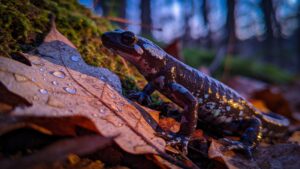
Mole salamanders are built for a life that balances both land and water. Unlike fully aquatic salamanders, adults spend most of their time in underground tunnels, abandoned rodent burrows, or hidden pockets beneath rocks and logs. Their bodies are thicker and more muscular than many other salamander species, allowing them to push through soil and leaf litter with surprising efficiency.
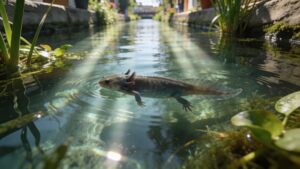
These amphibians rely heavily on moisture and cool temperatures, which is why they are most active during rainy nights or in the damp conditions of spring and autumn. When breeding season arrives, adults travel to shallow vernal pools that form from snowmelt and rainfall. These temporary pools provide safe nurseries for salamander eggs and larvae because they usually dry up before fish can establish themselves as predators.
Life Cycles Shaped by Water and Soil
The life cycle of mole salamanders begins in water but quickly expands into the hidden world beneath the forest floor. Females deposit clusters of eggs in quiet pools, attaching them to submerged vegetation or branches. These eggs develop into aquatic larvae that resemble tiny fish, complete with external gills that allow them to breathe underwater. As the larvae grow, they gradually transform into juvenile salamanders capable of living on land. During this transformation, known as metamorphosis, the gills disappear, lungs develop, and the young salamanders begin their transition into a terrestrial lifestyle. Once they leave the water, many species spend the majority of their lives underground, emerging primarily to hunt or reproduce.
Spotted Salamanders: Forest Icons
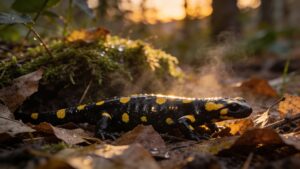
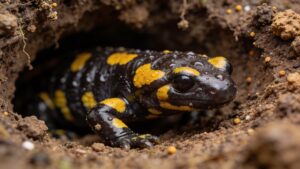
One of the most famous members of the mole salamander group is the spotted salamander, a striking amphibian recognized by its glossy black body decorated with bright yellow spots. These salamanders are commonly found in deciduous forests across eastern North America and are well known for their synchronized breeding migrations during early spring rains.
Spotted salamanders play an important ecological role within forest ecosystems. They feed on insects, worms, and small invertebrates found in soil and leaf litter, helping maintain balanced populations of many forest organisms. Their eggs also support a unique relationship with algae, forming one of the rare examples of a symbiotic partnership between vertebrates and photosynthetic organisms.
Tiger Salamanders: Giants of the Salamander World
Tiger salamanders are among the largest terrestrial salamanders in North America and represent one of the most widespread species within the mole salamander group. Their bold patterns of yellow or olive stripes across dark bodies give them a striking appearance that makes them easily recognizable. Unlike many forest-dwelling relatives, tiger salamanders inhabit a wide range of environments including grasslands, prairies, agricultural fields, and desert edges. They spend most of their lives underground in deep burrows where moisture remains stable. Their adaptability and wide distribution have made them one of the most successful salamander species across the continent.
Marbled Salamanders: Autumn Breeders
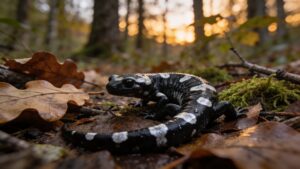
While most mole salamanders breed in spring, marbled salamanders follow a completely different seasonal rhythm. These distinctive amphibians, marked by dramatic white or silver bands across dark bodies, migrate to breeding sites during autumn rains instead of spring.
Marbled salamanders often lay their eggs in dry or partially dry pond basins before winter rains fill the pools. The eggs remain dormant until water levels rise, allowing the larvae to hatch into pools already rich with nutrients and food sources. This unusual reproductive strategy helps the species avoid competition with other salamanders that breed earlier in the year.
Jefferson and Blue-Spotted Salamanders
Two closely related members of the mole salamander family are the Jefferson salamander and the blue-spotted salamander. These species inhabit forests across northeastern North America and are particularly known for their complex reproductive biology. In some regions these salamanders participate in unusual reproductive systems involving hybrid lineages composed entirely of female salamanders. These unique populations borrow genetic material from males of related species to reproduce, creating one of the most fascinating genetic systems in the animal kingdom. Scientists continue to study these salamanders to better understand how hybridization and evolutionary adaptation can shape species over time.
The Mysterious World of Vernal Pools
Vernal pools are temporary wetlands that form in forests during spring rains and snowmelt. Though they may appear small or insignificant, these pools are vital breeding grounds for many amphibians, especially mole salamanders. Because the pools dry out later in the season, fish are usually absent, providing a safer environment for salamander eggs and larvae.
These temporary ecosystems support a remarkable variety of life. In addition to salamanders, vernal pools host fairy shrimp, insects, frogs, and numerous microscopic organisms. The seasonal appearance and disappearance of these pools create dynamic habitats that play an important role in forest biodiversity.
Why Mole Salamanders Matter to Ecosystems
Despite their secretive nature, mole salamanders are critical contributors to forest health. By feeding on insects, worms, and other small invertebrates, they help regulate populations of soil-dwelling organisms. This activity influences nutrient cycling and contributes to the balance of forest ecosystems. Mole salamanders also serve as important prey for predators including snakes, birds, raccoons, and foxes. Their presence links underground ecosystems with larger food webs, transferring energy from soil communities to animals higher in the food chain. In many forests, salamanders are among the most abundant vertebrates in terms of biomass.
Conservation Challenges and Hope for the Future
Like many amphibians, mole salamanders face growing environmental pressures. Habitat loss, road mortality during breeding migrations, pollution, and climate change all pose challenges for these sensitive animals. Because they rely on both underground habitats and seasonal wetlands, even small environmental changes can affect their populations.
Fortunately, conservation efforts aimed at protecting forests and vernal pools are helping many salamander populations remain stable. Scientists, land managers, and citizen scientists continue to monitor breeding migrations and protect important habitats. By understanding the needs of these amphibians, communities can help ensure that future generations will still witness the magical nighttime migrations of mole salamanders.
Continuing the Journey into the World of Mole Salamanders
The world of mole salamanders is far richer and more diverse than most people realize. Beneath quiet forests and grassy fields, these amphibians lead complex lives shaped by soil, water, and seasonal rhythms. Each species tells a unique story about adaptation, survival, and the delicate balance of ecosystems. This page serves as a gateway into that hidden world. As you continue exploring the individual species pages within this category, you will encounter salamanders with remarkable colors, unusual reproductive strategies, and fascinating ecological roles. Every species offers another glimpse into the mysterious underground lives of mole salamanders, inviting curious readers to keep discovering the wonders hidden beneath the forest floor.