
A Distinctive Amphibian Appearance
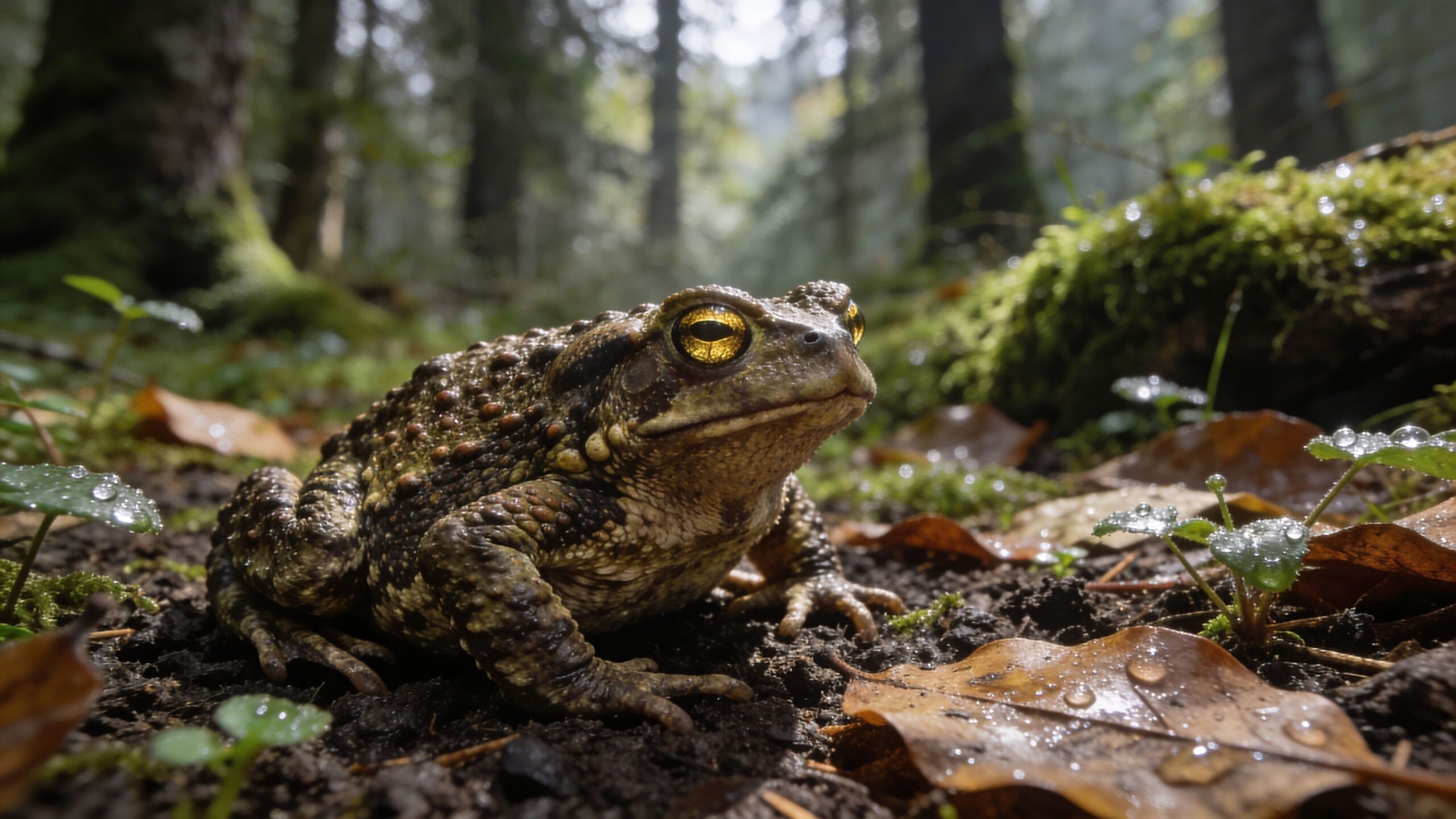
The Common European Toad is known for its robust body and characteristically rough skin. Adults typically grow between three and five inches long, although females are usually larger than males. Their skin is covered with small warts that create a bumpy texture, giving the toad its rugged appearance. Coloration ranges from brown and olive to gray or reddish tones, helping the animal blend into soil, leaf litter, and forest floors.
Behind each eye lies a pair of prominent glands known as parotoid glands. These glands produce a defensive secretion that discourages predators from attacking the toad. While the toxin is not dangerous to humans through casual contact, it serves as an effective deterrent to many animals. The presence of these glands is a key feature that distinguishes toads from many other amphibians.
The eyes of the Common European Toad are striking and expressive. They are typically copper or golden in color with horizontal pupils that allow the animal to detect movement effectively. Combined with its broad head and squat posture, these features give the toad a unique and somewhat thoughtful appearance. Its short limbs are well suited for slow hopping and walking rather than long leaps.
A Range Spanning Much of Europe
The Common European Toad has one of the widest distributions among European amphibians. Its range stretches from the Iberian Peninsula in the west to parts of western Asia in the east. It can also be found throughout the United Kingdom, Scandinavia, central Europe, and portions of the Mediterranean region. This wide distribution demonstrates the species’ remarkable adaptability to different climates and landscapes.
Although the toad prefers moist environments, it is surprisingly tolerant of various habitats. Forests, grasslands, farmland, gardens, and even city parks can support populations of Bufo bufo. As long as suitable breeding ponds exist nearby, the toads can thrive in many terrestrial environments. This flexibility has allowed the species to remain common across large parts of Europe. Seasonal changes strongly influence where the toads spend their time. During colder months they seek shelter beneath logs, stones, or underground burrows where they can hibernate. When temperatures rise in spring, they emerge and begin migrating toward breeding waters. These annual movements are one of the most dramatic events in the life of the Common European Toad.
A Life Mostly Lived on Land
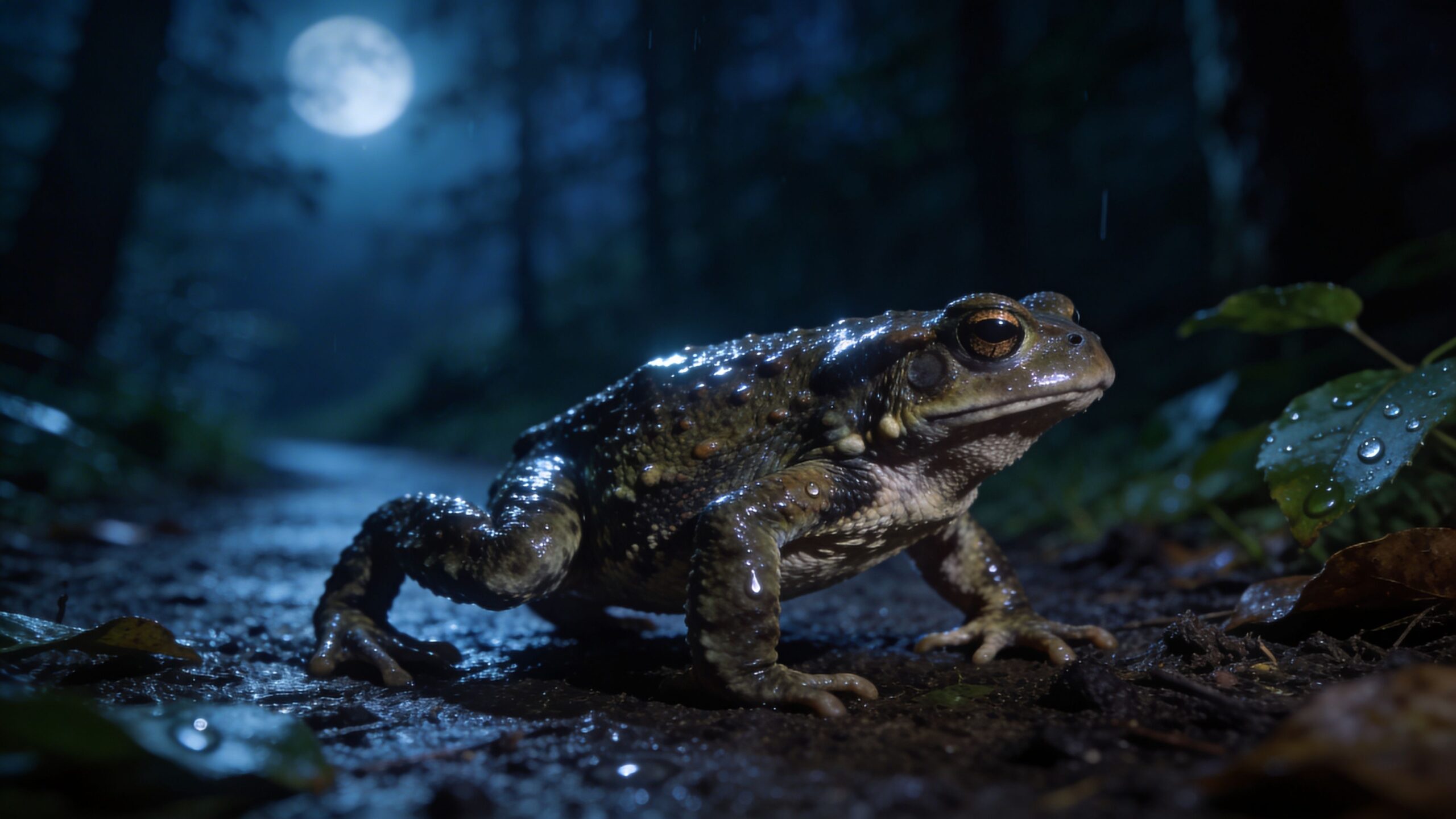
Although amphibians are often associated with water, the Common European Toad spends the majority of its life on land. Outside the breeding season, it roams through forests, fields, and gardens in search of food. Its movements are typically slow and deliberate, often occurring during nighttime hours when humidity is higher and predators are less active.
The toad’s skin plays a crucial role in maintaining moisture. While it is drier than that of frogs, it still allows gas exchange and requires humid conditions to function properly. For this reason, the toad often hides during the day beneath rocks, logs, or dense vegetation. These shelters help reduce water loss and protect the animal from heat and sunlight.
The species’ calm demeanor and slow movements may give the impression that it is vulnerable. However, its defensive toxins and camouflage make it surprisingly resilient. Many predators quickly learn that the toad is not an easy meal. As a result, adult Common European Toads often enjoy relatively long lifespans compared with many other amphibians.
Nighttime Hunters of the Forest Floor
The Common European Toad is primarily a nocturnal hunter. When darkness falls and humidity rises, it emerges from its daytime hiding places to search for food. Its diet consists mainly of insects and other small invertebrates found on the forest floor. Beetles, ants, worms, slugs, and spiders are common prey items. The toad hunts using a combination of patience and quick reflexes. It typically remains still and waits for prey to wander within striking distance. When the opportunity arises, the toad extends its sticky tongue with remarkable speed, capturing the insect and pulling it into its mouth. This feeding method allows the toad to conserve energy while still capturing a steady supply of food.
In gardens and agricultural areas, the Common European Toad often provides a natural form of pest control. By consuming large numbers of insects and slugs, it helps maintain ecological balance in local environments. This quiet service often goes unnoticed, yet it benefits both natural ecosystems and human landscapes.
Springtime Migrations and Breeding Rituals
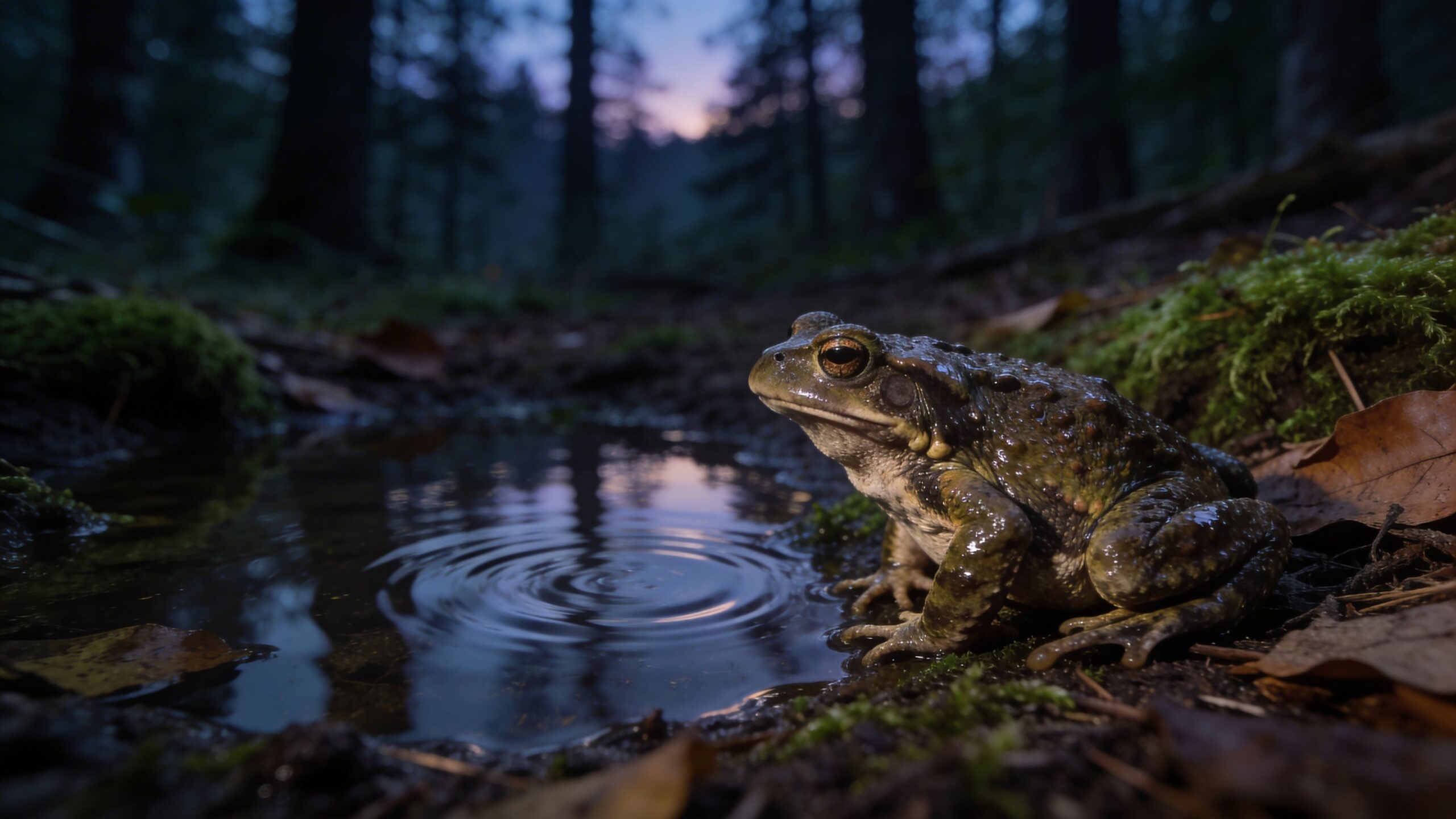
One of the most fascinating aspects of the Common European Toad’s life cycle occurs in early spring. As temperatures begin to rise, adult toads leave their winter shelters and begin migrating toward breeding ponds. These journeys can involve traveling hundreds or even thousands of meters across forests, fields, and roads.
When they reach the breeding site, males begin calling to attract females. The calls are low and subtle compared with the loud croaks of many frogs. Once a female arrives, the male climbs onto her back in a position called amplexus. The female then releases long strings of eggs into the water while the male fertilizes them externally.
Each female can produce several thousand eggs during a breeding event. These eggs form long gelatinous chains that wrap around aquatic vegetation. Within a few days, the eggs hatch into tiny black tadpoles that begin feeding and growing in the water.
From Tadpole to Toad
The early life of the Common European Toad begins as a small aquatic tadpole. These tadpoles swim in schools and feed on algae, plant material, and microscopic organisms found in the water. Over several weeks, they undergo a remarkable transformation known as metamorphosis.
During this transformation, the tadpoles develop legs, lungs, and other features required for life on land. Their tails gradually shrink as their bodies change shape. Eventually, they emerge from the water as tiny toadlets only a few millimeters long. These young toads often leave the pond in large numbers during warm, humid weather. The sight of thousands of tiny toads dispersing across the landscape can be one of the most dramatic events in amphibian life. Although many face challenges during their early stages, those that survive will grow into adults capable of repeating the cycle.
Defense Through Chemistry
Like many members of the toad family, the Common European Toad possesses chemical defenses. The parotoid glands behind its eyes produce substances that can irritate or deter predators. These secretions act as a powerful warning to animals that attempt to bite or swallow the toad.
Most predators quickly learn to avoid the toad after encountering these chemicals. Some animals may spit the toad out or refuse to attack it again. This defense strategy allows the toad to move slowly without relying on speed or agility for survival.
Interestingly, some predators have developed ways to deal with these toxins. Certain birds and mammals may flip the toad over and consume only the less toxic portions of its body. These interactions illustrate the ongoing evolutionary relationship between predators and prey.
Living Alongside Humans
The Common European Toad has adapted remarkably well to landscapes shaped by human activity. Gardens, parks, farmland, and suburban ponds often provide suitable habitat for these amphibians. As long as breeding water is available and shelter exists nearby, the toads can thrive.
Many people encounter them during evening walks or while working in their gardens. Their slow movements and calm demeanor make them easy to observe. Unlike some wildlife that avoids human presence entirely, the Common European Toad often coexists quietly in shared environments. Across Europe, community groups sometimes organize efforts to help migrating toads safely cross roads during the spring breeding season. These activities highlight the cultural connection between people and this amphibian. Even in modern cities and towns, the Common European Toad remains a familiar and valued part of the natural world.
A Longstanding Member of Europe’s Ecosystems
For centuries, the Common European Toad has been part of Europe’s forests, wetlands, and meadows. Its presence reflects the health of many ecosystems where amphibians serve as important indicators of environmental conditions. While populations vary across regions, the species continues to occupy a wide geographic range.
Amphibians often respond quickly to environmental changes such as habitat alteration, pollution, or climate shifts. Observing their populations helps scientists understand broader ecological trends. The Common European Toad therefore contributes valuable insights into the functioning of natural systems.
Despite the challenges faced by amphibians worldwide, Bufo bufo remains a resilient species across much of its range. Its quiet persistence across forests, gardens, and countryside landscapes demonstrates the remarkable adaptability of amphibian life.
Appreciating a Humble Amphibian
The Common European Toad may not possess the bright colors or dramatic calls of some amphibians, but its story is just as fascinating. From nighttime hunting to long spring migrations, its life cycle reveals a complex and resilient animal adapted to seasonal rhythms. Each year it quietly continues the ancient pattern of emerging from winter shelter, returning to water, and beginning the next generation.
Observing this amphibian encourages a deeper appreciation for the small creatures that share our environments. Even in busy human landscapes, the Common European Toad finds ways to survive and thrive. Its presence reminds us that wildlife does not always need wilderness to endure. Ultimately, Bufo bufo represents the quiet endurance of nature itself. Through patience, adaptation, and remarkable life cycles, this humble toad continues to inhabit the landscapes of Europe just as it has for centuries.