
Two Names, One Desert Giant
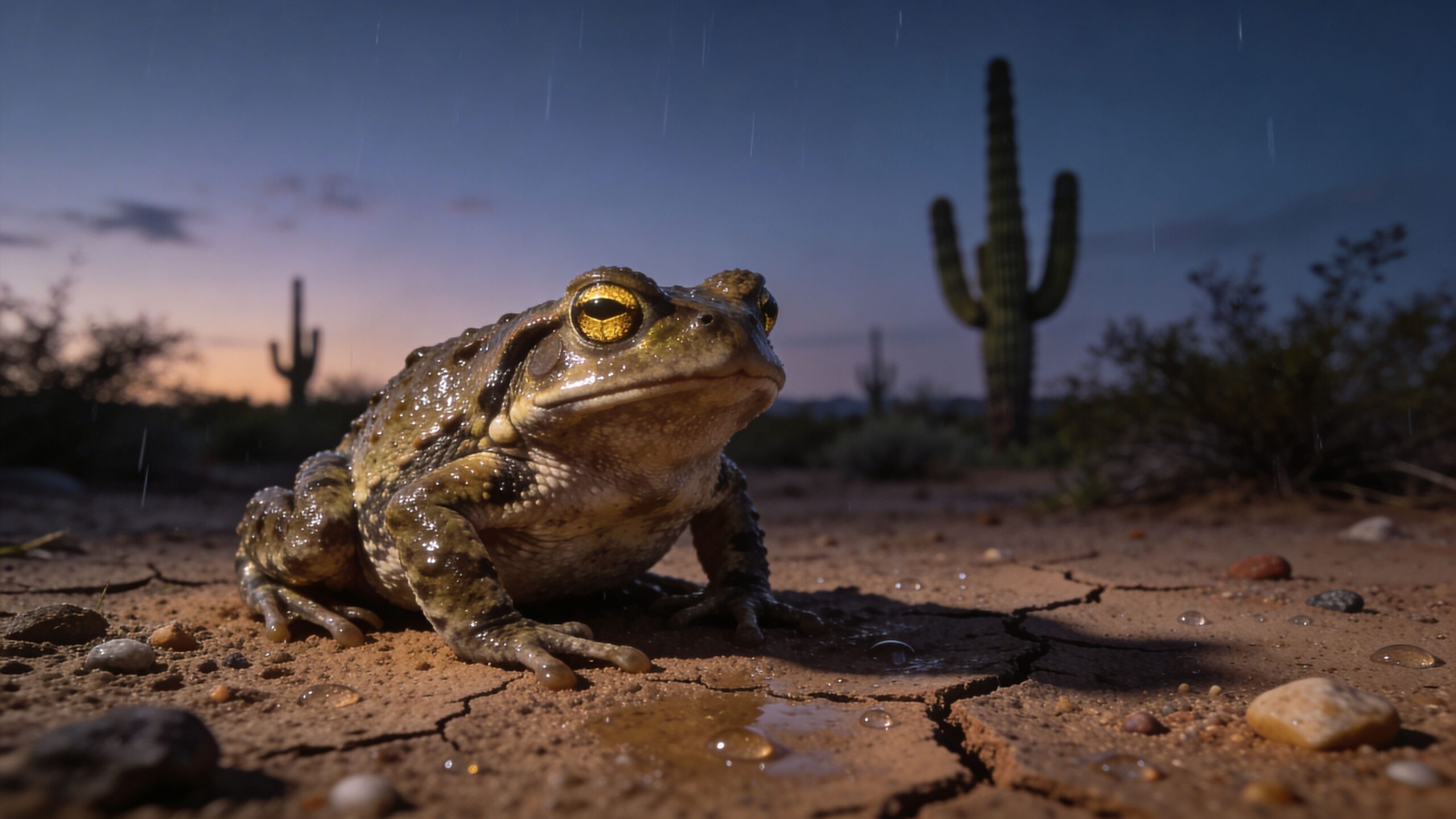
People often hear two common names for this species, and both point to something real about its identity. Sonoran Desert Toad emphasizes its strong link to the Sonoran Desert region, where summer monsoon storms create the brief wet windows it needs. Colorado River toad reflects how frequently it has been associated with riparian corridors, irrigated landscapes, and desert waterways that provide moisture and food. The toad is large for North America, with a broad body that looks almost like it was designed for storing water and energy. It can appear heavy and calm, but it is capable of quick movement when startled. Many first-time observers are surprised by its size and by how confidently it sits in open areas at night.
The confusion about names can also connect to older scientific naming, because the species was historically placed in the genus Bufo and is still referred to that way in older books. Today, Incilius alvarius is the scientific name most widely used, and it helps separate this species from other toads that share similar habitats. The name change does not alter the animal itself, but it can affect how people search for information. If you see references to Bufo alvarius, you are typically looking at the same species in a previous classification. For readers, the simplest approach is to remember the look and the region: a big desert toad with prominent glands behind its eyes and a life synchronized to summer storms. Once you have that picture in mind, the naming details become easier to navigate.
A Desert Body Built for Dry Times
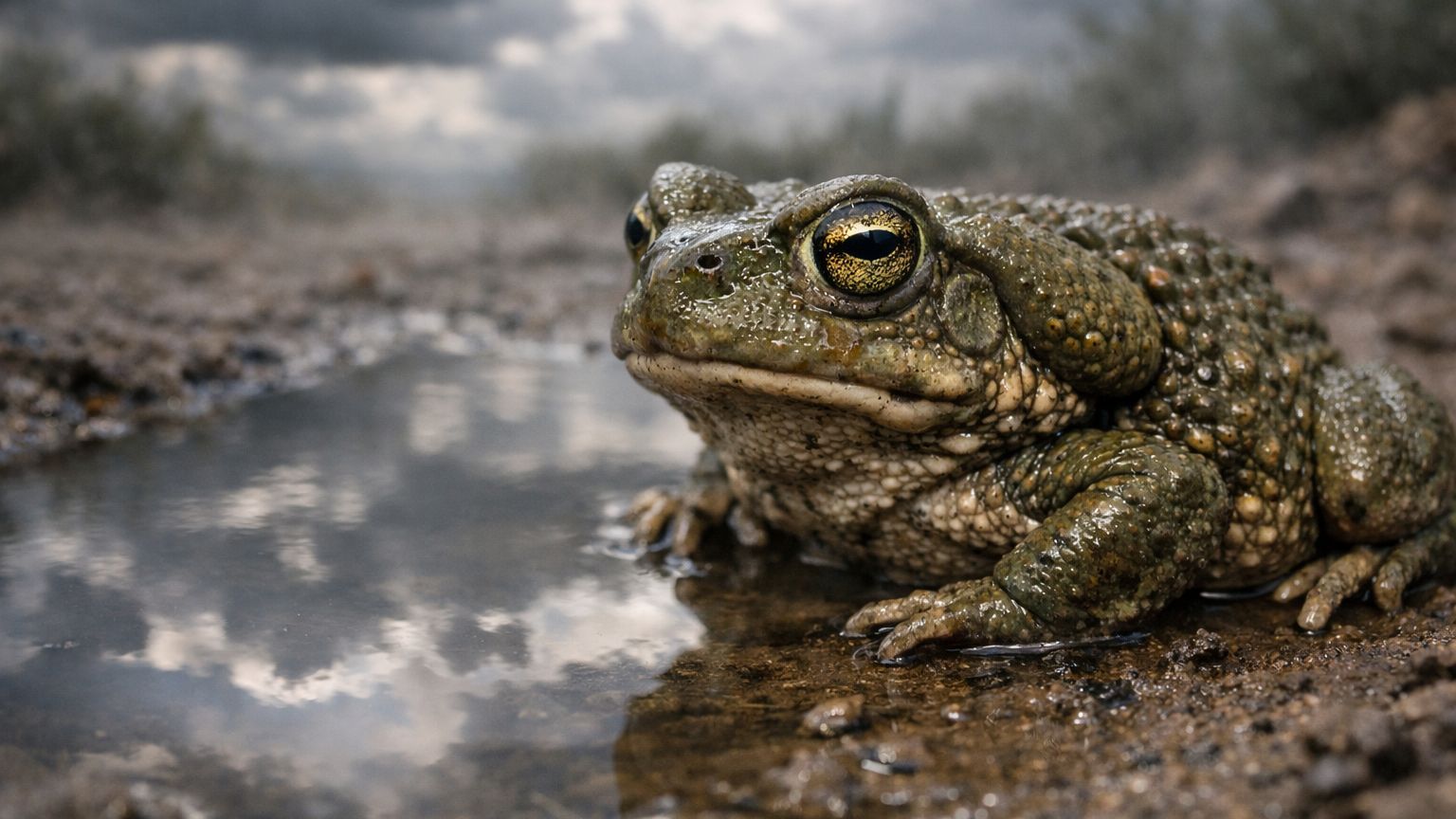
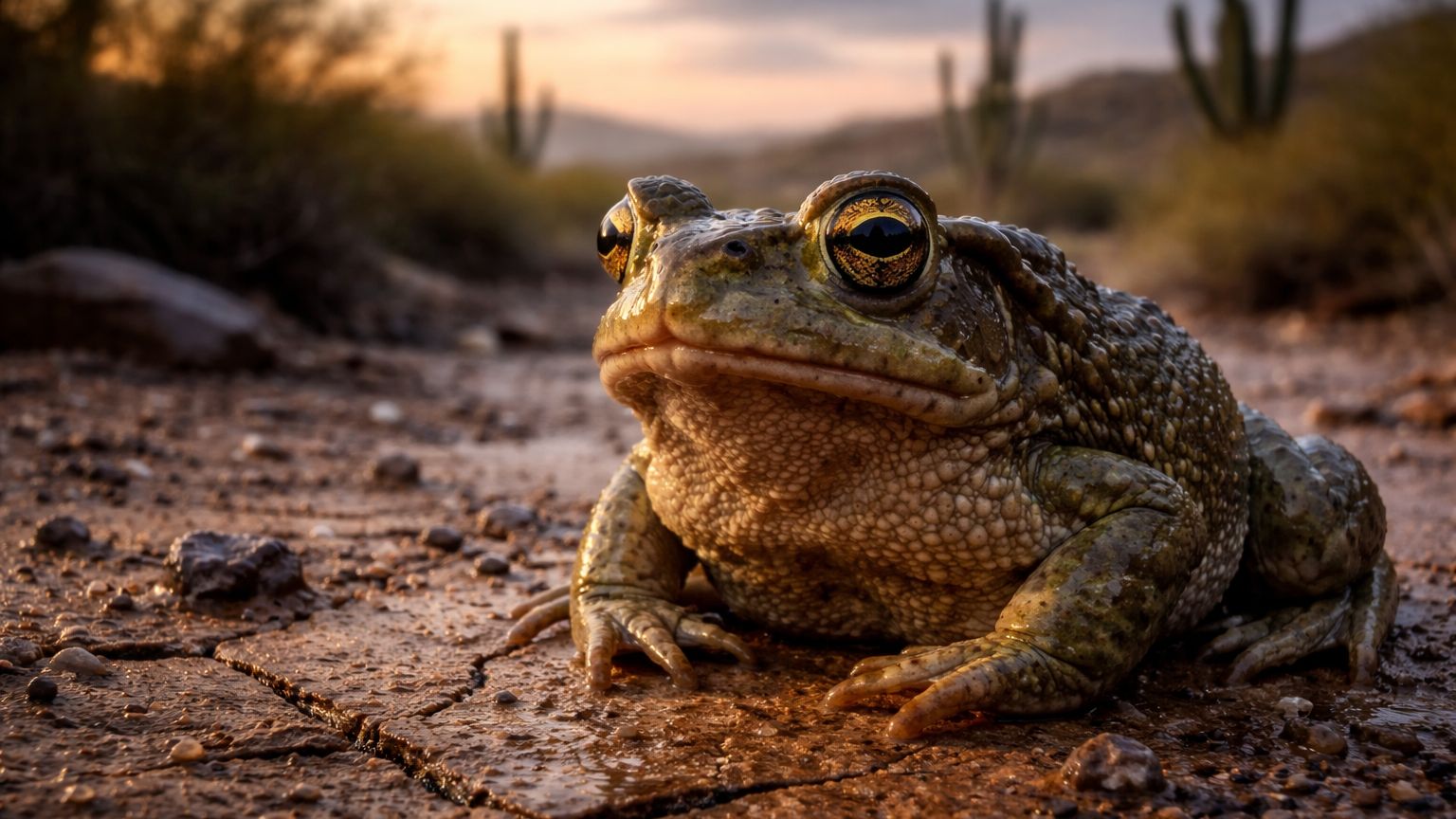
The Sonoran Desert Toad is instantly recognizable once you know what to look for. Its skin is usually olive, brown, or grayish, often with a slightly smoother look than some warty toads, though texture is still present and visible in good light. The most important features are the large parotoid glands behind the eyes, which can look like swollen pads or rounded bulges. These glands are part of its defense system and signal that this is not an animal most predators can eat safely. The eyes are often golden with horizontal pupils, giving the toad a steady, watchful appearance. Its head is broad, and its body is thick and muscular, especially around the legs. This build supports a strategy of endurance rather than constant motion. In the desert, surviving can be more about waiting than wandering, and the toad’s body helps it do exactly that. It can store energy reserves that carry it through long dry periods when it stays underground. When the rains come, that stored energy turns into sudden activity, including feeding and breeding. The toad’s skin and posture also help it reduce moisture loss, especially when it retreats into humid soil pockets. In a landscape where a single week can swing from scorching heat to soaking storms, the Sonoran Desert Toad is designed to handle both extremes without needing to migrate far.
Home Range Across the Sonoran Region
The Sonoran Desert Toad is closely tied to the Sonoran Desert and adjacent regions in the southwestern United States and northwestern Mexico. It is most often associated with southern Arizona and parts of Sonora, with occurrences also linked to suitable desert lowlands and riparian areas. What matters more than political boundaries is the presence of summer rains and landscapes that offer both shelter and temporary water. In natural settings, it can be found near washes, streams, and low desert flats where monsoon runoff pools for short periods. In human-altered environments, it may show up near canals, irrigation ditches, ponds, and other water sources that mimic the wet moments it relies on. This mix of natural and human-provided moisture is part of why encounters can happen in surprising places.
Its habitat choices are shaped by a need for underground shelter and access to food when conditions improve. During dry periods, it stays hidden in burrows or in soil cracks where humidity remains higher than at the surface. When nights become warm and wet, it emerges into open areas to hunt, sometimes traveling along roads or paths that make movement easier. Desert vegetation like creosote bush, mesquite, and palo verde can provide cover and insect-rich foraging zones. Low spots that collect water can become temporary breeding sites, especially if they persist long enough for tadpoles to develop. The toad’s presence is often patchy from year to year because the desert’s rainfall is unpredictable, and this species is built to respond to that unpredictability rather than fight it.
The Hidden Calendar of Monsoon Season
If you want to understand this toad, you have to think like a desert and pay attention to timing. For long stretches, the Sonoran Desert Toad can be almost invisible, because it spends daylight hours and dry months underground. Its emergence is strongly linked to warm nighttime temperatures and summer storms, especially during monsoon season. Rain softens the soil, raises humidity, and triggers insect booms, creating a brief period when the desert becomes an excellent place for a large amphibian. The toad responds quickly, and on the right nights it can seem like the landscape is suddenly full of them. This is not a population explosion happening overnight, but a hidden population surfacing all at once. During these active windows, the toads feed heavily and may gather near water to breed. You might hear calling at night near temporary pools or see individuals moving across wet roads after storms. Activity can be intense but short-lived, because desert puddles can disappear quickly in heat and wind. When conditions dry out again, the toads retreat, reducing movement and conserving energy. That pattern can repeat multiple times in a season if storms return in waves. In practical terms, this means the best time to observe them is often a warm, rainy night, when the desert feels like it has temporarily shifted into amphibian mode.
Night Hunting in a Land of Beetles and Bursts
The Sonoran Desert Toad is primarily nocturnal, which helps it avoid daytime heat and reduces dehydration. At night, it hunts with patience and quick reflexes, often sitting still and waiting for prey to pass within range. Its diet includes a wide variety of desert invertebrates, including beetles, roaches, ants, crickets, and other insects that become active after rain. Larger individuals may also take small vertebrates when opportunities arise, such as tiny rodents or other small animals that can be swallowed whole. This flexible diet is one reason the species can thrive in both natural desert and suburban edges. It is not picky, but it is efficient.
Feeding often becomes easiest in places where insects gather. Streetlights, porch lights, and damp pavement can attract bugs, and toads sometimes take advantage of these concentrated food sources. Natural water edges can also act like insect magnets, especially right after storms when many insects hatch or become active. The toad’s tongue strike is fast and sticky, pulling prey into its mouth with minimal effort. This hunting style conserves energy, which matters in a landscape where food availability can spike and then drop quickly. In a sense, the toad is a specialist in making the most of short-term abundance, turning a few rainy nights into a meaningful boost in survival.
Breeding in Temporary Water, Fast by Necessity
Breeding in the desert is a race against evaporation, and the Sonoran Desert Toad is built for that race. When rain creates temporary pools, males may call to attract females, using a low, resonant sound that carries through humid night air. The breeding sites can be natural depressions, puddled washes, or human-made basins that hold water long enough for eggs and tadpoles to develop. After mating, females lay eggs in water, and the early life stages begin quickly because the clock is always ticking. In desert conditions, the difference between a pool lasting two weeks versus four weeks can decide whether a cohort succeeds. The toad’s strategy is to seize opportunity rapidly and repeat it whenever storms cooperate. Tadpoles grow in water that can warm quickly under the desert sun, which can speed development but also increases the risk of drying. As tadpoles mature, they transition through metamorphosis, developing legs and lungs before emerging as small toadlets. Those toadlets then disperse into surrounding habitat, often moving at night or during humid conditions to avoid dehydration. Early life is vulnerable, and not every season produces successful young, but the species persists by synchronizing reproduction with the most favorable rainfall events. This approach is common among desert amphibians, but the Sonoran Desert Toad is an especially striking example because of its size and visibility when conditions align. A desert puddle can look insignificant, yet for a few weeks it can function as a complete nursery for a new generation.
Burrows, Estivation, and the Art of Waiting
The Sonoran Desert Toad is not active year-round in the way many animals are, and that is part of its strength. During dry periods, it can enter a state of dormancy often called estivation, reducing activity and conserving moisture. It shelters underground in burrows, soil cracks, or spaces beneath debris where humidity is higher and temperatures are more stable. In some cases, it may dig backward into the soil, using strong hind legs to disappear with surprising speed. Underground, it avoids the worst of the desert’s heat and dryness while waiting for the next rains. This waiting is not passive in a biological sense, because the toad’s body is actively managing water balance and energy use.
When the environment shifts, the toad shifts with it, moving between hidden and active modes like a seasonal switch. This ability to pause life at the surface is one of the most important adaptations desert amphibians possess. It also explains why people may go years without seeing one and then suddenly notice multiple individuals in a single week. The toad’s relationship with the soil is as important as its relationship with water. Without suitable ground for burrowing, survival becomes harder, even if storms arrive on schedule. In other words, the toad needs both a safe place to wait and a brief moment to thrive, and the desert provides that combination in a rhythm the species has learned to follow.
Chemical Defenses and a Clear Safety Message
Like many toads, the Sonoran Desert Toad relies on chemical defenses to discourage predators. The large glands behind the eyes produce secretions that can be toxic and irritating, and they are an effective deterrent for many animals that might otherwise try to bite. This is a natural defense, and it is best understood as the toad’s way of surviving in a world full of hungry mammals, reptiles, and birds. For people, the practical takeaway is simple: avoid handling the animal, and keep pets from mouthing it. Dogs in particular can become sick if they bite or lick a toad, because toxins can irritate the mouth and affect the body. The toad is not aggressive, but it is well protected. This species is also sometimes discussed because its skin secretions include compounds such as 5-MeO-DMT, a potent chemical that has attracted inappropriate attention. From a natural-history perspective, this compound is part of a defensive cocktail designed to make predators regret the encounter. It is not something to experiment with, and attempting to collect or ingest secretions can be dangerous and harmful to both people and the animal. A respectful approach is to treat the toad like any wild creature with defenses: observe without contact and give it space to move away. In the desert, many animals survive by making themselves an unpleasant meal, and this toad is a master of that strategy. Its message is clear in its anatomy: those glands are a warning sign, and nature intends them to be taken seriously.
Living Near People in Canals, Neighborhoods, and Desert Edges
One reason the Sonoran Desert Toad feels so famous is that it sometimes lives close to human-built water. In desert cities and towns, canals, irrigated yards, golf courses, and retention basins can create moist corridors that resemble natural riparian conditions. These areas can support insects and offer occasional standing water, which can draw toads during active seasons. Encounters often happen on warm rainy nights when toads move between feeding grounds and shelter sites. Because the animal is large, it is easy to notice, and because it moves slowly at times, people may assume it is tame or safe to pick up. In reality, it is simply calm and well defended, and it prefers not to be touched.
If you live within its range, coexistence is mostly about awareness. Keeping pets supervised during rainy nights, reducing access to bright outdoor lights that attract insects, and providing safe passage away from roads can reduce problems. The toad itself is not trying to enter homes or cause trouble, but it may use patios, gardens, and shaded corners as temporary rest spots. It can also be vulnerable to vehicles when roads stay wet and toads cross them at night. When people treat it as a normal part of local wildlife, the relationship tends to stay peaceful. In many ways, it is simply a desert neighbor that shows up when the weather turns the key.
Conservation in a Practical, Ground-Level Way
The Sonoran Desert Toad is not usually framed as a global emergency species, but it can be sensitive to local changes in water, land use, and habitat connectivity. Desert amphibians depend on a chain of conditions that must line up: suitable soil for shelter, enough prey during active periods, and temporary or semi-permanent water for breeding. When water patterns change drastically, breeding opportunities can shrink, and populations can become more isolated. At the same time, the species has a history of persistence because it is adapted to variability and can wait through poor years. This combination means local populations can fluctuate without necessarily indicating a long-term collapse. A toned-down conservation mindset focuses on habitat basics rather than panic. Protecting riparian corridors, maintaining natural desert washes, and preserving areas where temporary pools can form helps many desert species, including this toad. In urban settings, thoughtful water management can reduce accidental trapping in drains and keep breeding sites from becoming hazardous. Public education also matters, especially around pet safety and respectful observation. When people understand that the toad is both protected by toxins and valuable as a predator of insects, they tend to react with curiosity rather than fear. The desert is a place of tight margins, and small, practical choices can make coexistence easier.
How to Observe a Sonoran Desert Toad Responsibly
If you want to see this species, the best strategy is to let weather do the planning. Warm nights during or just after summer monsoon rains are often ideal, especially near desert edges, washes, or areas with temporary water. You can look along paths where moisture collects, but the most reliable method is often listening near water, because calling can reveal breeding activity. Use minimal light, and avoid shining bright beams directly into an animal’s eyes for long periods. Keep a respectful distance so the toad can continue its natural behavior without stress. If you bring children or friends, framing the moment as observation rather than interaction helps everyone enjoy it safely.
It is also wise to remember that desert nights are shared by many animals. Snakes, insects, and other nocturnal wildlife may be active in the same places, so stepping carefully and staying aware is part of responsible viewing. If you encounter a toad on a road, the safest approach is usually to slow down and allow it time to move away rather than trying to handle it. Handling increases stress and can expose you or pets to toxins, while also potentially harming the animal. A photo taken from a low angle at a respectful distance can capture the toad’s presence without interference. The best encounter is one where the toad continues on its way as if you were never there.
The Desert’s Amphibian Surprise, Explained
The Sonoran Desert Toad is a reminder that deserts are not lifeless, but seasonal, and that the most dramatic events often happen at night. Its entire life strategy is built around patience, timing, and making the most of rare water. It is a predator when insects are plentiful, a breeder when pools appear, and a hidden sleeper when the ground dries out again. That flexibility is not accidental; it is the product of long adaptation to a landscape that can switch personalities in hours. The toad looks heavy and slow, yet its life cycle is fast where it needs to be and paused where waiting is safer. In that combination, it becomes one of the most impressive amphibians of North America’s deserts. For general readers, the most helpful way to think about Incilius alvarius is as a weather-driven animal with a strong desert toolkit. It survives heat by going underground, survives predators by being chemically defended, and survives unpredictability by breeding quickly when conditions allow. It also shows how human landscapes can unintentionally create habitat, for better or worse, by adding water to dry regions. The toad’s story is not just about extremes, but about timing, and about how a creature can thrive by aligning its entire life with the brief moments the desert offers. Once you understand that rhythm, seeing one after a storm feels less like a random encounter and more like a glimpse into the desert’s hidden schedule.